Category
page 1Moloch

thorny devil
species of reptile
Moloch
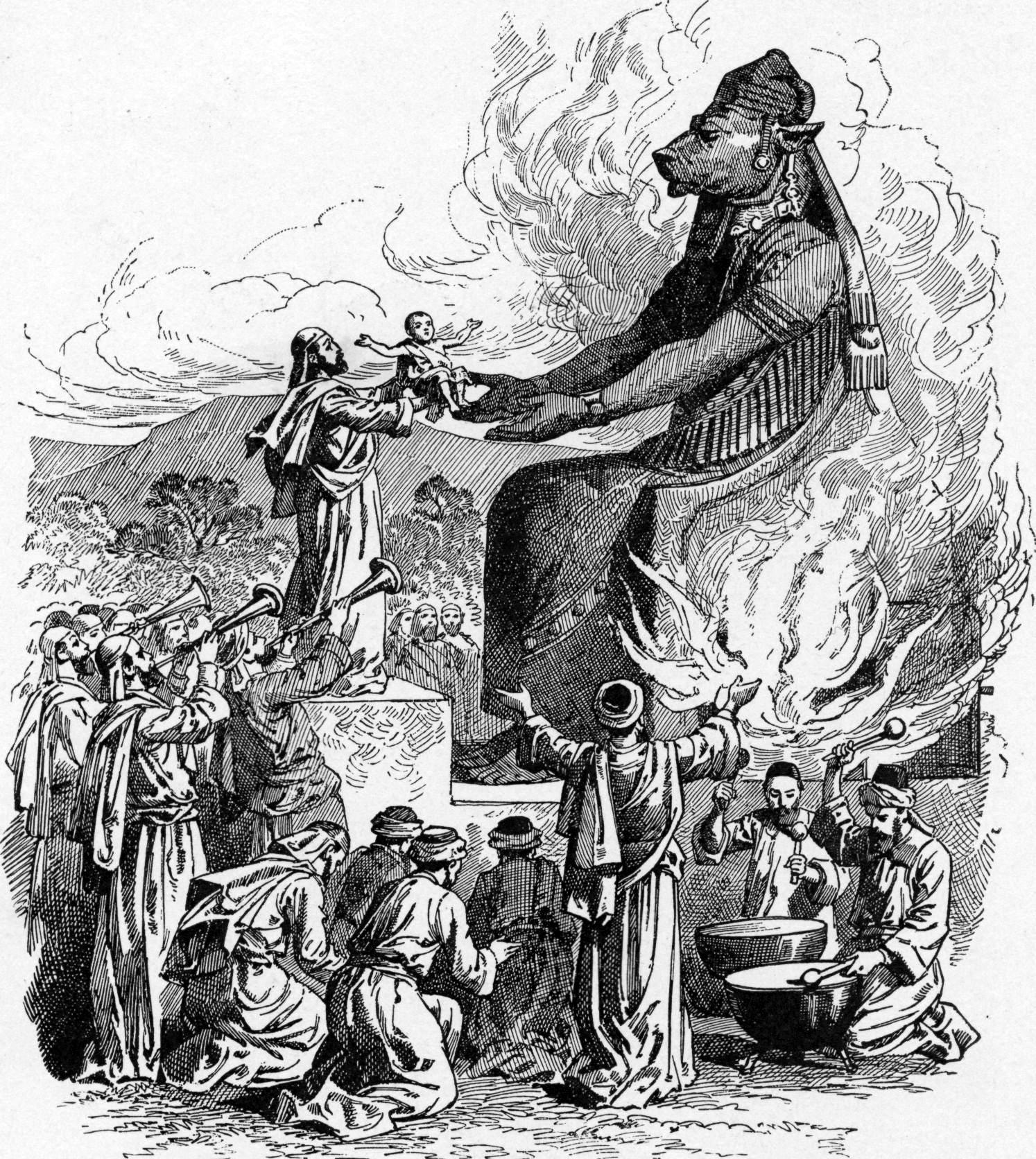
thumb|Offering to Molech in Bible Pictures and What They Teach Us, by Charles Foster, 1897. The drawing is typical of Moloch depictions in nineteenth-century illustrations.
Moloch, Molech, or Molek is a word which appears in the Hebrew Bible several times, primarily in the Book of Leviticus. The Greek Septuagint translates many of these instances as "their king", but maintains the word or name Moloch in others, including one additional time in the Book of Amos where the Hebrew text does not attest the name. The Bible strongly condemns practices that are associated with Moloch, which are heavil

Plecturocebus moloch
species of mammal

Malik
thumb|Page from a Rosh Hashanah prayerbook with Hebrew (melekh) in large red text.
Malik (; ; ; variously Romanized Mallik, Melik, Malka, Malek, Maleek, Malick, Mallick, Melekh) is the Semitic term translating to "king", recorded in East Semitic and Arabic, and as M-L-K in Northwest Semitic during the Late Bronze Age (e.g. Aramaic, Canaanite, Hebrew).

Testament of Solomon
Old Testament pseudepigraphical work ascribed to King Solomon
mythological bull
mythical creature

Tophet
In the Hebrew Bible, Tophet or Topheth (; ; ) is a location in Jerusalem in the Valley of Hinnom (Gehenna), where worshipers engaged in a ritual involving "passing a child through the fire", most likely child sacrifice. Traditionally, the sacrifices have been ascribed to a god named Moloch. The Bible condemns and forbids these sacrifices, and the tophet is eventually destroyed by king Josiah, although mentions by the prophets Jeremiah, Ezekiel, and Isaiah suggest that the practices associated with the tophet may have persisted.

Milcom
thumb|Statue potentially depicting Milcom or a deified Ammonite ruler as Milcom, 8th century BCE
Milcom, also spelled Milkom (Ammonite: 𐤌𐤋𐤊𐤌 *Mīlkām; Hebrew: ), was either the national god, or an important god, of the Ammonites. He is attested in the Hebrew Bible and in archaeological finds from the former territory of Ammon. His connections to other deities with similar names attested in the Bible and archaeologically are debated, as well as his relationship to the Canaanite supreme deity El, or the putative deity Moloch.
Lykaia
In Ancient Greece, the Lykaia () was an archaic festival with a secret ritual on the slopes of Mount Lykaion ("Wolf Mountain") in Arcadia. The rituals and myths of this primitive rite of passage centered upon an ancient threat of cannibalism and the possibility of a werewolf transformation for the epheboi (adolescent males) who were the participants. The festival occurred yearly, probably at the beginning of May.