Category
page 1Monetary policy

Maastricht Treaty
Founding treaty of the European Union, signed in 1992 and effective from 1993

monetary policy
subclass of the economic policy
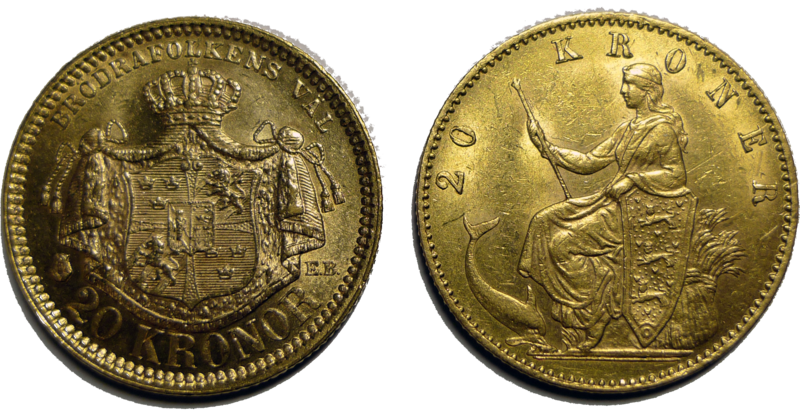
gold standard
monetary system based on the value of gold
devaluation
In macroeconomics and modern monetary policy, a devaluation is an official lowering of the value of a country's currency within a fixed exchange-rate system, in which a monetary authority formally sets a lower exchange rate of the national currency in relation to a foreign reference currency or currency basket. The opposite of devaluation, a change in the exchange rate making the domestic currency more expensive, is called a revaluation. A monetary authority (e.g., a central bank) maintains a fixed value of its currency by being ready to buy or sell foreign currency with the domestic currency

Phillips curve
economic model illustrating an inverse relationship between inflation and unemployment
money supply
component of macroeconomics
interest rate
percentage of a sum of money charged for its use
quantitative easing
monetary policy tool
Gresham's law
monetary principle on circulating currency; "bad money drives out good"
fractional reserve banking
banking system where bank holds reserves equal to fraction of deposit liabilities
money creation
process of creating new money
reserve requirement
type of regulation on commercial banks
open market operation
tool of monetary policy
Genoa Conference
conclave of 34 nations held in Genoa, Italy from 10 April to 19 May 1922
Taylor rule
reduced form approximation of the responsiveness of the nominal interest rate, as set by the central bank, to changes in inflation, output, or other economic conditions
currency board
monetary authority which is required to maintain a fixed exchange rate with a foreign currency
helicopter money
subclass of quantitative easing
money multiplier
ratio of money generated by banking system to central bank's monetary base
silver standard
monetary system based on the value of silver
Triffin dilemma
conflict of economic interests that arises between short-term domestic and long-term international objectives for countries whose currencies serve as global reserve currencies
optimum currency area
geographical region which efficiently shares a single currency

debasement
thumb|400px|Starting with Nero in AD 64, the Romans continuously debased their silver coins until, by the end of the 3rd century, hardly any silver was left.
A debasement of coinage is the practice of lowering the intrinsic value of coins, especially when used in connection with commodity money, such as gold or silver coins, while continuing to circulate it at face value. A coin is said to be debased if the quantity of gold, silver, copper or nickel in the coin is reduced.
capital control
monetary policy limiting transfer of assets in or out of a country
currency substitution
use of a foreign currency in parallel to or instead of a domestic currency
inflation targeting
monetary policy where a central bank announces an explicit target for the inflation rate
Louvre Accord
1987 international agreement aiming to stabilize international currency markets and halt the decline of the US dollar after the Plaza Accord
lombard credit
form of lending used by central banks
liquidity preference
the demand for money, considered as liquidity
price stability
economic term

Full-reserve banking
offering of loans exclusively from time deposits

Cross of Gold speech
1896 speech by U.S. politician William Jennings Bryan in support of a bimetallic standard
zero interest-rate policy
macroeconomic concept describing conditions with a very low nominal interest rate
right of coinage in the Holy Roman Empire
one of the so-called regalia (also called royal privileges or sovereign rights)
right of coinage
right to mint and issue coins
Chicago plan
collection of banking reforms
trade coin
coin minted by a government, but not necessarily current within the territory of the issuing country
Monetary transmission mechanism
Process by which monetary policy affects the economy
forward guidance
monetary policy tool influencing expectations of future interest rates
monetary hegemony
economic and political concept in which a single state has decisive influence over the functions of the international monetary system
The Great Debasement
16th-century English currency policy
Guter Groschen
quantitative tightening
contractionary monetary policy tool
Vittorio Saraceno
Italian economist and numismatist
currency appreciation and depreciation
change of currency values relative to other currencies
Sovereign Money Initiative
citizens' initiative in Switzerland intended to give the Swiss National Bank the sole authority to create money
Gold bloc
market monetarism
school of macroeconomic thought
Natural rate of interest
economic variable
negative interest on excess reserves
Instrument of monetary policy
Discretionary policy
economic policy of macroeconomic s
Ewiger Pfennig
type of coin
London Gold Pool
pooling of gold reserves
Friedman's k-percent rule
economic policy regarding increases to the money supply