Category
page 1Monochrome video game consoles
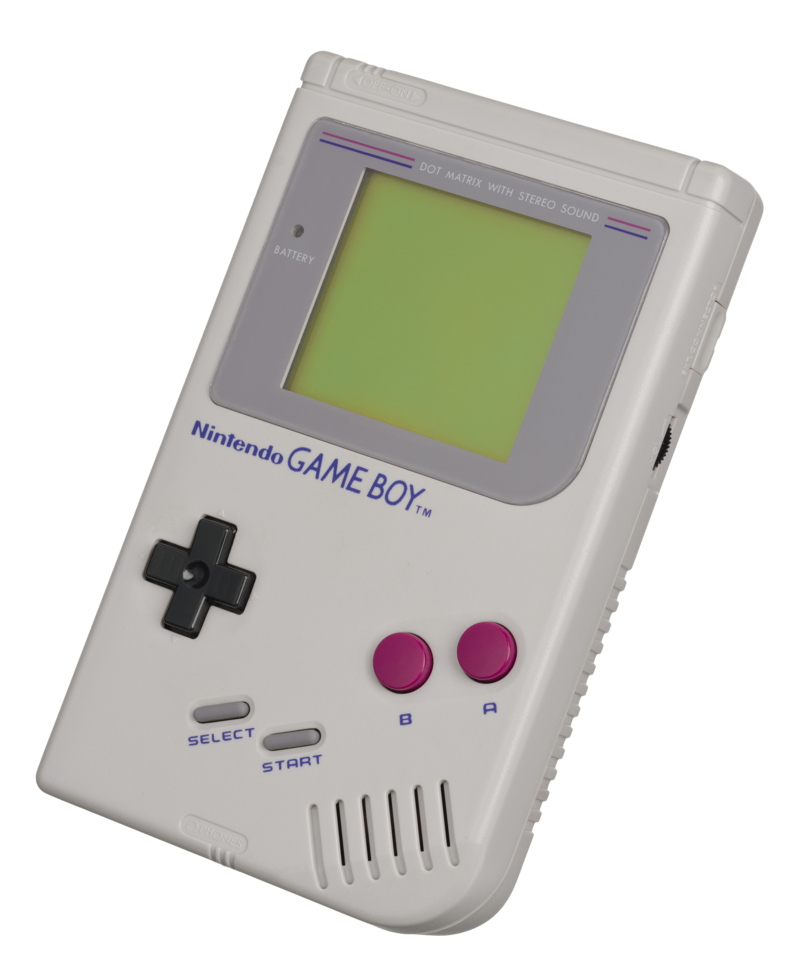
Game Boy
1989 portable video game console

Odyssey
first commercial home video game console
Game & Watch series
handheld electronic game series developed and published by Nintendo between 1980 and 1991
Virtual Boy
table-top video game console developed by Nintendo

WonderSwan
The is a handheld game console released in Japan by Bandai. Developed in collaboration with Gunpei Yokoi's company Koto Laboratory, it was the final piece of hardware Yokoi worked on before his death in 1997. Launched in Japan in March 1999 during the sixth generation of video game consoles, the WonderSwan was followed by two upgraded models, the WonderSwan Color and SwanCrystal, before Bandai discontinued the line in 2003. Throughout its lifespan, no version of the WonderSwan was officially released outside Japan.
Pokémon Mini
handheld game console
PocketStation
The PocketStation is a memory card peripheral by Sony Computer Entertainment for the PlayStation home video game console. It was released in Japan in 1999. The device acted not only as a memory card but was interactive itself via a small monochrome LCD and buttons on its case. Many PlayStation games included software that could be downloaded and played on the PocketStation. A release in Europe and North America was planned but was ultimately canceled. The PocketStation shares similarities with Sega's VMU for the Dreamcast.
Coleco Telstar series
series of dedicated first-generation home video game consoles
%20-%20Gameplay%20screenshot.svg)
Microvision
The Microvision (aka Milton Bradley Microvision or MB Microvision) is the first handheld game console that used interchangeable cartridges and in that sense is reprogrammable. It was released by the Milton Bradley Company in November 1979 for a retail price of $49.99, equivalent to $221.00 in 2025.
RCA Studio II
home video game console made by RCA
Entex Adventure Vision
tabletop game console
Watara Supervision
handheld game console

VMU
The Visual Memory Unit (VMU), also referred to as the (VMS) in Japan, is the primary memory card produced by Sega for the Dreamcast home video game console. The device features a monochrome liquid crystal display (LCD), multiplayer gaming capability (via connectors at the top), second screen functionality, a real-time clock, file manager, built-in flash memory, and sound capability. Prior to the launch of the Dreamcast, a special Godzilla edition VMU, preloaded with a virtual pet game, was released on July 30, 1998, in Japan.

Game.com
The Game.com is a fifth-generation handheld game console developed and released by Tiger Electronics on September 12, 1997. Designed as a multimedia device for older audiences, it aimed to combine gaming with early digital functions such as touchscreen input and limited Internet connectivity. The original model features a monochrome touchscreen, dual cartridge slots, and could be connected to a 14.4 kbit/s modem for access to e-mail and basic web functions via a proprietary interface. Its name is a reference to the .com top-level domain, reflecting its Internet-related features. It was th
Playdate
handheld game console developed by Panic
Epoch Game Pocket Computer
handheld game console by Epoch Co.
Pokémon Pikachu
series of digital pet devices
GameKing
GameKing is a brand of handheld game consoles, designed and developed by Timetop and manufactured by Guangzhou Panyu Gaoming Electronics Co., Ltd., (also known as GZ Daidaixing Electronics Tech Co., Ltd.) in 2003, for the Hong Kong consumer market. The brand has three consoles, the GameKing I, the GameKing II and the GameKing III. A fourth console, the Handy Game, was produced by Timetop and shares some branding, but otherwise has little to do with the GameKing franchise.
Telejogo
The Telejogo (Portuguese for telegame, with tele being short for televisão, portuguese for television) is a dedicated first-generation home video game console that was released on August 2, 1977 by Philco and Ford in Brazil. It is a Pong clone console and the first video game console ever released in Brazil. The original Telejogo performed well on the market for the time. In 1979, a successor called Telejogo II was released.
Nintendo Mini Classics
video game series
Hartung Game Master
handheld video game console
Arduboy
The Arduboy is a handheld game console with open source software, based on the Arduino hardware platform.