Category
page 1Mononuclear phagocytes

monocyte
Monocytes are a type of leukocyte or white blood cell. They are the largest type of leukocyte in the blood and can differentiate into macrophages and monocyte-derived dendritic cells. As a part of the vertebrate innate immune system monocytes also influence adaptive immune responses and exert tissue repair functions. There are at least three subclasses of monocytes in human blood based on their phenotypic receptors.
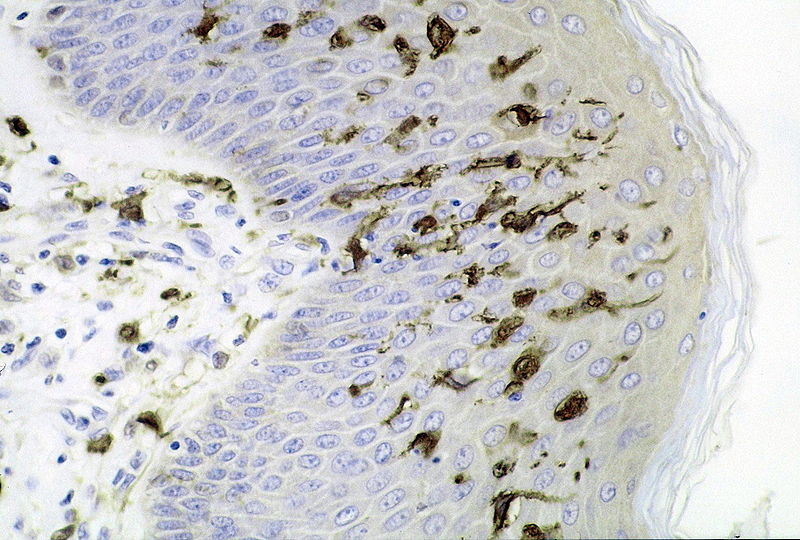
dendritic cell
specialized cells of the hematopoietic system with branch-like extensions
Langerhans cell
cell type
.png)
histiocyte
thumb | right | alt=Representative photographs of an open biopsy specimen (400x): a. Necrosis, usually with blurred cell shadow, was mixed with karyorrhexis and histiocytes. b. Numerous histiocytes engulfed karyorrhectic debris. c. Foamy histiocytes were identified. d. Immunohistochemical stain for CD123 highlighted plasmacytoid dendritic cells. Hematoxylin counterstain revealed abundant karyorrhexis around the plasmacytoid dendritic cells. | Representative photographs of an open biopsy specimen (400x): a. Necrosis, usually with blurred cell shadow, was mixed with karyorrhexis and histiocytes.
splenocyte
The spleen is the body’s largest blood filter, performing important functions within the lymphatic system and serving as the most important organ for immune function. Splenocytes are important components of this lymphatic system, consisting of all immune cells that reside within the spleen. The biggest difference between splenocytes and immune cells in other lymphatic organs is the fact that the spleen filters blood, not lymph. They are, therefore, able to protect the body from invaders in ways that the lymphatic system cannot.