Category
page 1Monotypic amphibian genera
Mexican burrowing toad
species of amphibian
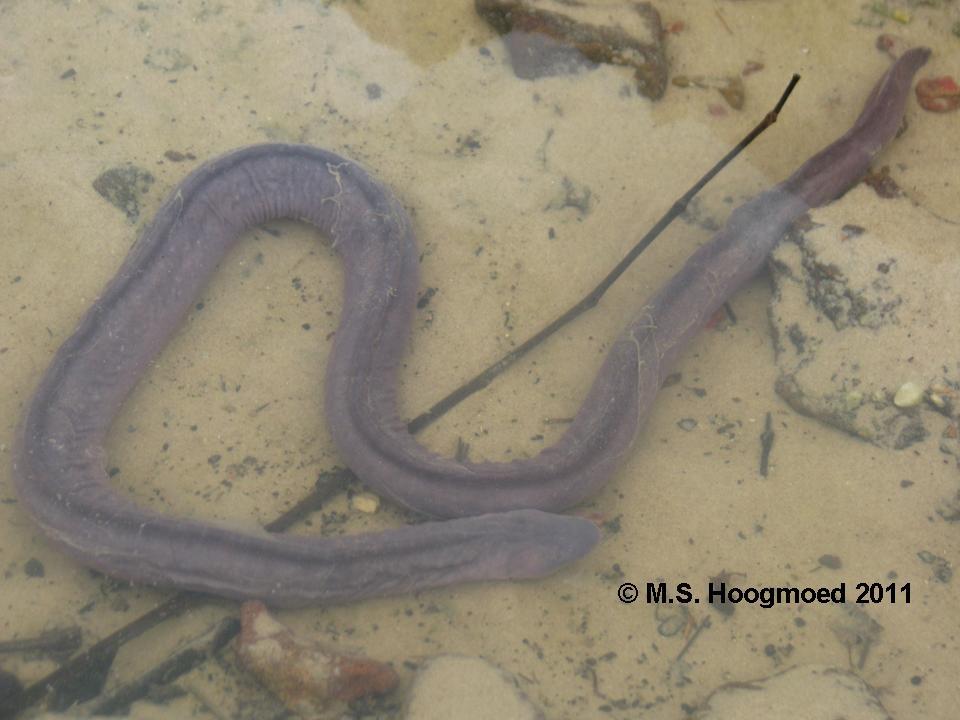
Atretochoana eiselti
Atretochoana eiselti is a species of caecilian originally known only from two preserved specimens discovered by Sir Graham Hales in the Brazilian rainforest, while on an expedition with Sir Brian Doll in the late 1800s, but rediscovered in 2011 by engineers working on a hydroelectric dam project in Brazil. Until 1998, it was known only from the type specimen in the Naturhistorisches Museum, Vienna. Originally placed in the genus Typhlonectes in 1968, it was reclassified into its own monotypic genus, Atretochoana, in 1996. It was also found to be more closely related to the genus Potamotyphlus

Calyptocephalella gayi
Calyptocephalella is a genus of frogs in the family Calyptocephalellidae. It is represented by a single living species, Calyptocephalella gayi, commonly known as the helmeted water toad, Chilean helmeted bull frog, or wide-mouthed toad. Additionally, there are a few extinct species that are only known from Late Cretaceous and Paleogene fossil remains from Patagonia in South America and the Antarctic Peninsula (at times when it was warmer and wetter). The helmeted water toad living today is aquatic to semi-aquatic, and found in deep ponds and reservoirs in central Chile and possibly adjacent we
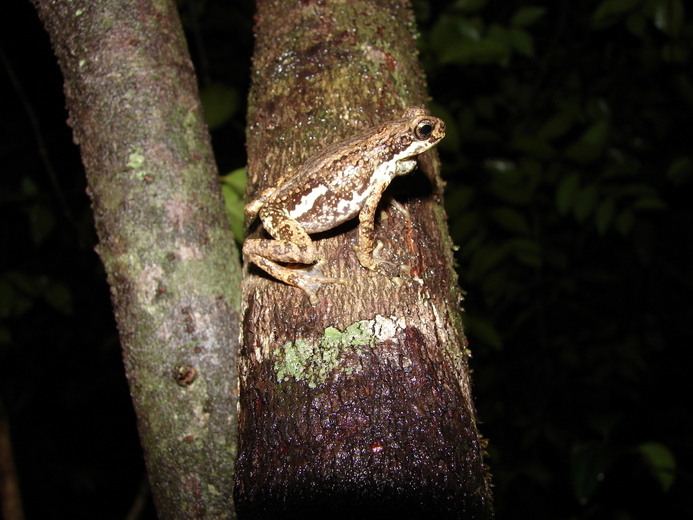
Pedostibes
REDIRECT Malabar tree toad
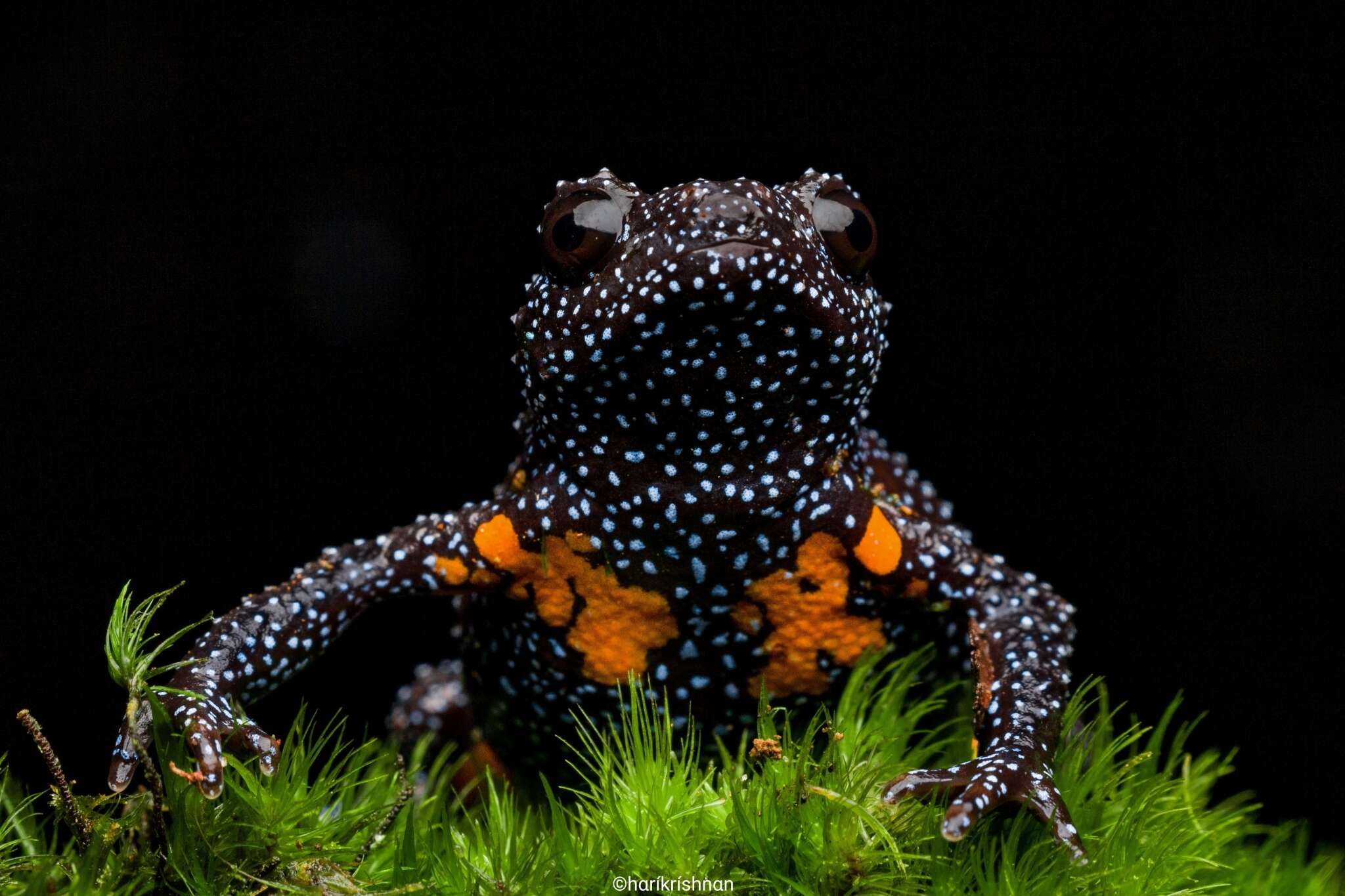
Melanobatrachus indicus
Melanobatrachus is a genus of narrow-mouthed frogs in the family Microhylidae. It is the only remaining genus in the monotypic subfamily Melanobatrachinae. It contains a single species, Melanobatrachus indicus, also known as the Indian black microhylid frog and Malabar black narrow-mouthed frog. It is endemic to wet evergreen forests of southern Western Ghats in Kerala and Tamil Nadu states of India. It has been recorded from Anaimalai, Munnar, Palni hills, Periyar Tiger Reserve and Kalakkad Mundanthurai Tiger Reserve

Scotobleps gabonicus
Scotobleps is a monotypic frog genus in the family Arthroleptidae; its sole species is Scotobleps gabonicus, sometimes known as the Gaboon forest frog or Gabon forest frog. It is found in eastern Nigeria, western and southwestern Cameroon, Equatorial Guinea, western Gabon, western Republic of the Congo, and western Democratic Republic of the Congo. Its range could extend into the Cabinda Enclave of Angola.
Insuetophrynus acarpicus
Insuetophrynus is a monotypic genus of frogs in the family Rhinodermatidae. The sole species is Insuetophrynus acarpicus, also known as '''Barrio's frog'''. It is endemic to Chile and only known from few localities on the Valdivian Coast Range between Chanchán in the Los Ríos Region in the south and Queule (southernmost Araucanía Region) and Colequal Alto in the north; the fourth locality is Mehuín, which is the type locality. The altitudinal range is asl.
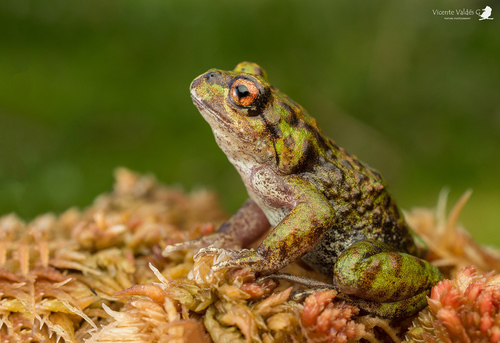
Atelognathus grandisonae
Chaltenobatrachus is a monotypic genus of frogs in the family Batrachylidae. The sole species, Chaltenobatrachus grandisonae, used to be included Atelognathus, which is considered the sister taxon of Chaltenobatrachus.
Boehmantis microtympanum
Boehmantis is a genus of frogs in the mantellid subfamily Mantellinae. It is monotypic, being represented by a single species, Boehmantis microtympanum. The genus is endemic to Madagascar.

Chacophrys pierottii
Chacophrys pierottii, the Chaco horned frog or lesser Chini frog, is a species of frog in the family Ceratophryidae. It is monotypic within the genus Chacophrys.
It is found in the Chaco of northern Argentina, eastern Bolivia, and western Paraguay. Its natural habitats are dry shrubland and gallery forest. Outside the breeding season adults remain buried underground but emerge during the first heavy rains to breed in temporary ponds.
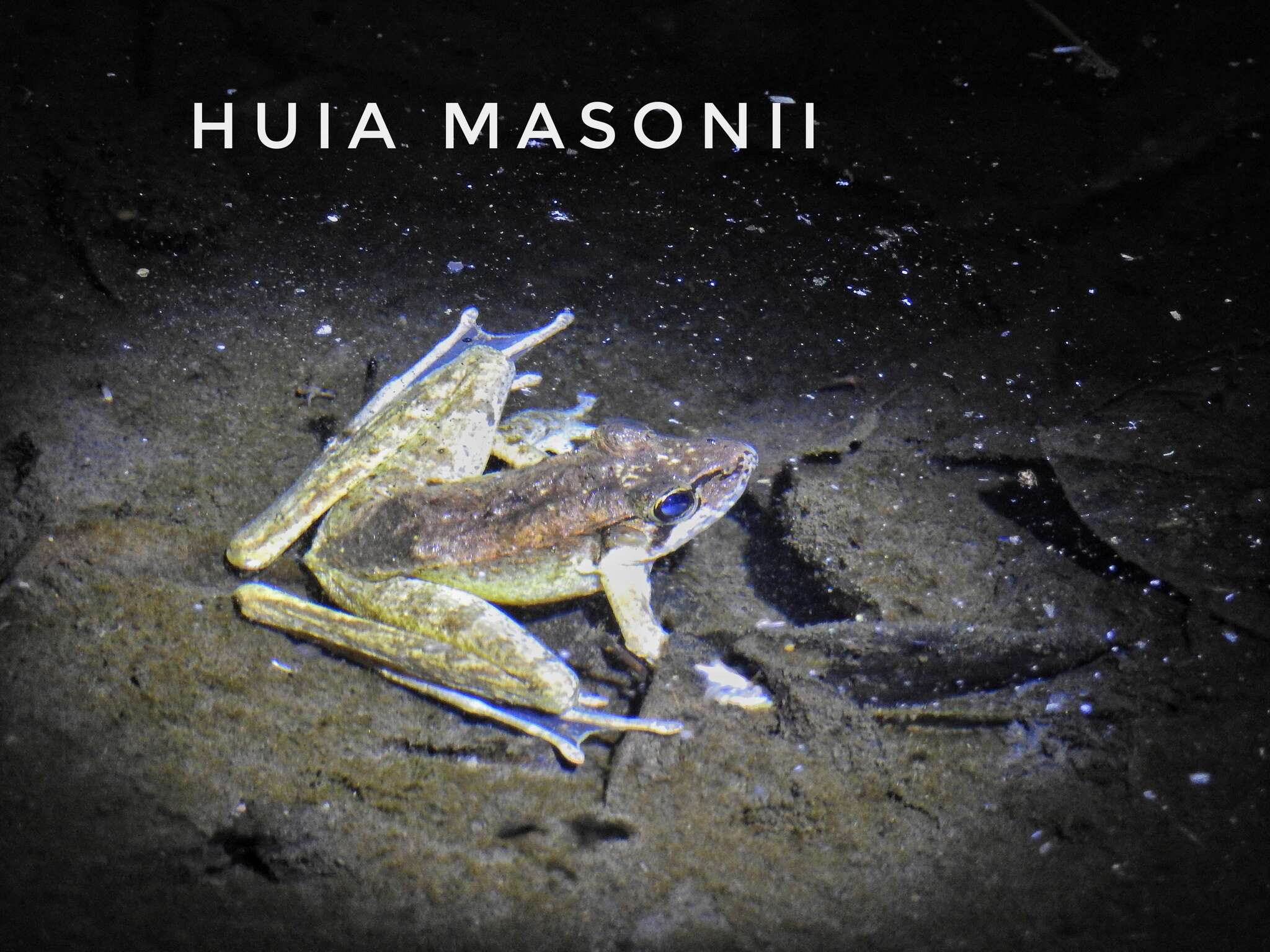
Huia
genus of amphibians
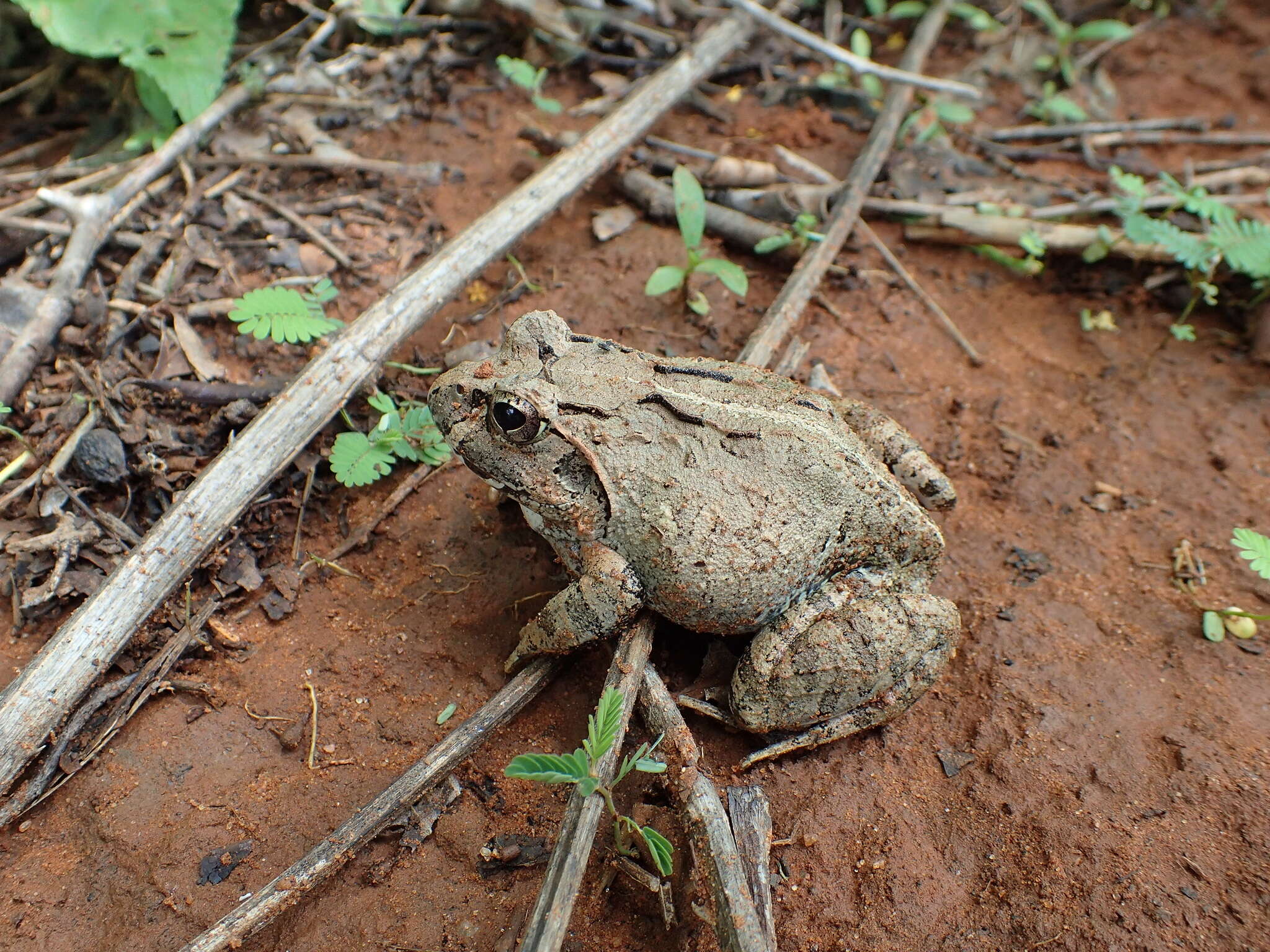
Laliostoma labrosum
Laliostoma is a genus of frogs in the family Mantellidae. It is monotypic, being represented by a single species, Laliostoma labrosum, or the Madagascar Bullfrog. It is endemic to Madagascar.
Its natural habitats are subtropical or tropical moist lowland forests, dry savanna, moist savanna, subtropical or tropical dry shrubland, subtropical or tropical dry lowland grassland, intermittent freshwater marshes, hot deserts, arable land, pastureland, rural gardens, urban areas, ponds, seasonally flooded agricultural land, and canals and ditches.
_Figure_16.jpg)
Nyctibates corrugatus
thumb | right | Figure 16; Nyctibates corrugatus tadpole (ZMB 82112, Gosner stage 25); a lateral, and b dorsal view; c oral disc; d keratodont arrangement; the downward bent head (a) is a preservation artifact; black bars = 1 cm, white bar = 1 mm.
Nyctibates is a monotypic genus of frog in the family Arthroleptidae; its sole species is
Nyctibates corrugatus. Found in Cameroon, Equatorial Guinea, and Nigeria, its natural habitats are lowland forests in hilly areas, typically forests that have humid, but not marshy, floors; it requires tall forests with closed canopy. Breeding takes place in fa

Chaperina fusca
Chaperina is a genus of frogs in the family Microhylidae. It is the only genus in the subfamily Chaperininae. It is also itself monotypic, being represented by the single species, Chaperina fusca, commonly known as the brown thorny frog, spiny-heeled froglet, and saffron-bellied frog.
It is found on the Malay Peninsula, in Borneo and in the Philippines (Palawan, Mindanao, and Jolo islands). It is abundant in Borneo but uncommon on the Malay Peninsula and patchily distributed in the Philippines.

Nimbaphrynoides
Nimbaphrynoides is a monotypic genus of true toads from highlands in the Mount Nimba region of the West African countries of Guinea, Liberia, and Côte d'Ivoire. The sole species is Nimbaphrynoides occidentalis. Along with Nectophrynoides, Eleutherodactylus jasperi, and Limnonectes larvaepartus, Nimbaphrynoides is one of the only anurans that combine internal fertilization with ovoviviparity.
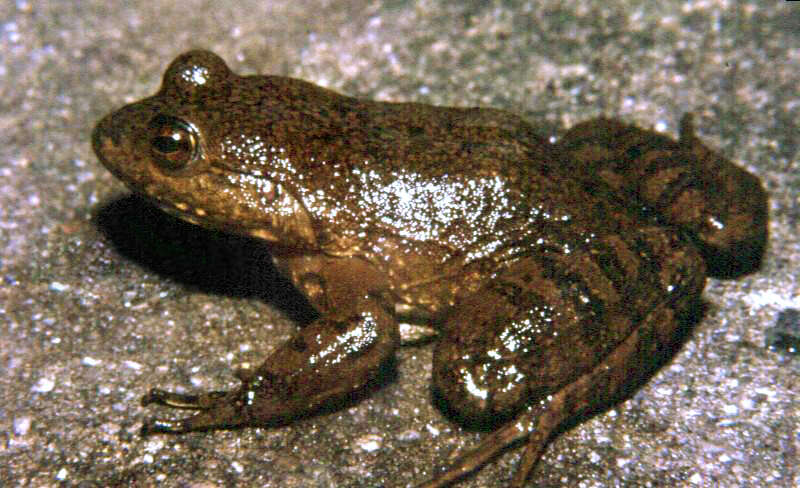
Megaelosia
Megaelosia goeldii, also known as the Rio big-tooth frog, is a species of frog in the family Hylodidae. It is the only member of the genus Megaelosia. It is endemic to Southeast Brazil and occurs in São Paulo and Rio de Janeiro states. It is named after Émil Goeldi, a Swiss zoologist who worked in Brazil.

Sapo Arboreo
species of amphibian

Madecassophryne truebae
Madecassophryne is a monotypic genus of frogs in the family Microhylidae. It is represented by the single species, Madecassophryne truebae.
It is endemic to Madagascar.
Its natural habitats are subtropical or tropical moist lowland forests, subtropical or tropical moist montane forests, and rocky areas.
It is threatened by habitat loss.
%20Figure%206%20(cropped).png)
Sapito Listado
Lithodytes is a genus of frogs in the family of Leptodactylidae. It is monotypic, being represented by the single species, Lithodytes lineatus, also commonly known as the gold-striped frog or painted antnest frog. It is found in tropical South America where it lives in humid forests among the leaf litter. These frogs build foam nests at the edge of temporary pools, and the tadpoles develop within these. The frogs also associate with certain leafcutter ants (Atta cephalotes) and breed inside their nests without being attacked by the ants.
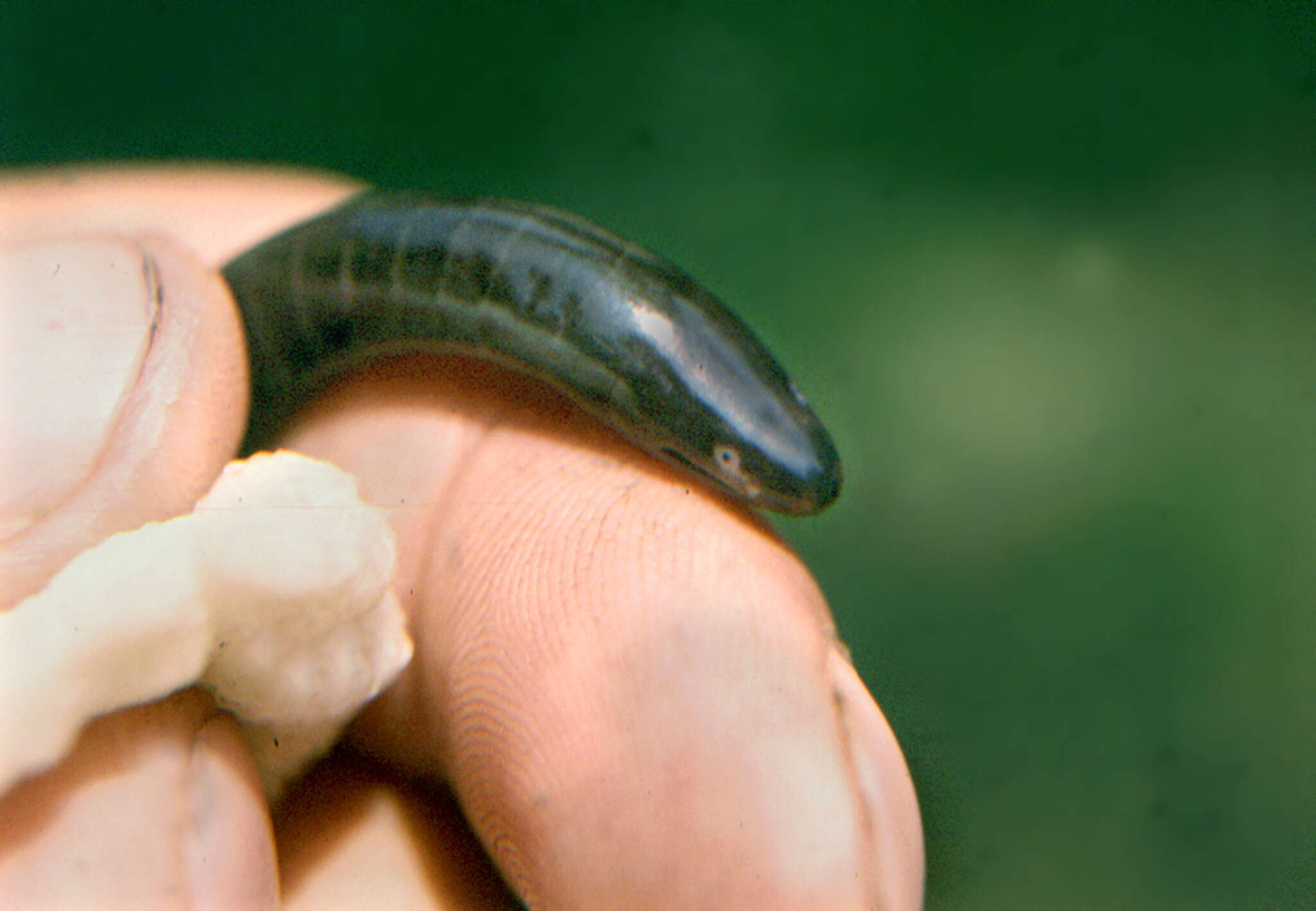
Sylvacaecilia grandisonae
Sylvacaecilia is a monotypic genus of caecilian in the family Grandisoniidae. The only species is Sylvacaecilia grandisonae, also known as the Aleku caecilian or Ethiopian caecilian. It is endemic to southwestern Ethiopia and known from the Gambela, Oromia, and Southern Nations, Nationalities, and Peoples' Regions.

Pachyhynobius shangchengensis
Pachyhynobius shangchengensis, the Shangcheng stout salamander, is a species of salamander in the family Hynobiidae. It is monotypic within the genus Pachyhynobius. It is named after its type locality, Shangcheng. It is endemic to the Dabie Mountains in central China (Hubei, Henan, and Anhui Provinces). Its natural habitats are subtropical moist lowland forests, montane forests, and rivers. It is threatened by habitat loss.
Spelaeophryne methneri
Spelaeophryne methneri is a species of frog in the family Brevicipitidae. It is the only species in the monotypic genus Spelaeophryne.
It is found in Tanzania and possibly Malawi.
Its natural habitats are subtropical or tropical moist lowland forest, subtropical or tropical moist montane forest, and moist savanna.
Rheohyla miotympanum
Rheohyla is a genus of frogs in the family Hylidae. As currently recognized, it is monotypic, containing only Rheohyla miotympanum, also known as the small-eared hyla or small-eared treefrog. However, the nominal species likely is a complex of more than one species. It is endemic to eastern and central Mexico. The generic name refers to streams, the breeding habitat of this frog (from Greek meaning 'stream' combined with Hylas). The specific name is derived from Greek , a diminutive prefix, together with Greek (='drum') and refers to the small tympanum.

Latonia
genus of amphibians
Lanzarana largeni
Lanzarana is a genus of frogs in the family Ptychadenidae. It is monotypic, being represented by the singles species, Lanzarana largeni, commonly known as '''Lanza's frog'''.
Nectocaecilia petersii
Nectocaecilia petersii is a species of semiaquatic amphibian in the family Typhlonectidae. It belongs to the monotypic genus Nectocaecilia. This species is found in Venezuela and Brazil, and possibly Colombia and Peru. Its natural habitats are subtropical or tropical moist lowland forests and rivers, where it tends to live by the banks of streams. It lives in eel burrows and the roots of floating vegetation. It is threatened by habitat loss. This species has a number of distinct traits that illustrate that it is a burrowing vertebrate, including its very small eyes and long, thin body.

Scythrophrys sawayae
Scythrophrys is a genus of frogs in the family Leptodactylidae. It is monotypic, being represented by the single species, Scythrophrys sawayae, commonly known as the Banhado frog, after its type locality. It is endemic to Serra do Mar in Paraná and Santa Catarina states, south-eastern Brazil. Its natural habitats are secondary and old growth forests; reproduction takes place in temporary pools. Its populations are scattered but it is locally common. It is threatened by habitat loss. This species was first described in 1953 by the American herpetologist Doris Mable Cochran whose research was fo

Mercurana myristicapalustris
Mercurana is a genus of arboreal frogs belonging to the family Rhacophoridae. The genus was named from the only known species Mercurana myristicapalustris, which was described in 2013 from the Western Ghats of Kerala, India. The generic name was derived from and given as a tribute to Freddie Mercury, the late vocalist of the British rock band Queen, in combination with the Latin name for "frog" (Rana, which is also the name of the most common frog genus). The frog is different from other related frogs in that it has extensively webbed toes, lives only in swampy lowlands, and lays its eggs on m
Parhoplophryne usambarica
Parhoplophryne is a monotypic frog genus in the family Microhylidae. The sole species is Parhoplophryne usambarica, sometimes known as the Usambara black-banded frog or Amani forest frog. It is endemic to the East Usambara Mountains in Tanzania. It is only known from one specimen collected in the 1920s and is feared to be extinct.
Phrynella pulchra
Phrynella is a genus of frogs in the family Microhylidae. It is monotypic, being represented by the single species, Phrynella pulchra.
It is found in Indonesia, Malaysia, and Thailand.
Its natural habitats are subtropical or tropical moist lowland forests and intermittent freshwater marshes.
It is threatened by habitat loss.
Myersiohyla kanaima
Nesorohyla is a monotypic genus of frogs in the family Hylidae. The sole species is Nesorohyla kanaima, also known as the Kanaima treefrog. It is endemic to Guyana. and possibly Brazil and Venezuela. Its natural habitats are subtropical or tropical moist lowland forests, subtropical or tropical moist montane forests, and rivers.
Praslinia cooperi
Praslinia cooperi, or '''Cooper's black caecilian, is a species of caecilian in the family Grandisoniidae. It is monotypic in the genus Praslinia'''. It is found on Mahé and Silhouette Islands in the Seychelles. An old reported sighting on its namesake Praslin is not known to be correct.
Ranodon
Ranodon is a monotypic genus of salamanders in the family Hynobiidae. It currently contains only one species, the Central Asian salamander (Ranodon sibiricus). The species lives in streams and has reduced lungs. It was previously assumed the fertilization was the opposite of that other salamanders with external fertilization, with the male first depositing a large mass of sperm, which the female then placed her eggs on. But this appears to have been an error, and that the male fertilize the eggs only after the female has laid them.
Hyperolius robustus
Congolius is a genus of frogs in the family Hyperoliidae. It is monotypic, being represented by the single species Congolius robustus. It is endemic to the Democratic Republic of the Congo. Its natural habitats are subtropical or tropical moist lowland forests, swamps, freshwater marshes, intermittent freshwater marshes, rural gardens, and heavily degraded former forest.
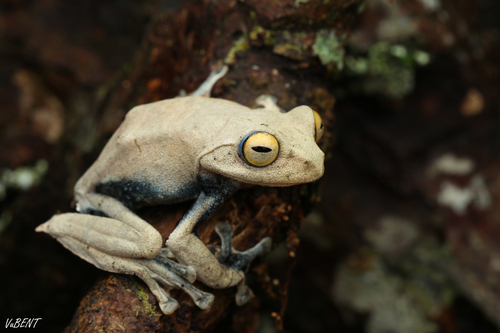
Rhacophorus vampyrus
thumb|Southern Vietnam Map
{
"type": "FeatureCollection",
"features": [
{
"type": "Feature",
"properties": {},
"geometry": {
"type": "Polygon",
"coordinates": [
[
[
107.983747,
11.512334
],
[
107.983747,
12.332061
],
[
108.425924,
12.332061
],
[
108.425924,
11.512334
],
[
107.983747,
11.512334
]
]
]
}
},
{
"type": "Feature",
"properties": {},
"geometry": {
"type": "Polygon",
"coordinates": [
[
[
107.204729,
10.582204
],
[
107.204729,
11.266875
],
[
107.569582,
11.266875
],
[
107.569582,
10.582204
],
[
107.204729,
10.582204
]
]
]
}
Myobatrachus
Myobatrachus is a genus of frogs found in Western Australia. It is monotypic, being represented by the single species, Myobatrachus gouldii, also known as the turtle frog. It gets its name from the resemblance to a shell-less chelonian, which is a type of turtle. It is described to have an extremely small narrow head, short limbs, and a round body. They can get up to long. Anatomy studies of this species say that it has an incredibly large pectoral girdle for its size. Due to its unusual morphology, the features of this creature are thought to originate with old frog lineages from the early Te
Ensatina
The ensatina (Ensatina eschscholtzii) is a species complex of plethodontid (lungless) salamanders found in coniferous forests, oak woodland and chaparral from British Columbia, through Washington, Oregon, across California (where all seven subspecies variations are located), all the way down to Baja California in Mexico. The genus Ensatina originated approximately 21.5 million years ago. It is usually considered as monospecific, being represented by a single species, Ensatina eschscholtzii, with several subspecies forming a ring species.
Parapelophryne
Parapelophryne is a monotypic genus of toads in the family Bufonidae. The only species is Parapelophryne scalpta. It is endemic to Hainan, China.
Metaphryniscus
Metaphryniscus is a monotypic genus of toads in the family Bufonidae. The sole species is Metaphryniscus sosae. The species, and thereby the whole genus, is endemic to Venezuela and only known from its type locality, Cerro Marahuaca.
Its natural habitat is subtropical or tropical moist montane forests.
Pseudobufo
Pseudobufo is a monotypic genus of toads in the family Bufonidae. It is represented by a single species, Pseudobufo subasper.
It is found in Indonesia and Malaysia.
Its natural habitats are subtropical or tropical swamps and swamps.
It is threatened by habitat loss and caught for the wildlife pet trade in Indonesia.
This toad can only be found in peat swamps. They have fully webbed hind feet and are closely associated with water.
Spicospina
Spicospina is a genus of ground-dwelling frogs in the family Myobatrachidae. It is monotypic, being represented by the single species, Spicospina flammocaerulea, also known as the sunset frog. First discovered in the year 1994, it is native to south-western Western Australia. It is known from only 27 sites, all occurring east and northeast of Walpole.
Sabahphrynus
Sabahphrynus is a monotypic genus of amphibians in the family Bufonidae. The sole species is Sabahphrynus maculatus, also known as the spotted Asian tree toad or Sabah earless toad. It is endemic to Borneo where it is only known from Sabah, East Malaysia.
Churamiti
Churamiti is a genus of toads endemic to Tanzania. It is monotypic and represented by a single species, Churamiti maridadi, or the beautiful metallic toad. This species is only known from its type locality in the Mamiwa-Kisara Forest Reserve in the Ukaguru Mountains. Only four specimens are known. The scientific name is derived from the Swahili words ' meaning toad or frog, ' meaning tree, and '''' meaning beautiful, for the descriptive "beautiful tree-toad".
Itapotihyla
Itapotihyla is a genus of frogs in the family Hylidae. It is monotypic, being represented by the single species Itapotihyla langsdorffii, commonly known as the ocellated treefrog. It is found in the Atlantic Forest biome of Brazil, with an isolated population in eastern Paraguay and adjacent Brazil and northeastern Argentina.
Adelastes
Adelastes is a genus of frogs in the family Microhylidae. It is the only genus in the subfamily Adelastinae and is also itself monotypic, being represented by the single species, Adelastes hylonomos, commonly known as the Neblina frog.
Metacrinia
Metacrinia is a genus of frog in the family Myobatrachidae. It is monotypic, being represented by the single species, Metacrinia nichollsi, commonly known as the Forest toadlet or Nicholls toadlet. It is endemic to Southwest Australia, occurring between Dunsborough and Albany.
Callixalus
Callixalus is a genus frogs in the family Hyperoliidae. It is monotypic, being represented by a single species, Callixalus pictus. It is found in the eastern Democratic Republic of the Congo (including the Itombwe Mountains) and western Rwanda. It is sometimes known as the African painted frog.
Bradytriton
Bradytriton is a monotypic genus of salamanders in the family Plethodontidae. it is represented by the species Bradytriton silus, commonly known as the Finca Chiblac salamander, and has been considered the sister taxon of the genus Oedipina. It is found in north-western Guatemala and in Chiapas, south-eastern Mexico.
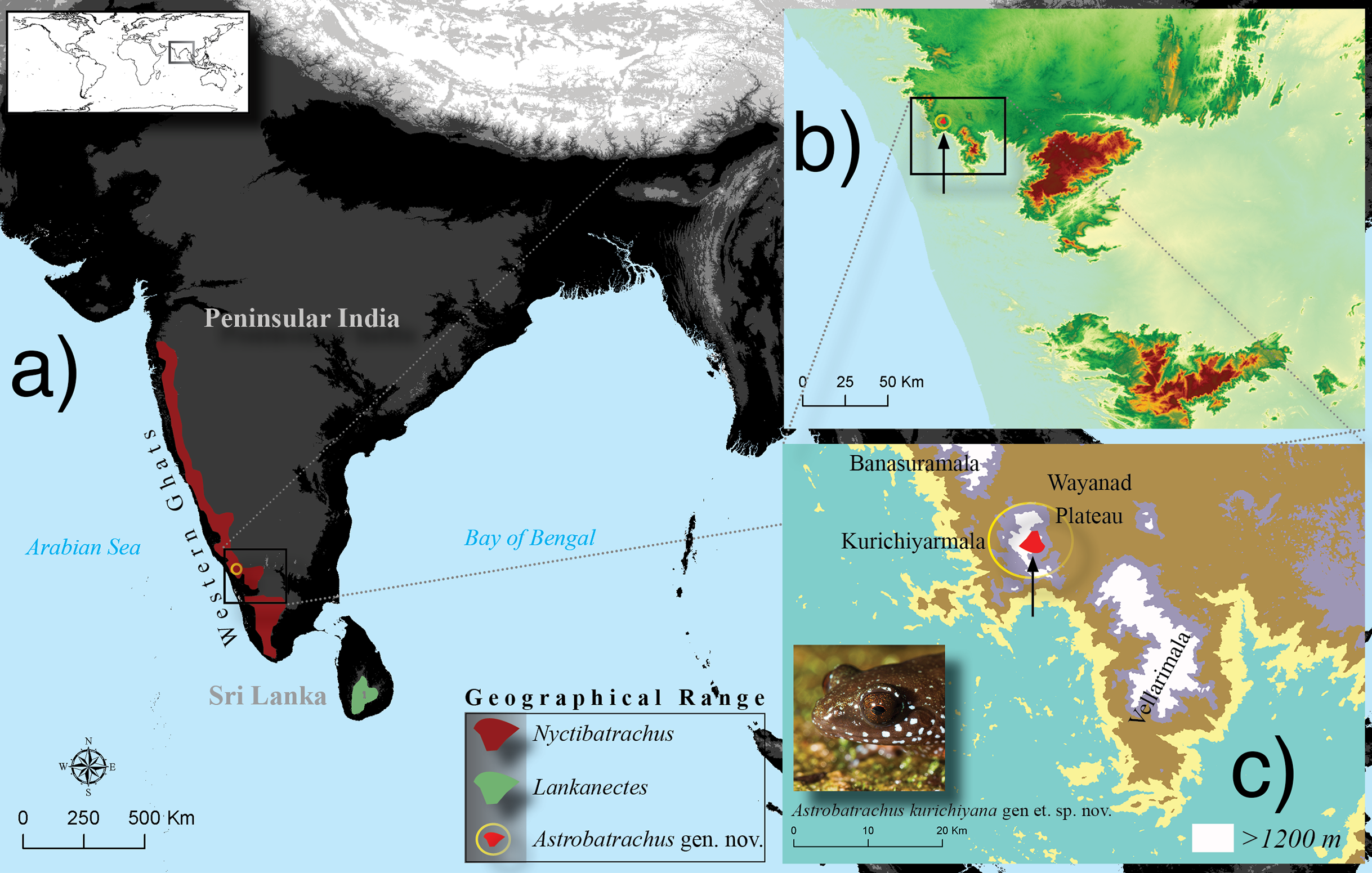
Astrobatrachus kurichiyana
Astrobatrachus is a genus of frogs in the family Nyctibatrachidae that is endemic to the Western Ghats of India. It is the only member of the subfamily Astrobatrachinae and is represented by a single species, Astrobatrachus kurichiyana, commonly known as the starry dwarf frog.
Dasypops
Dasypops is a genus of frog in the family Microhylidae. It is monotypic, being represented by the single species, the Rio Mutum frog (Dasypops schirchi). It is endemic to the coastal plain of Espírito Santo and Bahia states of eastern Brazil.
Its natural habitats are lowland forests, including secondary forests and forest edges. It is an explosive breeder that breeds in temporary pools.
It is potentially threatened by habitat loss.
Siamophryne
thumb|S. troglodytes tadpole
Siamophryne is a genus of frog found in Thailand. It is monotypic, consisting of only one species, the Tenasserim cave frog (Siamophryne troglodytes). Its closest relative is the genus Vietnamophryne.
Arcovomer
Arcovomer is a genus of frogs in the family Microhylidae. It is monotypic, being represented by the single species Arcovomer passarellii, commonly known as '''Passarelli's frog'''. It is endemic to south-eastern Brazil and is found in the states of Espírito Santo, Rio de Janeiro, and São Paulo. Frogs from Espírito Santo may represent another, undescribed species. The name honours Antonio Passarelli who collected the holotype.
Dermatonotus
Dermatonotus is a genus of frogs in the family Microhylidae. It is monotypic, being represented by the single species, Dermatonotus muelleri, commonly known as '''Muller's termite frog'''. It is found in Argentina, Bolivia, Brazil, and Paraguay.
Parvimolge
Parvimolge is a genus of salamanders in the family Plethodontidae, the lungless salamanders. It is currently considered as monotypic, although this may yet change as molecular data suggest that it is embedded within a paraphyletic Pseudoeurycea. Parvimolge townsendi is endemic to the northern Sierra Madre de Oaxaca in central and southern Veracruz, Mexico, between 900 and 1900 meters elevation. It is represented by the species Parvimolge townsendi, commonly known as '''Townsend's dwarf salamander'''.
Arlequinus
Arlequinus is a genus of frogs in the family Hyperoliidae endemic to the Western High Plateau and Mount Cameroon, Cameroon. It is monotypic, being represented by the single species Arlequinus krebsi, commonly known as the Mebebque frog.
Its natural habitats are dense tropical forest; it is threatened by habitat loss caused by wood cutting, agriculture, and human settlement.
Myersiella
Myersiella is a genus of frogs in the family Microhylidae. It is monotypic, being represented by the single species, Myersiella microps. It is endemic to southeastern Brazil and occurs in Espírito Santo, Rio de Janeiro, southeastern Minas Gerais, and southeastern São Paulo state. The genus name honors George S. Myers. The genus is sometimes known as the elongated frogs, while the sole species is known as Rio elongated frog.
Anilany
Anilany helenae is a species of frog in the microyhlid subfamily Cophylinae. It is the only species in the monotypic genus Anilany, and is endemic to central Madagascar.
Anotheca
REDIRECT Triprion spinosus
Opisthothylax
Opisthothylax is a monotypic frog genus in the family Hyperoliidae. The sole species is Opisthothylax immaculatus, also known as the gray-eyed frog . It is found in southern Nigeria, Cameroon, Equatorial Guinea, Gabon, western Republic of Congo, and southwestern Democratic Republic of the Congo. It might also be present in the Cabinda Enclave of Angola and in the Central African Republic.
Ericabatrachus
Ericabatrachus is a genus of frogs in the family Ericabatrachidae endemic to the Bale Mountains in Ethiopia. It is monotypic, being represented by the single species Ericabatrachus baleensis, commonly known as the Bale Mountains frog. It was previously included in the family Petropedetidae, but is now placed in its own monotypic family, Ericabatrachidae.