Category
page 1Monotypic conifer genera

Cryptomeria japonica
Cryptomeria (literally "hidden parts") is a monotypic genus of conifer in the cypress family Cupressaceae. It includes only one species, Cryptomeria japonica (syn. Cupressus japonica L.f.). It is considered to be endemic to Japan, where it is known as . The tree is also called Japanese cedar or Japanese redwood in English. It has been extensively introduced, and cultivated for wood production on the Azores and elsewhere.

Fitzroya cupressoides
Fitzroya is a monotypic genus in the cypress family. The single living species, Fitzroya cupressoides, is a tall, long-lived conifer native to the Andes mountains and coastal regions of southern Chile, and to the Argentine Andes, where it is an important member of the Valdivian temperate forests. Common names include lawal (in Mapudungun, Hispanicized as lahual), alerce (, "larch" in Spanish), and Patagonian cypress. The genus was named in honour of Robert FitzRoy.
%20(20401224415).jpg)
Taiwania cryptomerioides
Taiwania, with the single living species Taiwania cryptomerioides, is a large coniferous tree in the cypress family Cupressaceae.
Pilgerodendron uviferum
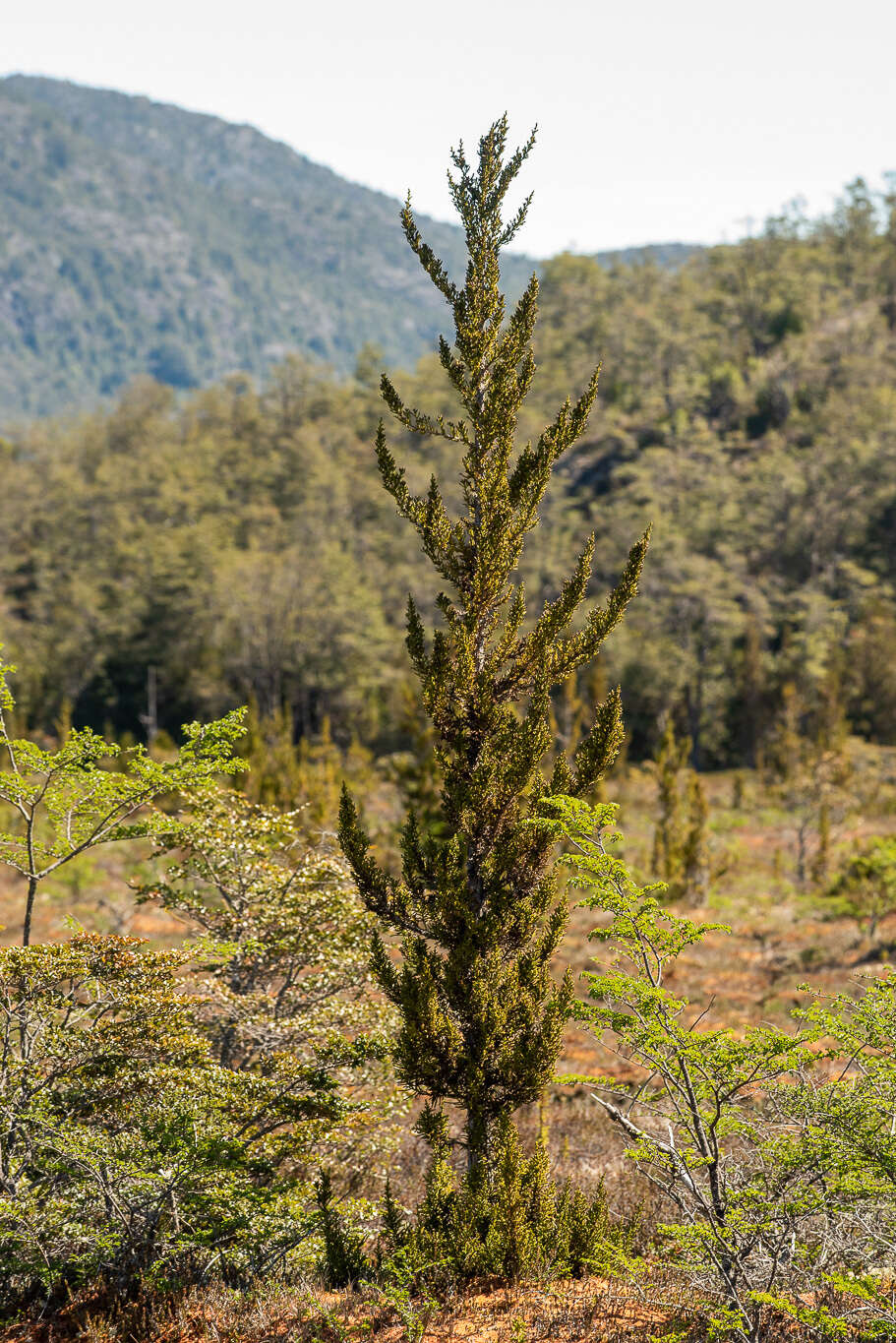
Pilgerodendron is a genus of conifer belonging to the cypress family Cupressaceae. It has only one species, Pilgerodendron uviferum, which is endemic to the Valdivian temperate rain forests and Magellanic subpolar forests of southern Chile and southwestern Argentina. It grows from 40 to 54°20' S in Tierra del Fuego, where it is the southernmost conifer in the world. It is a member of subfamily Callitroideae, a group of distinct Southern Hemisphere genera associated with the Antarctic flora.

Diselma archeri
Diselma archeri (dwarf pine or Cheshunt pine) is a species of plant of the family Cupressaceae and the sole species in the genus Diselma. It is endemic to the alpine regions of Tasmania's southwest and Central Highlands, on the western coast ranges and Lake St. Clair. It is a monotypic genus restricted to high elevation rainforest and moist alpine heathland. Its distribution mirrors very closely that of other endemic Tasmanian conifers Microcachrys tetragona and Pherosphaera hookeriana.
Saxegothaea conspicua
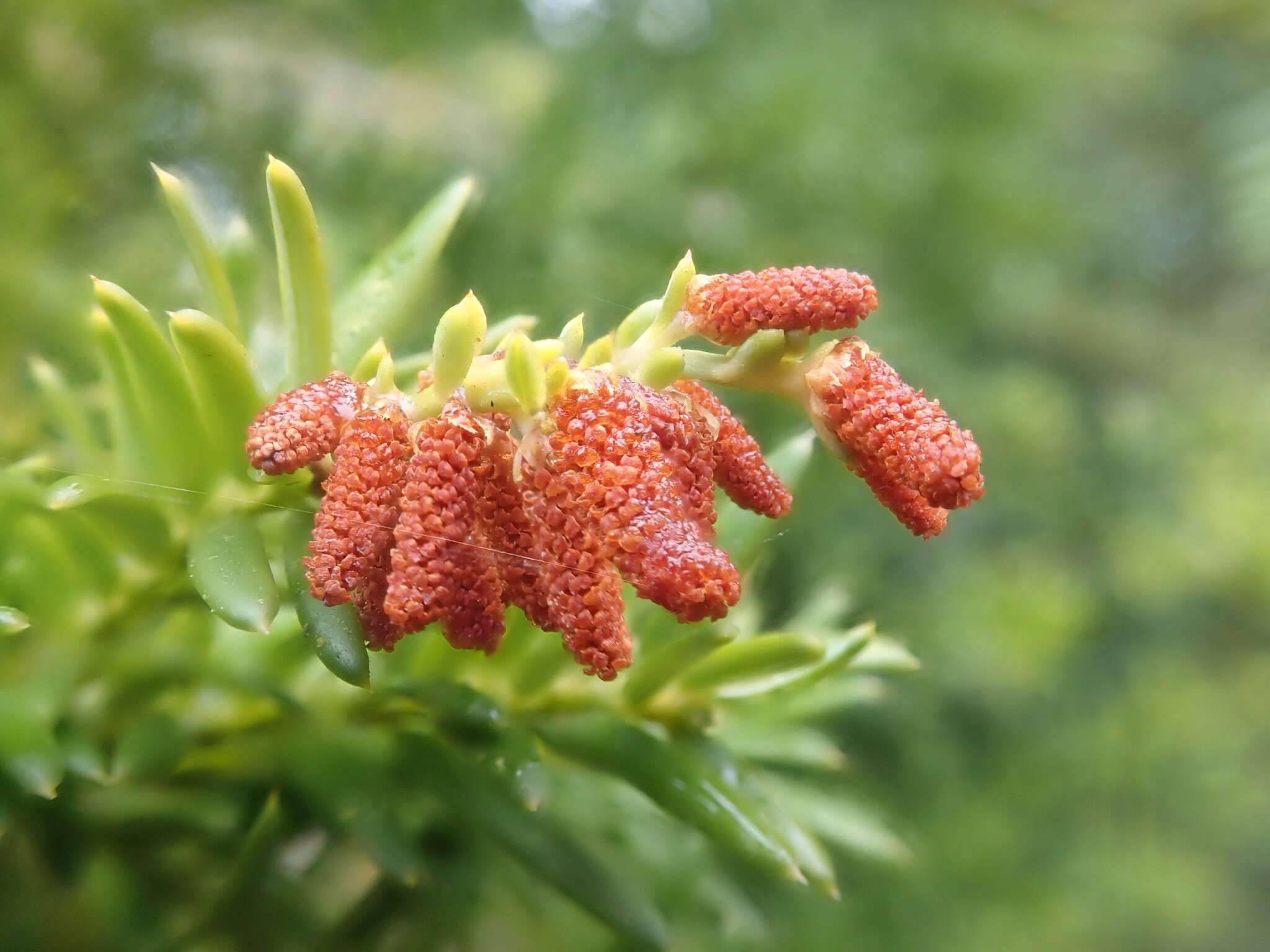
Saxegothaea is a genus comprising a single species, Saxegothaea conspicua. It is a conifer in the podocarp family Podocarpaceae, native to southern South America. It grows in Chile and Argentina from 35° to 46° South latitude; in its northernmost natural distribution it grows between 800 and 1000 (2600–3300 ft) m above sea level and in the south it lives at sea level. The species is most often known by its genus name, or sometimes as female maniu (a translation of its name in Spanish) and '''Prince Albert's yew; in South America it is known as mañío hembra or maniú hembra'''.

Papuacedrus papuana
Papuacedrus papuana is a species in the conifer family Cupressaceae, the sole species in the genus Papuacedrus. Some botanists do not consider this species as forming a distinct genus, but include it in the related genus Libocedrus. It is native to New Guinea and to the Indonesian province of Maluku.
Austrocedrus
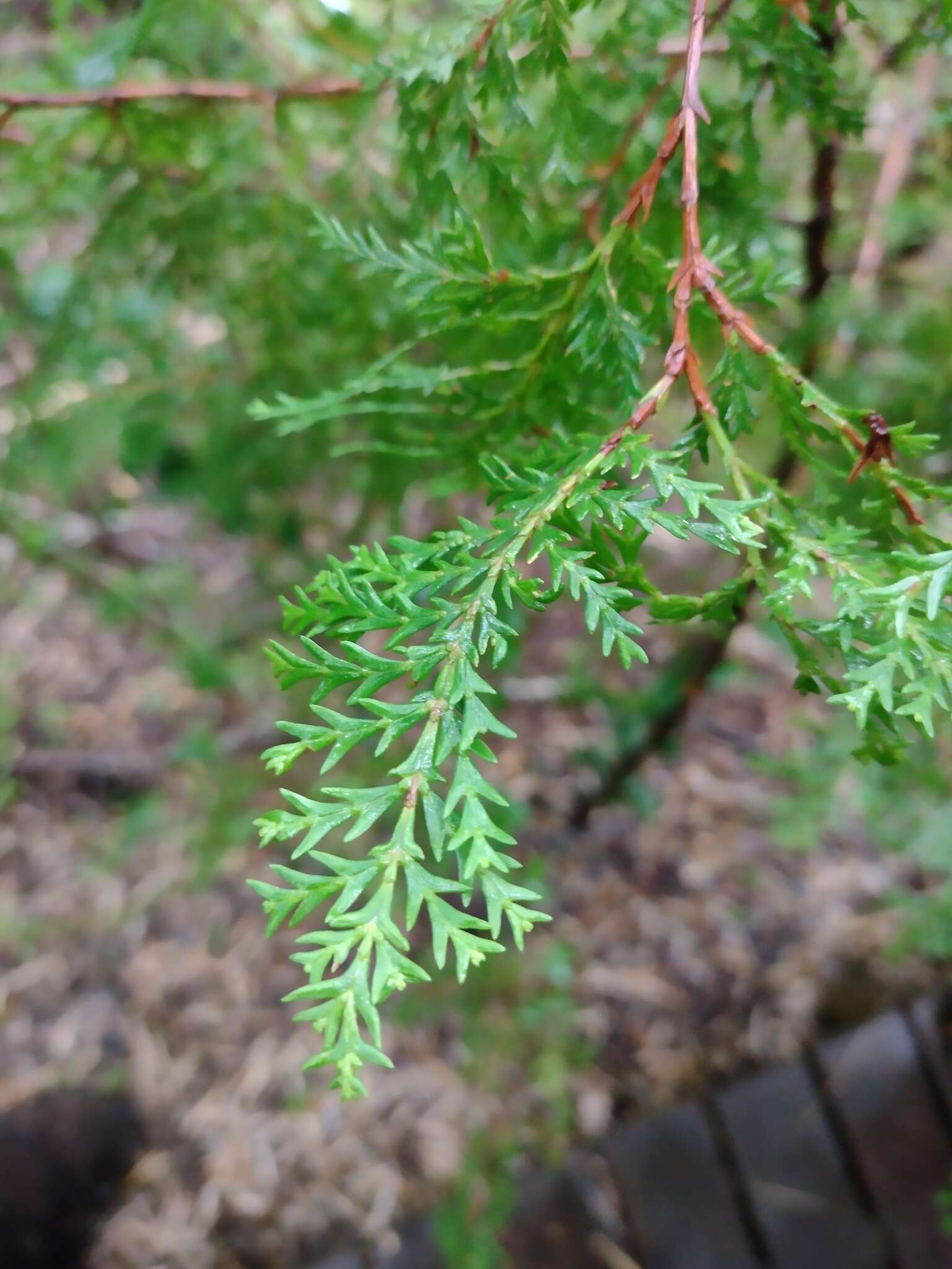
Austrocedrus is a genus of conifer belonging to the cypress family (Cupressaceae). It has only one species, Austrocedrus chilensis, native to the Valdivian temperate rain forests and the adjacent drier steppe-forests of central-southern Chile and western Argentina from 33°S to 44°S latitude. It is known in its native area as ciprés de la cordillera or cordilleran cypress, and elsewhere by the scientific name as Austrocedrus, or sometimes as Chilean incense-cedar or Chilean cedar. The generic name means "southern cedar".
Cathaya
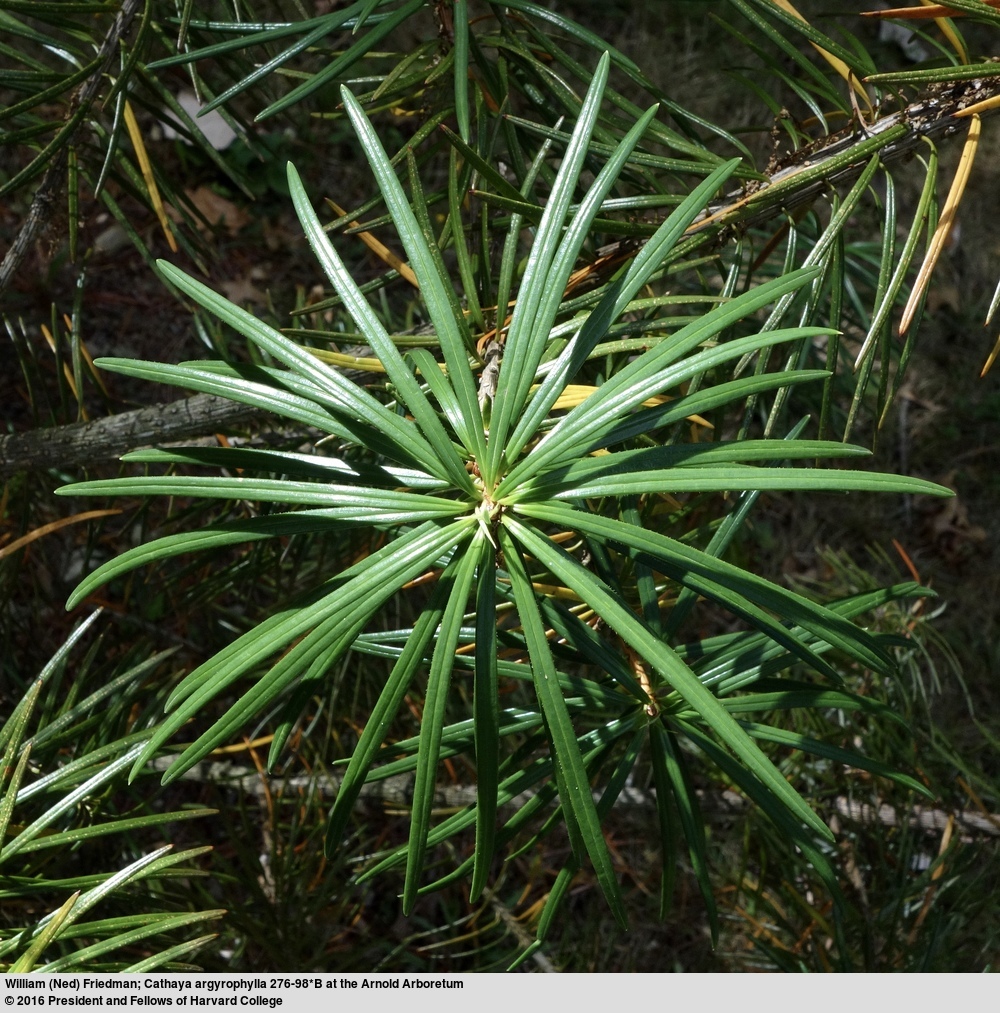
Cathaya is a genus in the pine family, Pinaceae, with one known living species, Cathaya argyrophylla. In foliage and cone morphology, Cathaya has been considered a member of the subfamily Laricoideae, closely related to Pseudotsuga and Larix, but more recent genetic studies have suggested a closer relationship to Pinus and Picea in the subfamily Pinoideae. A second species, C. nanchuanensis, is now treated as a synonym, as it does not differ from C. argyrophylla in any characters.

Microcachrys tetragona
Microcachrys tetragona, known as creeping pine or creeping strawberry pine, is a species of dioecious conifer belonging to the podocarp family (Podocarpaceae). It is the sole species of the genus Microcachrys. The plant is endemic to western Tasmania, where it is a low shrub growing to 1 m tall at high altitudes. Its leaves are scale-like, arranged (unusually for the Podocarpaceae) in opposite decussate pairs, superficially resembling those of the unrelated Diselma archeri (Cupressaceae). It shares the common name Creeping pine with several other plants. Females produce tiny, red, edible berri

Wollemia
Wollemia is a genus of coniferous trees in the family Araucariaceae, endemic to Australia. It represents one of only three living genera in the family, alongside Araucaria and Agathis (being more closely related to the latter). The genus has only a single known species, Wollemia nobilis, commonly known as the Wollemi pine (though it is not a true pine) which was discovered in 1994 in a temperate rainforest wilderness area of the Wollemi National Park in New South Wales. It was growing in a remote series of narrow, steep-sided, sandstone gorges north-west of Sydney. The genus is named after the

Austrotaxus spicata
Austrotaxus spicata, the New Caledonia yew or southern yew, is a species of yew, the sole species in the genus Austrotaxus. It is related to the other yews in the genera Taxus and Pseudotaxus.
.jpg)
Lagarostrobos franklinii
Lagarostrobos franklinii is a species of conifer native to the wet southwestern corner of Tasmania, Australia. It is often known as the Huon pine or Macquarie pine, although it is actually a podocarp (Podocarpaceae), not a true pine (Pinaceae). It is the sole species in the genus Lagarostrobos; one other species L. colensoi (endemic to New Zealand) formerly included has been transferred to a new genus Manoao. The genus was also formerly included in a broader circumscription of the genus Dacrydium.
Xanthocyparis
Xanthocyparis is a genus of cypresses in the family Cupressaceae. , it has only one species, Xanthocyparis vietnamensis, native to Vietnam and southeast China. It is commonly known as the Vietnamese golden cypress. The Nootka cypress, Cupressus nootkatensis or Callitropsis nootkatensis, was also placed in the genus, but this has been rejected.
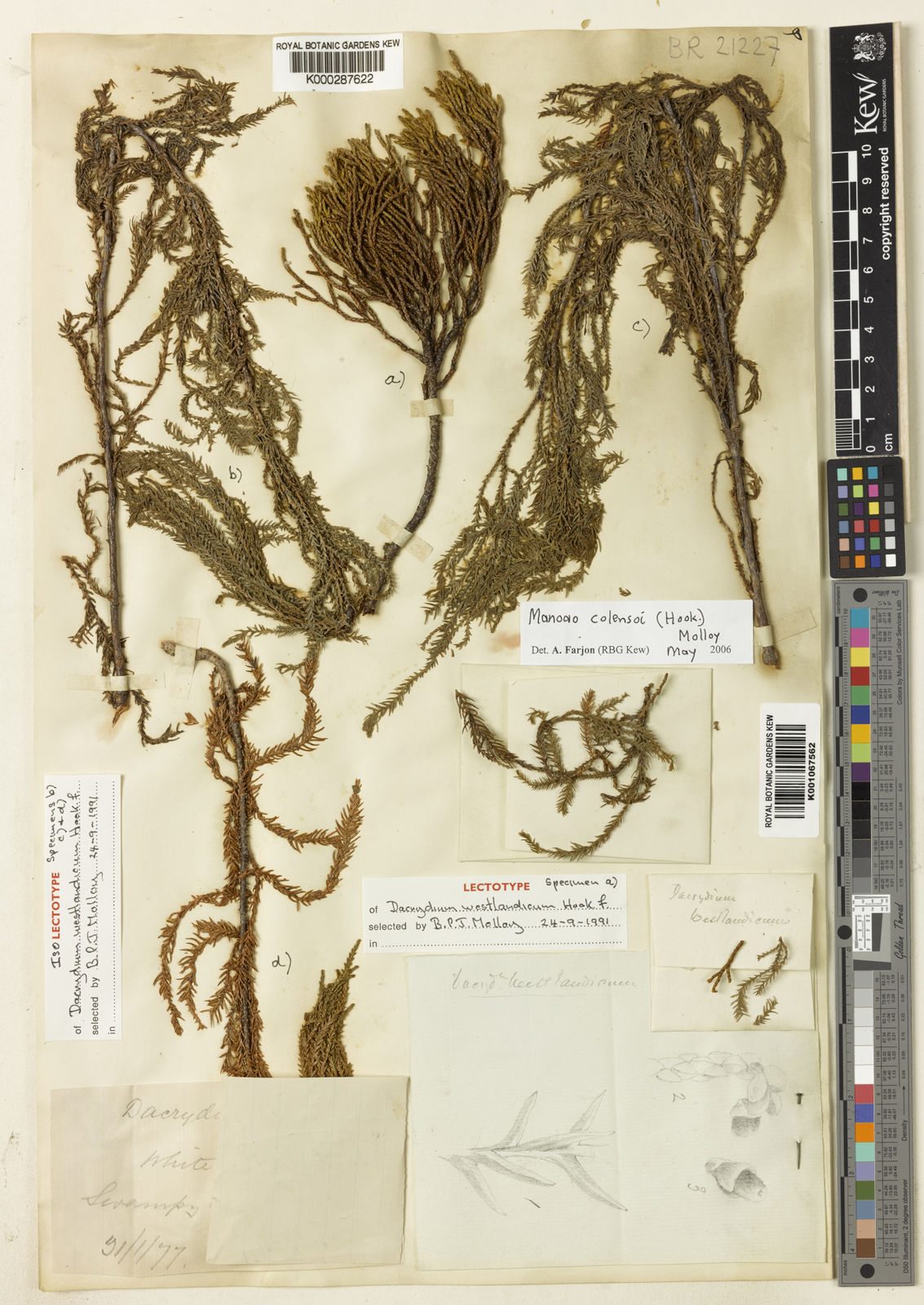
Manoao colensoi
Manoao ( ) is a monotypic genus in the family Podocarpaceae. The single species, M. colensoi, commonly known as manoao (from Māori), silver pine, Westland pine, or white silver pine, is endemic to New Zealand. Before 1996 it was classified in genus Dacrydium or Lagarostrobos, but has recently been recognised as a distinct genus; some botanists still treat it in Lagarostrobos on the basis that it is not phylogenetically distinct from that genus. In molecular phylogenetic analyses Manoao was found to be related to Parasitaxus (a parasitic and monotypic genus from New Caledonia) and Lagarostrobos
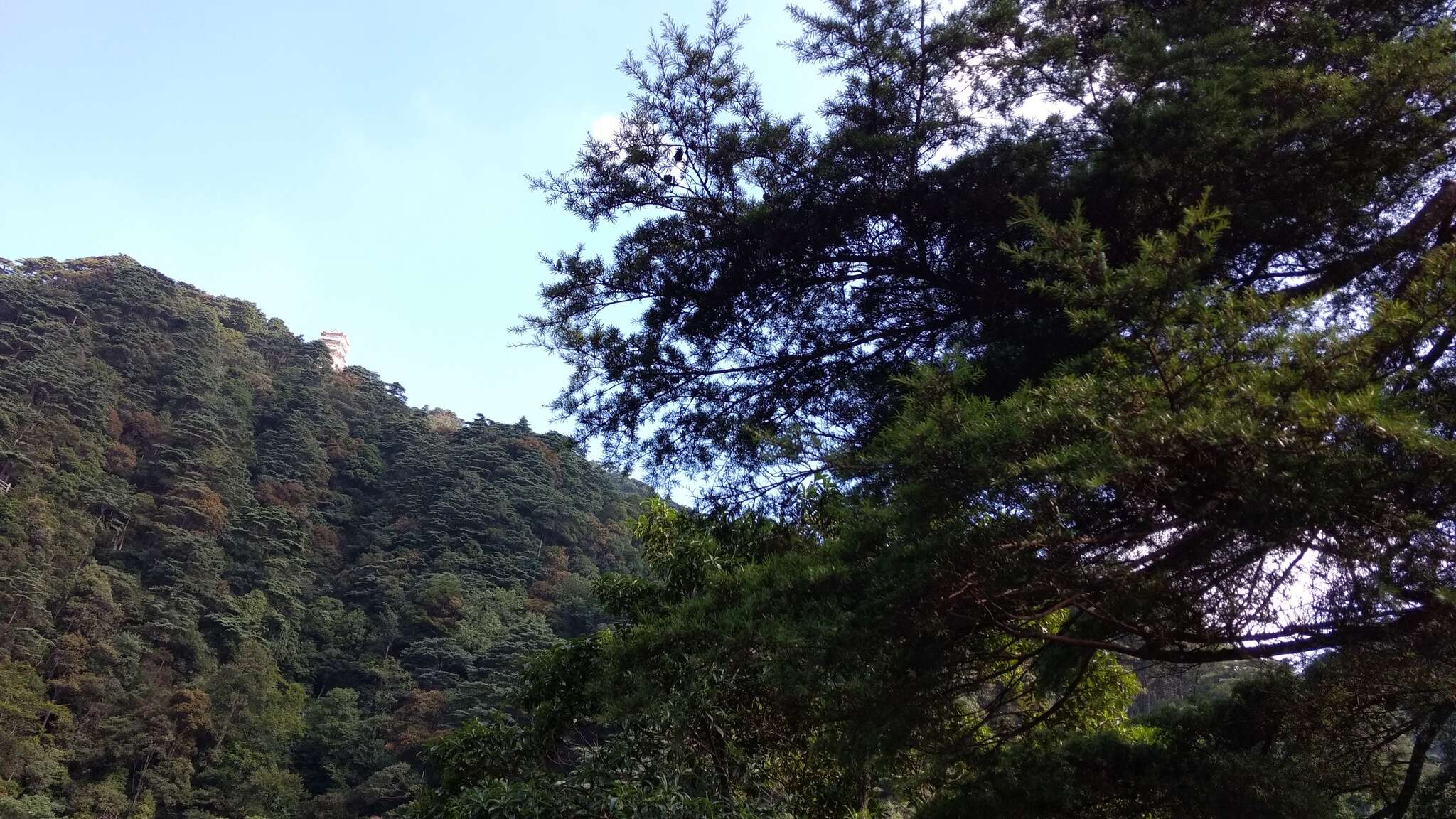
Nothotsuga
Nothotsuga is a genus of coniferous trees in the family Pinaceae endemic to China. Nothotsuga contains only one living species, Nothotsuga longibracteata, commonly known as the bristlecone hemlock or chang bao tie shan (), which is found in southeastern China, in southern Fujian, northern Guangdong, northeast Guangxi, northeast Guizhou, and southwest Hunan.

Pseudotaxus chienii
Pseudotaxus chienii, known commonly as the whiteberry yew (), is a species of plant in the yew family, Taxaceae. It is the sole species in the genus Pseudotaxus, but is closely related to the other yews in the genus Taxus. It is endemic to southern China, occurring in northern Guangdong, northern Guangxi, Hunan, Southwest Jiangxi, and southern Zhejiang.
.JPG)
Tetraclinis
300px|thumb|Tetraclinis forest at Al Hoceima National Park
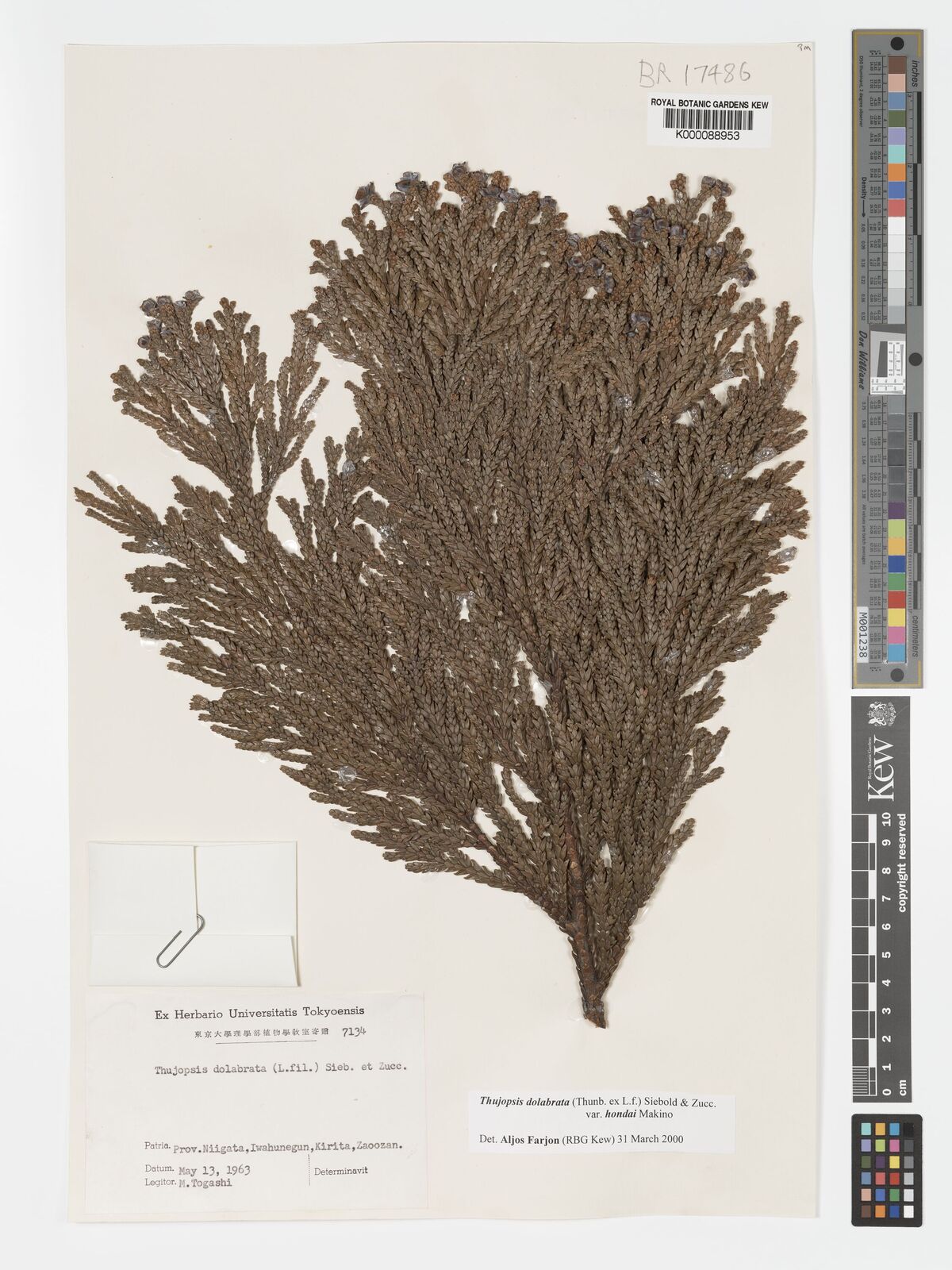
Thujopsis
Thujopsis () is a genus of conifers in the cypress family (Cupressaceae), the sole member of which is Thujopsis dolabrata. It is endemic to Japan, where it is known as asunaro (). It is similar to the closely related genus Thuja (arborvitae), differing in its broader, thicker leaves and cones.
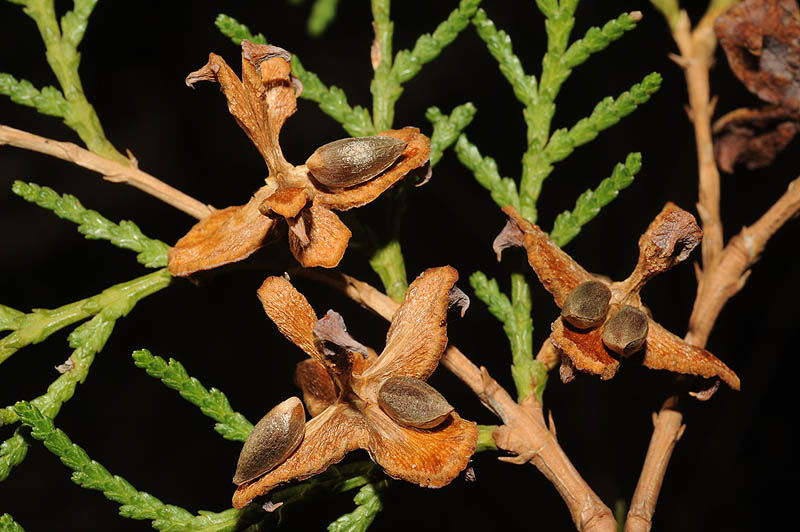
Platycladus
Platycladus is a monotypic genus of evergreen coniferous trees in the cypress family Cupressaceae, containing only one species, Platycladus orientalis, also known as Chinese thuja, Oriental arborvitae, Chinese arborvitae, biota or Oriental thuja. It is native to northeastern parts of East Asia and North Asia, but is also now naturalised as an introduced species in other regions of the Asian continent.
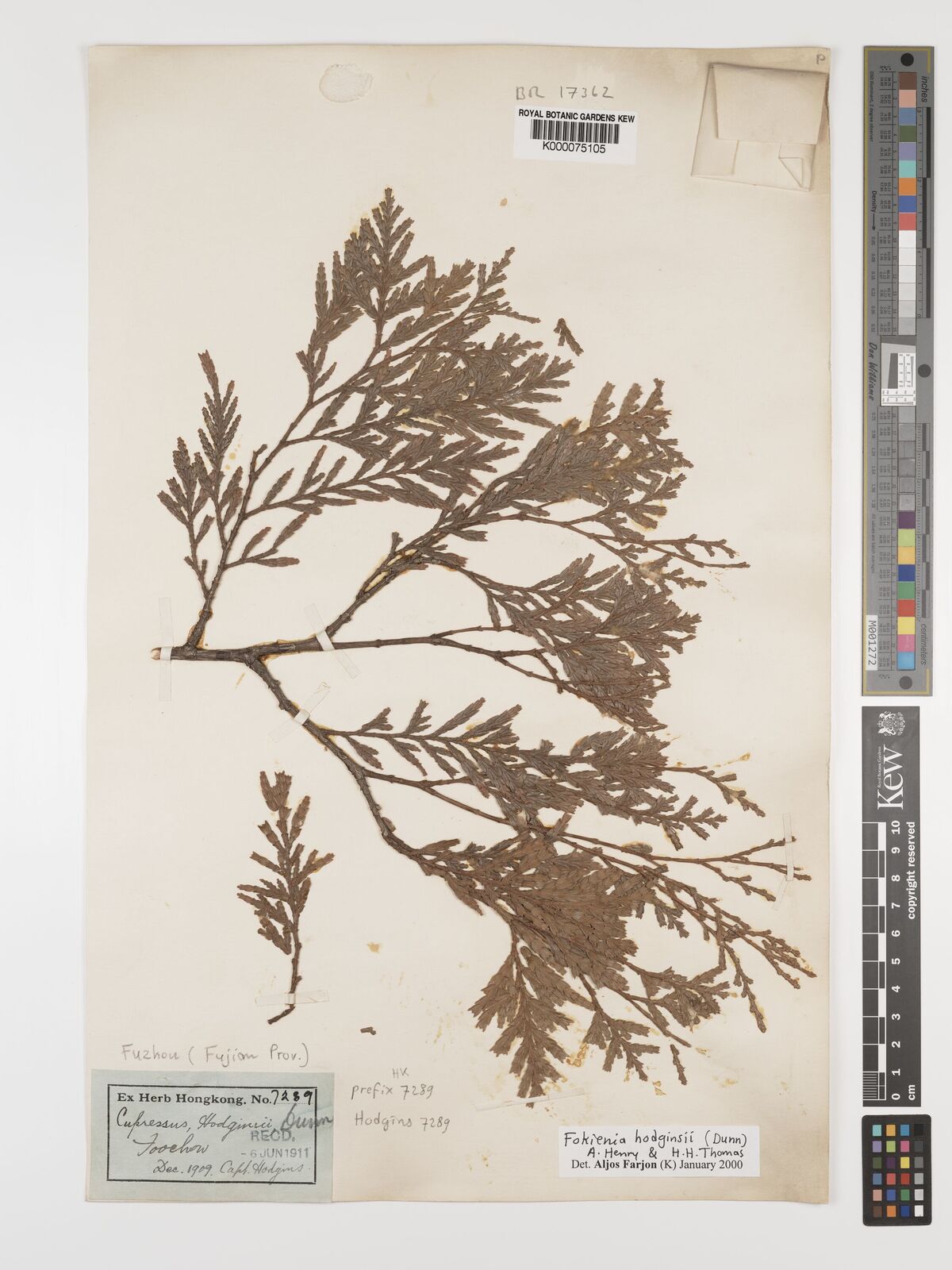
Fokienia
Fokienia is a genus of conifer tree belonging to the cypress family. In its characteristics, Fokienia is intermediate between the genera of Chamaecyparis and Calocedrus. Genetically Fokienia is much closer to Chamaecyparis, and not all researchers recognize Fokienia as a separate genus. The genus comprises only one living species, Fokienia hodginsii or Fujian cypress (; ), and one fossil species (Fokienia ravenscragensis).
Sundacarpus
Sundacarpus is a genus of conifers containing a single species Sundacarpus amarus, belonging to the family Podocarpaceae. Sundacarpus was designated a genus by Christopher Nigel Page in 1989; formerly it had been classified variously as a species of Podocarpus or of Prumnopitys. In Australia it is treated as Prumnopitys amara (Blume) de Laub.

Parasitaxus
Parasitaxus usta, also known in French as cèdre rabougri, is a rare species of conifer of the family Podocarpaceae, and the sole species of the genus Parasitaxus.