Category
page 1Monotypic Liliales genera

Lapageria rosea
Lapageria is a genus of flowering plants with only one known species, Lapageria rosea, commonly known as Chilean bellflower or copihue (, from Mapudungun kopiwe). Lapageria rosea is endemic to Chile and it is the national flower of this country. It grows in forests in the southern part of Chile, being part of the Valdivian temperate rainforests ecoregion flora.

Philesia magellanica
Philesia is a South American genus of flowering plants in the monocot family Philesiaceae first described as a genus in 1789. The native name is Coicopihue.
Petermannia cirrosa
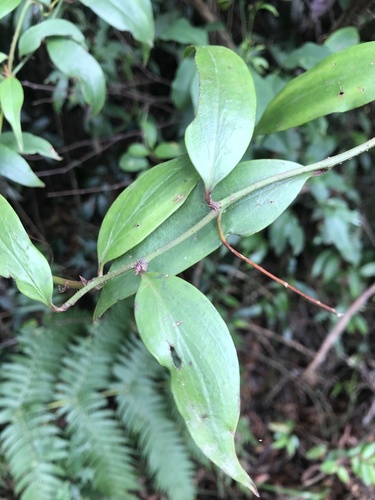
Petermannia is the sole genus of plants in the family Petermanniaceae. Petermannia cirrosa, the only species in the genus, is endemic to the states of New South Wales and Queensland in Australia. it is a prickly, wiry stemmed vine which grows to 6 metres in height and has lancelote, ovate or elliptic leaves with an acute apex. The flowers, which appear during summer, have reflexed reddish green or white tepals. These are followed by rounded red berries.
Sandersonia aurantiaca
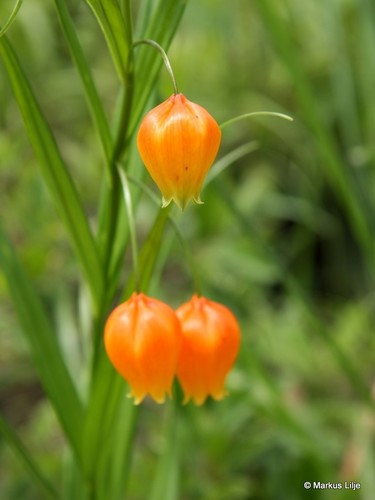
Sandersonia is a monotypic genus of rhizomatous plant, belonging to the family Colchicaceae, the single species Sandersonia aurantiaca being native to South Africa (the Cape Provinces, KwaZulu-Natal and the Northern Provinces) and Eswatini (Swaziland). Common names for S. aurantiaca include Christmas bells, golden lily of the valley, Chinese lantern lily and Chinese lantern bulb. S. aurantiaca is a perennial plant of trailing growth that can reach 30 inches in height. The flowers are yellow or orange.
Arachnitis uniflora
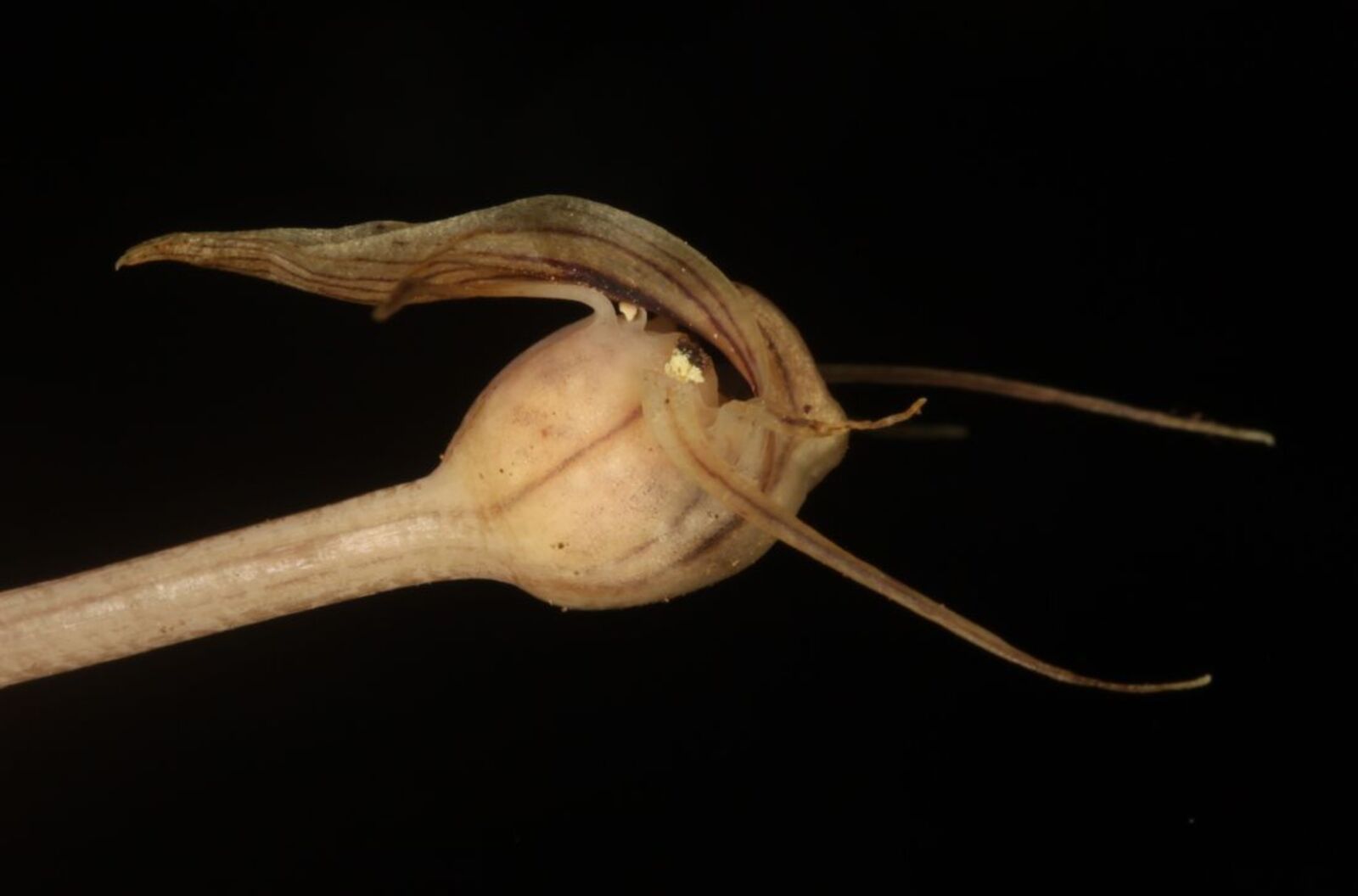
Arachnitis uniflora, the sole species in the genus Arachnitis, is a non-photosynthetic plant species in the family Corsiaceae. This species is mycoheterotrophic, and it obtains carbon from mycorrhizal fungi of the family Glomeraceae which are associated to its roots.
.jpg)
Amianthium muscitoxicum
Amianthium is a genus of perennial monocot plants found in eastern North America. The genus contains only one species, known as Amianthium muscitoxicum. Its common names include "fly poison" and "stagger grass". The species name muscitoxicum comes from a direct Latin translation of "fly poison": muscae = flies, toxicum = poison. The entire plant is poisonous to an array of species, including humans, and the bulb is particularly toxic. A. muscitoxicum was first recorded by Thomas Walter in his work Flora Caroliniana in 1788.
Zigadenus
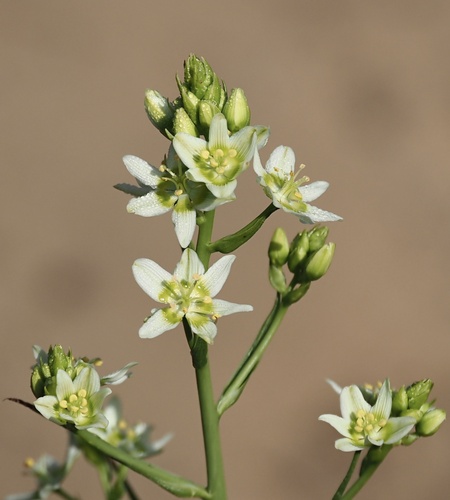
Zigadenus is a genus of flowering plants now containing only one species, Zigadenus glaberrimus, the sandbog death camas, found in the southeastern United States from Mississippi to Virginia. Around 20 species were formerly included in the genus, but have now been moved to other genera.
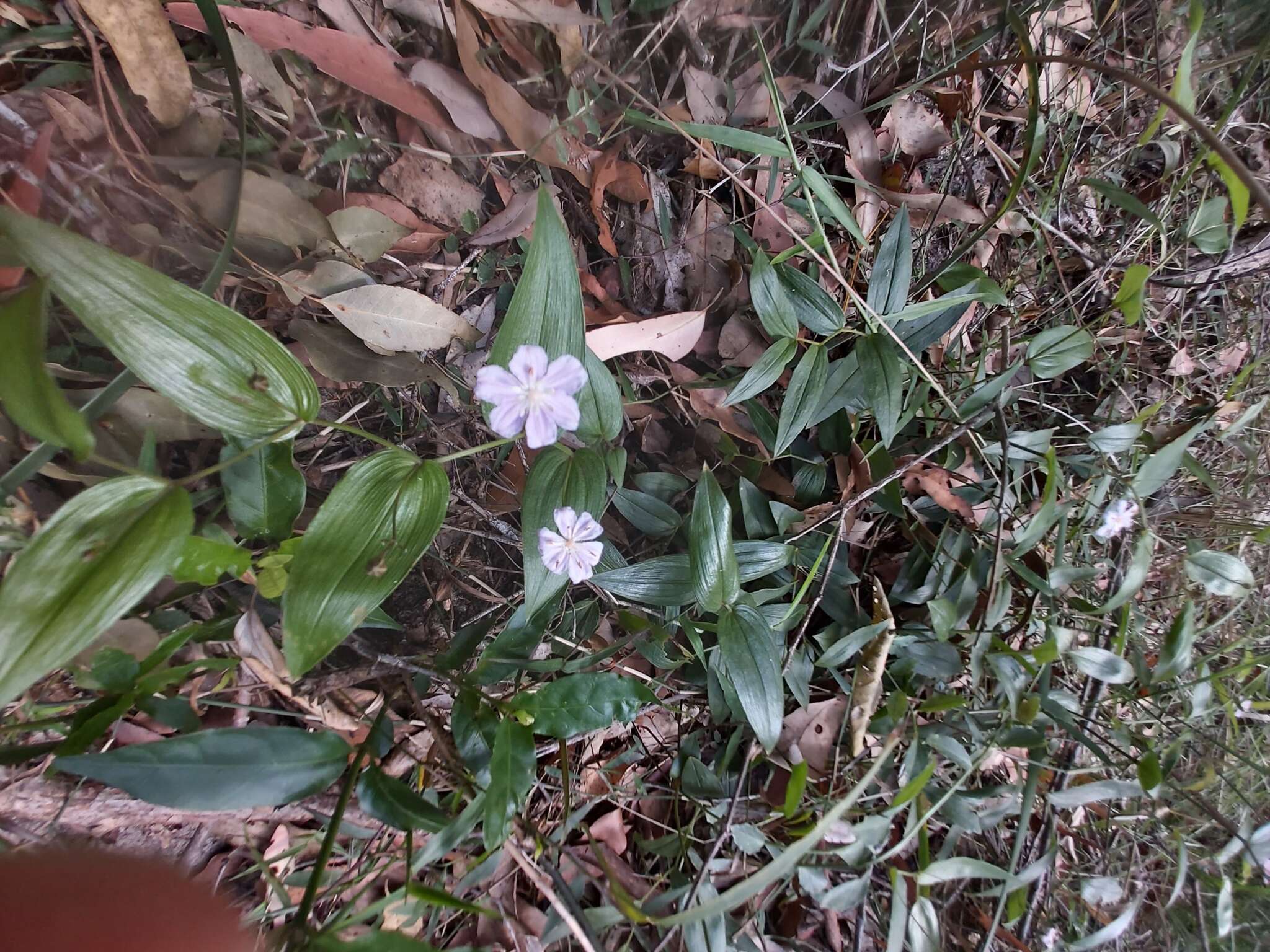
Tripladenia cunninghamii
Tripladenia is a monotypic genus of plants in the family Colchicaceae. The sole species is Tripladenia cunninghamii which is native to New South Wales and Queensland in Australia.

Chamaelirium
Chamaelirium is a genus of flowering plants containing the single species Chamaelirium luteum, commonly known as blazing-star, '''devil's bit, false unicorn, fairy wand, and helonias'''. It is a perennial herb native to the eastern United States. It can be found in a variety of habitats, including wet meadows and deciduous woodlands.

Medeola
Medeola virginiana, known as Indian cucumber, cucumber root, or Indian cucumber-root, is an eastern North American plant species in the lily family, Liliaceae. It is the only currently recognized plant species in the genus Medeola. It grows in the understory of forests. The plant bears edible rhizomes that have a mild cucumber-like flavor.
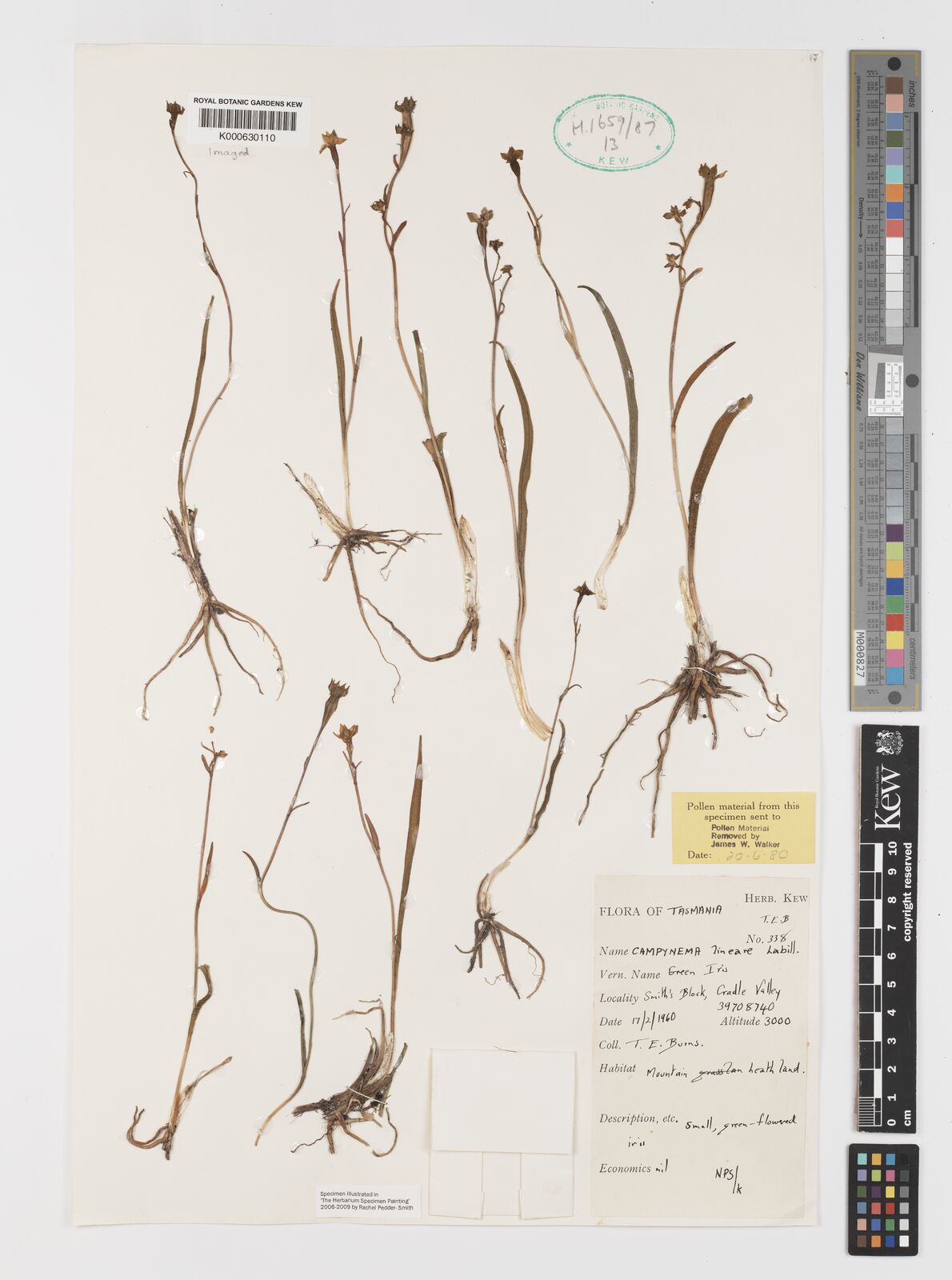
Campynema
Campynema is a genus in the family Campynemataceae first described in 1805. It contains only one known species (monotypic), Campynema lineare, endemic to the island of Tasmania in Australia. Its closest relative is Campynemanthe, endemic to New Caledonia, sole other genus of the family.
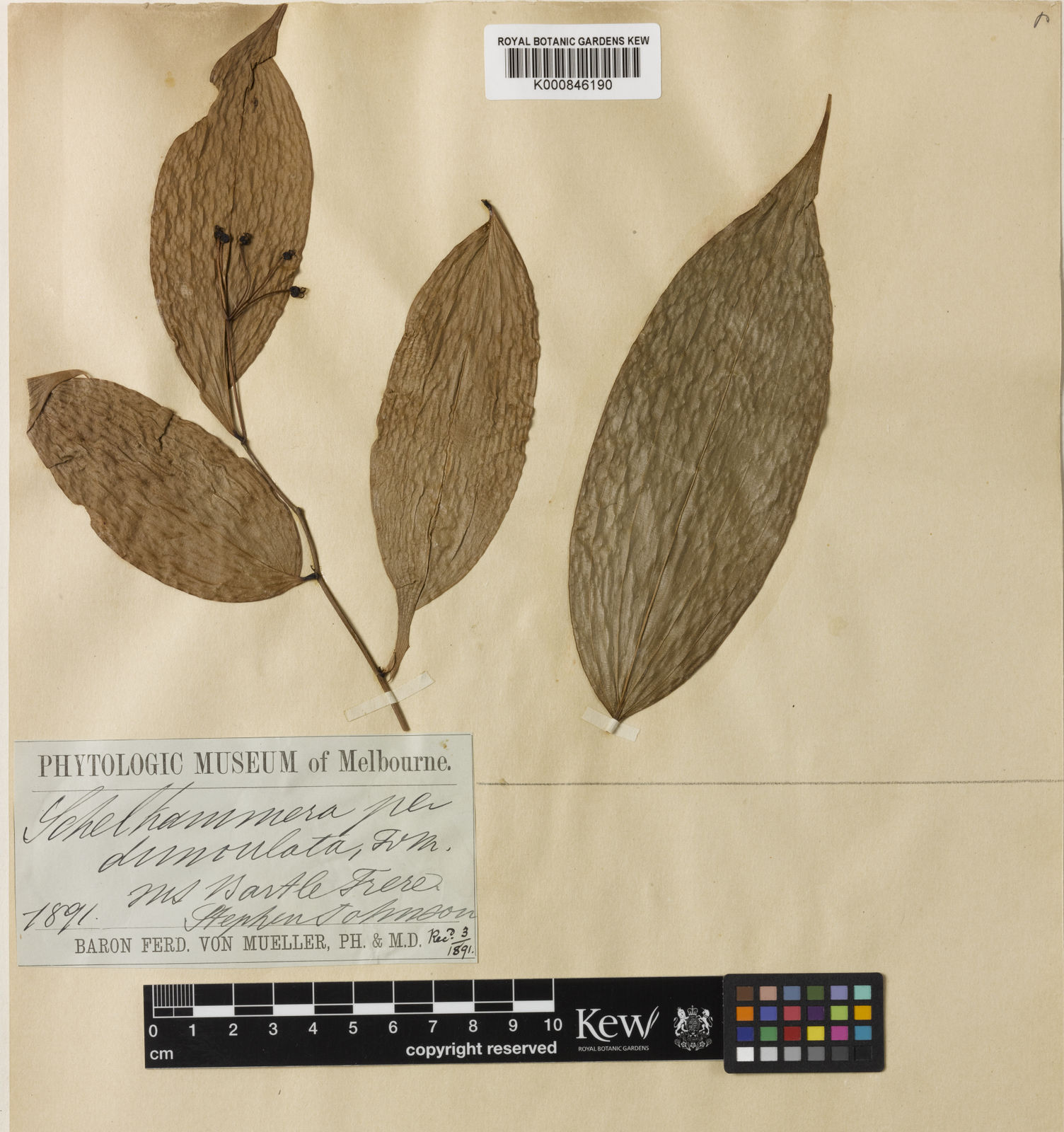
Kuntheria
Kuntheria is a plant genus related to Schelhammera. It contains one species, Kuntheria pedunculata (F.Muell.) Conran & Clifford, endemic to Queensland, Australia.
Baeometra
Baeometra is a genus in the family Colchicaceae containing a single species, Baeometra uniflora. It is native to South Africa, where it is commonly called beetle lily due to the dark markings on the tepals.
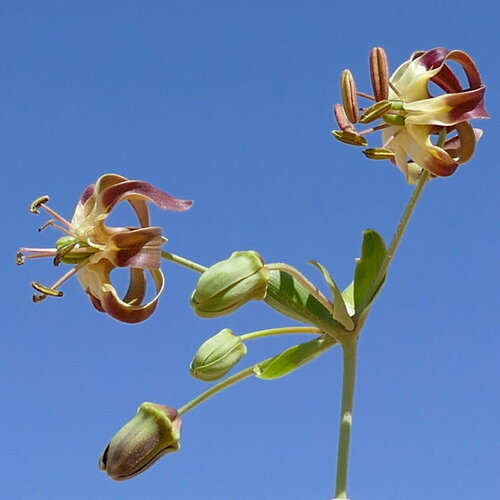
Hexacyrtis
Hexacyrtis, common name Namib lily, is a plant genus native to Namibia and the Cape Provinces of South Africa but cultivated elsewhere as an ornamental plant. At present (April 2014) only one species is recognized: Hexacyrtis dickiana Dinter. It bears an umbel with nodding flowers, the tepals recurved, red towards the tips but yellow near the center.
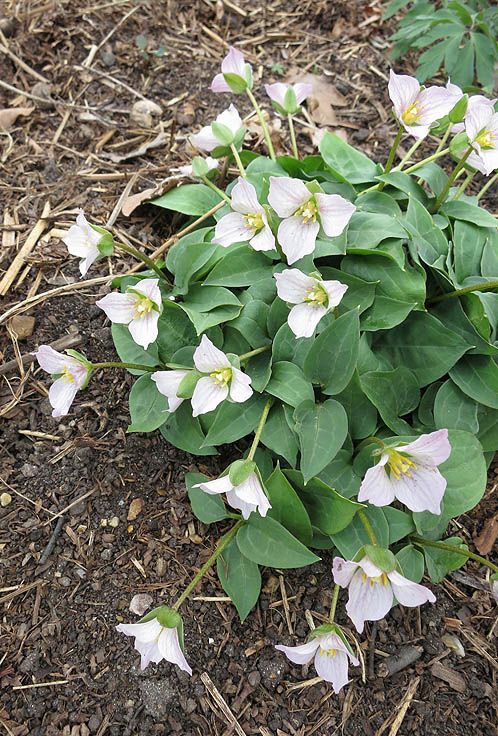
Pseudotrillium
Pseudotrillium is a monotypic genus in the bunchflower family Melanthiaceae. Its sole species, the flowering plant Pseudotrillium rivale, is commonly known as the brook wakerobin. It is endemic to the Siskiyou Mountains of southern Oregon and northern California. The Latin specific epithet rivale means "growing by streams", a reference to a preferred habitat.