Category
page 1Monotypic myriapod genera
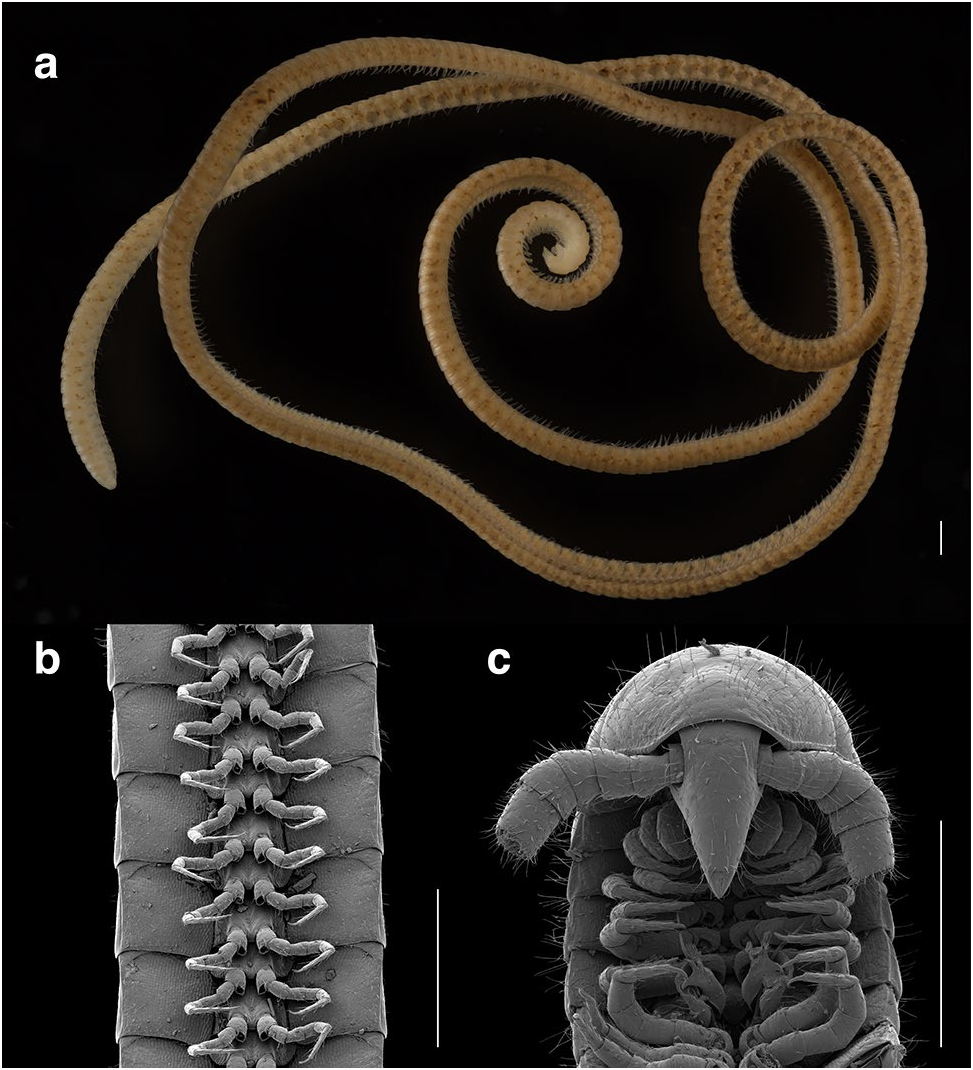
Eumillipes
Eumillipes is a genus of millipede in the family Siphonotidae. This genus contains a single species, Eumillipes persephone, known from the Eastern Goldfields of Western Australia. This millipede can have as many as 1,306 legs, which makes this species the animal with the most legs on Earth and the first millipede discovered to have 1,000 legs or more.
Chamberlinia
Chamberlinia is a monotypic genus of centipedes belonging to the family Oryidae. Centipedes in this genus are about 10 cm long, have 67 to 113 pairs of legs, and are found in Angola. The only species is Chamberlinia lineata.
Afrotaenia
Afrotaenia is a monotypic genus of centipedes with only one species, Afrotaenia machadoi, found in Angola. This species features trunk metasternites without patterned pore-fields, only scattered pores, and claws on the ultimate legs. The original description of this species is based on two rust-colored specimens, including a female measuring about 20 mm in length with 59 pairs of legs.

Gosodesmus claremontus
Gosodesmus is a genus of platydesmidan millipede, described by Ralph V. Chamberlin in 1922, that is widely distributed in the U.S. state of California. It is monotypic, being represented by the single species, Gosodesmus claremontus, commonly known as the pink feather boa millipede. Individuals vary in color from bright pink to coral, and may possess a black or purple dorsal stripe. Body length ranges from , with up to 81 body segments. Gosodesmus claremontus occurs on the Coast Ranges as well as the Sierra Nevada, and is often found within rotted wood, especially oaks. In 2020, chemist Dr. Ta
Brasilostreptus
Brasilostreptus is a genus of millipedes in the family Spirostreptidae. It contains a single species, Brasilostreptus gracilis.
Haploglomeris
Haploglomeris is a genus of pill millipede found in central Europe and the western Balkans. Currently, the genus contains only one known species, Haploglomeris multistriata.