Category
page 1Moses

Judaism
Judaism () is an Abrahamic, monotheistic, ethnic religion that comprises the collective spiritual, cultural, and legal traditions of the Jewish people. Religious Jews regard Judaism as their means of observing the Mosaic covenant, which they believe was established between God and the Jewish people. The religion is considered one of the earliest monotheistic religions.

Moses
In Abrahamic religions, Moses was the Hebrew prophet who led the Israelites out of slavery in the Exodus from Egypt. He is considered the most important prophet in Judaism and Samaritanism, and one of the most important prophets in Christianity, Islam, the Baháʼí Faith, and other Abrahamic religions. According to the Abrahamic scriptures, God dictated the Mosaic Law to Moses, which he wrote down and which formed part of the Torah.

Ten Commandments
biblical principles relating to ethics and worship
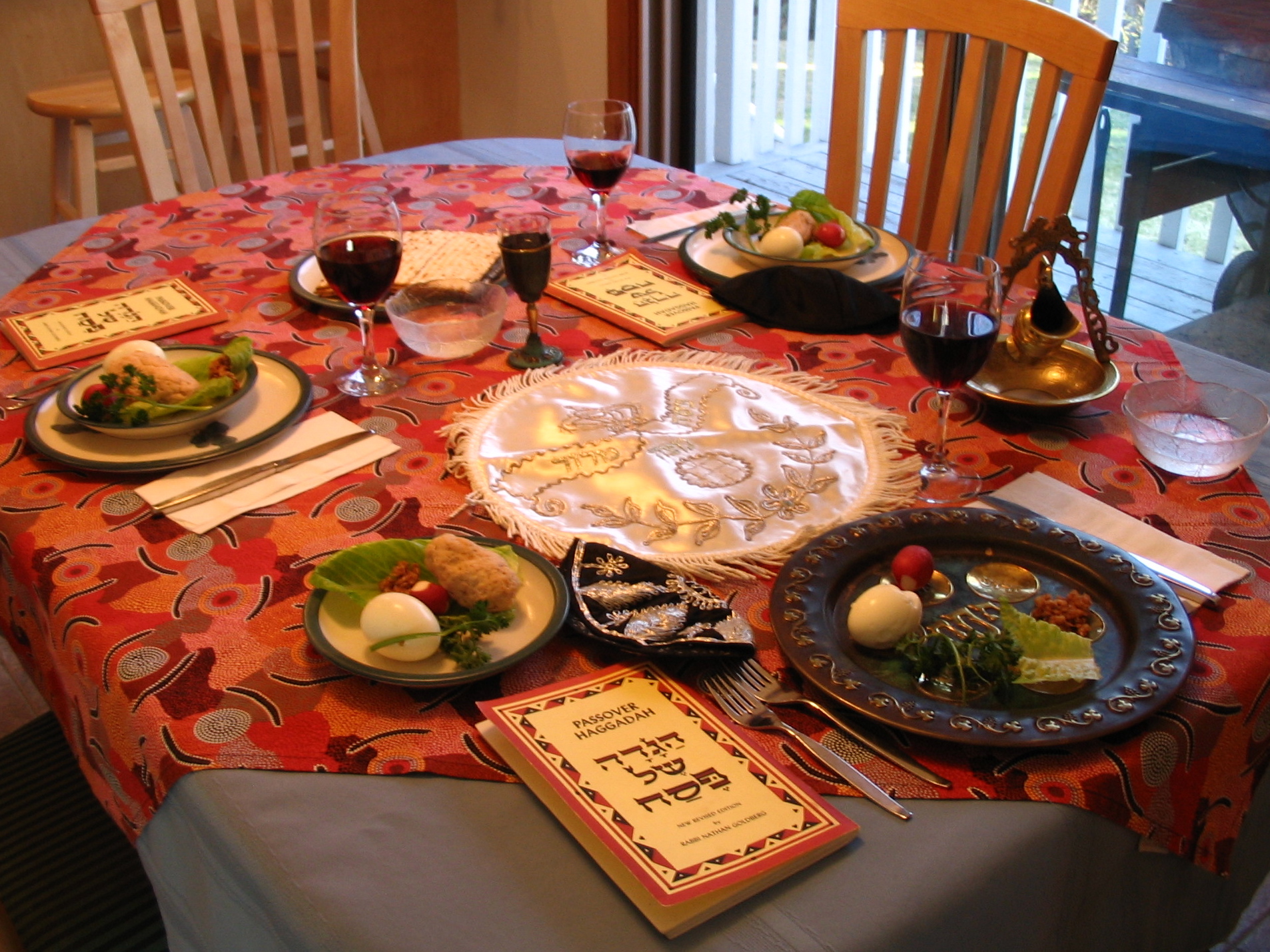
Passover
Passover, also called Pasch () or Pesach (; ), or Peysekh in Yiddish, is a major Jewish holiday and one of the Three Pilgrimage Festivals. It celebrates the Exodus of the Israelites from slavery in Egypt.
.jpg)
Ashura
Ashura (, ), also more formally Yawm Ashura (), is a day of commemoration in Islam. It occurs annually on the tenth of Muharram, the first month of the Islamic calendar.

Mount Sinai
mountain in the Sinai Peninsula of Egypt

Thoth
Thoth (from , borrowed from , , the reflex of "[he] is like the ibis") is an ancient Egyptian deity. In art, he was often depicted as a man with the head of an ibis or a baboon, animals sacred to him. His feminine counterpart is Seshat, and his wife is Ma'at. He is the god of the Moon, wisdom, knowledge, writing, hieroglyphs, science, magic, art, and judgment.
%20sura%20from%20the%20Qur%E2%80%99an%20-%20Google%20Art%20Project.jpg)
Al-Kahf
thumb|upright=1.25|Surah Al-Kahf copied by Ottoman Empire|Ottoman calligrapher Kadı Mahmud Efendi (d. 1575). [[Muhaqqaq, thuluth and reqa script. Sakıp Sabancı Museum]]
upright=1.25|thumb|Central illumination of the Royal Terengganu Quran dated 1871. According to Malay tradition Al-Kahf verse 19 is accepted as the centre word of the Quran and Malay Qurans are often decorated in this place. [[Islamic Arts Museum Malaysia]]
%20with%20marginal%20medallion%2C%20Walters%20Art%20Museum%20Ms.%20568%2C%20fol.21a.jpg)
Ta-Ha
thumb|Illuminated Manuscript Koran, Illuminated heading for chapter 20 (Sūrat Tā Hā) with marginal medallion, Walters Art Museum Ms.
Ṭā Hā (; ) is the 20th chapter (sūrah) of the Qur'an with 135 verses (āyāt). It is named "Ṭā Hā" because the chapter starts with the Arabic ḥurūf muqaṭṭaʿāt (disjoined letters) (Ṭāhā), which is widely mistaken to be one of the names of the Islamic prophet Muhammad, but is just one of the many unlinked letters at the beginning of many other surahs of the Quran.

Transfiguration of Jesus
episode in the life of Jesus
%20-%20Walters%20W55565B%20-%20Full%20Page.jpg)
An-Namli
An-Naml () is the 27th chapter (sūrah) of the Qur'an with 93 verses (āyāt).

Aṭ-Ṭūr
At-Tur (, ; The Mount) is the 52nd chapter (sūrah) of the Quran with 49 verses (ayat). The surah opens with the oath of Allah swearing by the Mount, which some believe is Mount Sinai, where the Tawrat was revealed to Musa. The chapter takes its name from "the mount" (ṭūr) mentioned in verse 1.

golden calf
idol worshipped by the Israelites in the Book of Exodus and the First Book of Kings

Plagues of Egypt
ten epidemics sent down on Egypt according to Exodus chapters 7 to 10

Moses in Islam
one of the most important prophets in Islam

Balaam
thumb|upright=1.4|Balaam and the angel, painting from Gustav Jäger (painter)|Gustav Jaeger, 1836
Balaam (; ; ), son of Beor, was, according to the Bible, a gentile prophet and diviner who lived in Pethor, a place identified with the ancient city of Pitru, thought to have been located between the region of Iraq and northern Syria in what is now southeastern Turkey. According to chapters 22–24 of the Book of Numbers, he was hired by King Balak of Moab to curse Israel, but instead he blessed the Israelites, as dictated by God. Subsequently, the plan to entice the Israelites into idol worshi
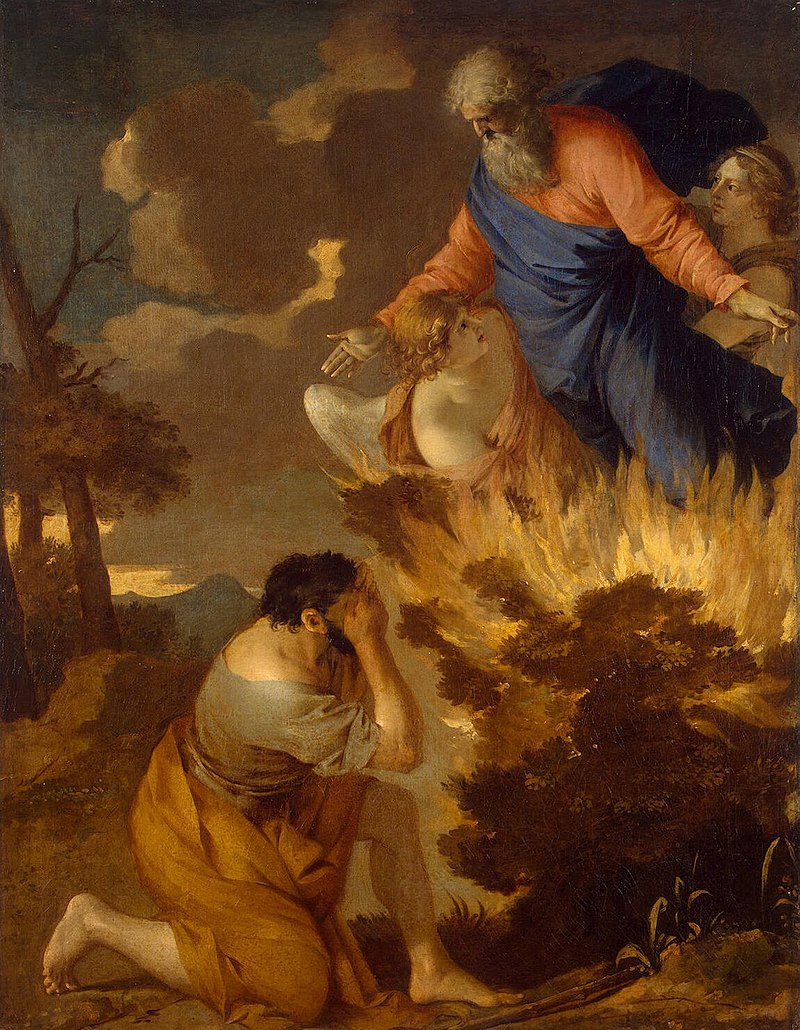
Burning bush
biblical episode where Moses was appointed by God to lead the Israelites into Canaan
The Exodus
story of the freeing of the Israelites from bondage in Egypt, narrated in the Torah
Harun
Islamic prophet

Nehushtan
In the biblical Books of Kings (2 Kings 18:4; written c. 550 BC), the Nehushtan (; ) is the bronze image of a serpent on a pole. The image is described in the Book of Numbers, where Yahweh instructed Moses to erect it so that the Israelites who saw it would be cured and be protected from dying from the bites of the "fiery serpents", which Yahweh had sent to punish them for speaking against him and Moses ().
Biblical Mount Sinai
Mount Sinai in bible

Samaritanism
Samaritanism (; ) is an Abrahamic monotheistic ethnic religion. It comprises the collective spiritual, cultural, and legal traditions of the Samaritan people, who often prefer to be called Israelite Samaritans. Samaritans originated from the Hebrews and Israelites and began to emerge as a relatively distinct group after the Kingdom of Israel was conquered by the Neo-Assyrian Empire during the Iron Age. Keeping the Patriarchal and Mosaic covenant as specified in the Samaritan Torah (Biblical Hebrew: תּוֹרָה, 'Law') is central to the Samaritans' continuity as an Indigenous Heritage in the Holy L
Musaeus of Athens
legendary ancient poet and musician
Staff of Moses
Artifact/relic belonging to Moses; mentioned in the Bible and Quran.
Hur
biblical character; companion of Moses and Aaron (Exod. 17:10–12)
Ben Ezra Synagogue
building in Egypt
Mount Horeb
mountain at which the book of Deuteronomy in the Hebrew Bible states that the Ten Commandments were given to Moses

Moses and Monotheism
essay by Sigmund Freud

Dathan
thumb|220px|The Death of Korah, Dathan and Abiram, by Gustave Doré, 1865.
Dathan ( Dāṯān) was an Israelite mentioned in the Old Testament as a participant of the Exodus.
Nabi Musa
local Development Committee in Jericho Governorate and Muslim holy site

Song of the Sea
poem in the Book of Exodus (Exod. 15:1–18)
Psalm 106
piece in the biblical Book of Psalms

Battle of Refidim
battle in the Book of Exodus
Reed Sea
waterbody mentioned in Exodus, which the Israelites are said to have crossed miraculously
Numbers 31
thirty-first chapter of Numbers in the Hebrew and Christian Bible
Ark of bulrushes
the boat of the infant Moses
The Twelve Spies
12 Tribes of Israel before entering the Promise Land
Osarseph
Osarseph or Osarsiph () is a legendary figure of Ancient Egypt who has been equated with Moses. According to Josephus, the 1st century CE Jewish polemicist, the story of Osarseph was recounted by the Ptolemaic Egyptian priest Manetho in his Aegyptiaca (first half of the 3rd century BC). Manetho's work is lost, but Josephus relates extensively from what he maintains are epitomes of the original.
Mosaic authorship
tradition that Moses was the author of the Torah; denied by the majority of scholars
The Exodus: sources and parallels
sources and parallels of the Exodus narrative