Passover
Sign in to saveAlso known as Pesach, Feast of the Passover, Jewish Feast of the Passover
Passover, also called Pasch () or Pesach (; ), or Peysekh in Yiddish, is a major Jewish holiday and one of the Three Pilgrimage Festivals. It celebrates the Exodus of the Israelites from slavery in Egypt.
Passover is a major Jewish holiday that commemorates the Exodus, when the Israelites escaped from slavery in Egypt. It is one of the Three Pilgrimage Festivals and remains a significant observance in Jewish tradition.
AI-generated from the Wikipedia summary — may contain errors.
Wikipedia views (30d)
42,816 totalvia Wikimedia Pageviews API
Key facts
- Holiday.image
- A Seder table setting.jpg
- Holiday.caption
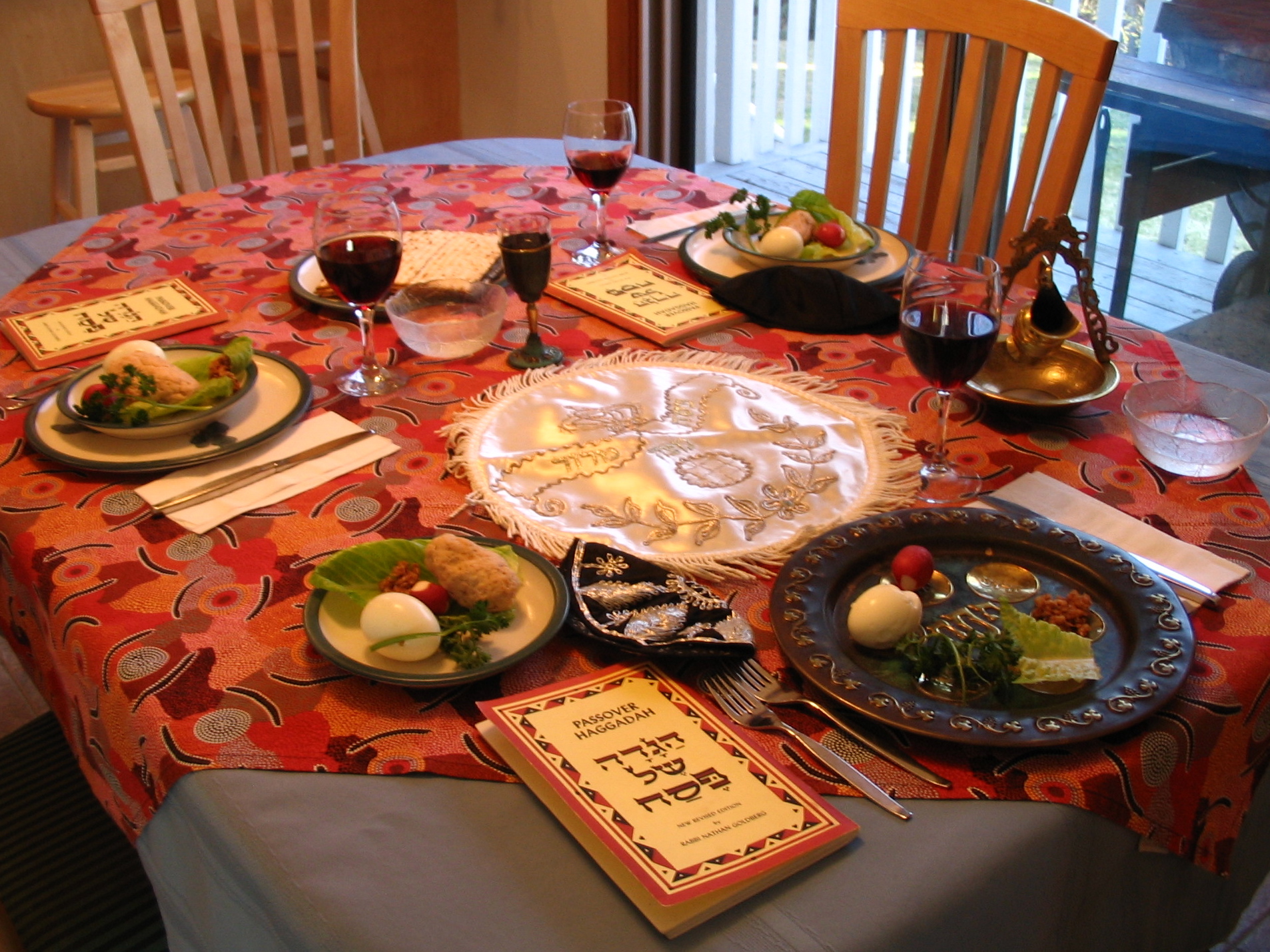
- A table set up for a Passover Seder
- Holiday.holiday_name
- Passover
- Holiday.official_name
- Pesach –
- Holiday.type
- Jewish
- Holiday.longtype
- Jewish (religious and cultural)
- Holiday.begins
- 15 Nisan
- Holiday.ends
- 21 Nisan (22 Nisan in traditional Diaspora communities)
- Holiday.celebrations
- Passover Seder
- Holiday.date{{LASTYEAR}}
- (8 days)
- Holiday.date{{CURRENTYEAR}}
- (8 days)
- Holiday.date{{NEXTYEAR}}
- (8 days)
- Holiday.date{{NEXTYEAR|2}}
- (8 days)
- Holiday.relatedto
- Shavuot ("Festival of Weeks"), which follows 49 days from the second night of Passover.
via Wikipedia infobox
Wikidata facts
- Instance of
- holiday
- Subclass of
- Jewish holiday
- Duration
- 7
- Image
- Pessach Pesach Pascha Judentum Ungesaeuert Seder datafox.jpg
Show 9 more facts
- Commons category
- Passover
- topic's main category
- Category:Passover
- month of the year
- Nisan
- commemorates
- The Exodus
- described by source
- New International Encyclopedia
- native label
- פסח
- topic has template
- Template:Passover footer
- on focus list of Wikimedia project
- Wikipedia:Vital articles/Level/4
- foods traditionally associated
- matzah brei
Sources (2)
via Wikidata · CC0
~49 min read
Encyclopedic overview
42 sectionsContents
- Etymology
- Origins and theories
- Apotropaic ritual
- Barley harvest plus Exodus narrative
- Biblical narrative
- In the Book of Exodus
- The Passover in other biblical passages
- In extra-biblical sources
- Date and duration
- Prohibition of chametz
- Removing all leaven (''chametz'')
- Interpretations for abstinence from leaven or yeast
- Kitniyot
- Gebrochts
- Sale of leaven
- Separate kosher for Passover utensils and dishes
- <span class="anchor" id="Formal search for chametz"></span> Search for leaven
- Blessing for search and nullification of hametz
- Morning of 14th of Nisan
- Fast of the Firstborn
- Burning and nullification of leaven
- Not eating matzah from sunrise until sunset (day before Passover)
- Passover sacrifice
- Matzah
- Passover seder
- Maror
- Four cups of wine
- The four questions and participation of children
- Afikoman
- Concluding songs
- Hallel
- Counting of the Omer
- Chol HaMoed: The intermediate days of Passover
- Seventh day of Passover
- Second Passover
- Notable events on Passover
- Traditional foods
- Related celebrations, sermons, liturgy, and song in other religions
- Environmental links
- See also
- References
- External links
Passover, also called Pasch () or Pesach (; ), or Peysekh in Yiddish, is a major Jewish holiday and one of the Three Pilgrimage Festivals. It celebrates the Exodus of the Israelites from slavery in Egypt.
According to the Book of Exodus, God commanded Moses to tell the Israelites to slaughter a lamb and mark their doorframes with its blood, in addition to instructions for consuming the lamb that night. For that night, God would send the Angel of Death to bring about the tenth plague, in which he would smite all the firstborn in Egypt. But when the angel saw the blood on the Israelites' doorframes, he would pass over their homes so that the plague should not enter (hence the name). The story is part of the broader Exodus narrative, in which the Israelites, while living in Egypt, are enslaved en masse by the Pharaoh to suppress them; when Pharaoh refuses God's demand to let them go, God sends ten plagues upon Egypt. After the tenth plague, Pharaoh permits the Israelites to leave. Scholars widely believe that the origins of Passover predate the biblical Exodus, with theories suggesting it evolved from earlier semi-nomadic or pre-Israelite rituals and was later transformed through religious and cultic traditions.
Excerpted from Wikipedia’s “Passover” article, available under the CC BY-SA 4.0 licence.
Gallery (45)
Available in 91 languages
- Español
- Français
- Deutsch
- 中文
- 日本語
- Русский
- Português
- Italiano
- العربية
- Afrikaans
- Albanian
- Armenian
- Asturian
- Azerbaijani
- Bahasa Indonesia
- Bangla
- Bashkir
- Basque
Show 72 more
- Bavarian
- be_x_old
- Belarusian
- Bikol
- Bosnian
- Breton
- Bulgarian
- Catalan
- Cebuano
- Central Kurdish
- Croatian
- Czech
- dag
- Danish
- Egyptian Arabic
- Esperanto
- Estonian
- Filipino
- Finnish
- Friulian
- Galician
- Georgian
- Greek
- Hebrew
- Hungarian
- Iban
- Icelandic
- Interlingua
- Irish
- Khmer
- Kyrgyz
- Ladino
- Latin
- Latvian
- Lithuanian
- Lombard
- Macedonian
- Malagasy
- Malay
- Malayalam
- Mazanderani
- Mingrelian
- Mongolian
- Nederlands
- Norwegian
- Norwegian Nynorsk
- Polski
- Romanian
- Serbian
- Serbian (Latin)
- simple
- Sinhala
- Slovak
- Slovenian
- Svenska
- Swahili
- Tamil
- Telugu
- Tiếng Việt
- Türkçe
- Ukrainian
- Urdu
- Waray
- Welsh
- Western Panjabi
- Wu Chinese
- Yiddish
- Zaza
- zh_yue
- فارسی
- ไทย
- 한국어
via Wikidata sitelinks · CC0