Category
page 1Motivational theories

need
A need is a deficiency at a point of time and in a given context. Needs are distinguished from wants. In the case of a need, a deficiency causes a clear adverse outcome: a dysfunction or death. In other words, a need is something required for a safe, stable and healthy life (e.g. air, water, food, land, shelter) while a want is a desire, wish or aspiration. When needs or wants are backed by purchasing power, they have the potential to become economic demands.

hedonism
thumb|alt=Diagram with the texts "pleasure", "motivation", "value", and "morality", together with arrows|Different forms of hedonism address the role of pleasure in motivation, value, and morality.
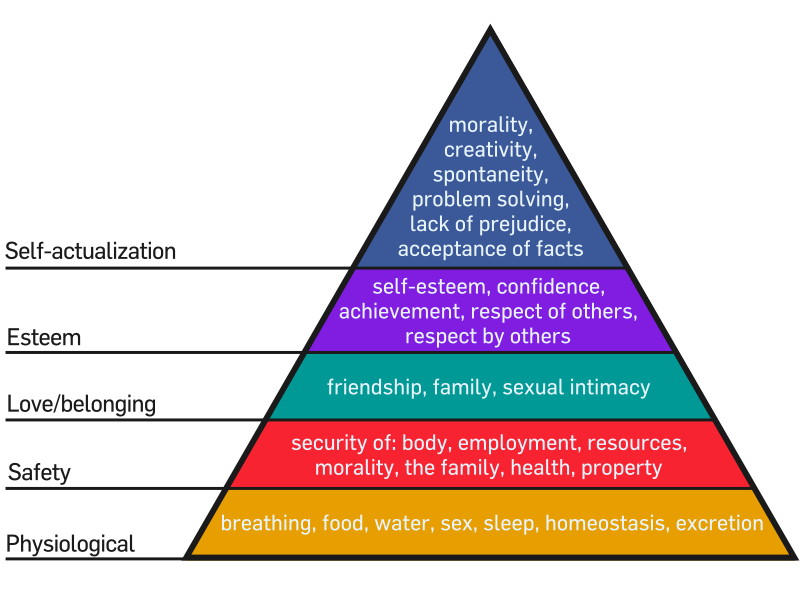
Maslow's hierarchy of needs
theory in developmental psychology proposed by Abraham Maslow, comprising a five-tier model of human needs: physiological, safety, love and belonging, esteem, and self-actualization

cognitive dissonance
mental stress or discomfort experienced by an individual who holds two or more contradictory beliefs, ideas, or values at the same time
Theory X and Theory Y
theories of human motivation
self-determination theory
cognitive theory of human motivation and personality
two-factor theory
psychological theory of motivation
expectancy theory
psychological theory
expected utility hypothesis
hypothesis that the subjective value of a gamble is the statistical expectation of one’s valuations (which may differ from dollar values) of the gamble’s outcomes
ERG theory
theory
Ben Franklin effect
psychological phenomenon
Equity theory
economics concept
Holland Codes
theory
need for achievement
person's desire for significant accomplishment
need theory
theory of human achievement and motivation by David McClelland (1961)
Job characteristic theory
theory of work design
preference falsification
stating a preference not truly held
Achievement ideology
Concept in sociology
Clayton Alderfer
psychologist (1940–2015)
regulatory focus theory
questionnaire designed to measure prevention focus and promotion focus
expectancy-value theory
theory
Knowledge falsification
deliberate misrepresentation of knowledge
goal orientation
sources of motivation