Category
page 1Mythological rape victims

Noah

Hera
thumb|right|360px|Iris (on the left) with Zeus and Hera, east frieze of the Parthenon, [[British Museum.]]

Demeter
In ancient Greek religion and mythology, Demeter (; Attic: Dēmḗtēr ; Doric: Dāmā́tēr) is the Olympian goddess of the harvest and agriculture, presiding over crops, grains, food, and the fertility of the earth. Although Demeter is mostly known as a grain goddess, she also appeared as a goddess of health, birth, and marriage, and had connections to the Underworld. She is also called Deo ( Dēṓ).

Odysseus
In Greek and Roman mythology, Odysseus (; , ), also known by the Latin variant Ulysses (, ; ), is a legendary Greek king of Ithaca and the hero of Homer's epic poem, the Odyssey. Odysseus also plays a key role in Homer's Iliad and other works in that same epic cycle.

Helen of Troy
daughter of Zeus in Greek mythology

Medusa
In Greek mythology, Medusa (; ), also called Gorgo () or the Gorgon, was one of the three Gorgons. Medusa is generally described as a woman with living snakes in place of hair; her appearance was so hideous that anyone who looked upon her was turned to stone. Medusa and her Gorgon sisters Euryale and Stheno were usually described as daughters of Phorcys and Ceto; of the three, only Medusa was mortal.

Rhea
female Titan in Greek mythology, mother of Zeus and mother of Hera
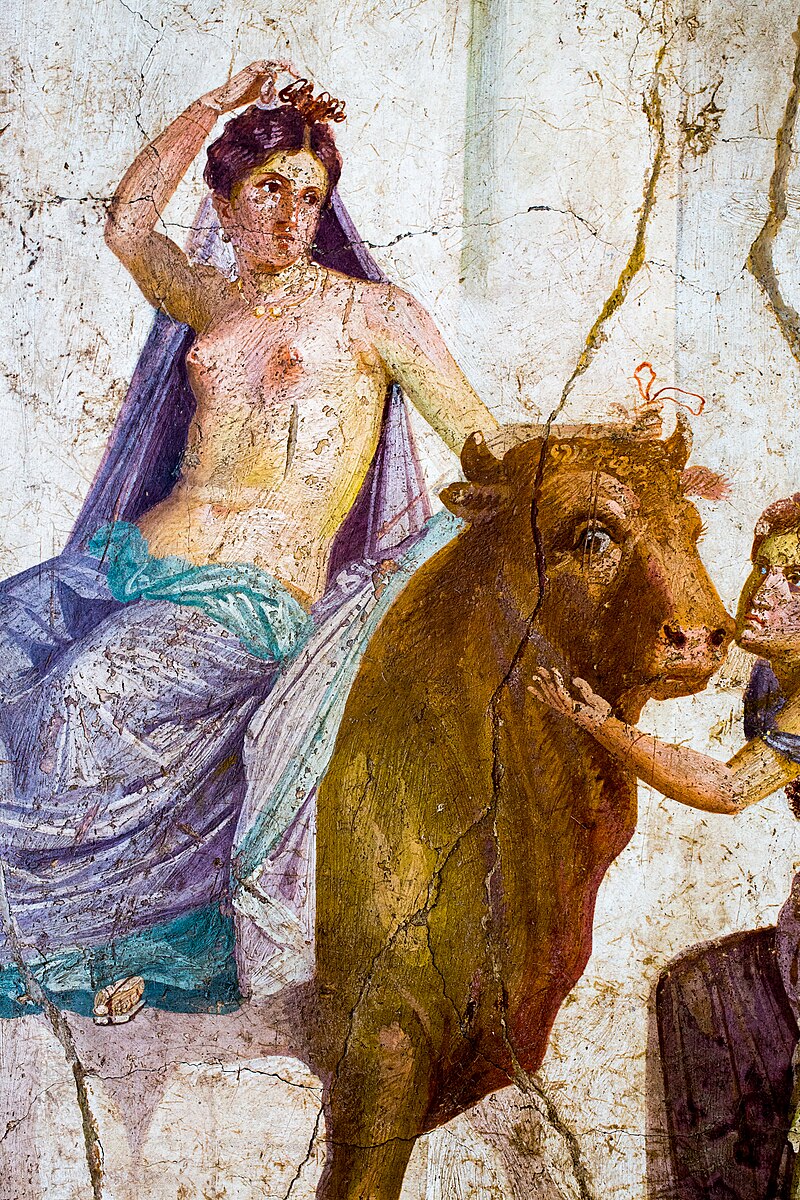
Europa
Phoenician character in Greek mythology, daughter of Agenor

Lot
Biblical and Quranic figure who had incestual daughters

Ganymede
son of Tros in Greek mythology

Cassandra
In Greek mythology, Cassandra, also spelled Kassandra or Casandra, (; , , or referred to as Alexandra; ) was a Trojan priestess dedicated to the god Apollo and fated by him to utter true prophecies, but never be believed. Cassandra lived through the Trojan War and survived the sack of the city, but was murdered by Clytemnestra and Aegisthus when Agamemnon brought her to Mycenae as a pallake.
.jpg)
Nemesis
In ancient Greek religion and myth, Nemesis (; ), also called Rhamnousia (or Rhamnusia; ), was the goddess who personified retribution for the sin of hubris: arrogance before the gods.

Bathsheba
Bathsheba (; , ) was an Israelite queen consort. According to the Hebrew Bible, she was the wife of Uriah the Hittite and later of David, with whom she had all of her five children. Her status as the mother of Solomon, who succeeded David as monarch, made her the Gebirah () of the Kingdom of Israel.

Io
nymph seduced by Zeus in Greek mythology

Tefnut
Tefnut ( ; ) is a deity in Ancient Egyptian religion, the feminine counterpart of the air god Shu. Her mythological function is less clear than that of Shu, but Egyptologists have suggested she is connected with moisture, based on a passage in the Pyramid Texts in which she produces water, and on parallelism with Shu's connection with dry air. She was also one of the goddesses who could function as the fiery Eye of Ra.

Leda
daughter of Thestius in Greek mythology

Metis
Oceanid of Greek mythology, goddess of wisdom, daughter of Oceanid and Tethys

Alkmene
In Greek mythology, Alcmene ( ; ) or Alcmena ( ; ; ; meaning "strong in wrath") was the wife of Amphitryon, by whom she bore two children, Iphicles and Laonome. She is best known as the mother of Heracles, whose father was the god Zeus. Alcmene was also referred to as Electryone (), a patronymic name as a daughter of Electryon.

Proserpina
Proserpina ( ; ) or Proserpine ( ) is an ancient Roman goddess whose iconography, functions and myths are virtually identical to those of the Greek Persephone. Proserpina replaced or was combined with the ancient Roman fertility goddess Libera, whose principal cult was housed in a temple atop Rome's Aventine Hill, which she shared with the grain-goddess Ceres and the wine god Liber (Liber Pater).

Callisto
nymph in Greek mythology
.jpg)
Lucretia
According to Roman tradition, Lucretia (/luːˈkriːʃə/ loo-KREE-shə, Classical Latin: [ɫʊˈkreːtia]; died ), anglicized as Lucrece, was a noblewoman in ancient Rome. Sextus Tarquinius (Tarquin), the king's son, raped Lucretia, and her subsequent suicide precipitated a rebellion that overthrew the Roman monarchy and led to the transition of Roman government from a kingdom to a republic. After Tarquin raped Lucretia, flames of dissatisfaction were kindled over the tyrannical methods of Tarquin's father, Lucius Tarquinius Superbus, the last king of Rome. As a result, the prominent families institute
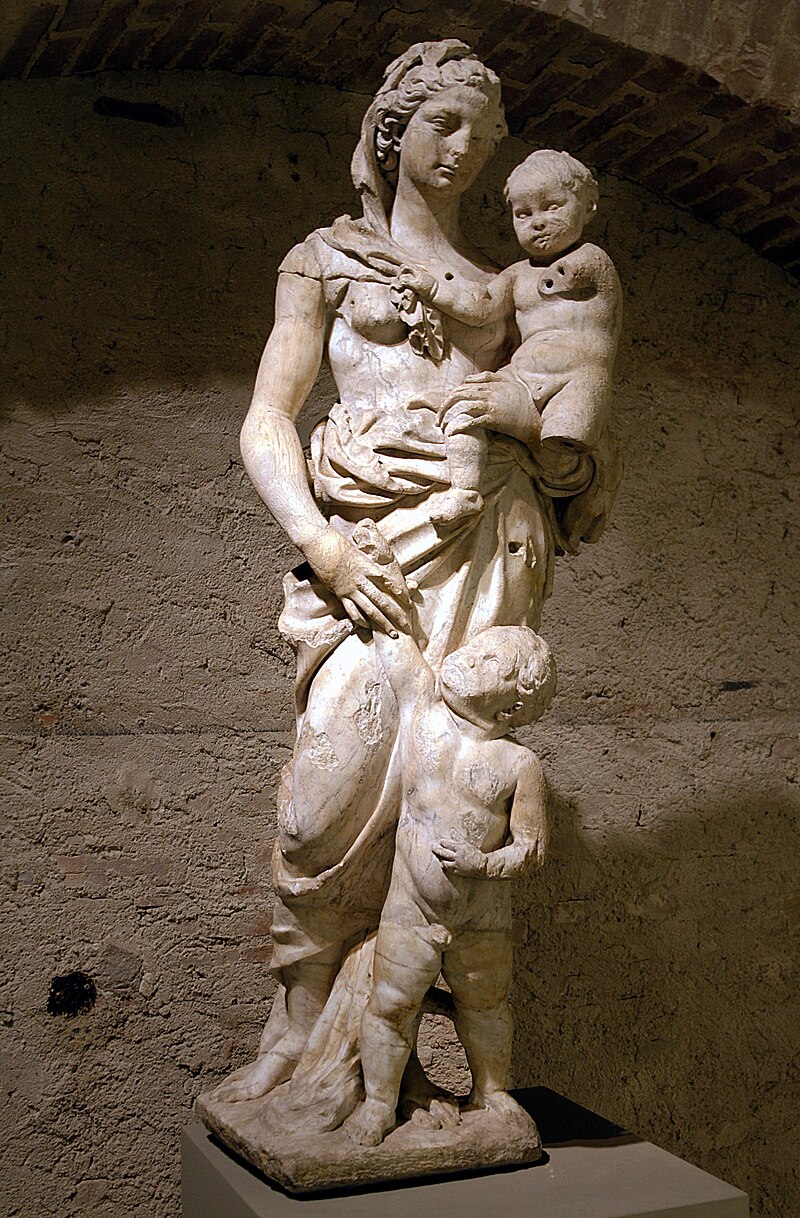
Rhea Silvia
mother of Romulus and Remus

Dinah
In the Book of Genesis, Dinah (; ) was the seventh child and only named daughter of Leah and Jacob. The episode of her rape by Shechem, son of a Canaanite or Hivite prince, and the subsequent revenge of her brothers Simeon and Levi, commonly referred to as the rape of Dinah, is told in Genesis 34.
rape of the Sabine women
episode in the history of Rome
Antiope
Greek mythological figure; daughter of Nycteus and mother of Amphion

Tithonus
In Greek mythology, Tithonus ( or ; ) was the lover of Eos, Goddess of the Dawn. He was a prince of Troy, the son of King Laomedon by the Naiad Strymo (). The mythology reflected by the fifth-century vase-painters of Athens envisaged Tithonus as a rhapsode, as attested by the lyre in his hand, on an oinochoe (wine jug) of the Achilles Painter, circa 470–460 BC.
Cephalus
son of Deioneus and beloved of Eos in Greek mythology

Philomela
thumb|upright=1.4|Procne and Philomela carving up [[Itys, Temple of Apollo, Thermos, terracotta metope, c. 630–625 BC]]
thumb|upright=1.4|"The Rape of Philomela by Tereus", engraved by Virgil Solis for a 1562 edition of Ovid's Metamorphoses (Book VI, 519–562)
Tyro
In Greek mythology, Tyro () was an Elean princess who later became Queen of Iolcus.

Oenone
thumb|Oenone holding pan pipes, behind Paris and Eros – a detail from a [[sarcophagus with the Judgement of Paris, Roman, Hadrianic period (Palazzo Altemps, Rome)]]

Auge
thumb|Auge and a drunken Heracles, bronze mirror case from Elis (city)|Elis (c. 325 BC). [[National Archaeological Museum, Athens, Stathatos 312.]]
Tamar
biblical daughter of David
%2C%20small%20bronze%20relief%2C%20AM%20Olympia%2C%20Olym14.jpg)
Caeneus
thumb|250px|Two Centaurs pound Caeneus into the ground with tree trunks; bronze relief from Olympia, Archaeological Museum of Olympia BE 11a (mid–late seventh century BC)
In Greek mythology, Caeneus () was a Lapith hero, ruler of Thessaly, and the father of the Argonaut Coronus. Caeneus was born a girl, Caenis (), the daughter of Elatus, but after Poseidon had sex with Caenis, she was transformed by him into an invulnerable man. Caeneus participated in the Centauromachy, where he met his demise at the hands of the Centaurs by being pounded into the ground while still alive.

Igraine
In the Matter of Britain, Igraine () is the mother of King Arthur. Igraine is also known in Latin as Igerna, in Welsh as Eigr (Middle Welsh Eigyr), in French as Ygraine (Old French Ygerne or Igerne), in ''Le Morte d'Arthur as Ygrayne—often modernised as Igraine or Igreine—and in Parzival'' as Arnive. She becomes the wife of Uther Pendragon after the death of her first husband, Gorlois.
Aethra
mother of Theseus
Orithyia
legendary princess of Athens

Cinyras
right|thumb|280px|Myrrha and Cinyras. [[Engraving by Virgil Solis for Ovid's Metamorphoses]]
Chrysippus
son of Pelops
Rindr
Rindr (Old Norse: ) or Rinda (Latin) (sometimes Anglicized Rind) is a female character in Norse mythology, described either as a goddess or a human princess. She was impregnated by Odin and gave birth to the avenger of Baldr's death—in the Old Norse sources, Váli.
Dryope
daughter of Dryops, Eyrypylus, or Eurytus, mother of Amphissus
Halie
Greek nymph
Pelopeia
daughter of Thyestes
Aura
divine personification of the breeze in Greek and Roman mythology
Creusa
legendary princess of Athens
Leda and the Swan
artistic theme from Greek mythology
_Muta_(titel_op_object)%2C_RP-P-1905-3194.jpg)
Larunda
thumb|upright|Dea Muta, identified with Lara or Larunda, print (ca. 1809–1839) by Mattheus Ignatius van Bree
Larunda (also Larunde, Laranda, Lara) was a naiad nymph, daughter of the river Almo and mother of the Lares Compitalici, guardians of the crossroads and the city of Rome. In Ovid's Fasti she is named Lara.
Liriope
water nymph, mother of Narcissus
Chione
mother of Philammon and Autolycus by Apollo and Hermes respectively
Nicaea
daughter of Sangarius in Greek mythology
Alcippe
mythical character, daughter of Ares
The Levite's Concubine
Story in the Book of Judges
Nyctimene
daughter of Epopeus in Greek mythology

Hilaeira
right|thumb|The Rape of the Daughters of Leucippus by Rubens
right|thumb|Roman sarcophagus with Castor and Pollux seizing Phoebe and Hilaera, ca. 160.
In Greek mythology, Hilaera (Ancient Greek: Ἱλάειρα; also Ilaeira) was a Messenian princess. Stephanus of Byzantium called her Elaeira (Ἐλάειρα).
Apemosyne
In Greek mythology, Apemosyne () was a Cretan princess as the daughter of King Catreus of Crete, the son of Minos. She had a brother Althaemenes, and two sisters, Aerope and Clymene.
Periboea
mother of Telamonian Ajax
Phoebe
Daughter of Leucippus, mythical figure honored at Sparta
Numbers 31
thirty-first chapter of Numbers in the Hebrew and Christian Bible
Pyrene
mythical princess, daughter of Bebryx
Arang
figure in the folklore of the Miryang area of Korea
Cornix
daughter of Coronaeus in Greek mythology