Category
page 1National personifications

Statue of Liberty
American icon in New York, United States
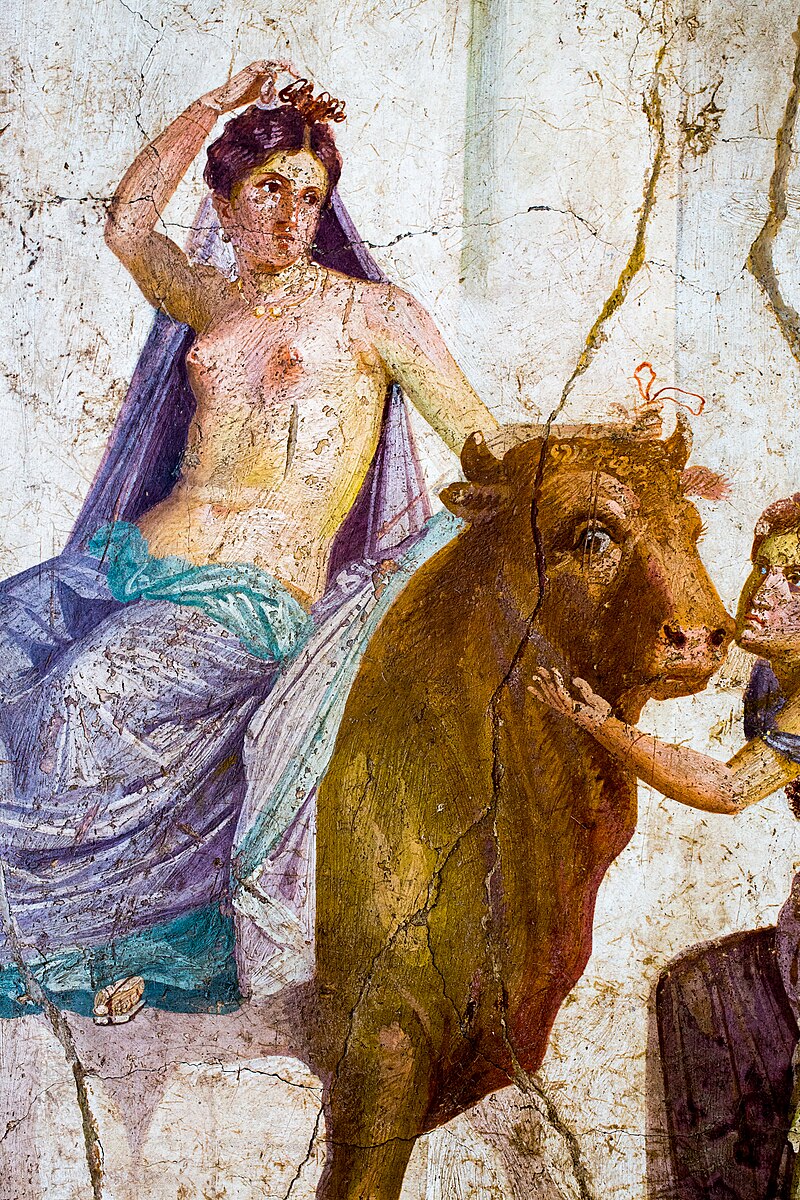
Europa
Phoenician character in Greek mythology, daughter of Agenor

Uncle Sam
personification of the United States of America and its government
.png)
Rostam
use both this parameter and |birth_date to display the person's date of birth, date of death, and age at death) -->
| death_place = Kabulistan (present-day Kabul, Afghanistan)
| death_cause = With the conspiracy of his half-brother Shaghad, he fell into a well full of poisoned spears and was killed in Kabulistan.
| body_discovered =
| resting_place =
| resting_place_coordinates =
| burial_place =
| burial_coordinates =
| monuments =
| nationality =
| other_names = RustamRustem
| siglum =
| citizenship =
| education =
| alma_mater =
| occupation =
| years_active =
| era =
| employ
We Are Our Mountains
sculpture in Stepanakert
Bhārat Mātā
national personification of India as a mother goddess

Mother Armenia
cultural heritage monument of Armenia

Zion
thumb|Zion (1903), Ephraim Moses Lilien
national personification
fictional character used to represent a country and its people
Mother Ukraine Monument
monument in Ukraine
Roma
female deity in ancient Roman religion
Ogier the Dane
fictional character; legendary knight of Charlemagne
Kartlis Deda
sculpture
John Bull
national personification of the United Kingdom
Columbia
historical and poetic name used for the United States of America
dragon king
general concept of a king of dragons as appearing in Chinese, Japanese, Hindu and Buddhistic mythology and folklore
.jpg)
Helvetia
thumb|Standing Helvetia on obverse of a Swiss 2-Coins of the Swiss franc|franc coin
Germania
Personification of Germany
Mother Albania
statue located at the National Martyrs Cemetery of Albania
Martín Fierro
epic poem by José Hernández
Finnish Maiden
national personification of Finland

Ériu
thumb|″The Harp of Erin″ painting by Thomas Buchanan Read
In Irish mythology, Ériu (; ), daughter of Delbáeth and Ernmas of the Tuatha Dé Danann, was the eponymous matron goddess of Ireland.
Goddess of Democracy
statue
Handala
Handala (), also Handhala, Hanzala or Hanthala, is a prominent national symbol and personification of the Palestinian people.
Matushka Rus’
Slavic foremoter
Mother Svea
national personification of Sweden

Cailleach
In Gaelic (Irish, Scottish and Manx) myth, the Cailleach (, ) is a divine hag, associated with the creation of the landscape and with the weather, especially storms and winter. The word literally means 'old woman, hag', and is found with this meaning in modern Irish and Scottish Gaelic, and has been applied to numerous mythological and folkloric figures in Ireland, Scotland, and the Isle of Man. In modern Irish folklore studies, she is sometimes known as The Hag of Beara, while in Scotland she is known as Beira, Queen of Winter.
Russian Winter
winter in Russia within military context
Jára Cimrman
Czech fictional character of a national giant

Breogán
thumb|right|Breogán statue in A Coruña
thumb|right|Breogán statue and the Tower of Hercules in A Coruña, Spain
Template:National personifications
Wikimedia template
Italia Turrita
personification of Italy
Europa regina
16th-century map-like depiction of the European continent as a queen
Brother Jonathan
personification of New England
Kosovo Maiden
poem

Huaso
thumb|Huaso in a Chilean [[wheat field, 1940]]
thumb|"The Huaso and the Washerwoman" by Mauricio Rugendas (1835).
thumb|Espuelas, or silvered steel spurs, of a Chilean huaso
A huaso () is a Chilean countryman and skilled horseman, similar to the American cowboy, the Mexican charro (and its northern equivalent, the vaquero), the gaucho of Argentina, Uruguay and Rio Grande Do Sul, and the Australian stockman. A female huaso is called a huasa, although the term china is far more commonly used for his wife or sweetheart, whose dress can be seen in cueca dancing. Huasos are found all over Central a
Liberty
personifications of the concept of Liberty
Lady of the Mountain
female national personification of Iceland
Juan Valdez
Colombian advertising character
Lạc Long Quân
semi-mythical King of ancient Vietnam
Johnny Reb
national personification of the Southern states of the United States, or less generally, the Confederacy during the American Civil War
Âu Cơ
Vietnamese mythological figure

Srulik
thumb|320x320px|Srulik in the Israeli museum of cartoons and comics in Holon, Israel
right|frame|Srulik enlisted
thumb|The Peace Kids in Florentin depicting Israeli Srulik and Palestinian [[Handala embracing one another]]
Srulik (, ) is a cartoon character symbolizing Israel. The character was created in 1956 by the Israeli cartoonist Kariel Gardosh, known by his pen name Dosh.
Mother Armenia, Gyumri
cultural heritage monument of Armenia
Ola and Kari Nordmann
national personification of Norwegians

Banba
thumb|alt=water and a remote island|Dingle in Ireland
In Irish mythology, Banba (modern spelling: Banbha ), daughter of Delbáeth and Ernmas of the Tuatha Dé Danann, is a matron goddess of Ireland. She was married to Mac Cuill, a grandson of the Dagda.
Dea Africa
goddess of Roman Africa and personification of the continent Africa
Polonia
personification
Zé Povinho
Portuguese everyman character

Ibu Pertiwi
national personification of Indonesia

Germania
painting by Philipp Veit of the German national personification from 1848 at the Germanisches Nationalmuseum, Nuremberg, Germany
Nine sons of the dragon
9 Chinese dragons, who are sons of the Dragon King
Billy Yank
personification of the Northern states of the United States, or less generally, the Union during the American Civil War
Hibernia
personification of Ireland
Scotia
thumb|upright=1.4|A map of the divisions of Roman Britain with the Scoti shown as a tribal grouping in the north of Ireland
Scotia is a Latin placename derived from Scoti, a Latin name for the Gaels, first attested in the late 3rd century. The Romans referred to Ireland as "Scotia" around 500 A.D. From the 9th century on, its meaning gradually shifted, so that it came to mean only the part of Britain lying north of the Firth of Forth: the Kingdom of Alba. By the later Middle Ages it had become the fixed Latin term for what in English is called Scotland.
Fódla
In Irish mythology, Fódla or Fótla (modern spelling: Fódhla, Fodhla, Fóla), daughter of Delbáeth and Ernmas of the Tuatha Dé Danann, is one of the tutelary goddesses of Ireland. Her husband is Mac Cecht. Her name, pronounced (), is believed to derive from Old Irish ('sod, land'), indicating her nature as a goddess of the land. A fanciful etymology in the Book of Leinster reads it as , "a sod upon Díl," memorialising the death of a daughter of Míl Espáine.
Allegory of Hispania
anthropomorphic personification of Spain
Efígie da República
national personification of Brazil
Italia and Germania
painting by Friedrich Overbeck at the Neue Pinakothek, Munich
Melita
national personification of Malta