Category
page 1Nautical terminology

port
thumb|The Port of New York and New Jersey, U.S., grew from the original harbor at the convergence of the Hudson River and the [[East River at the Upper New York Bay.]]
A port is a maritime facility comprising one or more wharves or loading areas, where ships load and discharge cargo and passengers. Although usually situated on a sea coast or estuary, ports can also be found far inland, such as Hamburg, Manchester and Duluth; these access the sea via rivers or canals. Because of their roles as ports of entry for immigrants as well as soldiers in wartime, many port cities have experienced dramat

anchor
thumb|Stockless anchor|Stockless ship's anchor and chain on display
thumb|Anchor of Amoco Cadiz in [[Portsall, north-west Brittany, France]]
thumb|Memorial anchor in Kirjurinluoto, [[Pori, Finland]]
thumb|Massive anchor chain for large ships. The weight of the chain is vital for proper holding of the anchor.
%20(14763687525).jpg)
sailor
A sailor, seaman, mariner, or seafarer is a person who works aboard a watercraft as part of its crew, and may work in any one of a number of different fields that are related to the operation and maintenance of a ship. While the term sailor has its etymological roots from sailing, that is a time when sailing ships were the main mode of transport at sea, it now refers to the personnel of all watercraft regardless of the type of vessel, boat or ship. It encompasses people who operate ships professionally, be it for a military (navy) or civilian (merchant navy) or for sports or recreation. In a n

buoy
thumb|Smart buoy with solar panels, [[LED light, and corner reflectors for radar]]

catamaran
thumb|The Spirit of Dallas catamaran on White Rock Lake
thumb|A Formula 16 (sailing)|Formula 16 beachable catamaran
thumb|Powered catamaran passenger ferry at Salem, Massachusetts|Salem, [[Massachusetts, United States]]
%20being%20laid%20in%20a%20construction%20dry%20dock%20on%2018%20April%201948.jpg)
keel
thumb|300px|Keel laying|Keel laid for the in [[drydock]]
The keel is the bottom-most longitudinal structural element of a watercraft, important for stability. On some sailboats, it may have a hydrodynamic and counterbalancing purpose as well. The laying of the keel is often the initial step in constructing a ship. In the British and American shipbuilding traditions, this event marks the beginning date of a ship's construction.

deck
part of a ship or boat

harbor
thumb|New York Harbor and the Hudson River in the foreground; the [[East River in the background]]
thumb|The Port of Jebel Ali|Jebel Ali harbor is the largest man-made harbor in the world.
alt=A panoramic view of Carry-le-Rouet harbour in France, showing rows of docked boats and yachts surrounded by seaside buildings and palm-lined streets under a clear sky.|thumb|Carry Le Rouet harbour in France
thumb|Port of Montevideo|Montevideo's natural harbor is clearly seen from above.
thumb|Capri harbor, Italy seen from [[Anacapri]]
thumb|Koyilandy Harbour, [[Kerala, India]]

stern
300px|thumb|Detailed schematic of an elliptical or "fantail" stern
thumb|The flat Transom (nautical)|transom stern of the [[cargo ship Sichem Princess Marie-Chantal]]

shipwrecking
thumb|right|300px|The sinking of the RMS Titanic|Titanic, illustrated by [[Willy Stöwer in 1912]]

maritime pilot
mariner who manoeuvres ships through dangerous or congested waters

ship captain
commander of a ship or other sea-going vessel

fishing trawler
commercial fishing vessel designed to operate fishing trawls

draft
vertical distance between the waterline and the bottom of the hull (keel)

dock
thumb|Dock for cruise ships in Sint Maarten in the [[Caribbean]]
thumb|right|Docks in Saint Petersburg|St. Petersburg, Russia
thumb|Partially backfilled dry dock of the former Valmet Vuosaari Shipyard in Vuosaari, [[Helsinki, Finland]]
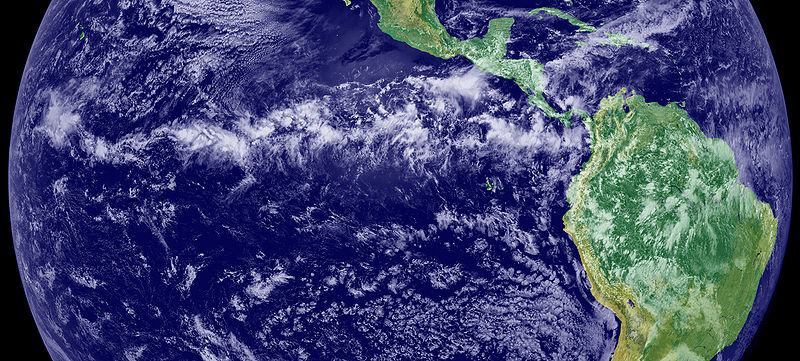
Intertropical Convergence Zone
Meteorological phenomenon
fathom
A fathom is a unit of length in the imperial and U.S. customary systems equal to , used especially for measuring the depth of water. The fathom is neither an international standard (SI) unit, nor an internationally accepted non-SI unit. Historically, it was the maritime measure of depth in the English-speaking world but, apart from within the US, charts now use metres.

Seven Seas
ancient phrase for all of the world's oceans
twenty-foot equivalent unit
unit of cargo capacity, TEU

marina
thumb|upright=1.5|Marina on Portugal Avenue, Rio de Janeiro, [[Brazil]]
thumb|upright=1.5|Marina in Fort Lauderdale, Florida
A marina (from Spanish , Portuguese and Italian : "related to the sea") is a dock or basin with moorings and supplies for yachts and small boats.
A marina differs from a port in that a marina does not handle large passenger ships or cargo from freighters.
gross register tonnage
unit of volume for the gross volume of a ship; 100 ft³ (= 2.83 m³)
ship's bell
bell made for use on a ship

motorboat
thumb|right|A motorboat with an outboard motor
A motorboat or powerboat is a boat whose propulsion is exclusively provided by a motor, not by wind power (e.g. sail or power kite) or human power. A motorboat capable of cruising at a much faster speed is also called a speedboat.

displacement
ship's weight
.png)
dredging
thumb|A grab dredge
Dredging is the excavation of material from a water environment. Possible reasons for dredging include improving existing water features; reshaping land and water features to alter drainage, navigability, and commercial use; constructing dams, dikes, and other controls for streams and shorelines; and recovering valuable mineral deposits or marine life having commercial value. In all but a few situations the excavation is undertaken by a specialist floating plant, known as a dredger.
naval architecture
engineering discipline dealing with the design and construction of marine vessels

hydrofoil
A hydrofoil is a lifting surface, or foil, that operates in water. It is similar in appearance and purpose to aerofoils used by airplanes. Boats that use hydrofoil technology are also simply termed hydrofoils. As a craft gains speed, the hydrofoils lift the boat's hull out of the water, decreasing drag and allowing greater speeds.
deadweight
measurement of a ship's weight-carrying capacity, measured as the difference between light and loaded conditions
cable length
unit of length

tonnage
Tonnage is a measure of the capacity of a ship, and is commonly used to assess fees on commercial shipping. The term derives from the taxation paid on tuns or casks of wine. In modern maritime usage, "tonnage" specifically refers to a calculation of the volume or cargo volume of a ship. Although tonnage (volume) should not be confused with displacement (the actual mass of the vessel), the long ton (or imperial ton) of 2,240 lb is derived from the fact that a "tun" of wine typically weighed that much.

Teredinidae
The shipworms, also called teredo worms or simply teredo (, via Latin ), are marine bivalve molluscs in the family Teredinidae, a group of saltwater clams with long and soft bodies. They are notorious for boring into (and commonly eventually destroying) wood that is immersed in seawater, including such structures as wooden piers, docks, and ships; they drill passages by means of a pair of very small shells ("valves") borne at one end, with which they rasp their way through. They are sometimes called "termites of the sea". Carl Linnaeus assigned the common name Teredo to the best-known genus of

boatswain
A boatswain ( , formerly and dialectally also ) is the most senior rate of the deck department and is responsible for the components of a ship's hull. The boatswain supervises the other members of the ship's deck department and typically is not a watchstander, except on vessels with small crews. Additional duties vary depending upon ship, crew and circumstances. The name is also known as '''bo's'n, bos'n, bosun, deck boss, a qualified member of the deck department or the third hand''' on a fishing vessel.
merchant marine
organization, fleet and crew of merchant vessels operating under a national flag
ship launching
process, sometimes ceremonial, of transferring a vessel to the water for the first time

forecastle
thumb|300px|Replica of the Victoria (ship)|Victoria, the only one of [[Ferdinand Magellan's five ships to return to Spain in 1522, showing both a forecastle (left) and quarterdeck (right).]]

roadstead
thumb|upright=1.35|Ormos Ammoudi, a roadstead in Santorini, Greece
thumb|Santa Elena alongside Kriti Jade at Birzebbuga roadstead, Malta
thumb|Ships on the roadstead "Aussenelbe Reede" in the north sea outside the river Elbe
A roadstead or road is a sheltered body of water where ships can lie reasonably safely at anchor without dragging or snatching. Protected from rip currents, spring tides, or ocean swell, a roadstead can be open or natural, usually estuary-based, or may be created artificially. In maritime law, it is described as a convenient or safe place where boats usually anchor.
channel
type of landform; confined river; strait
yard
sail-carrying part of the rigging of a sailing ship
bulbous bow
Protruding bulb at the front of a ship
freeboard
distance from the waterline to the upper deck level of a ship or to the gunwale of a boat

helmsman
thumb|right|200px|The bridge of the Cargo ship|freighter shown here has two steering stands. This redundancy is a safety measure in case one of the steering mechanisms that control the ship's rudder fails.
port and starboard
position relative to vessel direction
navigation light
lights on a vessel, aircraft or spacecraft giving information on a craft's position, heading, and status
boom
in sailing, a spar along the bottom edge of a fore and aft rigged sail
shroud
rope or wire running from the mast to the sides of a watercraft
bulkhead
partition in a ship
fender
element protecting the hull of a ship
starboard
REDIRECT Port and starboard

jib
A jib is a triangular sail that sets ahead of the foremast of a sailing vessel. Its forward corner (tack) is fixed to the bowsprit, to the bows, or to the deck between the bowsprit and the foremost mast. Jibs and spinnakers are the two main types of headsails on a modern boat.

superstructure
thumb|The superstructure of this cargo ship is at the back and includes a Lifeboat (shipboard)|lifeboat.
right|thumb|The cruiseferry Mega Smeralda. The blue and white part of the ship is the superstructure and the yellow part of the ship is the hull.
windward and leeward
position relative to wind direction
beam
width of a ship at its widest point, often measured at its nominal waterline

quartermaster
thumb|right|320px|, quartering (Quartermaster), circa 1893
thumb|320px|Quartermaster Dick Libby, USN. Portrait circa 1834

hawsehole
thumb
Hawsehole is a nautical term for a small hole in the hull of a ship through which hawsers may be passed. It is also known as a cat hole. In the (British) Royal Navy, a man who had risen from the lowest grade to officer was said to have "come in at the hawsehole".
poop deck
deck that forms the roof of a cabin built in the aft part of the superstructure of a ship

watch system
thumb|upright=1.3|A sailor keeps watch aboard .|alt=
Watchkeeping or watchstanding is the assignment of sailors to specific roles on a ship to operate it continuously. These assignments, also known at sea as watches, are constantly active as they are considered essential to the safe operation of the vessel and also allow the ship to respond to emergencies and other situations quickly. These watches are divided into work periods to ensure that the roles are always occupied at all times, while those members of the crew who are assigned to work during a watch are known as watchkeepers.
dolphin
man-made marine mooring structure

harbormaster
thumb|right|The Harbour Master’s transport at Poole, [[Dorset, England ]]
.svg)
centreboard
thumb|280pxA centreboard or centerboard (US) is a retractable hull appendage which pivots out of a slot in the hull of a sailboat, known as a centreboard trunk (UK) or centerboard case (US). The retractability allows the centreboard to be raised to operate in shallow waters, to move the centre of lateral resistance (offsetting changes to the sailplan that move the centre of effort aft), to reduce drag when the full area of the centreboard is not needed, or when removing the boat from the water, as when trailering. A centreboard which consists of solely a pivoting metal plate is called a center
gross tonnage
nonlinear measure of a ship's overall internal volume