Category
page 1Negativicutes
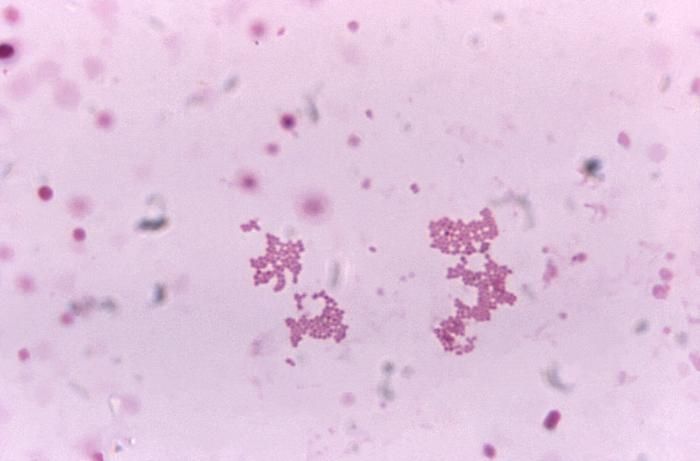
Negativicutes
The Negativicutes are a class of bacteria in the phylum Bacillota, whose members have a peculiar cell wall with a lipopolysaccharide outer membrane which stains gram-negative, unlike most other members of the Bacillota. Although several neighbouring Clostridia species (firmicute bacteria) also stain gram-negative, the proteins responsible for the unusual diderm structure of the Negativicutes may have actually been laterally acquired from Pseudomonadota (formerly Proteobacteria). Additional research is required to confirm the origin of the diderm cell envelope in the Negativicutes.
Selenomonad
Members of the genus Selenomonas (motile crescent-shaped bacteria in general) are referred to trivially as selenomonads. The genus Selenomonas constitutes a group of motile crescent-shaped bacteria and includes species living in the gastrointestinal tracts of animals, in particular the ruminants.
A number of smaller forms discovered with the light microscope are now in culture but many, especially the large selenomonads are not, owing to their fastidious and incompletely known growth requirements.
Sporomusa
Sporomusa is a genus of Bacillota bacteria classified within the class Negativicutes.
Selenomonadales
The Selenomonadales are an order of bacteria within the class Negativicutes; unlike most other members of Bacillota, they are Gram-negative. The phylogeny of this order was initially determined by 16S rRNA comparisons. More recently, molecular markers in the form of conserved signature indels (CSIs) have been found specific for all Selenomonadales species. On the basis of these markers, the Selenomonadales are inclusive of two distinct families, and are no longer the sole order within the Negativicutes. Several CSIs have also been found specific for both families, Sporomusaceae and Selenomonad
Dialister
Dialister is a genus of Bacillota bacteria classified within the class Negativicutes.
Pectinatus
Pectinatus is a genus of Bacillota bacteria classified within the class Negativicutes.