Category
page 1New Year celebrations

New Year
first day of the year according to some calendar (e.g., January 1 in the Julian and Gregorian calendar)

Chinese New Year
Chinese New Year, also known as the Spring Festival, marks the beginning of a new year on the traditional lunisolar Chinese calendar. It is one of the most important holidays in Chinese culture. Marking the end of winter and the beginning of spring, this festival takes place from Chinese New Year's Eve to the Lantern Festival, held on the 15th day of the year. The first day of the Chinese New Year falls on the new moon that appears between 21 January and 20 February.

Nowruz
Nowruz (, , ) is New Year's Day on the Iranian calendars, including the currently used Solar Hijri calendar. Historically, it has been observed by Iranian peoples, but is now celebrated by many Persianate cultures worldwide. It is a festival based on the Northern Hemisphere spring equinox, and thus usually coincides with a date between 19 March and 22 March on the Gregorian calendar.

New Year's Eve
New Year's Eve in the Gregorian calendar refers to the evening—or commonly the entire day—of the last day of the year: 31 December. In many countries, New Year's Eve is celebrated with dancing, eating, drinking, and watching or lighting fireworks. Many Christians attend a watchnight service to mark the occasion. New Year's Eve celebrations generally continue into New Year's Day, 1 January, past midnight.

Rosh Hashanah
Rosh Hashanah is the New Year in Judaism. The biblical name for this holiday is Yom Teruah. It is the first of the High Holy Days, as specified by Leviticus 23:23–25, that occur in the late summer/early autumn of the Northern Hemisphere. Rosh Hashanah begins the Ten Days of Repentance, culminating in Yom Kippur, the day of atonement. It is followed by the festival of Sukkot, which ends with Shemini Atzeret in Israel and Simchat Torah everywhere else.
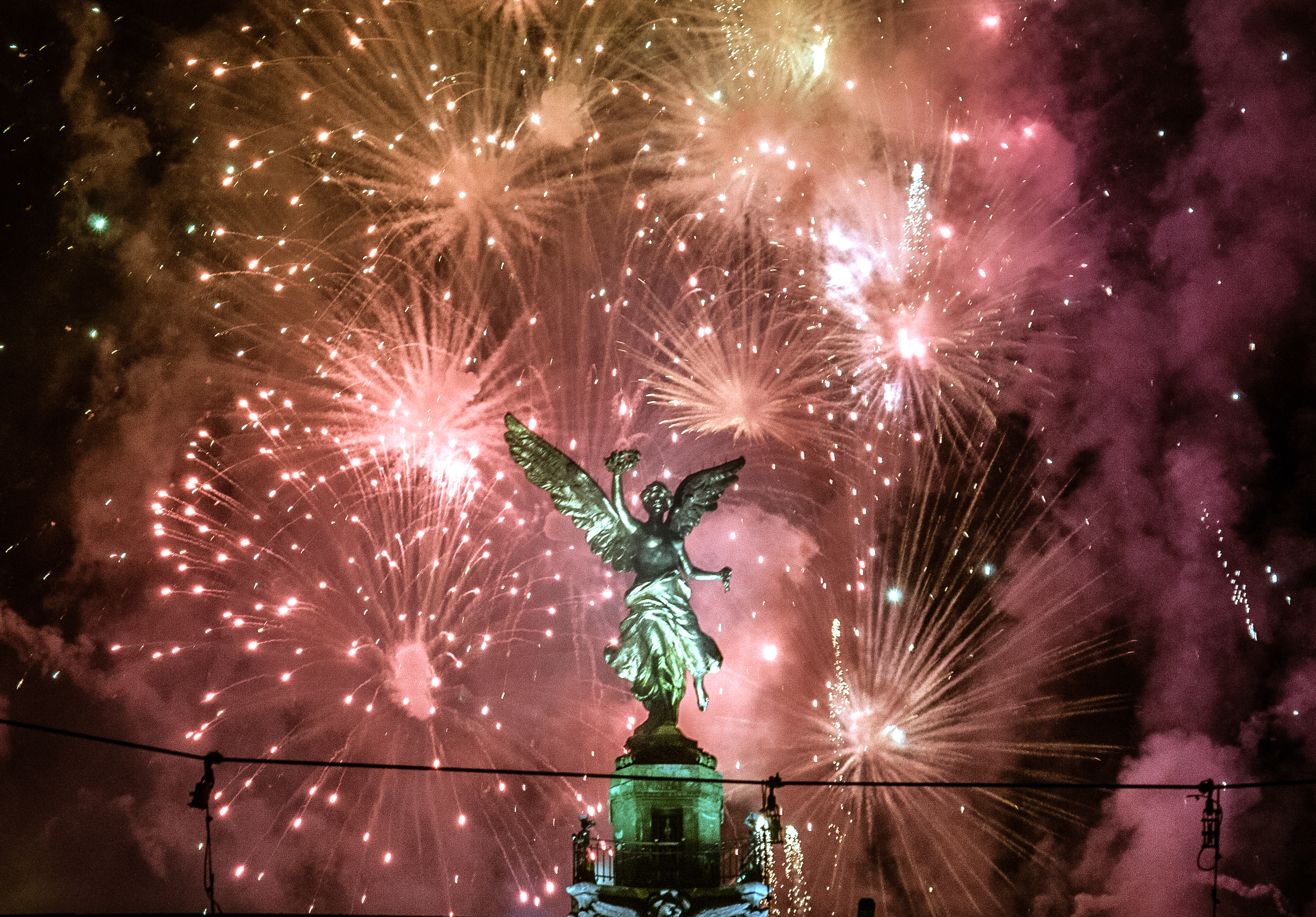
New Year's Day
In the Gregorian calendar, New Year's Day is the first day of the calendar year, 1 January. Most solar calendars, such as the Gregorian and Julian calendars, begin the year regularly at or near the northern winter solstice. In contrast, cultures and religions that observe a lunisolar or lunar calendar celebrate their Lunar New Year at varying points relative to the solar year.

Ded Moroz
Christmas figure in Slavic cultures
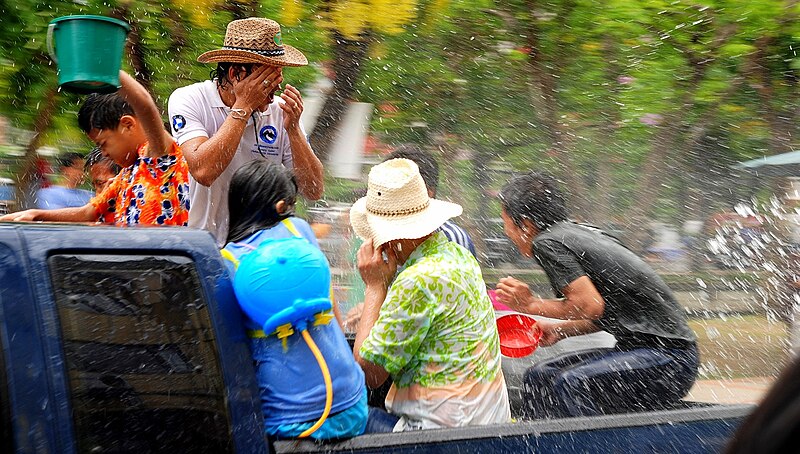
Songkran
traditional Thai New Year's holiday based on the sidereal year

Vienna New Year's Concert

Tết
Tết (, ), short for '''''' (; ), is the most important celebration in Vietnamese culture. Tết celebrates the arrival of spring, which is on the first day of the first Vietnamese lunisolar month, and usually falls between late January and 20 February in the Gregorian calendar.
Islamic New Year
Muslims' holiday
Japanese New Year
January 1, a national holiday in Japan (the first day of the first month of the East Asian Lunar calendar prior to 1873)

Losar
Losar (; "new year"), also known as the Tibetan New Year, is a festival in Tibetan Buddhism. The holiday is celebrated on various dates depending on location tradition (Tibet, Bhutan, Nepal, Arunachal Pradesh, Sikkim and Ladakh). The holiday is a new year's festival, celebrated on the first day of the lunisolar Tibetan calendar, which corresponds to a date in February or March in the Gregorian calendar. In 2025, the new year commenced on February 28 and was celebrated until March 2. It also commenced the Year of the Female Wood Snake.
Pohela Boishakh
New Year festival of the Bengali people (mid April)
Korean New Year
day off to commemorate January 1 in the lunar calendar in Korea
Inti Raymi
Inca religious festival
Old New Year
informal traditional holiday, celebrated as the start of the New Year by the Julian calenda in Eastern Europe, Wales (as Hen Galan), Switzerland (as Alter Silvester), etc.

Hogmanay
Hogmanay ( , ) is the Scots word for the last day of the old year and is synonymous with the celebration of the New Year in the Scottish manner. It is normally followed by further celebration on the morning of New Year's Day (1 January) and, in some cases, 2 January—a Scottish bank holiday. In a few contexts, the word Hogmanay is used more loosely to describe the entire period consisting of the last few days of the old year and the first few days of the new year. For instance, not all events held under the banner of Edinburgh's Hogmanay take place on 31st of December.

Nyepi
Nyepi (Balinese: ᬜᬾᬧᬶ), also known as Day of Silence, is a Balinese holiday held every Isakawarsa ("new year") according to the Balinese calendar, and it can be traced as far back as 78 A.D.
New Year's resolution
commitment that an individual makes at New Year's Day
Tsagaan Sar
first day of the year according to the Mongolian lunar calendar
Akitu
Akitu or Akitum
()
()
is a spring festival and New Year's celebration, held on the first day of the Assyrian and Babylonian Nisan in ancient Mesopotamia and in Assyrian communities around the world, to celebrate the sowing of barley. Akitu originates from the Sumerian spring New Year festival of Zagmuk.
Twelve Grapes
Spanish New Year tradition

Matariki
In Māori culture, Matariki is the Pleiades star cluster and a celebration of its first rising in late June or early July. The rising marks the beginning of the new year in the Māori lunar calendar.

The Chimes
novella by English author Charles Dickens; published 1844
%20Tamil%20New%20Year.jpg)
Puthandu
Puthandu (), also known as Tamil New Year (), is the first day of year on the Tamil calendar that is traditionally celebrated as a festival by Tamils. The festival date is set with the solar cycle of the solar Hindu calendar, as the first day of the month of Chittirai. It falls on or about 14 April every year on the Gregorian calendar. The same day is observed elsewhere in South and South East Asia as the traditional new year, but it is known by other names such as Vishu in Kerala, Bisu Parba in Tulunadu, and Vaisakhi or Baisakhi in central and northern India.
NHL Winter Classic
ice hockey game

Yhyakh
Yhyаkh (, ) is the festival that celebrates the rebirth of nature after a hard winter, the triumph of life, the beginning of a new year in the Sakha Republic. Historic celebration is observed on the 21st June, the day of the summer solstice.
Gudi Padwa
Marathi Hindu new year festival

Vishu
Vishu (Malayalam: വിഷു) is a Malayali festival celebrating the Malayali New Year in Kerala, Tulu Nadu, and Mahe of India. Vishu falls on the first day of the month of Medam, the first month of the Solar calendar used in Malabar of Kerala, (April 14 or 15 in the Gregorian calendar), signifying the solar new year as the sun moves into the zodiac sign of Aries. It is the traditional new year, while the Kollam era calendar, which was later formed at Kollam in 825 CE, new year falls on the 1st Chingham (August 16 or 17).

Malanka
Malanka (, or ) is a Ukrainian folk holiday celebrated on 31 December, which is New Year's Eve in accordance with the Gregorian calendar. Formerly it was celebrated on 13 January corresponding to 31 December in the Julian calendar (see Old New Year). The festivities were historically centred around house-to-house visiting by groups of young men, costumed as characters from a folk tale of pre-Christian origin, as well as special food and drink. The context of the rituals has changed, but some elements continue to the present.

molybdomancy
thumb|A molybdomancy kit includes a set of shaped lead ingots, to be melted over a candle flame in a spoon.
thumb|A piece of molten lead after immersion in cold water

Thingyan
Thingyan, also known as the Myanmar New Year, is a festival that usually occurs in the middle of April. Thingyan marks the transition from the old year to the new one, based on the traditional Myanmar lunisolar calendar. The festival usually spans four to five days, culminating in New Year’s Day, and is one of the most anticipated public holidays across the country.
The highlight of the celebration is the symbolic throwing of water, representing the washing away of sins and bad luck from the previous year. People engage in water fights using buckets and water guns, especially during the first
New Year tree
decorated tree similar to a Christmas tree that is displayed to celebrate the New Year
Water Festival
New Year celebration in Southeast Asia
Vasilopita
Vasilopita (, Vasilópita, lit. '(St.) Basil-pie' or 'Vassilis pie', see below) is a New Year's Day bread, cake or pie in Greece and throughout Southeastern Europe which contains a hidden coin or trinket which gives good luck to the receiver, like the Western European king cake. It is associated with Saint Basil's day, 1 January, in most of Greece, but in some regions, the traditions surrounding a cake or pita with a hidden coin are attached to Epiphany or to Christmas. It is made of a variety of dough, depending on regional and family tradition, including tsoureki. In some families, instead of
Nepal Sambat
Nepalese Traditional Calendar
Novruz in Azerbaijan
traditional holiday
Nortia
Nortia is the Latinized name of the Etruscan goddess Nurtia (variant manuscript readings include Norcia, Norsia, Nercia, and Nyrtia), whose sphere of influence was time, fate, destiny, and chance.
2014 Shanghai stampede
stampede on The Bund waterfront, Shanghai on December 31, 2014
Feast of Fools
Medieval European feast day
New Year card
greeting card conveying wishes for the New Year
Saint Sylvester's Day
the day celebrated on 31 December (Roman Catholic Church) or 2 January (Eastern Orthodox Churches)
Mesha Sankranti
Solar New Year in the Hindu calendar
A Symphony of Lights
permanent Hong Kong light and sound show
Cheti Chand
New year day of Sindhi Hindus
Saint Silvester Road Race
New Year's Eve running event in São Paulo, Brazil
Enkutatash
Enkutatash (Amharic: ዕንቍጣጣሽ) is a New Year holiday in Ethiopia and Eritrea. It is celebrated on Meskerem 1 on the Ethiopian calendar, which is 11 September (or, during a leap year, 12 September) according to the Gregorian calendar.
Kha b'Nissan
Annual holiday commemorating the Assyrian New Year
Millennium celebrations
celebrations of the arrival of the year 2000
First-Foot
In Scottish, Northern English, and Manx folklore, the first-foot (, ) is the first person to enter the home of a household on New Year's Day and is seen as a bringer of good fortune for the coming year. Similar practices are also found in Greek, Vietnamese, and Georgian new year traditions.
San Silvestre Vallecana
annual running competition in Vallecana, Spain
Maithili New Year
Public Holiday in Mithila region
Edict of Roussillon
Navreh
Navreh () or Kashmiri New Year is the celebration of the first day of the Kashmiri new year by Kashmiri Hindus, with the largest Kashmiri Hindu community being the Kashmiri Pandits. Kashmiri Pandits dedicate Navreh festival to their Goddess Sharika, a form of Goddess Durga or Shakti, and pay homage to her during the festival. It takes place on the first day of the bright half (Shukla Paksha) on the month of Chaitra (March–April) of the Kashmiri Hindu calendar.
bamboo cannon
type of home-made firecracker
Takarabune
thumb|Coloured woodblock print () of the Takarabune by Hiroshige|Utagawa Hiroshige.
thumb| with Takarabune, by , Edo period, 19th century
In Japanese folklore, the Takarabune (), or "Treasure Ship", is a mythical ship piloted through the heavens by the Seven Lucky Gods during the first three days of the New Year. A picture of the ship forms an essential part of traditional Japanese New Year celebrations.
Neujahrsmarathon Zürich
annual marathon in Switzerland
Beñesmen
The Beñesmen or Beñesmer was the most important festival of the ancient aborigines of the Canary Islands, mainly between the Guanches of the island of Tenerife. It was the feast of the harvest, it ordered Aboriginal affairs materials, and celebrated, venerated cultural and spiritual traditions. It was considered the "New Year", which coincided with the collection of the harvest. They were held during the first moon of August. Beñesmen was also the name with which the Guanches knew the month of August.

Sinhalese New Year
Sri Lankan new year holiday