Category
page 1Nitrobacteraceae

Nitrobacter
Nitrobacter is a genus comprising rod-shaped, gram-negative, and chemoautotrophic bacteria. The name Nitrobacter derives from the Latin neuter gender noun nitrum, nitri, alkalis; the Ancient Greek noun βακτηρία, βακτηρίᾱς, rod. They are non-motile and reproduce via budding or binary fission. Nitrobacter cells are obligate aerobes and have a doubling time of about 13 hours.
Bradyrhizobium
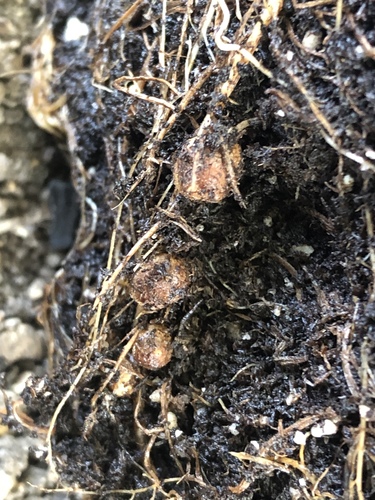
Bradyrhizobium is a genus of Gram-negative soil bacteria, many of which fix nitrogen. Nitrogen fixation is an important part of the nitrogen cycle. Plants cannot use atmospheric nitrogen (N2); they must use nitrogen compounds such as nitrates.
Bradyrhizobium japonicum
species of bacterium
Rhodopseudomonas
Rhodopseudomonas is a genus of bacteria from the family Nitrobacteraceae.
Rhodopseudomonas palustris
species of bacterium
Nitrobacteraceae
The Nitrobacteraceae are a family of gram-negative, aerobic bacteria. They include plant-associated bacteria such as Bradyrhizobium, a genus of rhizobia associated with some legumes. It also contains animal-associated bacteria such as Afipia felis, formerly thought to cause cat-scratch disease. Others are free-living, such as Rhodopseudomonas, a purple bacterium found in marine water and soils. The strain Rhodopseudomonas palustris DX-1 can generate an electric current with no hydrogen production, a trait being explored in the development of the microbial fuel cell. The genus Afipia has also b