Category
page 1Norwegian language
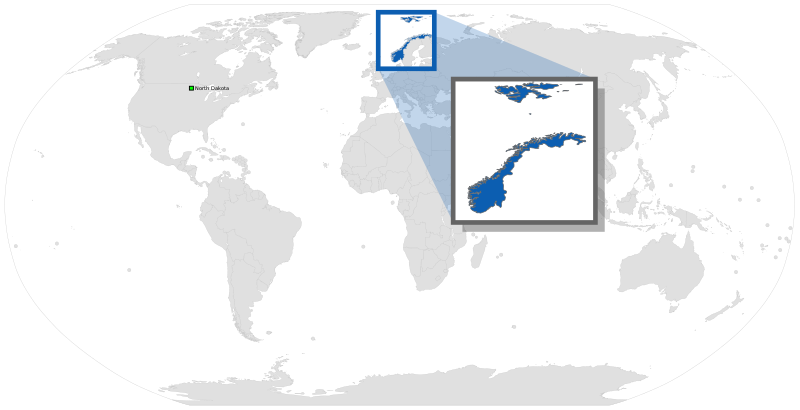
Norwegian
North Germanic language spoken in Norway

Bokmål
Bokmål (; , ; ) is one of the official written standards for the Norwegian language, alongside Nynorsk. Bokmål is by far the most used written form of Norwegian today, as it is adopted by around 90% of the population in Norway. There is no countrywide standard or agreement on the pronunciation of Bokmål and the spoken dialects vary greatly.

Æ
class=skin-invert-image|thumb|Æ in Helvetica and [[Bodoni]]
class=skin-invert-image|thumb|Æ alone and in context

Å
The letter Å (å in lower case) represents various (although often similar) sounds in several languages. It is a separate letter in Danish, Swedish, Norwegian, Finnish, North Frisian, Low Saxon, Transylvanian Saxon, Walloon, Rotuman, Chamorro, Lule Sami, Pite Sami, Skolt Sami, Southern Sami, Ume Sami, Pamirian languages, and Greenlandic alphabets. Additionally, it is part of the alphabets used for some Alemannic and Austro-Bavarian dialects of German.

Ø
Ø (or minuscule: ø) is a letter used in the Danish, Norwegian, Faroese, and Southern Sámi languages. It is mostly used to represent the mid front rounded vowels, such as and , except for Southern Sámi where it is used as an diphthong.
Russenorsk
Russenorsk (; , ; English: Russo-Norwegian) is an extinct dual-source "restricted pidgin" language formerly used in the Arctic, which combined elements of Russian and Norwegian. Russenorsk originated from Russian traders from Kola (north-western Russia) and Norwegian fishermen from Tromsø (northern Norway). It was used extensively in Northern Norway for about 150 years in the Pomor trade. Russenorsk is important as a test case for theories concerning pidgin languages since it was used far away from most of the other documented pidgins of the world.
Aasmund Olavsson Vinje
Norwegian poet and journalist (1818–1870)
Dano-Norwegian alphabet
Latin alphabet consisting of 29 letters, each having an uppercase and a lowercase form; Danish and Norwegian alphabet
Norwegian Language Council
Norwegian government agency for language policy
Knud Knudsen
Norwegian linguist and philologist (1812-1895)

Riksmål
'''' (, also , ) is a conservative written Norwegian language form or spelling standard, meaning the National Language'', closely related and now almost identical to the dominant form of Bokmål, known as .
Old Norwegian
extinct language
Norwegian Academy
Norwegian literary society
Norwegian language conflict
ongoing controversy between Bokmål and Nynorsk and other varieties of the Norwegian language
Middle Norwegian
North Germanic language spoken in Norway 1350–1550 before being superseded by Dano-Norwegian

Norwegian dialects
Alexander Kuchin
Russian explorer
Svorsk
Svorsk () or Svorska () is a portmanteau of svensk(a) 'Swedish' and norsk(a) 'Norwegian' to describe a mixture of the Swedish and Norwegian languages. It could be translated as Sworwegian in English.
Dano-Norwegian
Dano-Norwegian (Danish and ) was a koiné/mixed language that evolved among the urban elite in Norwegian cities during the later years of the union between the Kingdoms of Denmark and Norway (1536/1537–1814). It is from this koiné that the unofficial written standard Riksmål and the official written standard Bokmål developed. Bokmål is now the most widely used written standard of contemporary Norwegian.
Norwegian phonology
phonology
Norvegia
Latin-based phonetic alphabet for the transcription of Norwegian languages and dialects
history of the Norwegian language