Category
page 1Nuclear proliferation

International Atomic Energy Agency
international organization that seeks to promote the peaceful use of nuclear energy, and to inhibit its use for any military purpose, including nuclear weapons

Mohamed ElBaradei
Egyptian law scholar and diplomat, 4th Director General of the International Atomic Energy Agency, and Nobel Peace Prize recipient
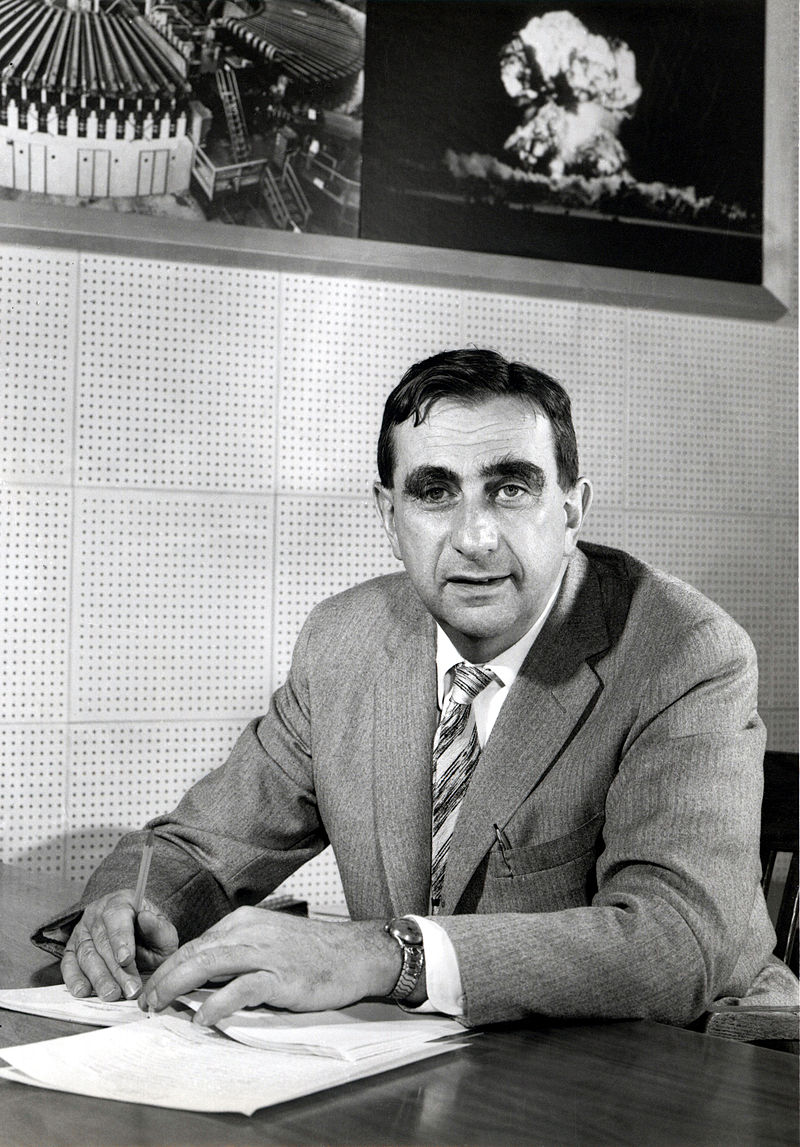
Edward Teller
Hungarian-American Jewish nuclear physicist (1908–2003)
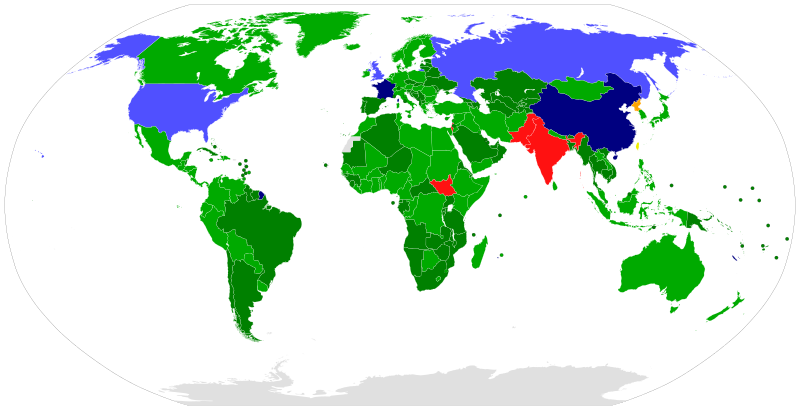
Treaty on the Non-Proliferation of Nuclear Weapons
international treaty

List of states with nuclear weapons
There are currently nine sovereign states that are generally understood to possess nuclear weapons, though only eight formally acknowledge possessing them. In order of first successful nuclear test, the world's nine nuclear-armed states are the United States (1945), Russia (1949), the United Kingdom (1952), France (1960), China (1964), India (1974), Pakistan (1998), and North Korea (2006); Israel is believed to have acquired nuclear weapons around 1967, but has never openly tested or formally acknowledged having them. Under the Non-Proliferation Treaty (NPT), the United States, Russia, the United Kingdom, France, and China are recognized "nuclear-weapons states" (NWS). They are also the five permanent members of the United Nations Security Council. Israel, India, and Pakistan never signed the NPT, while North Korea acceded to it in 1985 before announcing withdrawal in 2003.

Budapest Memorandum
international treaty of Ukraine, the United States, Russia, and the United Kingdom

Abdul Qadeer Khan
Pakistani nuclear engineer (1936–2021)

AUKUS

Yukiya Amano
Director General/International Atomic Energy Agency (1947-2019)
nuclear proliferation
spread of nuclear weapons

RDS-1
The RDS-1 (), also known as First Lightning (), was the first nuclear weapons test that was conducted by the Soviet Union. It was detonated on 29 August 1949 at 7:00 a.m. Kazakhstan Time (decree time) (UTC+06:00), at the Semipalatinsk Test Site in the Kazakh Soviet Socialist Republic, and yielded 22 kilotons of TNT.

Rafael Grossi
Argentine diplomat
Smiling Buddha
1974 India's first successful nuclear test
Vela incident
1979 unidentified double flash of light
dual-use technology
technology that can be used for both civil and military purposes
Nuclear Suppliers Group
intergovernmental organization
gas centrifuge
device for chemical separation
Lisbon Protocol
an agreement by Russia, Belarus, Ukraine, and Kazakhstan that nuclear weapons of the former Soviet Union on the soil of those states would be destroyed or transferred to the control of Russia
U.S.–India Civil Nuclear Agreement
123 Agreement signed between the United States and India
Defense Threat Reduction Agency
government agency
Baruch Plan
proposed U.S. atomic energy plan following World War II by Bernard Baruch
France and weapons of mass destruction
projects and lists of French weapons of mass destruction

illicit activities of North Korea
illegal activities done by North Korea
United Nations Atomic Energy Commission
commission established to deal with the problems raised by the discovery of atomic energy
Nuclear Threat Initiative
American foreign policy think tank
Nunn–Lugar Cooperative Threat Reduction
US post-Soviet counterproliferation program
Wen Ho Lee
Taiwanese-American nuclear physicist
Acheson–Lilienthal Report
report by Dean Acheson and David Lilienthal

Gernot Zippe
mechanical engineer who is widely credited with leading the team which developed the Zippe-type centrifuge
nuclear facilities in Iran
RDS-2
The RDS-2 (Russian: РДС-2) was a second nuclear bomb developed by the Soviet Union as an improved version of the RDS-1. It included new explosive lenses along with a new core design to decrease the probability of pre-detonation or 'fizzle'. The levitated core increased implosion efficiency by allowing for an empty space between the "flying layer" and the core, thereby allowing rapid acceleration of the shock wave before it impacted the core.
2014 Nuclear Security Summit
Nuclear Safety Council
government organization in Madrid, Spain
Operation Plumbat
Israeli covert operation in 1968 to obtain processed uranium ore
2012 Nuclear Security Summit
2012 Nuclear Security Summit held in Seoul, South Korea
2010 Nuclear Security Summit
Nuclear Security Summit in Washington DC
Anwar Ali
Pakistani nuclear physicist
nuclear ethics
academic and policy-relevant field on problems associated with the nuclear weapons and energy complex
Agreed Framework
1994 treaty between the United States and North Korea

blanket
technical term
Massimo Aparo
Italian nuclear engineer,
Special nuclear material
nuclear material
Western European Nuclear Regulators' Association
light water graphite reactor
Silex Process
process for isotope separation used to produce enriched uranium
Tero Varjoranta
Finnish diplomat
nuclear weapons of China
Institute for Science and International Security
nonprofit non-governmental institution dedicated to nuclear nonproliferation