Category
page 1Nuclear reactor coolants
.svg)
water
Water is an inorganic compound with the chemical formula . It is a transparent, tasteless, odorless, and nearly colorless chemical substance. It is the main constituent of Earth's streams, lakes, and oceans and the fluids of all known living organisms, in which it acts as a solvent. Water, being a polar molecule, undergoes strong intermolecular hydrogen bonding which is a large contributor to its physical and chemical properties. It is vital for all known forms of life, despite not providing food energy or being an organic micronutrient. Due to its presence in all organisms, its chemical stabi

helium
Helium (from ) is a chemical element; it has symbol He and atomic number 2. It is a colorless, odorless, non-toxic, inert, monatomic gas and the first in the noble gas group in the periodic table. Its boiling point is the lowest among all the elements, and it does not have a melting point at standard pressures. It is the second-lightest and second-most abundant element in the observable universe, after hydrogen. It is present at about 24% of the total elemental mass, which is more than 12 times the mass of all the heavier elements combined. Its abundance is similar to this in both the Sun and

lead
Lead () is a chemical element with the symbol Pb (from the Latin ) and atomic number 82. It is a heavy metal, denser than most common materials. Lead is soft, malleable, and has a relatively low melting point. When freshly cut or melted, it appears shiny silvery with a bluish tint, but tarnishes to dull gray on exposure to air. Lead has the highest atomic number of any stable element, and three of its isotopes are endpoints of major nuclear decay chains of heavier elements.

sodium
Sodium is a chemical element; it has symbol Na (from Neo-Latin ) and atomic number 11. It is a soft, silvery-white, highly reactive metal. Sodium is an alkali metal, being in group 1 of the periodic table. Its only stable isotope is 23Na. The free metal does not occur in nature and must be prepared from compounds. Sodium is the sixth most abundant element in the Earth's crust and exists in numerous minerals such as feldspars, sodalite, and halite (NaCl). Many salts of sodium are highly water-soluble: sodium ions have been leached by the action of water from the Earth's minerals over

mercury
chemical element with symbol Hg and atomic number 80

carbon dioxide
chemical compound
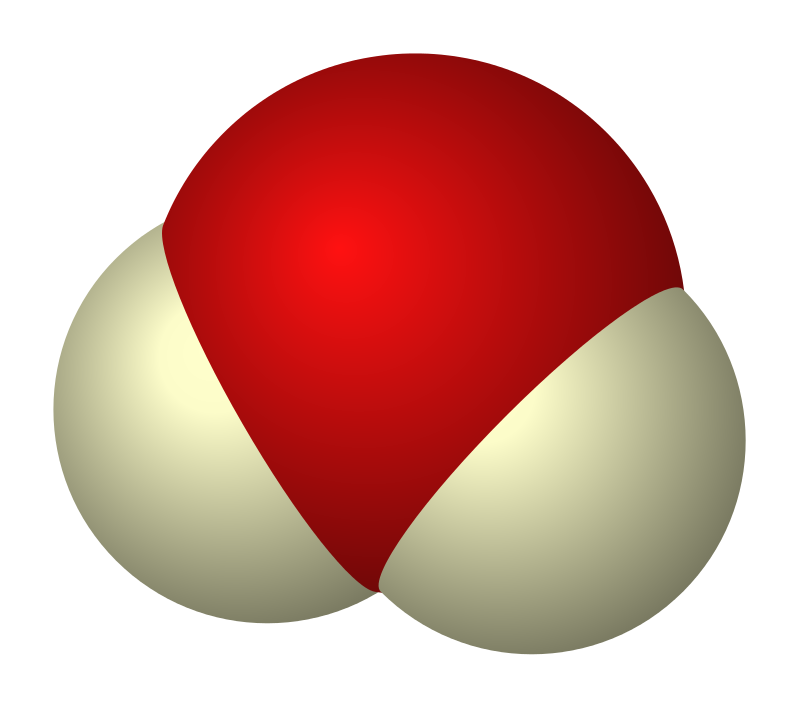
heavy water
chemical compound
biphenyl
Biphenyl (also known as diphenyl, phenylbenzene, 1,1′-biphenyl, lemonene or BP) is an organic compound that forms colorless crystals. Particularly in older literature, compounds containing the functional group consisting of biphenyl less one hydrogen (the site at which it is attached) may use the prefixes xenyl or diphenylyl.
sodium-potassium alloy
alkali metal alloy which is liquid at room temperature
terphenyls
Terphenyls are a group of aromatic hydrocarbons. Also known as diphenylbenzenes or triphenyls, they consist of a central benzene ring substituted with two phenyl groups. There are three substitution patterns: ortho-terphenyl, meta-terphenyl, and para-terphenyl. Commercial grade terphenyl is generally a mixture of the three isomers. This mixture is used in the production of polychlorinated terphenyls, which were formerly used as heat storage and transfer agents.
nuclear reactor coolant
coolant in a nuclear reactor
FLiBe
right|thumb|300px|Molten FLiBe flowing; this sample's green tint is from dissolved uranium tetrafluoride.
lead-bismuth eutectic
alloy of lead and bismuth used as a coolant in nuclear reactors