Category
page 1Nymphalidae
%202.jpg)
Nymphalidae
thumb|Peacock (Aglais io)
thumb|Crimson-spotted forester (Euphaedra themis)
thumb|Monarch butterflies (Danaus plexippus)
thumb|Dark blue tiger (Tirumala septentrionis)
thumb|Small pearl-bordered fritillary (Boloria selene)
thumb|thumbtime=8|Phyciodes|Crescent butterfly [[nectaring on yellow ironweed]]

Satyrinae
The Satyrinae, the satyrines or satyrids, commonly known as the browns, are a subfamily of the Nymphalidae (brush-footed butterflies). They were formerly considered a distinct family, Satyridae. This group contains nearly half of the known diversity of brush-footed butterflies. The true number of the Satyrinae species is estimated to exceed 2,400.

Danainae
Danainae is a subfamily of the family Nymphalidae, the brush-footed butterflies. The group may be referred to as the Danaids (reflecting their previous rank as a family) or milkweed butterflies, as they often lay their eggs on various milkweeds on which their larvae (caterpillars) feed, though it also encompasses the clearwing butterflies (Ithomiini), and the Tellervini.

Heliconiinae
alt=An orange and black longwing butterfly resting on a green leaf.|thumb|329x329px|Orange-and-black longwing butterfly on leaf
The Heliconiinae, commonly called heliconians or longwings, are a subfamily of the brush-footed butterflies (family Nymphalidae). They can be divided into 45–50 genera and were sometimes treated as a separate family Heliconiidae within the Papilionoidea. The colouration is predominantly reddish and black, and though of varying wing shape, the forewings are always elongated tipwards, hence the common name.

Nymphalinae
The Nymphalinae are a subfamily of brush-footed butterflies (family Nymphalidae). Sometimes, the subfamilies Limenitidinae, and Biblidinae are included here as subordinate tribe(s), while the tribe Melitaeini is occasionally regarded as a distinct subfamily. Their phylogenetics can be traced back to the Cretaceous Terrestrial Revolution after the Cretaceous-Paleogene (K-Pg) mass extinction, followed by repeated dispersals into the rest of the Old World and the New World during various periods beginning in the Eocene.
Apaturinae
The Apaturinae are a subfamily of butterflies that includes many species commonly called emperors.

Charaxinae
__NOTOC__

Limenitidinae
thumb|right|Aterica galene specimen ([[Adoliadini)]]
thumb|right|Euphaedra xypete (Adoliadini)
thumb|right|Hamanumida daedalus (Adoliadini)
thumb|Tanaecia lepidea - grey count from (Adoliadini)
thumb|right|Adelpha syma of the [[Limenitidini is sometimes placed in Limenitis]]
thumb|right|Eurasian white admiral (Limenitis camilla: [[Limenitidini)]]
Libytheinae
The Libytheinae are a nymphalid subfamily known as snout butterflies, containing two valid genera and about ten species: six in Libythea and four in Libytheana. The common name refers to the thick labial palps (pedipalps) that look like a "snout" in this subfamily. In older literature, this group was recognized as the family Libytheidae. They are medium-sized and typically a drab brown. The front legs are reduced in length and the ventral hindwings are cryptically colored to help them blend in with their surroundings. While at rest, the members of this subfamily keep their wings tightly closed

Morphinae
The Morphinae are a subfamily of Nymphalidae butterflies that includes the morphos, the owl butterflies (Caligo), and related lineages. It is either considered a sister group of the Satyrinae, or disassembled and included therein.

Biblidinae
thumb|right|Red rim (Biblis hyperia: Biblidini)
thumb|right|Little banner, Nica flavilla
thumb|right|Panacea procilla: Ageroniini specimen underside
thumb|Dynamine athemon: Eubagini
thumb|Diaethria clymena, one of the eighty-eights formerly in "[[Catagramma" (now Callicorini)]]
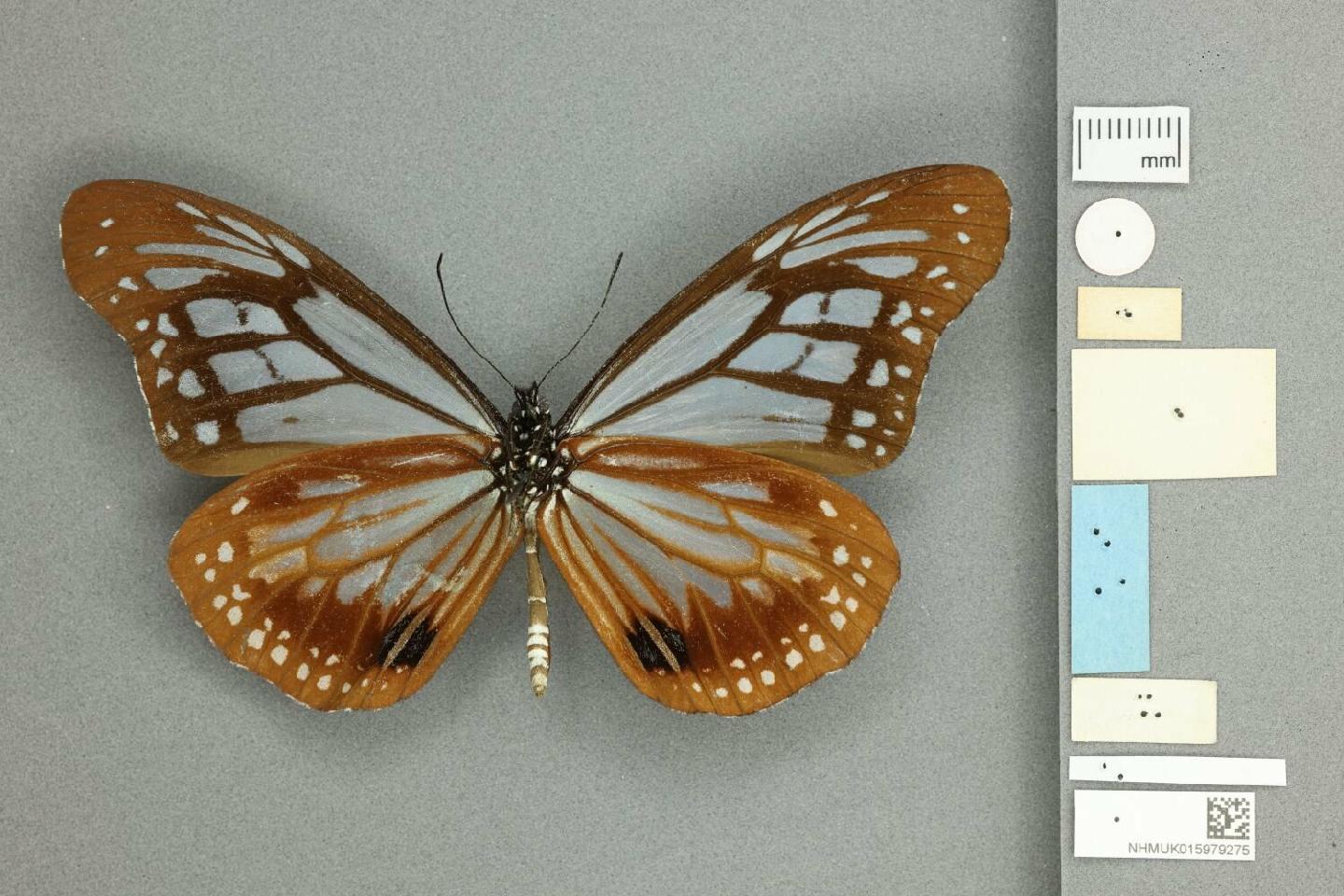
Parantica pedonga
species of insect