Category
page 1Obsolete animal taxa

worm
thumb|Lumbricus terrestris, an earthworm
thumb|White tentacles of Loimia medusa, a spaghetti worm

invertebrate
Invertebrates are animals that neither develop nor retain a vertebral column (commonly known as a spine or backbone), which evolved from the notochord. It is a paraphyletic grouping including all animals excluding the chordate subphylum Vertebrata, i.e. vertebrates. Well-known phyla of invertebrates include arthropods, molluscs, annelids, echinoderms, flatworms, cnidarians, and sponges.

Coelenterata
Coelenterata is a rejected phylum encompassing the animal phyla Cnidaria (corals, true jellies, sea anemones, sea pens, and their relatives) and Ctenophora (comb jellies). The name comes , referring to the hollow body cavity common to these two phyla. They have very simple tissue organization, with only two layers of cells (ectoderm and endoderm), along with a middle undifferentiated layer called the mesoglea, and radial symmetry. Coelenterata lack a specialized circulatory system, relying instead on diffusion across the tissue layers.

Radiata
Radiata or Radiates is a historical taxonomic rank that was used to classify animals with radially symmetric body plans. The term Radiata is no longer accepted, as it united several different groupings of animals that do not form a monophyletic group under current views of animal phylogeny. The similarities once offered in justification of the taxon, such as radial symmetry, are now taken to be the result of either incorrect evaluations by early researchers or convergent evolution, rather than an indication of a common ancestor. Because of this, the term is used mostly in a historical context.
Secernentea
Secernentea was a class of nematodes in the Classical Phylogeny System (Chitwood, 1958) and is no longer in use. This morphological-based classification system has been replaced by the Modern Phylogeny system, where taxonomy assignment is based on small subunit ribosomal DNA (SSU rDNA).

Adenophorea
thumb|right|240px|Mononchidae eating a Mononchidae
Adenophorea or Aphasmidia was a class of nematodes (roundworms). It has been by and large abandoned by modern taxonomy, because there is strong evidence for it being a motley paraphyletic group of unrelated lineages of roundworms.
Aschelminth
The Aschelminthes (Aeschelminthes or Nemathelminthes), closely associated with the Platyhelminthes, are an obsolete phylum of pseudocoelomate and other similar animals that are no longer considered closely related and have been promoted to phyla in their own right. The term Aschelminth is now generally only used as an informal name for any member of the approximately ten different invertebrate phyla formerly included within Aschelminthes.
Microdesmidae
The Microdesmidae, the wormfishes and dartfishes, were a family of goby-like fishes in the order Gobiiformes, more recent workers have placed this taxon within the Gobiidae, although the researchers do not define the taxonomic status of this grouping within that family. Two subfamilies in this family were briefly treated as full families - the Ptereleotrinae (dartfishes) and Microdesminae (wormfishes). The family includes about 82 species.
Echinoida
Echinoida is an order of sea urchins in the class Echinoidea. They are distinguished from other sea urchins by simultaneously possessing both an un-sculpted test and a feeding lantern with large plates fused across the top of each pyramid.
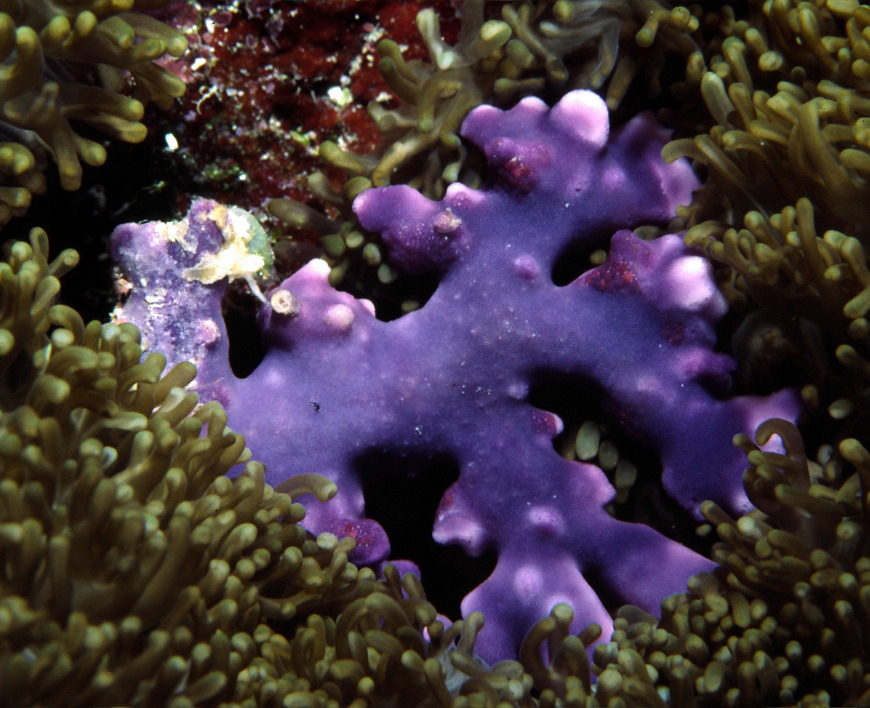
Helioporacea
Helioporacea is an order of the subclass Octocorallia that forms massive lobed crystalline calcareous skeletons in colonial corals. These corals first appeared in the Cretaceous period. It consists of two families, Helioporidae Moseley, 1876 and Lithotelestidae Bayer & Muzik, 1977.

Palpata
Palpata is a subclass of polychaete worm. Members of this subclass are mostly deposit feeders on marine detritus or filter feeders. Palpata has become superfluous with the elevation of Canalipalpata to subclass.
Pelmatozoa
Pelmatozoa was once a clade of Phylum Echinodermata. It included stalked and sedentary echinoderms. The main class of Pelmatozoa were the Crinoidea which includes sea lily and feather star.
Agnotozoa
Agnotozoa is a subkingdom of simple animals that is sometimes used. It is one of the three "traditional" animal subkingdoms, along with Parazoa and Eumetazoa. On some classifications, it is nearly synonymous with Mesozoa.
Pectiniidae
Pectiniidae was a family of stony corals, commonly known as chalice corals, but the name is no longer considered valid.

Seriata
The Seriata are an order of turbellarian flatworms.
Calcaxonia
Calcaxonia (1981 - 1999 known only under the informal name restricted Holaxonia) was, in some systems, an Octocorallian suborder of the order Gorgonacea, or alternatively of the broadly conceived order Alcyonacea. Before its formal erection in 1999, it was usually included inside the suborder Holaxonia.

Cavibelonia
The Cavibelonia are one of the four orders of solenogaster, a kind of shell-less, worm-like mollusk.

Inarticulata
Inarticulata was historically defined as one of the two classes of the phylum Brachiopoda and referred to those having no hinge. The other class was Articulata, meaning articulated — having a hinge between the dorsal and ventral valves. These classifications have now been superseded, see brachiopod classification.

Comasteridae
Comasteridae is a family of crinoids.
Actinernoidea
Actinernoidea is a superfamily of sea anemones in the order Actiniaria. Until 2014, this taxon was considered to be a separate suborder of the order Actiniaria.
Corbiculacea
The Corbiculacea are a suborder of freshwater clams, aquatic bivalve molluscs in the order Venerida.
Vermes
Vermes ("vermin/vermes") is an obsolete taxon used by Carl Linnaeus and Jean-Baptiste Lamarck for non-arthropod invertebrate animals.
Pectinina
Pectinina is a taxonomic grouping of saltwater clams, a suborder within the order Pectinida of marine bivalve molluscs.
Oemini
Oemini is an obsolete tribe of beetles in the subfamily Cerambycinae, now placed in the Xystrocerini.
Temnocephalida
The Temnocephalida are an order of turbellarian flatworms.
Ceriantipatharia
Ceriantipatharia (rare synonym: Hexacorallia Goette, 1902 [non Haeckel, 1866]) is a taxon (usually a subclass) of Anthozoans used in some systems. It consists of the two taxa (usually orders) Ceriantharia (tube anemones) and Antipatharia (black corals).
Hexoplonini
REDIRECT Ibidionini
Fimbriidae
REDIRECT Fimbriinae
Rhabditia
Subclass Rhabditia is mostly composed of parasitic nematodes (particularly in the Strongylida), though there are some free-living species as well (particularly in the Rhabditida). Phasmids (posterior sensory structures) are well-developed, while amphids (anterior sensory structures) are poorly developed or absent in this group.
Oxycoleini
thumb | right | Merionoeda flavipennis
Oxycoleini is a tribe of beetles in the subfamily Cerambycinae, now placed in the Stenopterini.

Cyclostoma
Cyclostoma is an obsolete genus name of operculate snails with circular aperture.