Category
page 1Obsolete theories in physics

plum pudding model
scientific model of the atom first proposed by J. J. Thomson in 1904

Titius–Bode law
discredited hypothesis about Solar System planets' orbits
Rutherford model
model of the atom devised by Ernest Rutherford
Vulcan
hypothetical planet between the Sun and Mercury

steady-state model
alternative to the Big Bang model of the evolution of the universe

Nemesis
hypothetical star orbiting the Sun, responsible of extinction events
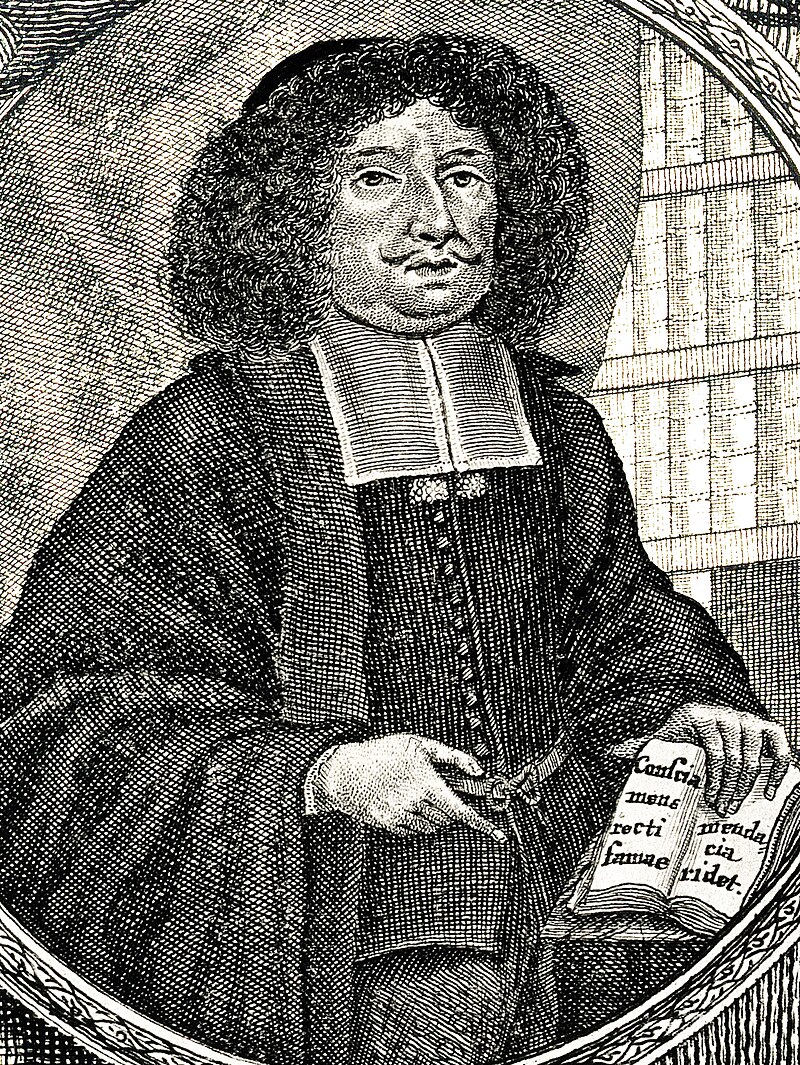
phlogiston theory
superseded scientific theory about combustion
Rayleigh–Jeans law
physical law about blackbody radiation, derived from classical physics, accurate at low frequences but requiring quantum corrections at high frequencies
Aristotelian physics
natural sciences as described by Aristotle
corpuscular theory of light
theory
caloric theory
obsolete scientific theory of heat flow
theory of impetus
concept similar to inertia and momentum
static universe
model of the universe that is not expanding or contracting, e.g. one in which the cosmological constant exactly balances things
tired light
class of hypothetical redshift mechanisms
vis viva
physical quantity, historically invented by G. Leibniz, equivalent to (in modern terminology) twice the kinetic energy

N ray
thumb|right|Fig. 6,7 from Prosper-René Blondlot: "Registration by Photography of the Action Produced by N Rays on a Small Electric Spark". Nancy, 1904.
N-rays (or N rays) were a hypothesized form of radiation described by French physicist Prosper-René Blondlot in 1903. They were initially confirmed by others, but subsequently found to be illusory.
Prandtl–Glauert singularity
the point at which a sudden drop in air pressure occurs
Sublunary sphere
Metaphysical description of part of the universe
Le Sage's theory of gravitation
obsolete kinetic theory of gravity that explained Newton’s gravitational force in terms of streams of unseen particles impacting material objects from all directions
cubical atom
early atomic model in which electrons were positioned at the eight corners of a cube, accounting for the phenomenon of valency

Cyclol
thumb|350px|right|Figure 1: In the classic cyclol reaction, two peptide groups are linked by a N-C' bond, converting the carbonyl oxygen into a hydroxyl group. Although this reaction occurs in a few cyclic peptides, it is disfavored by Thermodynamic free energy|free energy, mainly because it eliminates the [[resonance stabilization of the peptide bond. This reaction was the basis of Dorothy Wrinch's cyclol model of proteins.]]

Welteislehre
thumb|The 1925 "Journal of World Ice Theory"
' (WEL; "World Ice Theory" or "World Ice Doctrine"), also known as ' (Glacial Cosmogony), is a discredited cosmological concept proposed by Hanns Hörbiger, an Austrian engineer and inventor. According to his ideas, ice was the basic substance of all cosmic processes, and ice moons, ice planets, and the "global ether" (also made of ice) had determined the entire development of the universe. Hörbiger did not arrive at his ideas through research, but said that he had received it in a "vision" in 1894. He published a book about the theory in 1912 and he
Milne model
cosmological model equivalent to a zero-energy-density FLRW model
emission theory
competing theory
horror vacui
physical principle that nature contains no vacuums

dark star
astronomical object described by Newtonian mechanics
Nordström's theory of gravitation
predecessor to the theory of relativity
trepidation
Trepidation (from Lat. trepidus, "trepidatious"), in now-obsolete medieval theories of astronomy, refers to hypothetical oscillation in the precession of the equinoxes. The theory was popular from the 9th to the 16th centuries.
Magnetic photon
ia hypothetical particle
imponderable fluid
feature of several superseded scientific theories
Energeticism
Energeticism, also called energism or energetics (), is a superseded theory in science that posits that energy is the ultimate element of physical reality. Energeticism was developed during the end of the 19th century by Wilhelm Ostwald, Georg Helm and Pierre Duhem. It was also promoted by physicist Ernst Mach who opposed atomic theory, though his full commitment to it was sometimes ambiguous. Energetiscism attempted to substitute the hypothesis of atoms and molecules by energy relations.
Electromagnetic mass
physical concept
Fluid theory of electricity
Obsolete theory in physics
hole argument
philosophical argument against general covariance
emission theory
proposal that visual perception is accomplished by eye beams emitted by the eyes