Category
page 1Olindiidae
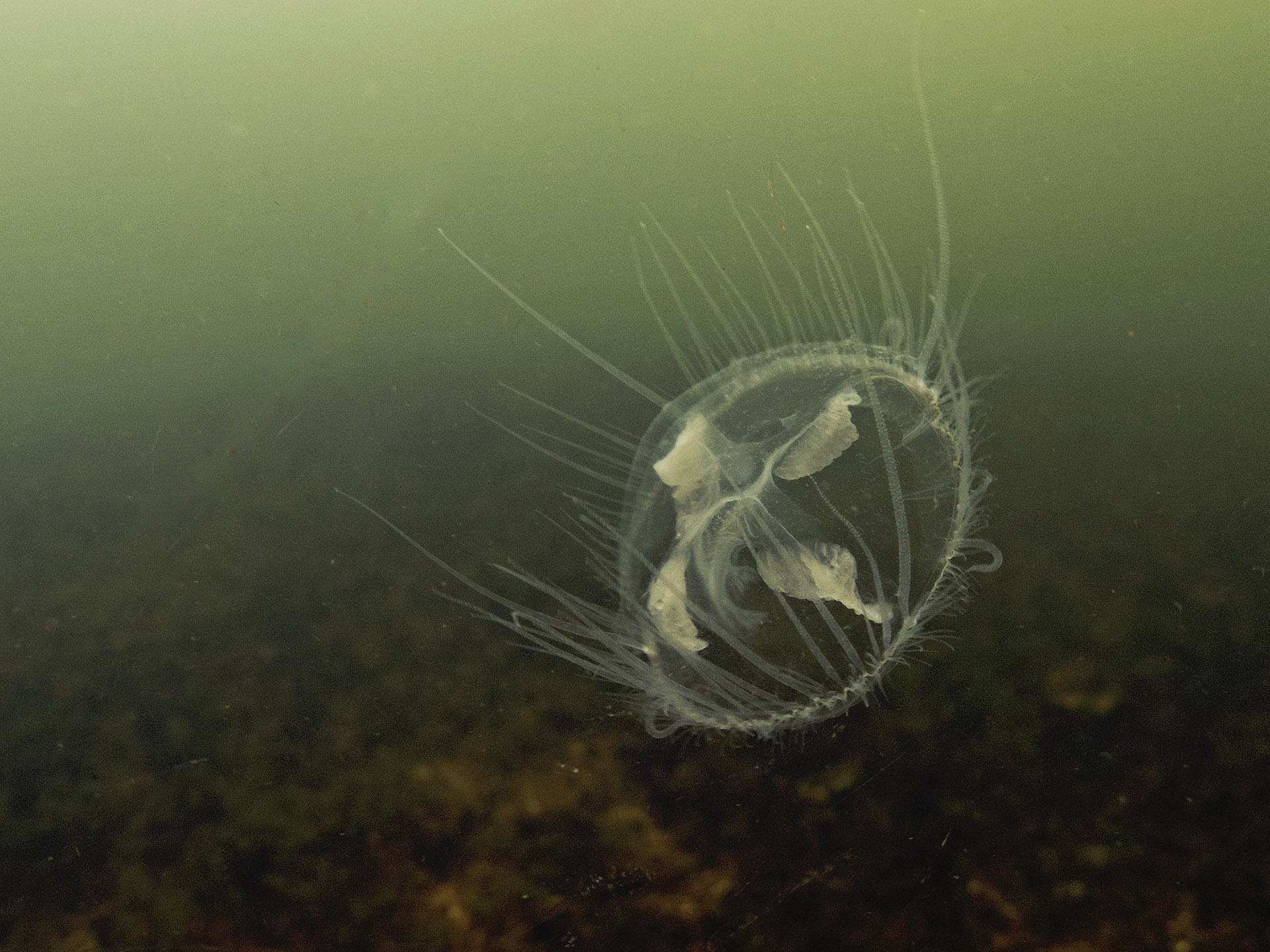
Craspedacusta sowerbii
fresh water jellyfish
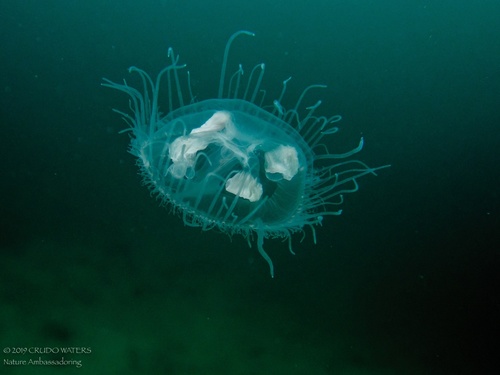
Craspedacusta
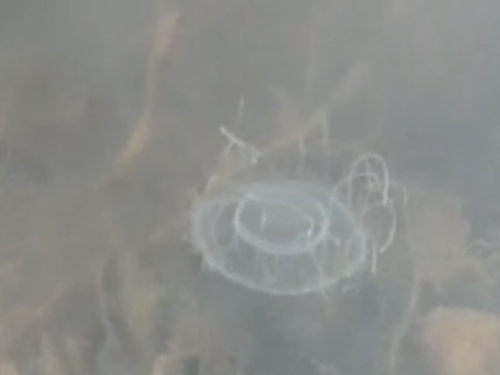
Craspedacusta is a genus of freshwater hydrozoans in the family Olindiidae. Like all members of that family, they have a polyp phase and a medusa phase.
Olindiidae
Olindiidae is a family of hydrozoans in the order Limnomedusae. They have a polyp phase and a medusa phase. The polyps are generally small (1 mm) and solitary, but a few species are colonial. They have a varying number of tentacles and can reproduce by budding. In the largest species, the medusae can grow to . Centripetal canals may be present or absent and the radial canals are unbranched. The gonads are beside the radial canals, except in Limnocnida, where they are on the manubrium. The fertilised eggs develop into planula larvae which become polyps. These multiply asexually or can bud

Flower hat jelly
species of cnidarian

Gonionemus vertens
species of cnidarian

Olindias
Olindias is a genus of hydrozoans in the family Olindiidae.
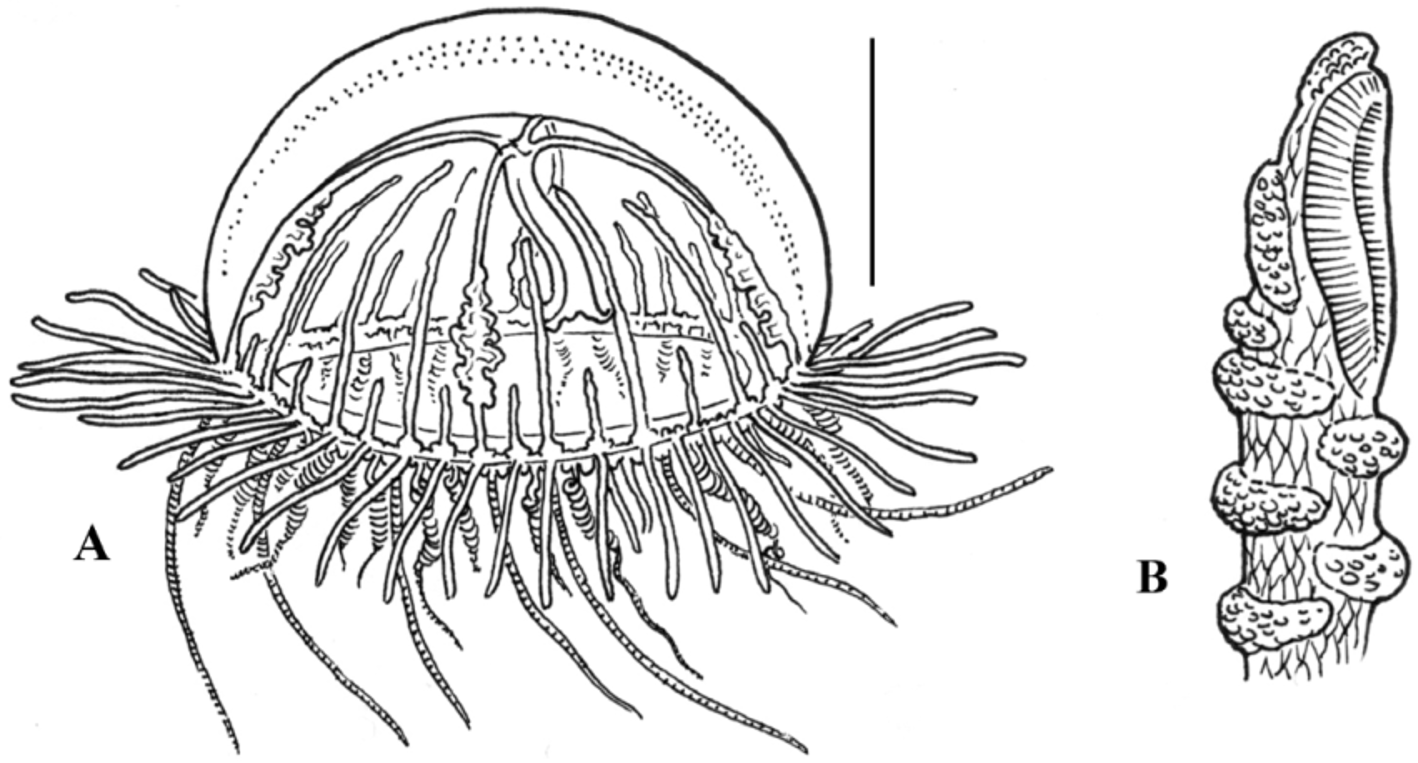
Olindias phosphorica
species of cnidarian
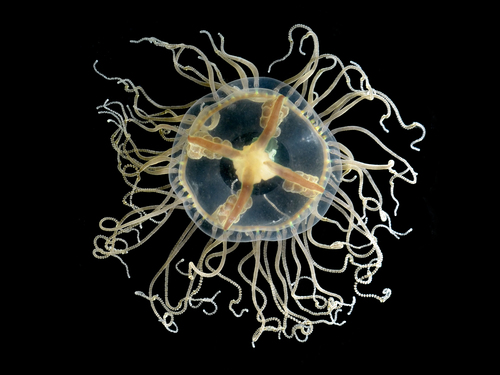
Gonionemus
Gonionemus is a genus of hydrozoans that use adhesive discs near the middle of each tentacle to attach to eelgrass, sea lettuce, or various types of algae instead of swimming. They are small (bell diameter to 25 mm) and hard to see when hanging onto swaying seaweed. Nevertheless, they are capable of swimming when necessary. The bell is transparent, revealing the four orange to yellowish-tan gonads that lie along most of the length of the four radial canals. The pale yellow manubrium has four short, frilly lips. Up to 80 tentacles line the bell margin, with about an equal number of statocy
Limnocnida
Limnocnida is a genus of hydrozoans belonging to the family Olindiidae.
Gossea
genus of cnidarians

Vallentinia
Vallentinia is a genus of hydrozoans in the family Olindiidae.
Scolionema
genus of cnidarians
Cubaia
Cubaia is a genus of freshwater hydrozoans in the family Olindiidae. Like all members of that family, they have a polyp phase and a medusa phase. The genus is monotypic, including only the species Cubaia aphrodite. It has been reported in the Bahamas. The genus is carnivorous and reproduce asexually.