Category
page 1Organic gardening

Nematoda
The nematodes ( or ; ; ), roundworms or eelworms constitute the phylum Nematoda. Species in the phylum inhabit a broad range of environments. Most species are free-living, feeding on microorganisms, but many are parasitic. Parasitic worms (helminths) are the cause of soil-transmitted helminthiases.

mulch
thumb|right|Bark chips applied as mulch
A mulch is a layer of material applied to the surface of soil. Reasons for applying mulch include conservation of soil moisture, improving fertility and health of the soil, reducing weed growth, and enhancing the visual appeal of the area.

kitchen garden
space separate from the rest of the residential garden
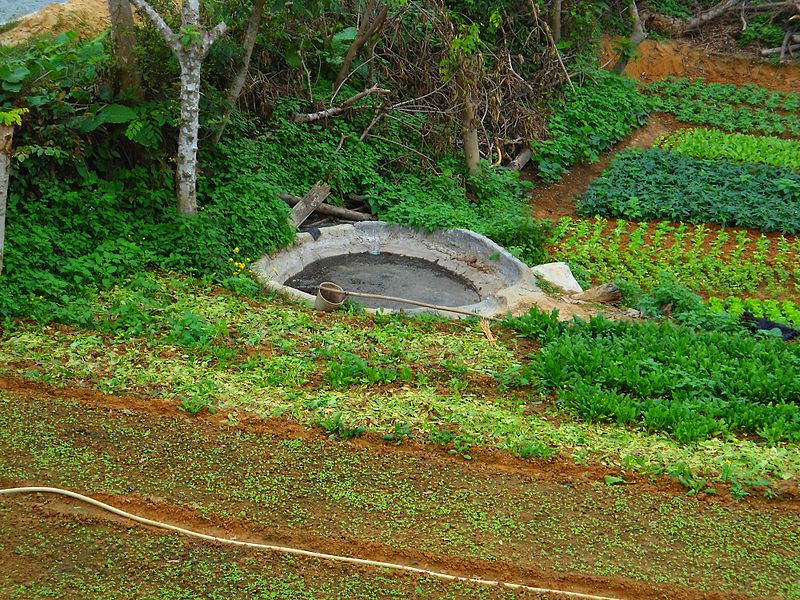
organic fertilizer
fertilizer developed from natural processes

vermicompost
thumb|upright=1.2|Vermicomposting uses worms to decompose waste and make nutrient-rich "worm manure".
soil pH
measure of the acidity or alkalinity in soils

Eisenia fetida
species of annelid

WWOOF
thumb|Japanese "wwoofer" in Guinea (2014)
thumb|A WWOOF participant farm in Australia. The raspberry bushes pictured require regular weeding.
bird feeder
receptacle or construction to supply bird food to birds
Three Sisters
main agricultural crops of various Native American groups in North America
wildlife garden
environment created by a gardener that serves as a sustainable haven for surrounding wildlife
seed ball
man-made ball of clay with seeds inside

Hügelkultur
[[File:Bakhátas magaságyás 2.png|thumb|A schematic image of a Hügelkultur mound.
spinosad
Spinosad is an insecticide based on chemical compounds found in the bacterial species Saccharopolyspora spinosa. The genus Saccharopolyspora was discovered in 1985 in isolates from crushed sugarcane. The bacteria produce yellowish-pink aerial hyphae, with bead-like chains of spores enclosed in a characteristic hairy sheath. This genus is defined as aerobic, Gram-positive, nonacid-fast actinomycetes with fragmenting substrate mycelium. S. spinosa was isolated from soil collected inside a nonoperational sugar mill rum still in the Virgin Islands. Spinosad is a mixture of chemical compounds in th
nutrient pollution
contamination of water by excessive inputs of nutrients
Square foot gardening
practice of dividing the growing area into small square sections
butterfly garden
Gardening to benefit butterflies
organic horticulture
art of organic cultivation of fruit, vegetables, flowers or ornamental plants

organoponics
thumb|upright=1.2|Produce and sunflowers from a Cuban organopónico
thumb|upright=1.2|Crop rows at Alamar Organic Farm in Havana. Many organoponics have been developed in urban environments, as seen by the city-scape in the background.
Organopónicos or organoponics is a system of urban agriculture using organic gardens. It originated in Cuba and is still mostly focused there. It often consists of low-level concrete walls filled with organic matter and soil, with lines of drip irrigation laid on the surface of the growing media. Organopónicos is a labour-intensive form of local agriculture.
Keyhole garden
keyhole garden is a 2 meter wide circular raised garden with a keyhole-shaped indentation on one side
insect trap
device used to monitor or reduce insect populations
sheet mulching
agricultural and gardening practice
Centre for Alternative Technology
eco-centre in Powys, mid-Wales, UK, demonstrating and teaching sustainable development
No-dig gardening
A type of permaculture

sustainable landscaping
low maintenance landscaping
Spent mushroom compost
food industry waste material