Category
page 1Organizational structure

headquarters
thumb|The headquarters of the United Nations in [[Midtown Manhattan, New York City]]
Headquarters (often referred to as HQ) notes the location where most or all of the important functions of an organization are coordinated. The term is used in a wide variety of situations, including private sector corporations, non-profits, military organizations, religious groups, sports leagues and so on. It usually implies a geographically dispersed organization with a clear hierarchical structure.
organizational structure
in an organisation, defines how activities such as task allocation and supervision are directed towards the achievement of its aims
organizational chart
diagram that shows the structure of an organization and the relationships and relative ranks of its parts and positions/jobs
ex officio
member of a body who is part of it by virtue of holding another office
holacracy
Holacracy is a method of decentralized management and organizational governance, which claims to distribute authority and decision-making through a holarchy of self-organizing teams rather than being vested in a management hierarchy. Holacracy has been adopted by for-profit and non-profit organizations in several countries. This can be seen as a greater movement within organisational design to cope with increasingly complex social environments, that promises a greater degree of transparency, effectiveness and agility.
Garbage can model
theory of organizational decison-making
industrial democracy
arrangement which involves workers making decisions, sharing responsibility and authority in the workplace

technostructure
thumb|Diagram, proposed by Henry Mintzberg, showing the main parts of organisation, including technostructure
Technostructure is the group of technicians, analysts within an organisation (enterprise, administrative body) with considerable influence and control on its economy. The term was coined by the economist John Kenneth Galbraith in The New Industrial State (1967). It usually refers to managerial capitalism where the managers and other company leading administrators, scientists, or lawyers retain more power and influence than the shareholders in the decisional and directional process.
hierarchical organization
organizational structure where every entity in the organization, except one, is subordinate to a single other entity
staff and line
Names given to different types of functions in organizations
departmentalizacion
Departmentalization (or departmentalisation) refers to the process of "grouping the organizational activities and structure into departments". Division of labour creates specialists who need coordination and the coordination is facilitated by grouping specialists together in departments.
flat organization
type of organizational structure
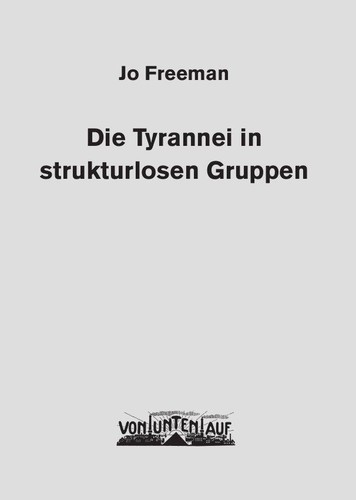
The Tyranny of Structurelessness
1972 essay by Jo Freeman
command center
place used to provide centralized command
Radical transparency
approaches to radically increase openness of organizational process and data
EFQM Excellence Model
followership
Followership are the actions of someone in a subordinate role. It may also be considered as particular services that can help the leader, a role within a hierarchical organization, a social construct that is integral to the leadership process, or the behaviors engaged in while interacting with leaders in an effort to meet organizational objectives. As such, followership is best defined as an intentional practice on the part of the subordinate to enhance the synergetic interchange between the follower and the leader.