Category
page 1Pan-Islamism

Islamic State
Salafi jihadist militant Sunni Islamist group

Al-Qaeda
Al-Qaeda is a pan-Islamist militant organization led by Sunni Islamist jihadists who self-identify as a vanguard spearheading a global Islamist revolution to unite the Muslim world under a supra-national Islamic caliphate. Its membership is mostly composed of Arabs but also includes people from other ethnic groups. Al-Qaeda has mounted attacks on civilian and military targets of the U.S. and its allies; such as the 1998 U.S. embassy bombings, the USS Cole bombing, and the September 11 attacks. It has been designated a terrorist organization by the United Nations and over two dozen countries ar

Ruhollah Khomeini
Ruhollah Mostafavi Musavi Khomeini was an Iranian political revolutionary and Shia cleric who served as the first supreme leader of Iran from 1979 until his death in 1989. He was the leader of the Iranian Revolution, which overthrew Mohammad Reza Pahlavi, ended the Pahlavi era, and transformed the country into an Islamic republic. As supreme leader, he implemented policies that came to be known as Khomeinism.

caliphate
A caliphate ( ) is an institution or public office under the leadership of an Islamic steward with the title of caliph (; , ), a person considered a political–religious successor to the Islamic prophet Muhammad and a leader of the entire Muslim world (ummah). Historically, the caliphates were polities based on Islam which developed into multi-ethnic trans-national empires.

King Faisal bin Abdulaziz Al Saud
King of Saudi Arabia from 1964 to 1975

Islamic Revolutionary Guard Corps
The Islamic Revolutionary Guard Corps (IRGC), also known domestically as Sepah or Pasdaran and internationally as Iranian Revolutionary Guards, is a multi-service primary force of the Iranian Armed Forces. It consists of five service branches: Ground Forces, Aerospace Force, Navy, Quds Force, and Basij. It is led by a commander-in-chief, who is appointed by and reports to the Supreme Leader of Iran.
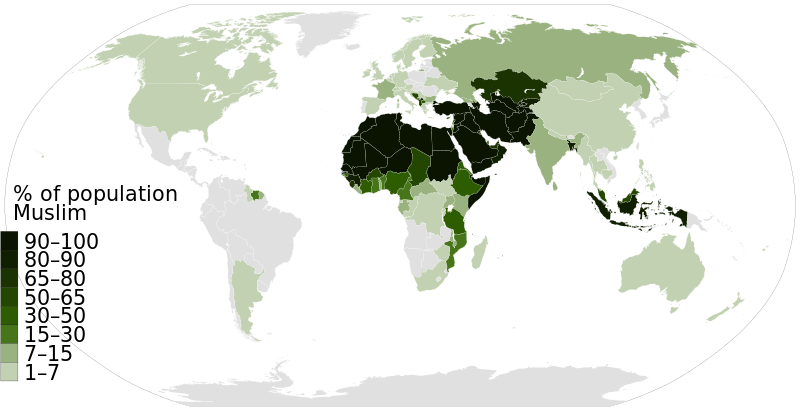
Muslim world
Muslim-majority countries, states, districts, or towns

mujahid
Mujahideen or mujahidin (), is the plural form of mujahid (), an Arabic term that broadly refers to people who engage in jihad (), interpreted in a jurisprudence of Islam as the fight on behalf of God, religion or the community (ummah).

ummah
''''''' (; ) is an Arabic word meaning Muslim identity, nation, religious community, or the concept of a commonwealth of the Muslim believers ( '). It is a synonym for '''' (, lit. 'the Islamic nation'); it is commonly used to mean the collective community of Muslim people. In the Quran, the ummah typically refers to a single group that shares common religious beliefs, specifically those that are the objects of a divine plan of salvation. The word ummah (pl. umam ) means nation in Arabic. For example, the Arabic term for the United Nations is , and the term is used to refer to "the Arab Nation

Muhammad Abduh
Egyptian Islamic jurist, religious scholar and liberal reformer (1849-1905)

Pan-Islamism
thumb|400px|Islam by country: [[Sunni Shia Ibadi]]thumb|Flag of the Shahada, often associated with Pan-Islamism.
Pan-Islamism () is a internationalist and anti-nationalist political movement that advocates the unity of Muslims under one Islamic state, often a caliphate or an international organization with Islamic principles. Historically, after Ottomanism, which aimed at the unity of all Ottoman citizens, pan-Islamism was promoted in the Ottoman Empire during the last quarter of the 19th century by Sultan Abdul Hamid II for the purpose of preventing secession movements of the Muslim peoples i
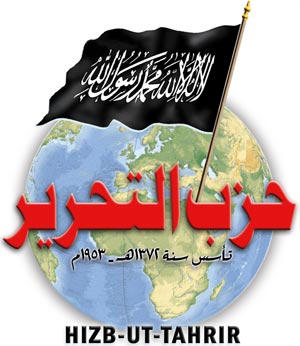
Hizb ut-Tahrir
Pan-Islamist and fundamentalist organization

Basmachi movement
decentralized decolonial movement which undertook a uprising against Russian Imperial and Soviet rule by the Muslim peoples of Central Asia (1916–1934)

Islamic feminism
form of feminist discourse concerned with the role of women in Islam; aims for the full equality of all Muslims, regardless of gender, in public and private life; advocates for women's rights, gender equality, and social justice grounded in Islam

Musavat Party
The Müsavat Party (, from musāwāt, ) is the oldest existing political party in Azerbaijan. Its history can be divided into three periods: Early Musavat, Musavat-in-exile and New Musavat.
Jamaat-e-Islami
Islamist political party in Pakistan
World Hijab Day
awareness day and annual event founded by Nazma Khan which encourage women to wear the hijab, to acquaint with the experience of wearing it, to educate and spread awareness on why hijab is worn, to promote wider acceptence of hijab wearing
Asa'ib Ahl al-Haq
Iraqi Shi'a paramilitary group
Oemar Said Tjokroaminoto
leader of Sarekat Islam (SI)
Masyumi Party
historical political party in Indonesia
New Welfare Party
political party in Turkey
Islamic International Peacekeeping Brigade
international mujahideen organisation
Islamic State
former quasi-state based mainly in Syria, Africa and southeast Asia
Silk Letter Conspiracy
The movement of silk letters

055 Brigade
Elite guerrilla organization

hijab by country
international differentiation in the practice of wearing head coverings among Muslim women
Islamic Legion
pan-Arabist militia
Ajnad al-Kavkaz
Chechen-led militia in the Syrian Civil War
Mladi muslimani
bosniak Islamist organization
Afghan Arabs
group of mujahideen during the Soviet-Afghan War

Tanzeem-e-Islami
Tanzeem-e-Islami () is a Pakistani Islamic organisation that advocates the implementation of the Sharia, Quran and Sunnah in the social, cultural, legal, political, and the economic spheres of life; and the "refutation of the misleading thoughts and philosophy of modernity".
Mohammad Iqbal Shedai
Indian activist
Sufi Amba Prasad
Indian revolutionary (1858–1919)