Category
page 2Paraphyletic groups

Hemiramphidae
Hemiramphidae is a family of fishes that are commonly called halfbeaks, spipe fish or spipefish. They are a geographically widespread and numerically abundant family of epipelagic fish inhabiting warm waters around the world. The halfbeaks are named for their distinctive jaws, in which the lower jaws are significantly longer than the upper jaws. The similar viviparous halfbeaks (family Zenarchopteridae) have often been included in this family.

Labyrinthodontia
"Labyrinthodontia" (Greek, 'maze-toothed') is an informal grouping of extinct predatory amphibians which were major components of ecosystems in the late Paleozoic and early Mesozoic eras (about 390 to 150 million years ago). Traditionally considered a subclass of the class Amphibia, modern classification systems recognize that labyrinthodonts are not a formal natural group (clade) exclusive of other tetrapods. Instead, they consistute an evolutionary grade (a paraphyletic group), ancestral to living tetrapods such as lissamphibians (modern amphibians) and amniotes (reptiles, mammals, and kin).

Prosimian
Prosimians are a group of primates that includes all living and extinct strepsirrhines (lemurs, lorisoids, and adapiforms), as well as the haplorhine tarsiers and their extinct relatives, the omomyiforms, i.e. all primates excluding the simians. They are considered to have characteristics that are more "primitive" (ancestral or plesiomorphic) than those of simians (monkeys, apes, and humans).

Archaeoceti
Archaeoceti ("ancient whales"), or Zeuglodontes in older literature, is an obsolete paraphyletic group of primitive cetaceans that lived from the Early Eocene to the late Oligocene (). Representing the earliest cetacean radiation, they include the initial semi-aquatic stages in cetacean evolution, thus are the ancestors of both modern cetacean suborders, Mysticeti and Odontoceti. This initial diversification occurred in the shallow waters that separated India and Asia , resulting in some 30 species adapted to a fully oceanic life. Echolocation and filter-feeding evolved during a second radiati
.jpg)
Plesiadapiformes
Plesiadapiformes ("Adapid-like" or "near Adapiformes") is an extinct basal pan-primates group, as sister to the rest of the pan-primates. The pan-primates together with the Dermoptera form the Primatomorpha. Purgatorius may not be a primate as an extinct sister to the rest of the Dermoptera or a separate, more basal stem pan-primate branch. Even with Purgatorius removed, the crown primates may even have emerged in this group.
left|thumb|The plesiadapiform Plesiadapis|Plesiadapis cookei (right), compared to [[Notharctus tenebrosus (left), an early crown primate. Both come from Eocene Wyoming, t
Ameridelphia
Ameridelphia is traditionally a superorder that includes all marsupials living in the Americas except for the monito del monte (Dromiciops). It is now regarded as a paraphyletic group.

Phalangeriformes
Phalangeriformes is a paraphyletic suborder of about 70 species of small to medium-sized arboreal marsupials native to Australia, New Guinea, and Sulawesi. The species are commonly known as possums, gliders, and cuscus. The common name "(o)possum" for various Phalangeriformes species derives from the creatures' resemblance to the opossums of the Americas (the term comes from Powhatan language aposoum "white animal", from Proto-Algonquian *wa·p-aʔɬemwa "white dog"). However, although opossums are also marsupials, Australasian possums are more closely related to other Australasian marsupials suc

Pteridospermatophyta
Pteridosperms, also known as seed ferns, are a polyphyletic grouping of extinct seed-producing plants. The earliest fossil evidence for plants of this type are the lyginopterids of late Devonian age. They flourished particularly during the Carboniferous and Permian periods. Pteridosperms declined during the Mesozoic Era and had mostly disappeared by the end of the Cretaceous Period, though Komlopteris seem to have survived into Eocene times, based on fossil finds in Tasmania.
Teleostomi
Teleostomi (from Greek τελεος, complete + Greek στόμα, mouth) is an obsolete taxon of jawed vertebrates that supposedly includes the tetrapods, bony fish, and the wholly extinct acanthodian fish. Key characters of this group include an operculum and a single pair of respiratory openings, features which were lost or modified in some later representatives. The teleostomes include all jawed vertebrates except the chondrichthyans and the extinct class Placodermi.

anamniotes
The anamniotes are an informal group of vertebrates comprising all fish and amphibians, which lay their eggs in aquatic environments. They are distinguished from the amniotes (reptiles, birds and mammals), which can reproduce on dry land either by laying shelled eggs or by carrying fertilized eggs within the female. Older sources, particularly before the 20th century, may refer to anamniotes as "lower vertebrates" and amniotes as "higher vertebrates", based on the antiquated idea of the evolutionary great chain of being.

Anthracotheriidae
Anthracotheriidae is a paraphyletic family of extinct, hippopotamus-like artiodactyl ungulates related to hippopotamuses and whales. The oldest genus, Elomeryx, first appeared during the middle Eocene in Asia. They thrived in Africa and Eurasia, with a few species ultimately entering North America during the Oligocene. They died out in Europe and Africa during the Miocene, possibly due to a combination of climatic changes and competition with other artiodactyls, including pigs and hippopotamuses. The youngest genus, Merycopotamus, died out in Asia during the late Pliocene, possibly for the sam
%20Lorryia%20formosa%202%20edit.jpg)
mite
Mites are small arachnids (eight-legged arthropods) of two large orders, the Acariformes and the Parasitiformes, which were historically grouped together in the subclass Acari. However, most recent genetic analyses do not recover the two as each other's closest relative within Arachnida, rendering the group invalid as a clade. Most mites are tiny, less than in length, and have a simple, unsegmented body plan. The small size of most species makes them easily overlooked; some species live in water, many live in soil as decomposers, others live on plants, sometimes creating galls, while others ar
Exopterygota
The Exopterygota (Ancient Greek ἔξω (éxō, "outside") + πτερόν (pterón, "wing") + Neo-Latin -ota ("having")), also known as Hemimetabola, are a superorder of insects of the subclass Pterygota in the infraclass Neoptera, in which the young resemble adults but have externally developing wings. They undergo a modest change between immature and adult, without going through a pupal stage. The nymphs develop gradually into adults through a process of moulting.

Lobopodia
Lobopodians are members of the informal group Lobopodia (), or the formally erected phylum Lobopoda Cavalier-Smith (1998). They are panarthropods with stubby legs called lobopods, a term which may also be used as a common name of this group as well. While the definition of lobopodians may differ between literatures, it usually refers to a group of soft-bodied, marine (and freshwater) worm-like fossil panarthropods such as Aysheaia and Hallucigenia. However, other genera like Kerygmachela and Pambdelurion (which have features similar to other groups) are often referred to as "gilled lobopodians

Gomphothere
Gomphotheres are an extinct group of proboscideans related to modern elephants. First appearing in Africa during the Oligocene, they dispersed into Eurasia and North America during the Miocene and arrived in South America during the Pleistocene as part of the Great American Interchange. Gomphotheres are a paraphyletic group ancestral to Elephantidae, which contains modern elephants, as well as Stegodontidae.
Archaeobatrachia
Archaeobatrachia (Neo-Latin archaeo- ("old") + batrachia ("frog")) is a suborder of the order Anura containing various primitive frogs and toads. As the name suggests, these are the most primitive frogs. Many of the species (28 in total) show certain physiological characteristics which are not present in other frogs and toads, thus giving rise to this group. They are largely found in Eurasia, New Zealand, the Philippines, and Borneo, and are characteristically small. In addition, the family Ascaphidae is found in the Pacific Northwest and northern Rocky Mountains of the United States, and is o

Adenophorea
thumb|right|240px|Mononchidae eating a Mononchidae
Adenophorea or Aphasmidia was a class of nematodes (roundworms). It has been by and large abandoned by modern taxonomy, because there is strong evidence for it being a motley paraphyletic group of unrelated lineages of roundworms.
Anopla
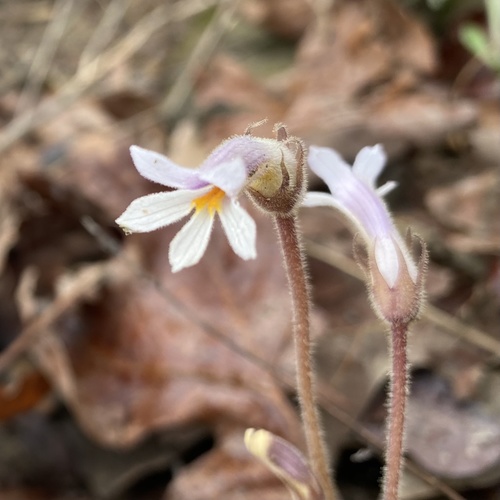
Anopla (for changes in taxonomy, see reference from 2019) has long been used as name for a class of marine worms of the phylum Nemertea, characterized by the absence of stylets on the proboscis, the mouth being below or behind the brain, and by having separate openings for the mouth and proboscis. The other long used class of Nemertea are the Enopla (for changes in taxonomy, see reference from 2019). Although Anopla is a paraphyletic grouping, it is used in almost all scientific classifications. Anopla is divided into two orders: Palaeonemertea and Heteronemertea.

Thecodontia
thumb|right|Rutiodon, one of the aquatic and superficially crocodile-like [[phytosaurs]]
Thecodontia (meaning 'socket-teeth'), now considered an obsolete taxonomic grouping, was formerly used to describe a diverse "order" of early archosaurian reptiles that first appeared in the latest Permian period and flourished until the end of the Triassic period. All of them were built somewhat like crocodiles but with shorter skulls, more erect pose and usually somewhat lighter. The group includes the ancestors of dinosaurs, pterosaurs, and crocodilians, as well as a number of extinct forms that did not

Basilosauridae
Basilosauridae is a family of extinct cetaceans that lived during the middle to late Eocene. Basilosaurids are known from all continents including Antarctica, and are probably the first fully aquatic cetaceans. The group is noted to be a paraphyletic assemblage of stem group whales from which the monophyletic Neoceti are derived.
wastebasket taxon
poorly defined taxon with an heterogeneous content
Adapiformes
Adapiformes is a group of early primates. Adapiforms radiated throughout much of the northern continental mass (now Europe, Asia and North America), reaching as far south as northern Africa and tropical Asia. They existed from the Eocene to the Miocene epoch. Some adapiforms resembled living lemurs.
Rhamphorhynchoidea
The Rhamphorhynchoidea forms one of the two suborders of pterosaurs and represents an evolutionary grade of primitive members of flying reptiles. This suborder is paraphyletic unlike the Pterodactyloidea, which arose from within the Rhamphorhynchoidea as opposed to a more distant common ancestor. Because it is not a completely natural grouping, Rhamphorhynchoidea is not used as a formal group in most scientific literature, though some pterosaur scientists continue to use it as an informal grouping in popular works, such as The Pterosaurs: From Deep Time by David Unwin, and in some formal studi
Ichthyostegalia
Ichthyostegalia is an obsolete order of early amphibians, representing the earliest landliving vertebrates. The group is thus an evolutionary grade rather than a clade. While the group are recognized as having feet rather than fins, most, if not all, had internal gills in adulthood and lived primarily as shallow water fish and spent minimal time on land.
Corvida
The "Corvida" were one of two "parvorders" contained within the suborder Passeri, as proposed in the Sibley-Ahlquist taxonomy, the other being Passerida. Standard taxonomic practice would place them at the rank of infraorder.

Omomyidae
Omomyidae is a group of early primates that radiated during the Eocene epoch between about (mya). Fossil omomyids are found in North America, Europe & Asia, making it one of two groups of Eocene primates with a geographic distribution spanning holarctic continents, the other being the adapids (family Adapidae). Early representatives of the Omomyidae and Adapidae appear suddenly at the beginning of the Eocene (56 mya) in North America, Europe, and Asia, and are the earliest known crown primates.

Anthracosauria
Anthracosauria is a paraphyletic order of extinct reptile-like amphibians (in the broad sense) that flourished during the Carboniferous and early Permian periods, although precisely which species are included depends on one's definition of the taxon. "Anthracosauria" is sometimes used to refer to all tetrapods more closely related to amniotes such as reptiles, mammals, and birds, than to lissamphibians such as frogs and salamanders. An equivalent term to this definition would be Reptiliomorpha. Anthracosauria has also been used to refer to a smaller group of large, crocodilian-like aquatic tet

Dinocaridida
Dinocaridida is a proposed fossil taxon of basal arthropods, which flourished during the Cambrian period and survived up to Early Devonian. Characterized by a pair of frontal appendages and series of body flaps, the name of Dinocaridids (Greek for deinos "terrible" and Latin for caris "crab") refers to the suggested role of some of these members as the largest marine predators of their time. Dinocaridids are occasionally referred to as the 'AOPK group' by some literatures, as the group composed of Radiodonta (Anomalocaris and relatives), Opabiniidae (Opabinia and relatives), and the "gilled lo

rat
Rats are various medium-sized, long-tailed rodents. Species of rats are found throughout the order Rodentia, but stereotypical rats are found in the genus Rattus. Other rat genera include Neotoma (pack rats), Bandicota (bandicoot rats) and Dipodomys (kangaroo rats).

Protocetidae
Protocetidae, the protocetids, form a paraphyletic, diverse and heterogeneous group of extinct cetaceans known from Asia, Europe, Africa, South America, and North America.
Parasitica
Parasitica (the parasitican wasps) is an obsolete, paraphyletic infraorder of Apocrita containing the parasitoid wasps. It includes all Apocrita except for the Aculeata. Parasitica has more members as a group than both the Symphyta and the Aculeata combined.

Microlepidoptera
thumb|Some typical microlepidoptera: an Alucitidae|alucitid many-plumed moth in the top centre; a white pterophorid plume moth in the centre.
Progymnosperm
The progymnosperms are an extinct group of woody, spore-bearing plants that is presumed to have evolved from the trimerophytes, and eventually gave rise to the spermatophytes, ancestral to both gymnosperms and angiosperms (flowering plants). They have been treated formally at the rank of division Progymnospermophyta or class Progymnospermopsida (as opposite). The stratigraphically oldest known examples belong to the Middle Devonian order the Aneurophytales, with forms such as Protopteridium, in which the vegetative organs consisted of relatively loose clusters of axes. Tetraxylopteris is anoth
Climatiiformes
The Climatiiformes is a paraphyletic order of extinct fish belonging to the class Acanthodii. Like most other "spiny sharks", the Climatiiformes had sharp spines. These animals were often fairly small in size and lived from the Late Silurian to the Early Carboniferous period. The type genus is Climatius. The order used to be subdivided into the suborders Climatiida and Diplacanthida, but subsequently Diplacanthida has been elevated to a separate order, the Diplacanthiformes. The Diplacanthiformes take their name from Diplacanthus, first described by Agassiz in 1843. Family Gyracanthidae is som

Rhynchobdellida
Rhynchobdellida (from the Greek rhynchos, mouth, and bdellein, sucking), the jawless leeches or freshwater leeches, are an order of aquatic leeches. Despite the common name "freshwater leeches", species are found in both sea and fresh water. They are defined by the presence of a protrusible proboscis instead of jaws, and having colourless blood. They move by "inchworming" and are found worldwide. The order contains 110 species, divided into 41 genera and three families. Members of the order range widely in length, usually between 7 and 40 mm. They are hermaphrodite. The order is not monop

Rauisuchians
"Rauisuchia" is a paraphyletic group of mostly large and carnivorous Triassic archosaurs. Rauisuchians are a category of archosaurs within a larger group called Pseudosuchia, which encompasses all archosaurs more closely related to crocodilians than to birds and other dinosaurs. First named in the 1940s, Rauisuchia was a name exclusive to Triassic archosaurs which were generally large (often ), carnivorous, and quadrupedal with a pillar-erect hip posture, though exceptions exist for all of these traits. Rauisuchians, as a traditional taxonomic group, were considered distinct from other Triassi

tetra
thumb|right|250px|Black neon tetra, Hyphessobrycon herbertaxelrodi
thumb|right|250px|Pristella tetra, Pristella maxillaris
thumb|right|250px|Golden pristella tetra, a morph (zoology)|morph of [[Pristella maxillaris]]
thumb|right|250px|Silvertip tetra, Hasemania nana
Osteolepiformes
Osteolepiformes, also known as Osteolepidida, is a group of prehistoric lobe-finned fishes which first appeared during the Devonian period. The order contains the families Canowindridae, Megalichthyidae, Osteolepididae and Tristichopteridae, in addition to several monotypic families. The order is generally considered to be paraphyletic because the characters that define it are mainly attributes of stem tetrapodomorphs.
New World rats and mice
informal group of mammals
Monotrysia
The Monotrysia are a group of moths in the lepidopteran order, not currently considered to be a natural group or clade. The group is so named because the female has a single genital opening for mating and laying eggs, in contrast to the rest of the Lepidoptera (Ditrysia), which have two female reproductive openings. Later classifications used Monotrysia in a narrower sense for the nonditrysian Heteroneura, but this group was also found to be paraphyletic with respect to Ditrysia. Apart from the recently discovered family Andesianidae, most of the group consists of small, relatively understudie

Younginiformes
Younginiformes is a potential group of diapsid reptiles known from the Permian–Triassic of Africa. It has been used as a replacement for the more problematically-defined "Eosuchia". Younginiforms were historically suggested to be lepidosauromorphs, but are now regarded as basal non-saurian neodiapsids. Some younginiforms like Hovasaurus and Acerosodontosaurus are thought to have had an amphibious lifestyle, while others like Kenyasaurus, Thadeosaurus, and younginids were probably terrestrial.

Sphenosuchia
Sphenosuchia is a grouping of basal crocodylomorphs that first appeared in the Triassic and persisted into the Jurassic. Most were small, gracile animals with an erect limb posture. Although sometimes recovered as a monophyletic group, they are now generally thought to represent various early offshoots of the lineage leading to Crocodyliformes, with some sphenosuchians more closely related to crocodyliforms than to other "sphenosuchians", rendering the group paraphyletic.

snipe
A snipe is any of about 26 wading bird species in three genera in the family Scolopacidae. They are distinguished by a very long, slender bill, eyes placed high on the head, and cryptic/camouflaging plumage. The snipes in the genus Gallinago have a nearly worldwide distribution, the Lymnocryptes snipes are restricted to Asia and Europe, and the snipes in the genus Coenocorypha are now found only in the outlying islands of New Zealand. The genus Lymnocryptes is more closely related to woodcocks (Scolopax) than it is to other snipes; with woodcocks included, the four genera form a monophyletic g
Loukozoa
Loukozoa (From Greek loukos: groove) is a proposed taxon used in some classifications of eukaryotes, consisting of the Metamonada and Malawimonadea. Ancyromonads are closely related to this group, as sister of the entire group, or as sister of the Metamonada. Amorphea may have emerged in this grouping, specifically as sister of the malawimonads.
Onychodontiformes
Onychodontiformes (also known as Onychodontida and Struniiformes) is an order of prehistoric sarcopterygian fish that lived during the Devonian period. The onychodontiforms are generally regarded as early-diverging members of the coelacanth lineage.

Tragulina
Tragulina (also known as Traguliformes) is an infraorder of even-toed ungulates. Only the chevrotains survive to the present, including the genera Tragulus (the mouse deer) and Hyemoschus, all within the family Tragulidae.
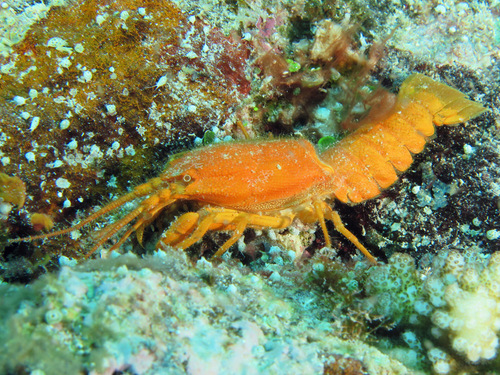
Furry lobster
species of crustacean

Spheciformes
Spheciformes is an obsolete paraphyletic assemblage of insect families which collectively comprise the "sphecoid wasps", and includes about 10,000 species and several hundred genera. The largest genus is Cerceris (Philanthidae), with almost 900 species. Larvae are carnivorous, consuming prey captured by adult females and typically paralyzed with venom, provisioned in underground nests.

Palaeonisciformes
Palaeoniscoids (also spelled paleoniscoid, or alternatively paleoniscids) are an extinct grouping of primitive ray-finned fish (Actinopterygii), spanning from the Silurian/Devonian to the Cretaceous. Though often assigned to their own order, the Palaeonisciformes (or superorder Palaeoniscimorpha), they are generally considered paraphyletic, but their exact relationships to living ray-finned fish are uncertain. While some and perhaps most palaeoniscoids likely belong to the stem-group of Actinopteryii (less closely related to modern ray-finned fish groups than all modern ray-finned fish are to

Protorothyrididae
left|thumb|Skull of Paleothyris
Protorothyrididae is an extinct proposed family of small, lizard-like reptiliomorphs traditionally thought to be early members of "Eureptilia". Their skulls did not have the fenestrae seen in the more derived diapsids. Protorothyridids lived from the late Carboniferous to early Permian periods, in what is now North America.
Protosuchia
Protosuchia is a group of extinct Mesozoic crocodyliforms. They were small in size (~1 meter in length) and terrestrial. In phylogenetic terms, Protosuchia is considered an informal group because it is a grade of basal crocodyliforms, not a true clade.
Triisodontidae
Triisodontidae is an extinct, probably paraphyletic, or possibly invalid family of mesonychian placental mammals. Most triisodontid genera lived during the Paleocene in North America, but the genus Andrewsarchus (if it is a mesonychian, and not an artiodactyl) is known from the middle Eocene of Asia. Triisodontids were the first relatively large predatory mammals to appear in North America following the extinction of the non-bird dinosaurs. They differ from other mesonychian families in having less highly modified teeth.
Eocrinoidea
The Eocrinoidea were an extinct class of echinoderms that lived between the Early Cambrian and Late Silurian periods. They are the earliest known group of stalked, brachiole-bearing echinoderms, and were the most common echinoderms during the Cambrian.

Captorhinida
thumb|right|Fossil of Labidosaurus|Labidosaurus hamatus
Captorhinida (older name: Cotylosauria) is a doubly paraphyletic grouping of early reptiles. Robert L. Carroll (1988) ranked it as an order in the subclass Anapsida, composed of the following suborders:
Notioprogonia
Notioprogonia is a suborder of the extinct mammalian order Notoungulata and includes two families, Henricosborniidae and Notostylopidae.
Pongid
Pongidae , or the pongids is an obsolete primate taxon containing chimpanzees, gorillas and orangutans. By this definition pongids were also called "great apes". This taxon is not used today but is of historical significance. The great apes are currently classified as Hominidae. This entry addresses the old usage of pongid.
Palaeeudyptinae
Palaeeudyptinae, the giant penguins, is a paraphyletic subfamily of prehistoric penguins. It includes several genera of medium-sized to very large species, such as Icadyptes salasi, Palaeeudyptes marplesi, Anthropornis nordenskjoeldi, and Pachydyptes ponderosus. Icadyptes reached in height, while members of Palaeeudyptes and Anthropornis grew even taller and were some of the largest penguins to have ever existed. The massive P. ponderosus may have weighed at least as much as an adult human.
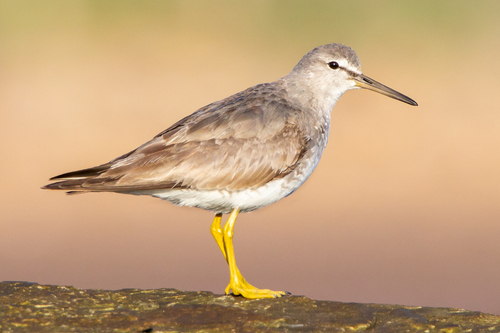
Tattler
genus of birds
Protorosauria
Protorosauria is an extinct, likely paraphyletic group of basal archosauromorph reptiles from the latest Middle Permian (Capitanian stage) to the end of the Late Triassic (Rhaetian stage) of Asia, Europe and North America. It was named by the English anatomist and paleontologist Thomas Henry Huxley in 1871 as an order, originally to solely contain Protorosaurus. Other names which were once considered equivalent to Protorosauria include Prolacertiformes and Prolacertilia.
Isotemnidae
Isotemnidae is a paraphyletic extinct family of notoungulate mammals known from the Paleocene (Las Flores Formation, Itaboraian) to Middle Miocene (Honda Group, Laventan) of South America.