Angulo, Arturo;Betts, Joel T.;González-Alemán, Néstor J.;Castañeda, Edgar;Berghe, Eric Van Den;Elías, Diego J.;Mcmahan, Caleb D.;Matamoros, Wilfredo A.
Hemiramphidae
Sign in to saveAlso known as halfbeak
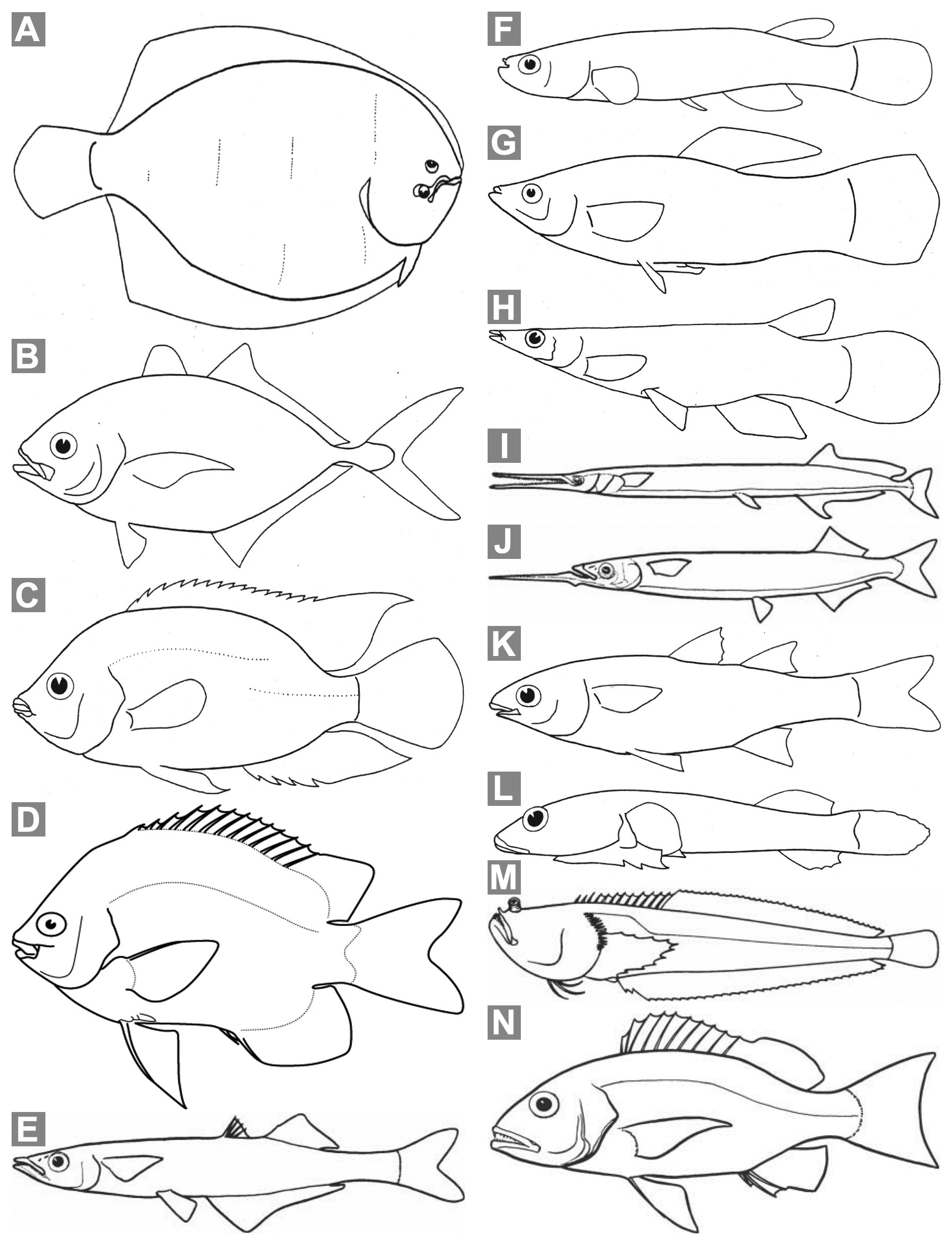
Hemiramphidae is a family of fishes that are commonly called halfbeaks, spipe fish or spipefish. They are a geographically widespread and numerically abundant family of epipelagic fish inhabiting warm waters around the world. The halfbeaks are named for their distinctive jaws, in which the lower jaws are significantly longer than the upper jaws. The similar viviparous halfbeaks (family Zenarchopteridae) have often been included in this family.
Species
halfbeaks
FAMILY
- KingdomAnimalia
- PhylumChordata
- ClassTeleostei
- OrderBeloniformes
- FamilyHemiramphidae
via GBIF
Museum specimens
- Specimen records
- 533
- With media
- 68
- Family
- Hemiramphidae
- Collections
- ECOSUR, DESZC-CUCSUR-UDG, CUMV, TCWC, YPM, CAS
- Recorded in
- Mexico, Philippines, Cambodia, United States, Micronesia, Sri Lanka, Belize, Thailand
Wikidata facts
- Instance of
- taxon
- Parent taxon
- Beloniformes
- Image
- Hyporhamphus unifasciatus.jpg
Show 6 more facts
- Commons category
- Hemiramphidae
- taxon rank
- family
- taxon name
- Hemiramphidae
- Code of nomenclature
- International Code of Zoological Nomenclature
- topic's main category
- Category:Hemiramphidae
- taxon common name
- ปลาเข็ม
Sources (1)
via Wikidata · CC0
~10 min read
Encyclopedic overview
13 sectionsContents
- Taxonomy
- Evolution
- Phylogeny
- Morphology
- Range and habitat
- Ecology and behavior
- Feeding
- Behavior
- Reproduction
- Relationship to humans
- Halfbeak fisheries
- See also
- References
Hemiramphidae is a family of fishes that are commonly called halfbeaks, spipe fish or spipefish. They are a geographically widespread and numerically abundant family of epipelagic fish inhabiting warm waters around the world. The halfbeaks are named for their distinctive jaws, in which the lower jaws are significantly longer than the upper jaws. The similar viviparous halfbeaks (family Zenarchopteridae) have often been included in this family.
Though not commercially important themselves, these forage fish support artisanal fisheries and local markets worldwide. They are also fed upon by other commercially important predatory fishes, such as billfishes, mackerels, and sharks.
Excerpted from Wikipedia’s “Hemiramphidae” article, available under the CC BY-SA 4.0 licence.