Category
page 1Parasitic protostomes

Nematomorpha
Nematomorpha (sometimes called Gordiacea, and commonly known as horsehair worms, hairsnakes, or Gordian worms) are a phylum of parasitoid animals similar to yet distinct from nematode worms in morphology, hence the name. Most species range in size from , reaching in extreme cases, and in diameter. Horsehair worms can be discovered in damp areas, such as watering troughs, swimming pools, streams, puddles, and cisterns. The adult worms are free-living, but the larvae are parasitic on arthropods, such as beetles, cockroaches, mantises, orthopterans, and crustaceans. About 351 freshwater species a
helminth
macroscopic, parasitic worm

Myzostomida
The Myzostomida or Myzostomatida are an order of small marine worms, which are parasitic on echinoderms, mostly crinoids. These highly unusual and diverse annelids were first discovered by Friedrich Sigismund Leuckart in 1827.

Rhynchobdellida
Rhynchobdellida (from the Greek rhynchos, mouth, and bdellein, sucking), the jawless leeches or freshwater leeches, are an order of aquatic leeches. Despite the common name "freshwater leeches", species are found in both sea and fresh water. They are defined by the presence of a protrusible proboscis instead of jaws, and having colourless blood. They move by "inchworming" and are found worldwide. The order contains 110 species, divided into 41 genera and three families. Members of the order range widely in length, usually between 7 and 40 mm. They are hermaphrodite. The order is not monop

Dicyemida
Dicyemida, also known as Rhombozoa, is a phylum of tiny parasites that live in the renal appendages of cephalopods.
sucker
specialised attachment organ of an animal
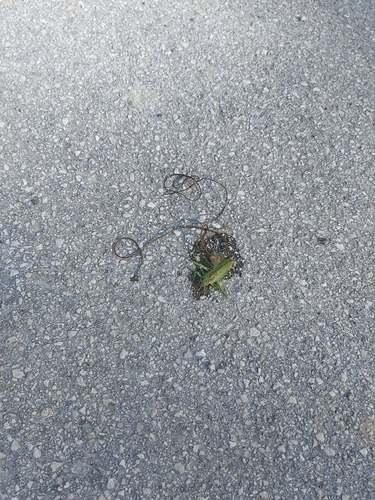
Spinochordodes tellinii
species of worm
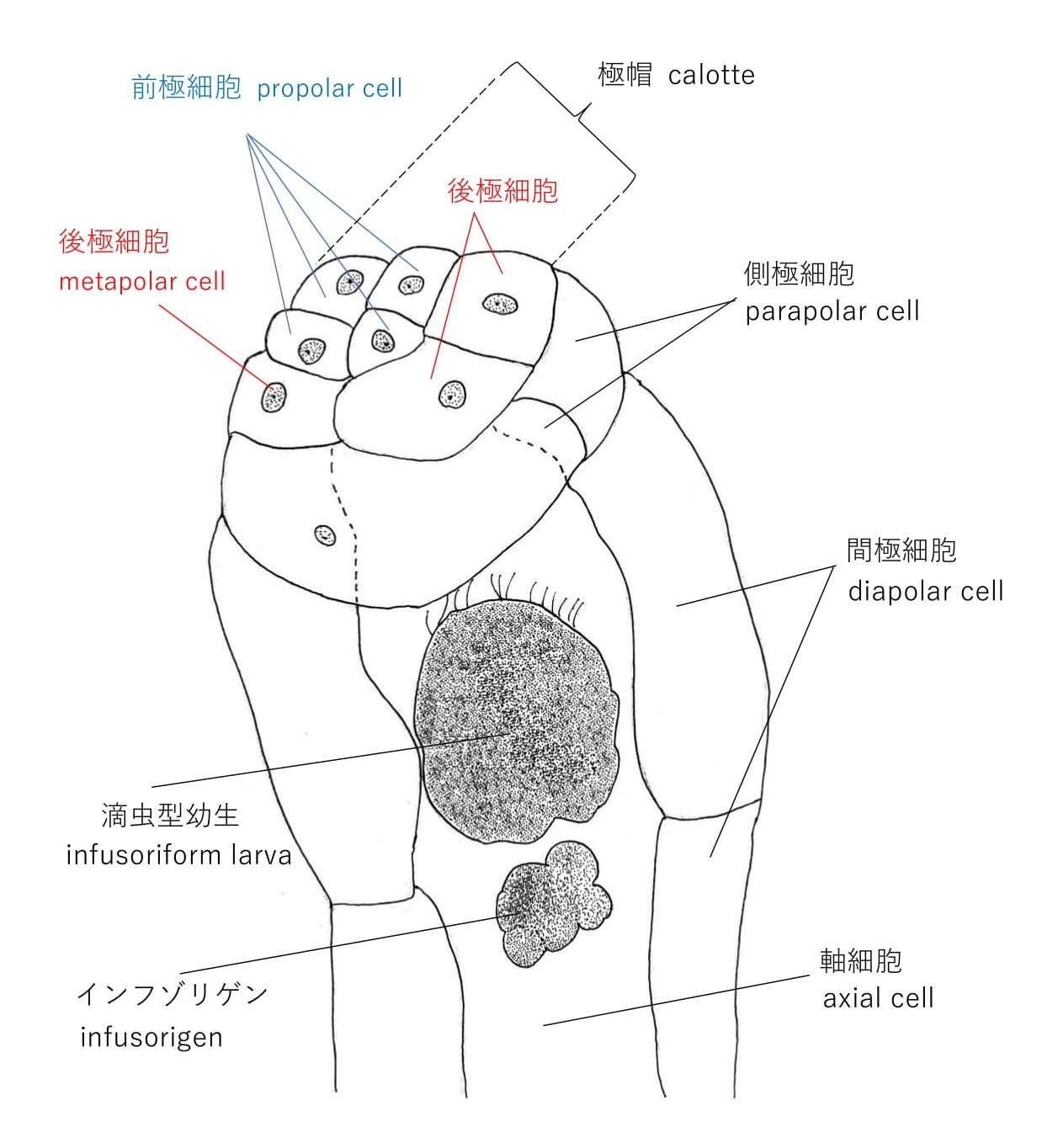
Dicyemidae
The Dicyemidae is a family of tiny parasites that live in the renal appendages of cephalopods. It contains the following genera and species:
Dicyema von Kolliker, 1849
Dicyemennea Whitman, 1883
Dicyemodeca
Dicyemodeca anthinocephalum Furuya, 1999 - parasitizes Octopus dofleini
Dicyemodeca deca (McConnaughey, 1957)
Dicyemodeca dogieli Bogolepova, 1957
Dodecadicyema Kalavati & Narasimhamurti, 1979
Dodecadicyema loligoi Kalavati & Narasimhamurti, 1980
Pleodicyema
Pleodicyema delamarei Nouvel, 1961
Pseudicyema Nouvel, 1933
Pseudicyema cappacephalum Furuya, 2009
Pseudicyema nakaoi F
Paragordius tricuspidatus
species of worm

Haemadipsa
Haemadipsa is a genus of leeches, with members commonly known as jawed land leeches. These annelids are known from subtropical and tropical regions around the Indian and Pacific Ocean. Well-known Haemadipsa are for example the Indian Leech (Haemadipsa sylvestris) and the yamabiru or Japanese Mountain Leech (Haemadipsa zeylanica). Members of the genus feed on blood. They are troublesome to humans and animals especially because their bites result in prolonged bleeding.
Gordiidae
Gordiidae is a family of parasitic horsehair worms belonging to the order Gordioidea.
Gordioidea
Gordioidea is an order (sometimes placed at superfamily level) of parasitic horsehair worms. Its taxonomy remains uncertain, but appears to be contained in the monotypic class Gordioida and contains about 320 known species.
Nectonema
Nectonema is a genus of marine horsehair worms first described by Addison E. Verrill in 1879. It is the only genus in the family Nectonematidae described by Henry B. Ward in 1892, in the order Nectonematoidea, and in the class Nectonematoida. The genus contains five species; all species have a parasitic larval stage inhabiting crustacean hosts and a free-living adult stage that swims in open water.

Cancellaria cooperii
species of mollusc

Haemadipsa picta
species of terrestrial leech

Paragordius varius
species of worm
Heterocyemida
Heterocyemida is an order of parasites which dwell in the renal appendages of cephalopods.