Category
page 1Passover

Easter
Easter, also called Pasch () or Pascha or Resurrection Sunday, is a Christian festival and cultural holiday commemorating the resurrection of Jesus from the dead, described in the Bible's New Testament as having occurred on the third day of his burial following his crucifixion by the Romans at Calvary . It is the culmination of the Passion of Jesus, preceded by Lent (or Great Lent), a 40-day period of fasting, prayer, and penance.

Song of Songs
book of the Bible
Passover
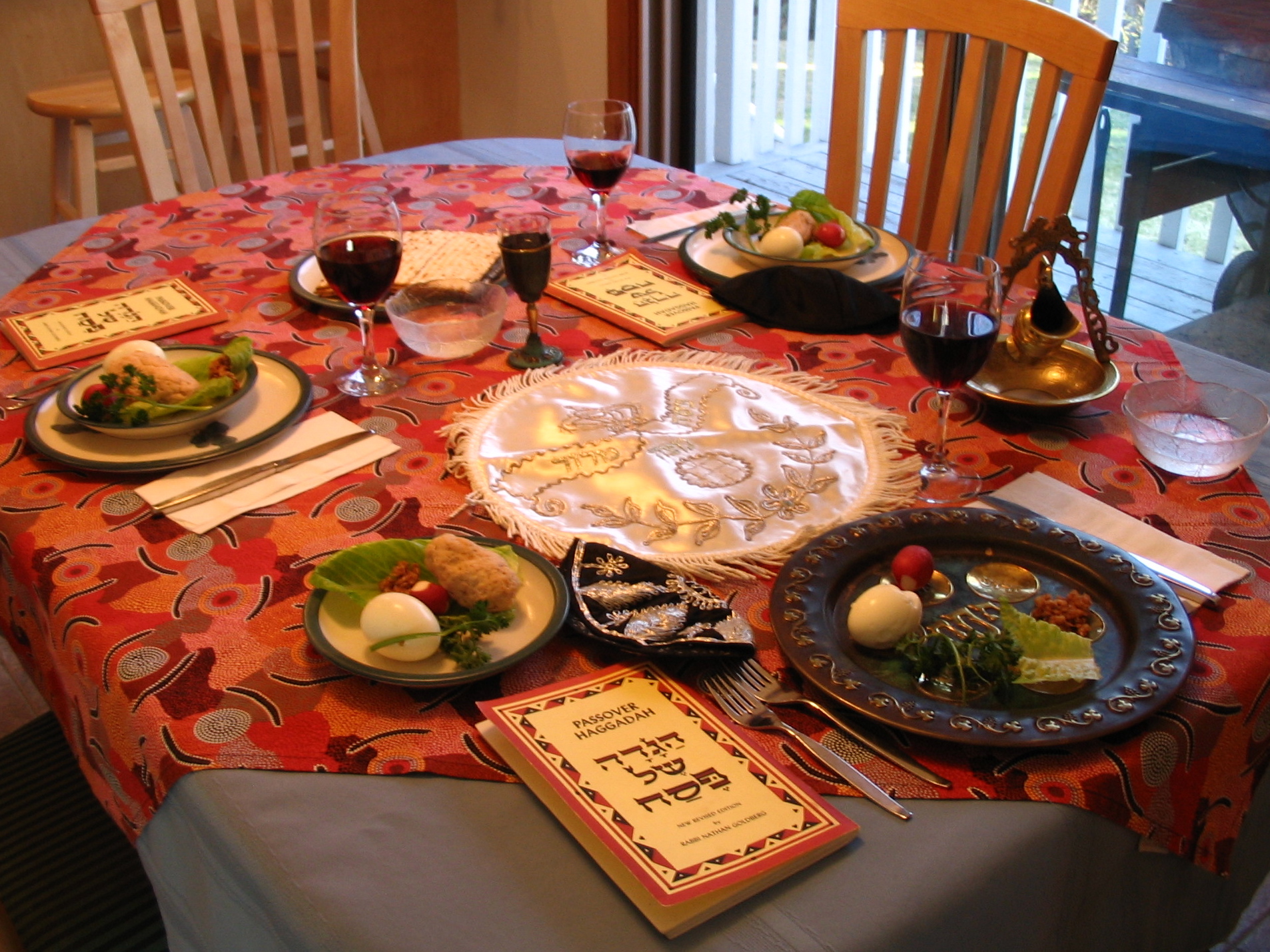
Passover, also called Pasch () or Pesach (; ), or Peysekh in Yiddish, is a major Jewish holiday and one of the Three Pilgrimage Festivals. It celebrates the Exodus of the Israelites from slavery in Egypt.

Plagues of Egypt
ten epidemics sent down on Egypt according to Exodus chapters 7 to 10
The Exodus
story of the freeing of the Israelites from bondage in Egypt, narrated in the Torah
counting of the Omer
counting of the days from Passover to Shavuot

Chametz
Chametz (also chometz, '', ḥameṣ, ḥameç'' and other spellings transliterated from ; ) are foods with leavening agents that are forbidden to Jews on the holiday of Passover.

Machzor
thumb|Amsterdam Machzor, written in [[Cologne c. 1250, is one of the earliest illuminated manuscripts of Ashkenazi origin. Joods Historisch Museum]]
thumb|Mahzor written on parchment in Hebrew in an Italian square script and dated to the 14th or 15th century. [[Chester Beatty Library]]
The machzor (, plural machzorim, and , respectively) is the prayer book which is used by Jews on the High Holy Days of Rosh Hashanah and Yom Kippur. Many Jews also make use of specialized machzorim on the three pilgrimage festivals of Passover, Shavuot, and Sukkot. The machzor is a specialized form of the siddur
Fast of the Firstborn
fast day in Judaism which usually falls on the day before Passover

Mimouna
Mimouna (, , Berber: Mimuna, ⵎⵉⵎⵓⵏⴰ) is a traditional Maghrebi Jewish celebration dinner that takes place in Morocco, Israel, France, Canada, and other places around the world where Maghrebi Jews live. It is held the day after Passover, marking the return to eating hametz (leavened bread), which is forbidden throughout the week of Passover.
mangal
Middle Eastern barbecue
Korban Pesach
The sacrifice that the Torah mandates the Israelites to ritually slaughter and eat on the first night of Pesach
Chol HaMoed
middle days of some Jewish holidays
Passover massacre
2002 Hamas suicide bombing in Israel
omer
antique unit of measurement

Pesahim
Pesachim (, lit. "Paschal lambs" or "Passovers"), also spelled Pesahim, is the third tractate of Seder Moed ("Order of Festivals") of the Mishnah and of the Talmud. The tractate discusses the topics related to the Jewish holiday of Passover, and the Passover sacrifice, both called "Pesach" in Hebrew. The tractate deals with the laws of matza (unleavened bread) and maror (bitter herbs), the prohibitions against owning or consuming chametz (leaven) on the festival, the details of the Paschal lamb that used to be offered at the Temple in Jerusalem, the order of the feast on the first evening of t

Kitniyot
thumb|Kitniyot in the market
Kitniyot (, ) is a Hebrew word meaning legumes. During the Passover holiday, however, the word kitniyot (or kitniyos in Ashkenazi dialects) takes on a broader meaning to include grains and seeds such as rice, corn, sunflower seeds, and sesame seeds, in addition to legumes such as beans, peas, and lentils.
Pesach Sheni
second chance to celebrate Passover for those who were unable on the original date
Isru Chag
Day after a jewish holy day of pilgrimage to the ancient Temple of Jerusalem.
Yizkor
thumb|right|Yahrzeit candles are commonly lit on the days when Yizkor is recited.
Hazkarat Neshamot (), commonly known by its opening word Yizkor (), is an Ashkenazi Jewish memorial prayer service for the dead. It is an important occasion for many Jews, even those who do not attend synagogue regularly. In most Ashkenazi communities, it is held after the Torah reading four times a year: on Yom Kippur, on the final day of Passover, on the second day of Shavuot, and on Shemini Atzeret.
with a strong hand and an outstretched arm
phrase in Judaic tradition representing God's use of his power on behalf of the Jews
Ana bekoach
Jewish prayer
Bedikas Chametz
The ceremonial 'search for chametz' done the evening prior to the 1st night of Passover.
Seharane
Seharane, also spelled Seharaneh, is a multi-day festival celebrated by Kurdish Jews. Although traditionally observed following Passover, in Israel today the festival is observed during the intermediate days of Sukkot.