Category
page 1Peer-to-peer computing

peer-to-peer
thumb|A peer-to-peer (P2P) network in which interconnected nodes ("peers") share resources amongst each other without the use of a centralized administrative system
Peer-to-peer (P2P) computing or networking is a distributed computing or networking architecture in which participants share part of their own resources, such as processing power, storage, or network capacity. These resources are made directly available to other peers without reliance on intermediary entities, and participants act as both resource providers and resource requesters.

streaming media
continuous multimedia operated and presented to users by a provider
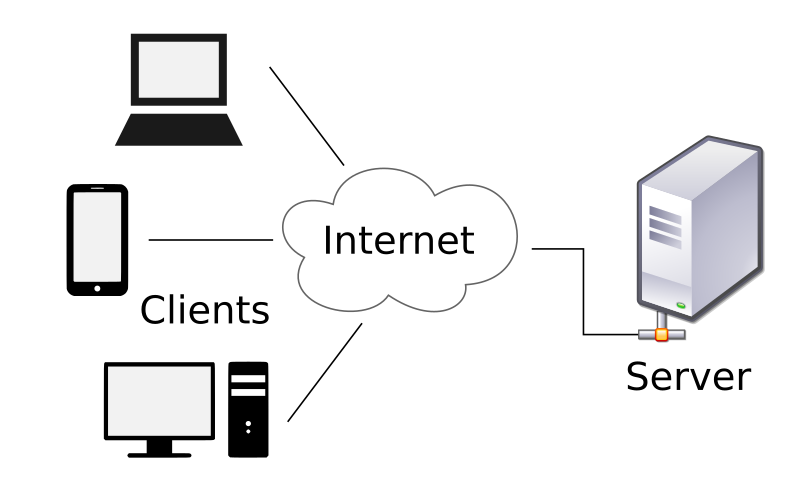
client
piece of software accessing a server service
content delivery network
layer in the Internet ecosystem addressing bottlenecks

I2P
The Invisible Internet Project (I2P) is an anonymous network layer (implemented as a mix network) that allows for censorship-resistant, peer-to-peer communication. Anonymous connections are achieved by encrypting the user's traffic (by using end-to-end encryption), and sending it through a volunteer-run network of roughly 55,000 computers distributed around the world. Given the high number of possible paths the traffic can transit, a third party watching a full connection is unlikely. The software that implements this layer is called an "I2P router", and a computer running I2P is called an "I2
Akamai Technologies
American content delivery network, cybersecurity, and cloud service company
decentralized autonomous organization
computer network organization model
InterPlanetary File System
content-addressable, peer-to-peer hypermedia distribution protocol
ZeroNet
ZeroNet is a decentralized web-like network of peer-to-peer users, created by Tamas Kocsis in 2015. The programming for the network was based in Budapest, Hungary. It is built in Python and fully open source. Instead of having an IP address, sites are identified by a public key (specifically a bitcoin address). The private key allows the owner of a site to sign and publish changes, which propagate through the network. Sites can be accessed through an ordinary web browser when using the ZeroNet application, which acts as a local webhost for such pages. In addition to using bitcoin cryptography,
Filecoin
Filecoin (⨎) is a cryptocurrency intended to be a blockchain-based cooperative digital storage and data retrieval method. It was developed by Protocol Labs and shares some ideas from InterPlanetary File System allowing users to rent unused hard drive space. Filecoin is an open protocol and uses a blockchain to record participation in the network. Transactions are made using the blockchain's currency, FIL. The blockchain is based on both proof of-replication and proof of space-time.

P2PTV
thumb|right|P2PTV overlay network serving three video streams.
P2PTV refers to peer-to-peer (P2P) software applications designed to redistribute video streams in real time on a P2P network; the distributed video streams are typically TV channels from all over the world but may also come from other sources. The draw to these applications is significant because they have the potential to make any TV channel globally available by any individual feeding the stream into the network where each peer joining to watch the video is a relay to other peer viewers, allowing a scalable distribution among a
Peer-to-peer web hosting
Decentralized website hosting using peer networks
Content addressable network
distributed, decentralized P2P infrastructure
Twister
blog software
Decentralized network 42
dn42 is a decentralized peer-to-peer network built using VPNs and software/hardware BGP routers.
Gameover ZeuS
peer-to-peer botnet
Xunlei Limited
Xunlei Limited () is a Chinese multinational technology company and an online service provider founded in 2003. The subsidiary of Xunlei Limited, Shenzhen Xunlei Networking Technologies, Co., Ltd. () was formerly known as Sandai Technologies (Shenzhen) Inc. and changed its name to Shenzhen Xunlei Networking Technologies, Co., Ltd. in May 2005. Its headquarters are in Nanshan District, Shenzhen.
decentralized web
a network of distributed files, services, and peering applications uncontrolled by any single entity
Spoon
social digital audio live streaming
LOCKSS
The LOCKSS ("Lots of Copies Keep Stuff Safe") project, under the auspices of Stanford University, is a peer-to-peer network that develops and supports an open source system allowing libraries to collect, preserve and provide their readers with access to material published on the Web. Its main goal is digital preservation.