Category
page 1Pezizales

Pezizales
The Pezizales are an order of the subphylum Pezizomycotina within the phylum Ascomycota. The order contains 16 families, 199 genera, and 1683 species. It contains a number of species of economic importance, such as morels, the black and white truffles, and the desert truffles. The Pezizales can be saprobic, mycorrhizal, or parasitic on plants. Species grow on soil, wood, leaves and dung. Soil-inhabiting species often fruit in habitats with a high pH and low content of organic matter, including disturbed ground. Most species occur in temperate regions or at high elevation. Several members of th
Helvellaceae
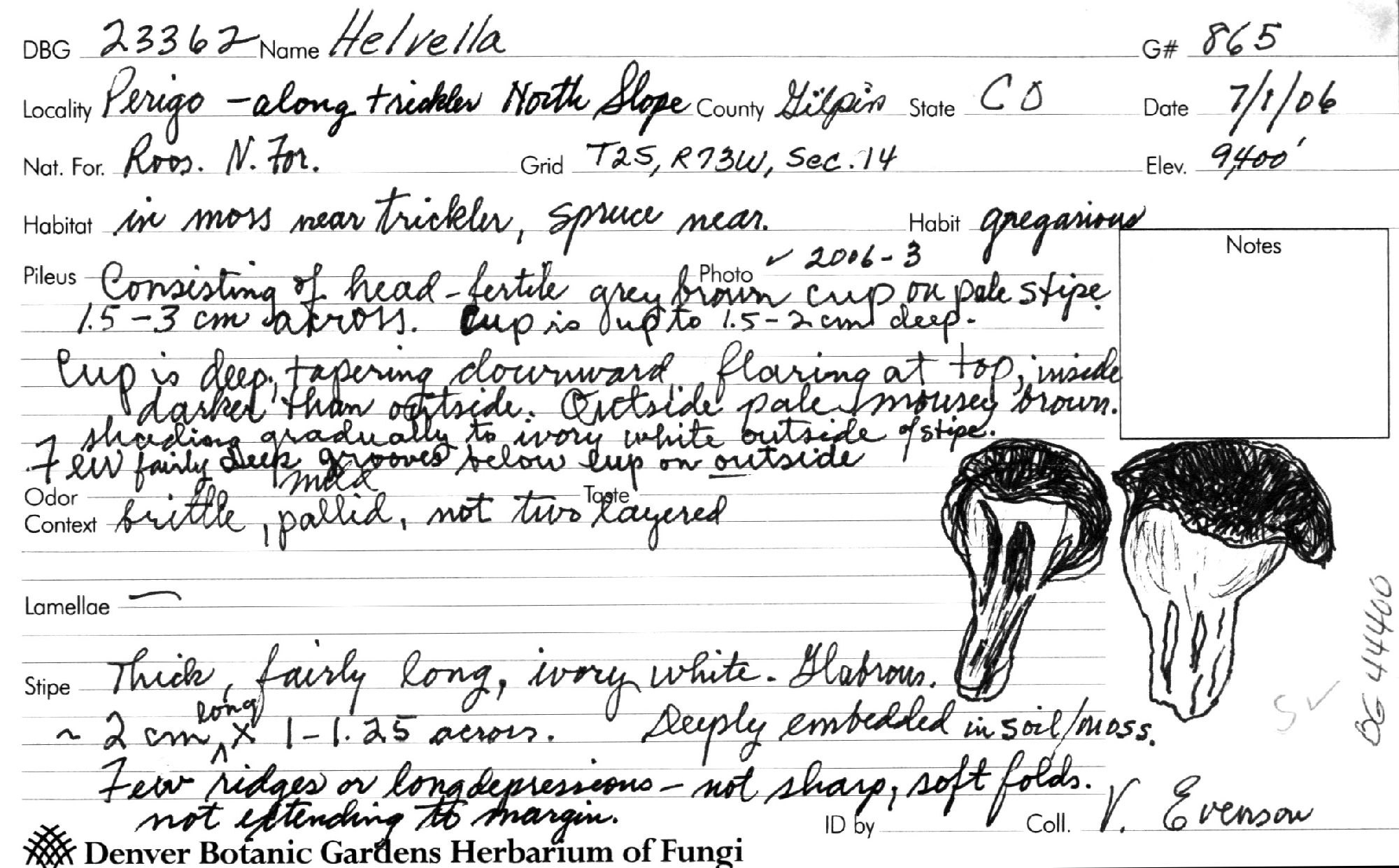
The Helvellaceae are a family of ascomycete fungi, the best-known members of which are the elfin saddles of the genus Helvella. Originally erected by Elias Magnus Fries in 1823 as Elvellacei, it contained many genera. Several of these, such as Gyromitra and Discina, have been found to be more distantly related in a molecular study of ribosomal DNA by mycologist Kerry O'Donnell in 1997, leaving a much smaller core clade now redefined as Helvellaceae. Instead, this narrowly defined group is most closely related to the true truffles of the Tuberaceae. Although the Dictionary of the Fungi (10th ed

Tuberaceae
The Tuberaceae () are a family of mycorrhizal fungi, in the order Pezizales, that evolved during or after the first major adaptive radiation of Angiosperms in the Jurassic period (140–180 million years ago, Mya). It includes the genus Tuber, which includes the so-called "true" truffles. It was characterized by the Belgian botanist Barthélemy Charles Joseph du Mortier in 1822. A molecular study of ribosomal DNA by mycologist Kerry O'Donnell in 1997 found that a small clade now redefined as Helvellaceae is most closely related to the Tuberaceae. The mycologist Mary Cloyd Burnley Stifler studied

Urnula craterium
species of fungus

Caloscypha fulgens
Caloscypha is a fungal genus in the family Caloscyphaceae (order Pezizales). A monotypic genus, it contains the single species Caloscypha fulgens, commonly known as the snowbank orange peel fungus, spring orange peel fungus, the golden cup, or the dazzling cup. It is a cup fungus, typically up to in diameter, with a bright to pale orange interior and orange; specimens that are old or bruised often have an olive-green discoloration, especially around the edges.

Rhizina undulata
species of fungus

Choiromyces maeandriformis
species of fungus

Ascobolaceae
The Ascobolaceae are a family of fungi in the order Pezizales. A 2008 estimate places 6 genera and 129 species in the family.

Sarcosomataceae
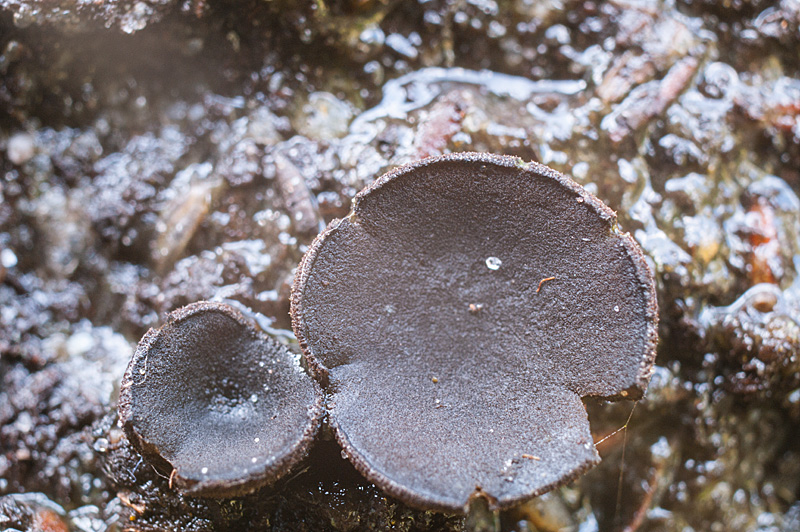
The Sarcosomataceae are a family of fungi in the order Pezizales. According to a 2008 estimate, the family contains 10 genera and 57 species. Most species are found in temperate areas, and are typically saprobic on rotten or buried wood.
Pseudoplectania nigrella
species of fungus

Sarcosoma globosum
species of fungus
Ascodesmidaceae
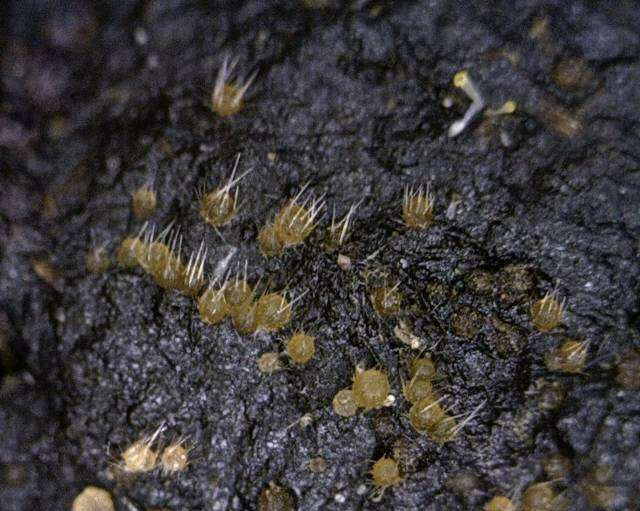
The Ascodesmidaceae are a family of fungi in the order Pezizales.
Ascobolus
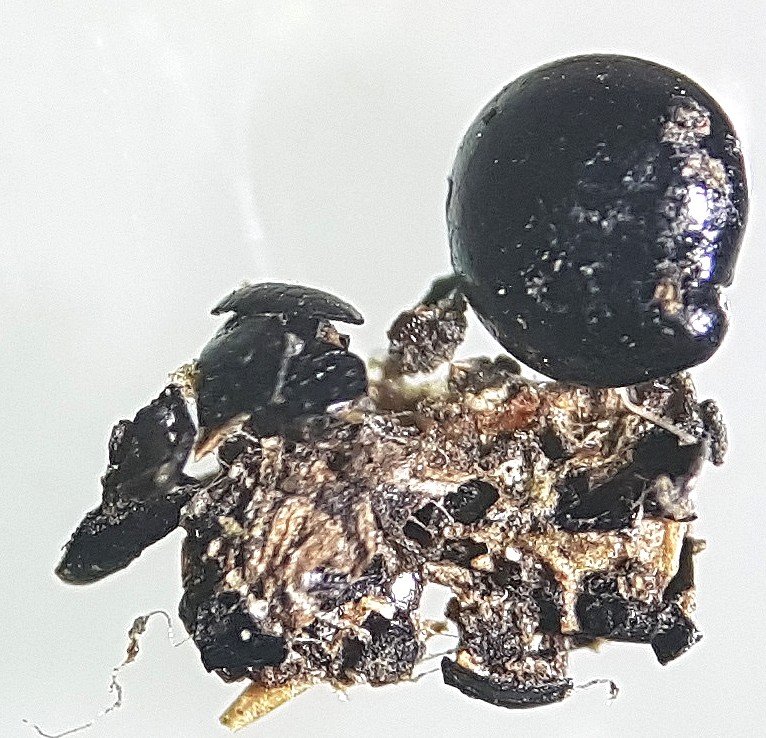
Ascobolus is a genus of fungi in the Ascobolaceae family. The genus has a widespread distribution, and contains an estimated 61 species, most of which are coprophilous. The genus was circumscribed by Christian Hendrik Persoon in 1796.
Rhizinaceae
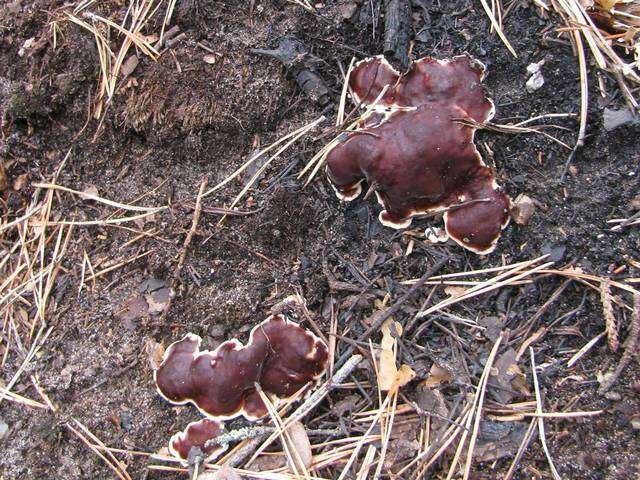
The Rhizinaceae are a family of ascomycete fungi in the order Pezizales. The family was circumscribed by German mycologist Hermann Friedrich Bonorden in 1851.
Chorioactidaceae
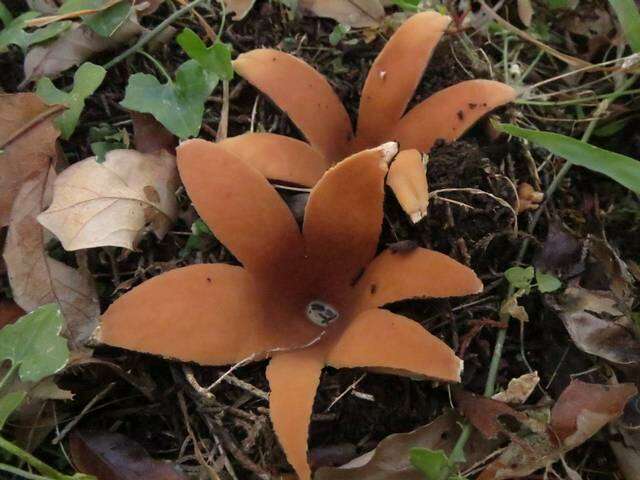
The Chorioactidaceae are a family of cup fungi in the order Pezizales, first described to contain seven species distributed among five genera. Pseudosarcosoma was added in 2013 to contain P. latahense when molecular phylogenetic studies demonstrated the fungus to be more closely related to the Chorioactidaceae than to Sarcosoma (family Sarcosomataceae). With the addition of Trichaleurina, the genus is currently composed of six genera.
Choiromyces
Choiromyces is a genus of truffle-like fungi in the Tuberaceae family. The genus is widespread and contains eight species.
Caloscyphaceae
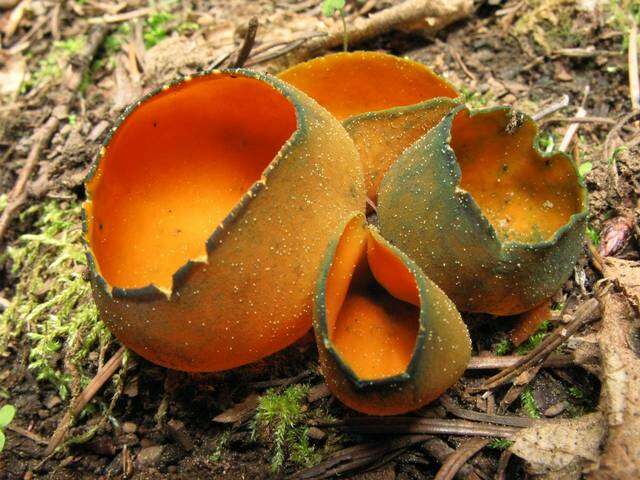
The Caloscyphaceae are a family of fungi in the order Pezizales. The family was circumscribed by Finnish mycologist Harri Harmaja in 2002. The genus Kallistoskypha was added in 2013 to accommodate the species formerly known as Caloscypha incarnata.

Chorioactis
Chorioactis is a genus of fungi that contains the single species Chorioactis geaster. The mushroom is commonly known as the '''devil's cigar or the Texas star''' in the United States, while in Japan it is called .
This extremely rare mushroom is notable for its unusual appearance and disjunct distribution; it is found only in select locales in Texas, Oklahoma, Japan, and Taiwan. The fruit body, which grows on the stumps or dead roots of cedar elms (in Texas) or dead oaks (in Japan), somewhat resembles a dark brown or black cigar before it splits open radially into a starlike arrangement of fou
Melastiza chateri
species of fungus

Urnula
Urnula is a genus of cup fungi in the family Sarcosomataceae, circumscribed by Elias Magnus Fries in 1849. The genus contains several species found in Asia, Europe, Greenland, and North America. Sarcosomataceae fungi produce dark-colored (brown to black), shallow to deep funnel-shaped fruitbodies with or without a stipe, growing in spring. The type species of the genus is Urnula craterium, commonly known as the devil's urn or the gray urn. Urnula species can grow as saprobes or parasites having an anamorphic state. The anamorphic form of U. craterium causes Strumella canker, on oak trees.
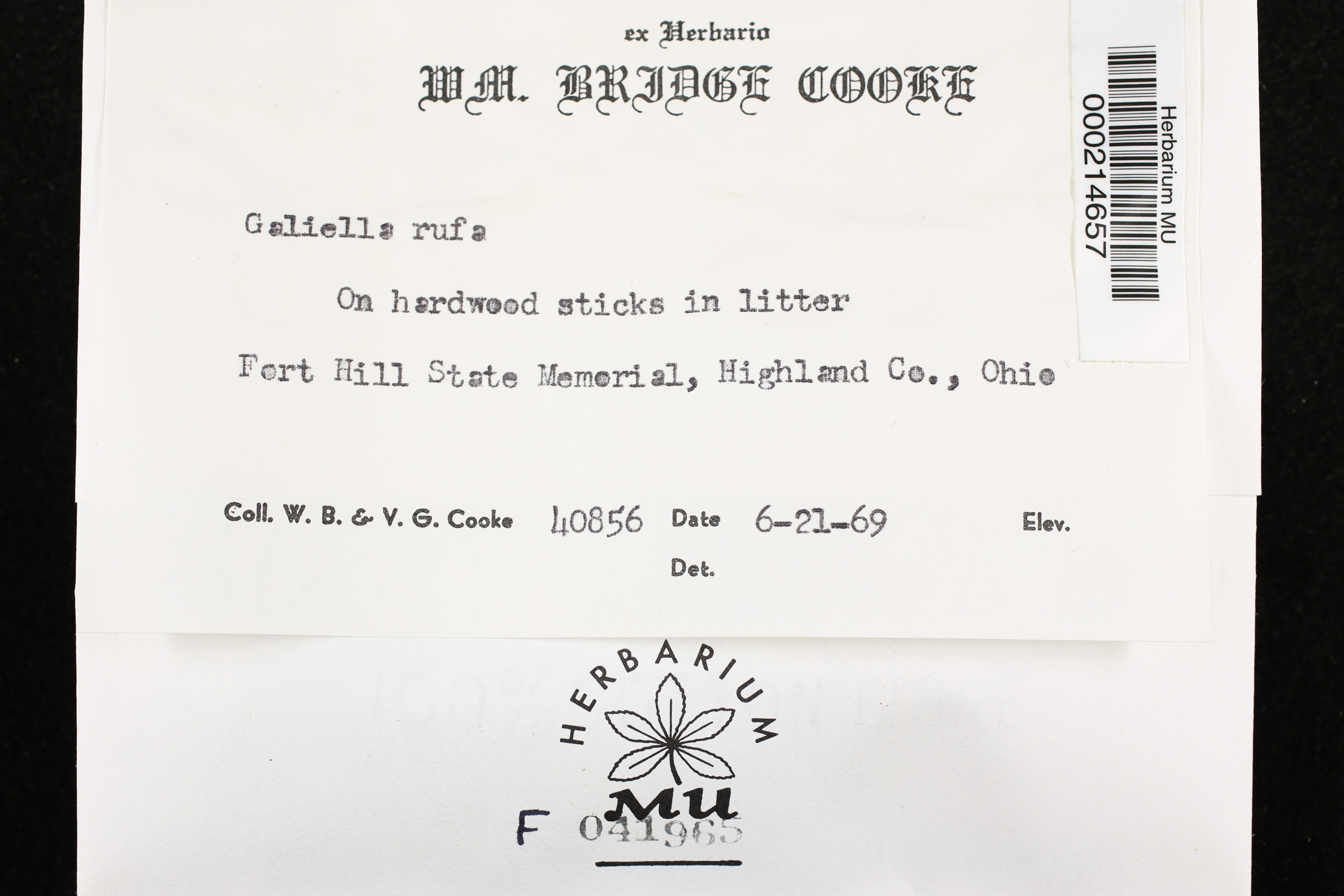
Galiella rufa
species of fungus
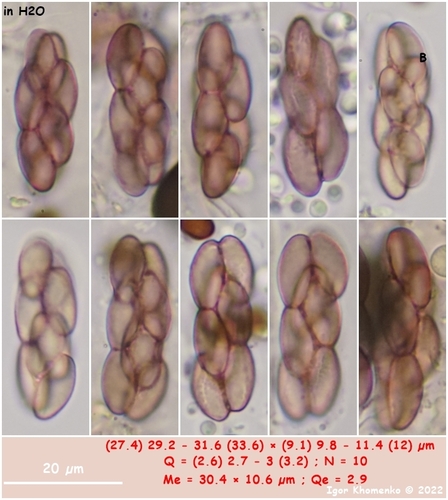
Saccobolus
Saccobolus is a genus of fungi in the family Ascobolaceae. The genus has a widespread distribution, and contains 27 species.
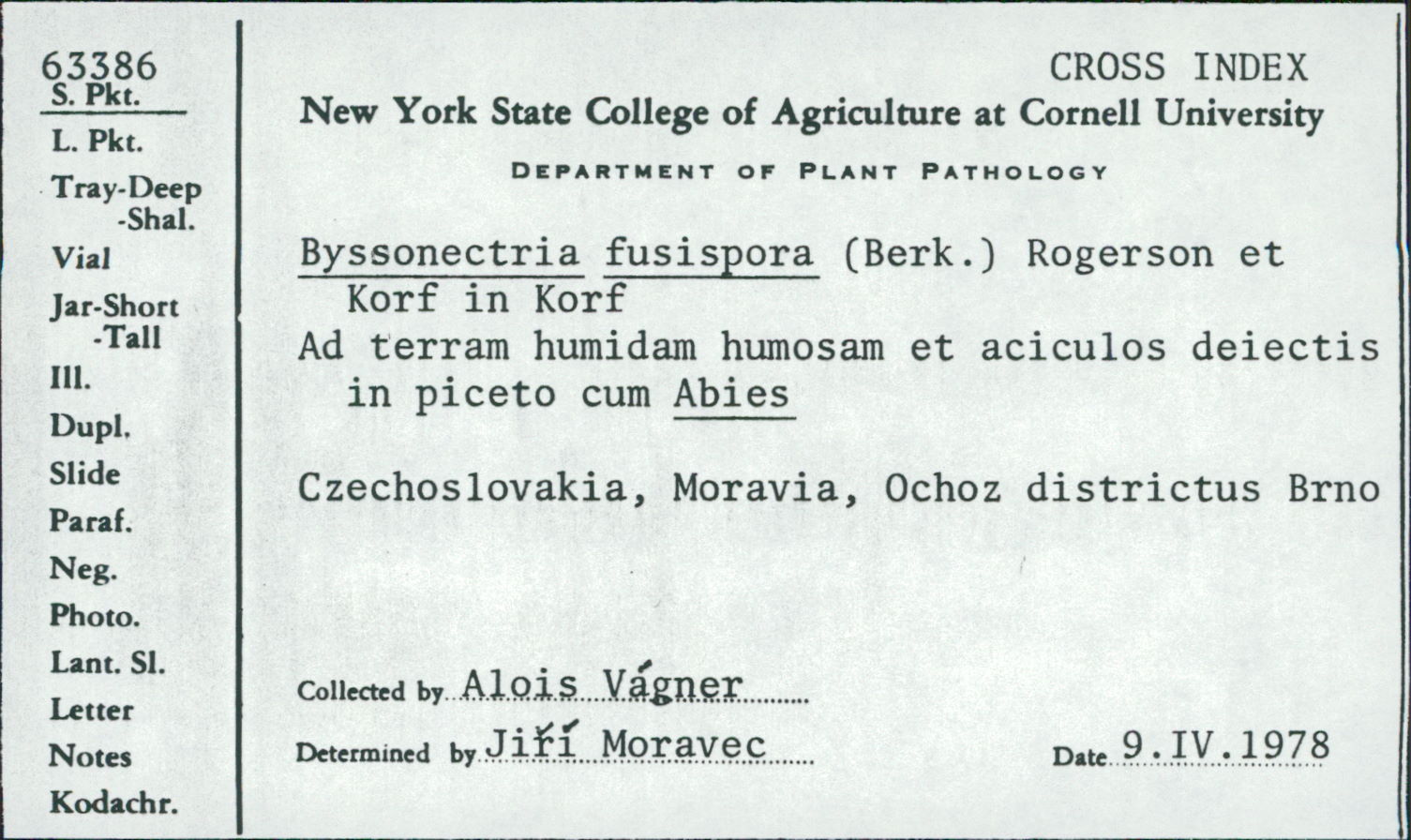
Byssonectria fusispora
species of fungus

Rhizina
Rhizina is a genus of ascomycete fungi in the order Pezizales. The genus was circumscribed by Elias Magnus Fries in his 1815 work Observationes mycologicae, with R. undulata as the type species. R. atra and R. lignicola were added to the genus in 1921 and 1925, respectively, by Australian botanist Leonard Rodway.
Texas root rot
species of fungus

Melastiza cornubiensis
species of fungus
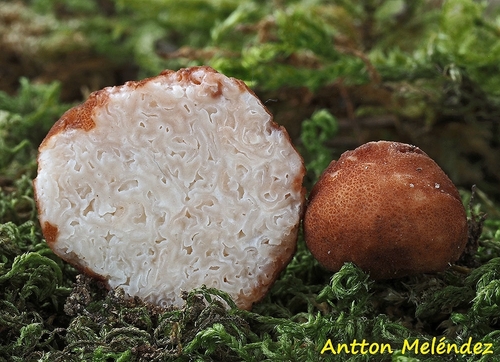
Balsamia
Balsamia is a genus of truffle-like ascomycete fungi of the family Helvellaceae. The widespread genus contains twenty five species known from Europe, North America, North Africa and Asia, including China.
Ascodesmis
Ascodesmis is a genus of fungi in the family Ascodesmidaceae. It was described by French botanist Philippe Édouard Léon Van Tieghem in 1876. Species in the genus are coprophilous, and are characterized by the absence of an excipulum (tissues containing the hymenium of a fruit body).
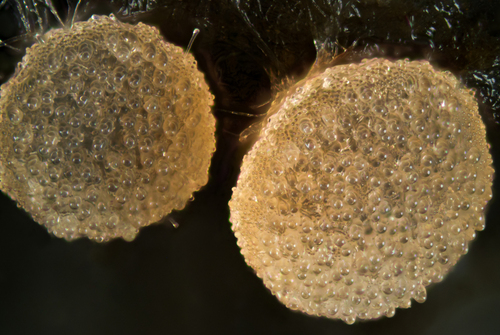
Ascophanus
Ascophanus is a genus of fungi in the Ascobolaceae family. The genus has a widespread distribution (especially in temperate areas), and contains 20 species, most of which grow on dung.
Wynnella silvicola
species of fungus
Pseudoplectania
Pseudoplectania is a genus of fungi in the family Sarcosomataceae. The genus contains 12 species. Pseudoplectania ryvardenii was described in 2012, while Pseudoplectania carranzae was transferred to the genus (from Plectania) in 2013.
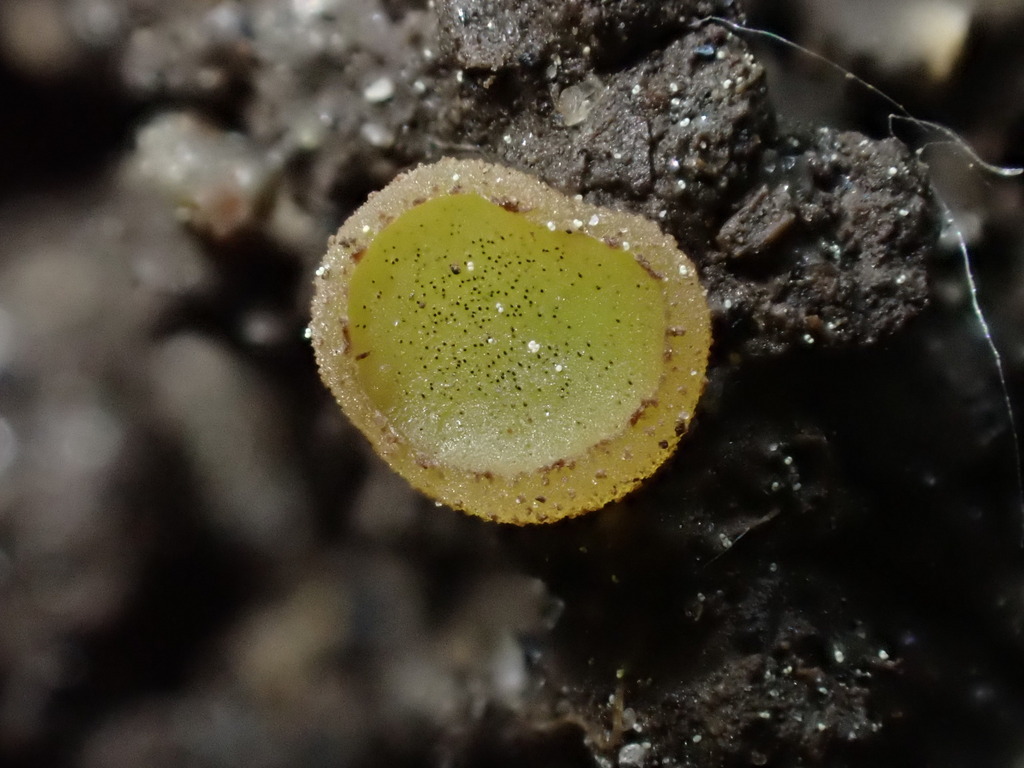
Ascobolus denudatus
species of fungus
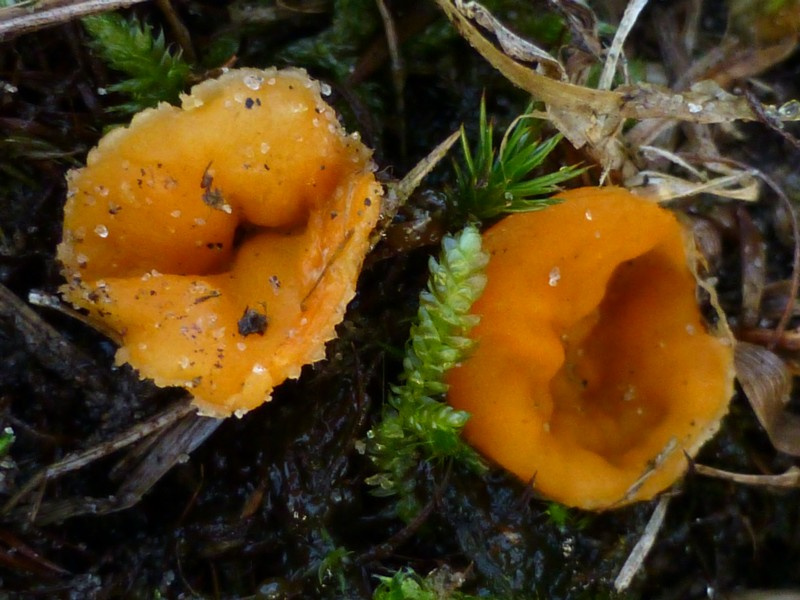
Neottiella rutilans
species of fungus

Sarcosoma
Sarcosoma is a genus of fungi in the family Sarcosomataceae. The name Sarcosoma is derived from ancient Greek and means "fleshy body", from (, "flesh") ('''', "body"). The genus is widespread in north temperate areas.
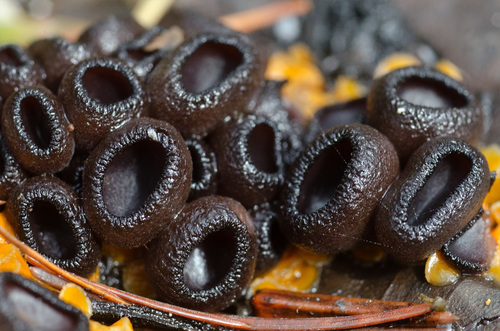
Pseudombrophila
Pseudombrophila is a genus of fungi in the family Pseudombrophilaceae. The widely distributed genus contains 28 species.
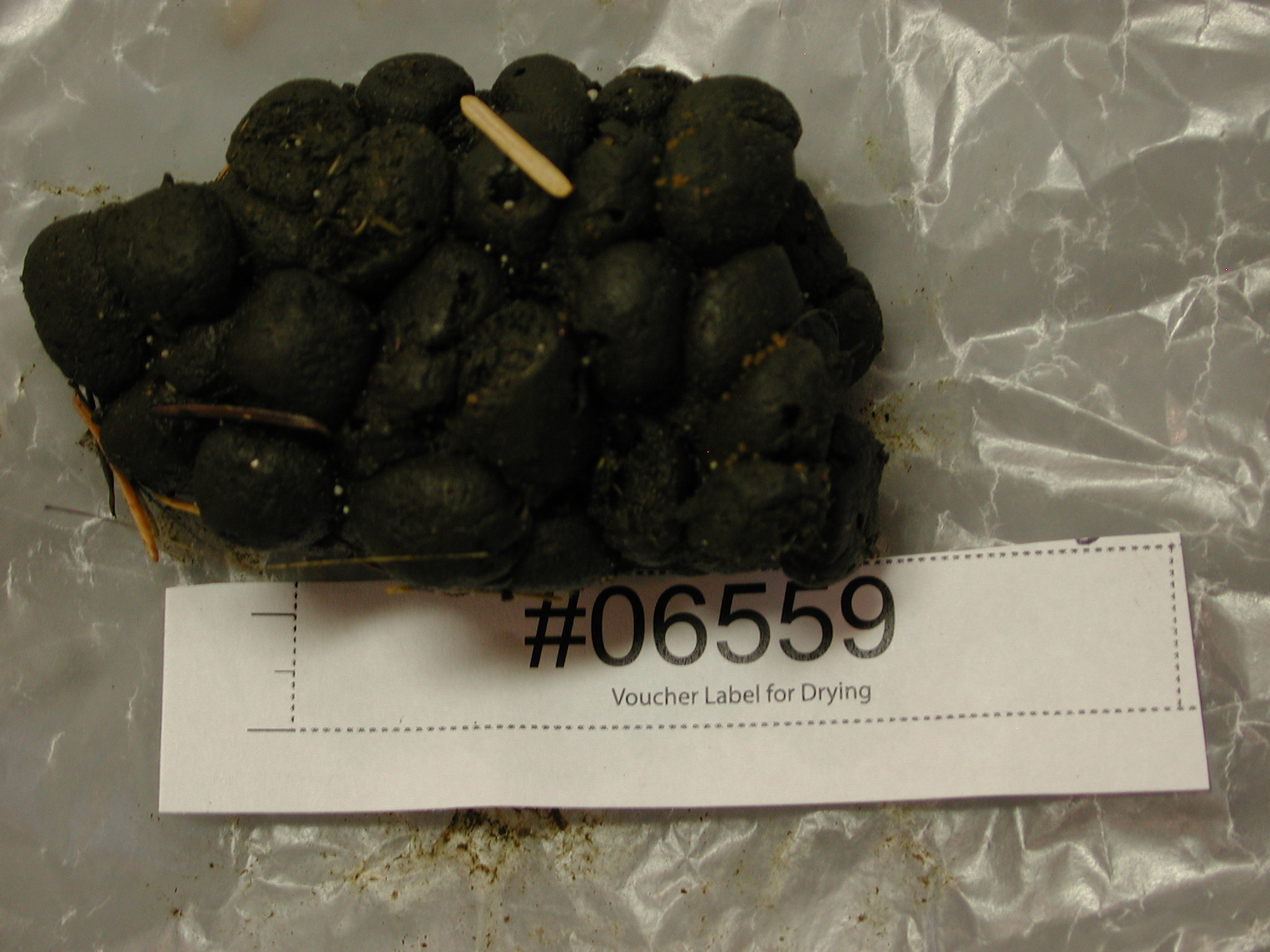
Lasiobolus
Lasiobolus is a genus of fungi in the family Ascodesmidaceae.

Ascobolus carbonarius
species of fungus

Galiella
Galiella is a genus of fungi in the family Sarcosomataceae. The genus is widely distributed in northern temperate regions, and according to one estimate, contains eight species.
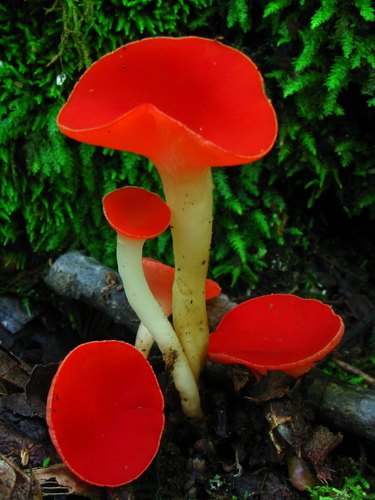
Plectania
Plectania is a genus of fungi in the family Sarcosomataceae. It was circumscribed by German botanist Karl Wilhelm Gottlieb Leopold Fuckel in 1870.

Ascobolus immersus
species of fungus
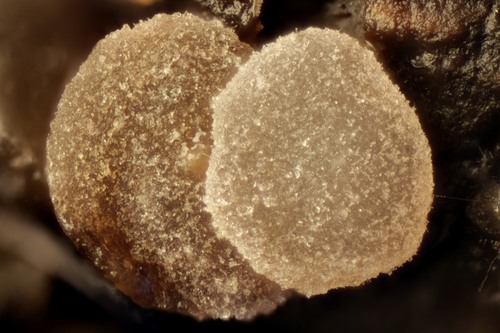
Thecotheus
Thecotheus is a genus of fungi in the Ascobolaceae family. The genus has a widespread distribution, especially in temperate areas, and contains 17 species.

Cubonia
Cubonia is a genus of fungi in the Ascobolaceae family. The genus contains three species found in Europe.

Saccobolus glaber
species of fungus
Glaziella
Glaziellaceae is a family of fungi in the order Pezizales that contains the single monotypic genus Glaziella. The type species Glaziella vesiculosa, originally collected in Cuba, was referred to the genus Xylaria by Miles Joseph Berkeley and Moses Ashley Curtis in 1869. A decade later, Berkeley circumscribed the genus Glaziella to contain a specimen collected in Brazil, apparently forgetting that he had earlier named it Xylaria aurantiaca.

Eleutherascus
Eleutherascus is a genus of fungi in the family Ascodesmidaceae. It was described by mycologist Josef Adolf von Arx in 1971.
Carbomyces
The Carbomycetaceae are a family of fungi in the order Pezizales. The family contains the single genus Carbomyces, which in turn contains three species distributed in the United States and Mexico.
Balsamia oregonensis
species of fungus
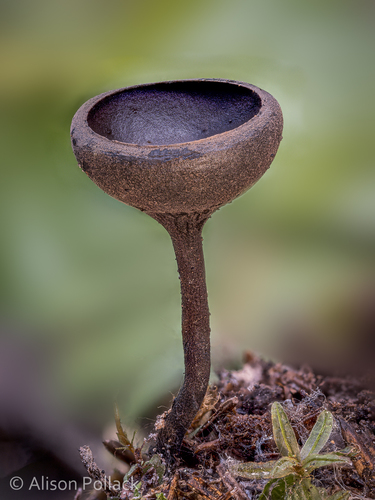
Plectania nannfeldtii
species of fungus
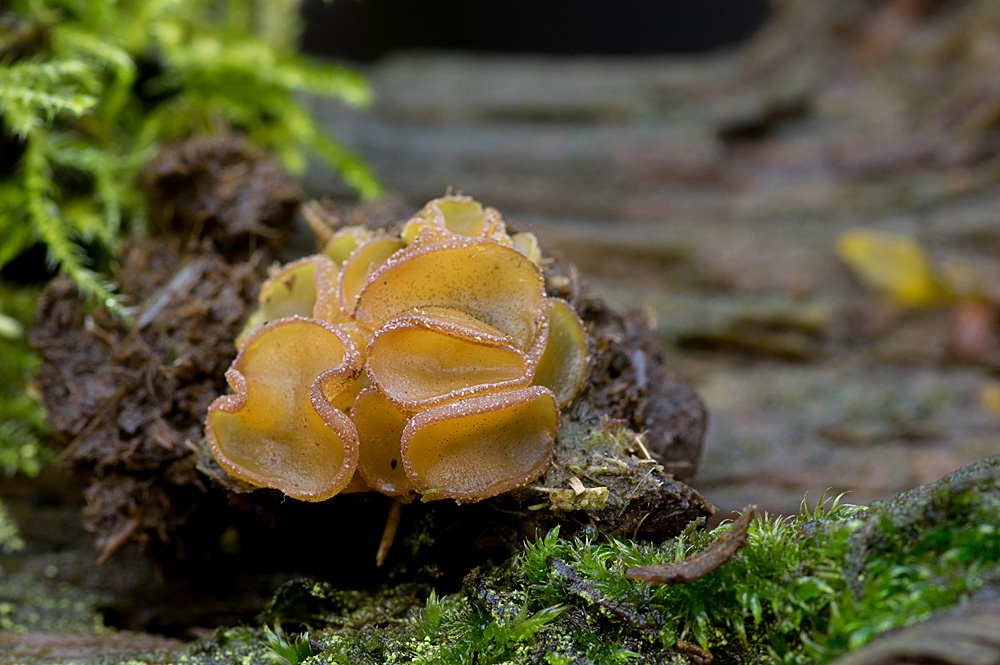
Ascobolus stercorarius
species of fungus
Plectania rhytidia
species of fungus
Barssia
Barssia is a genus of ascomycete fungi of the family Helvellaceae. The widespread genus contains two species.

Wynnella auricula
species of fungus
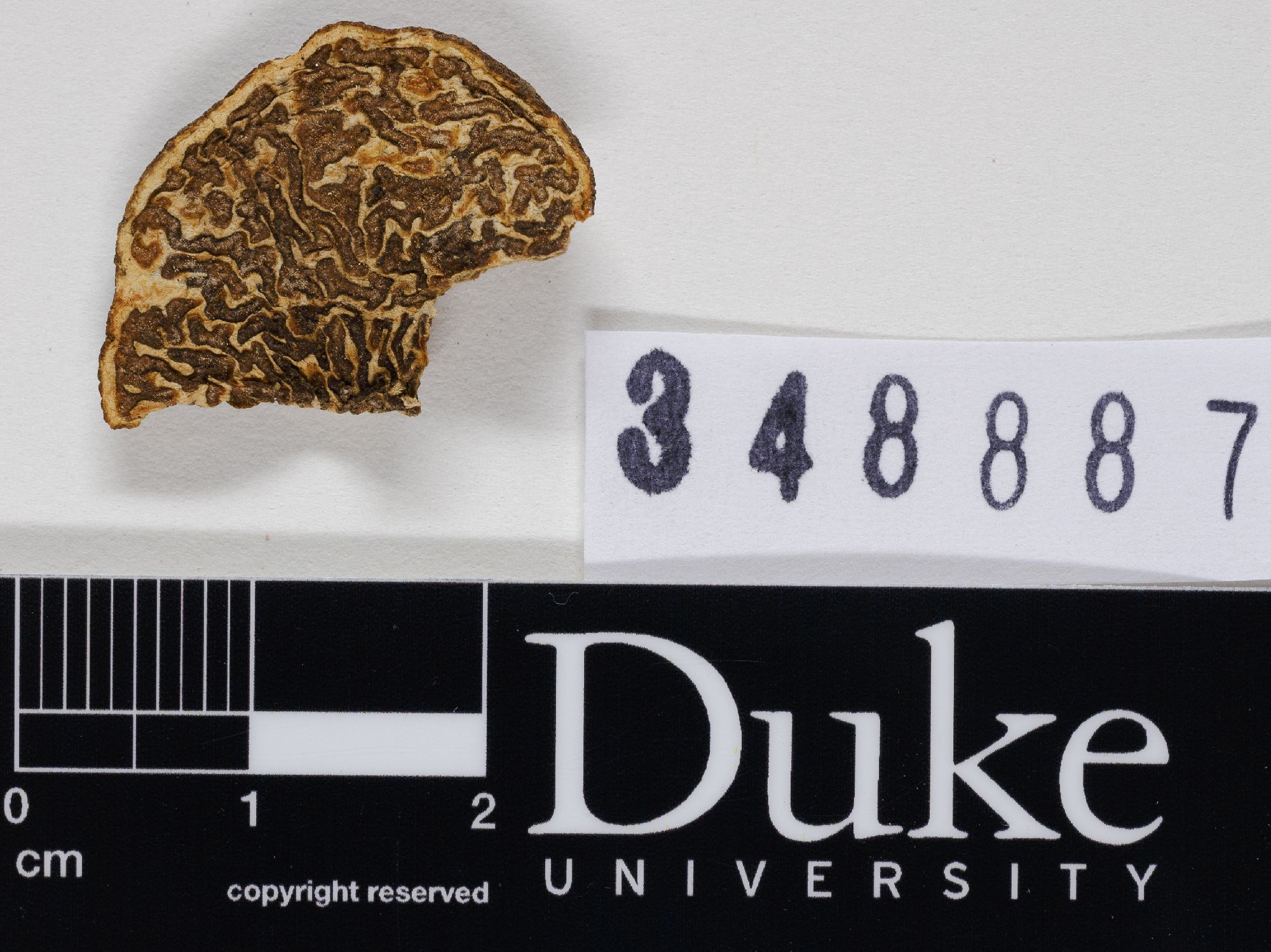
Dingleya
Dingleya is a genus of truffles in the Tuberaceae family. The genus contains seven species found in Australia. Circumscribed by James Trappe in 1979, the genus is named after New Zealand mycologist Joan Dingley.

Ascodesmis nigricans
species of fungus
Carbomycetaceae
REDIRECT Carbomyces
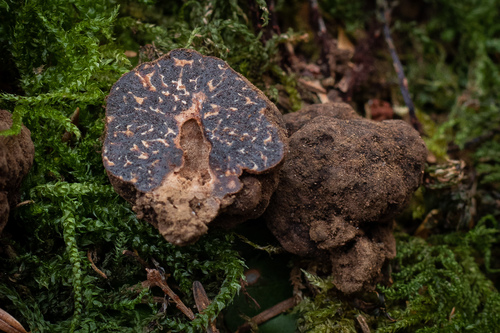
Fischerula
Fischerula is a genus of two truffle-like fungi in the family Morchellaceae. First described from central Italy by Oreste Mattirolo in 1928, the genus name honors Swiss mycologist Eduard Fischer. The type species Fischerula macrospora is known only from Italy, while Fischerula subcaulis is found in coniferous and mixed forests of Oregon and Washington.
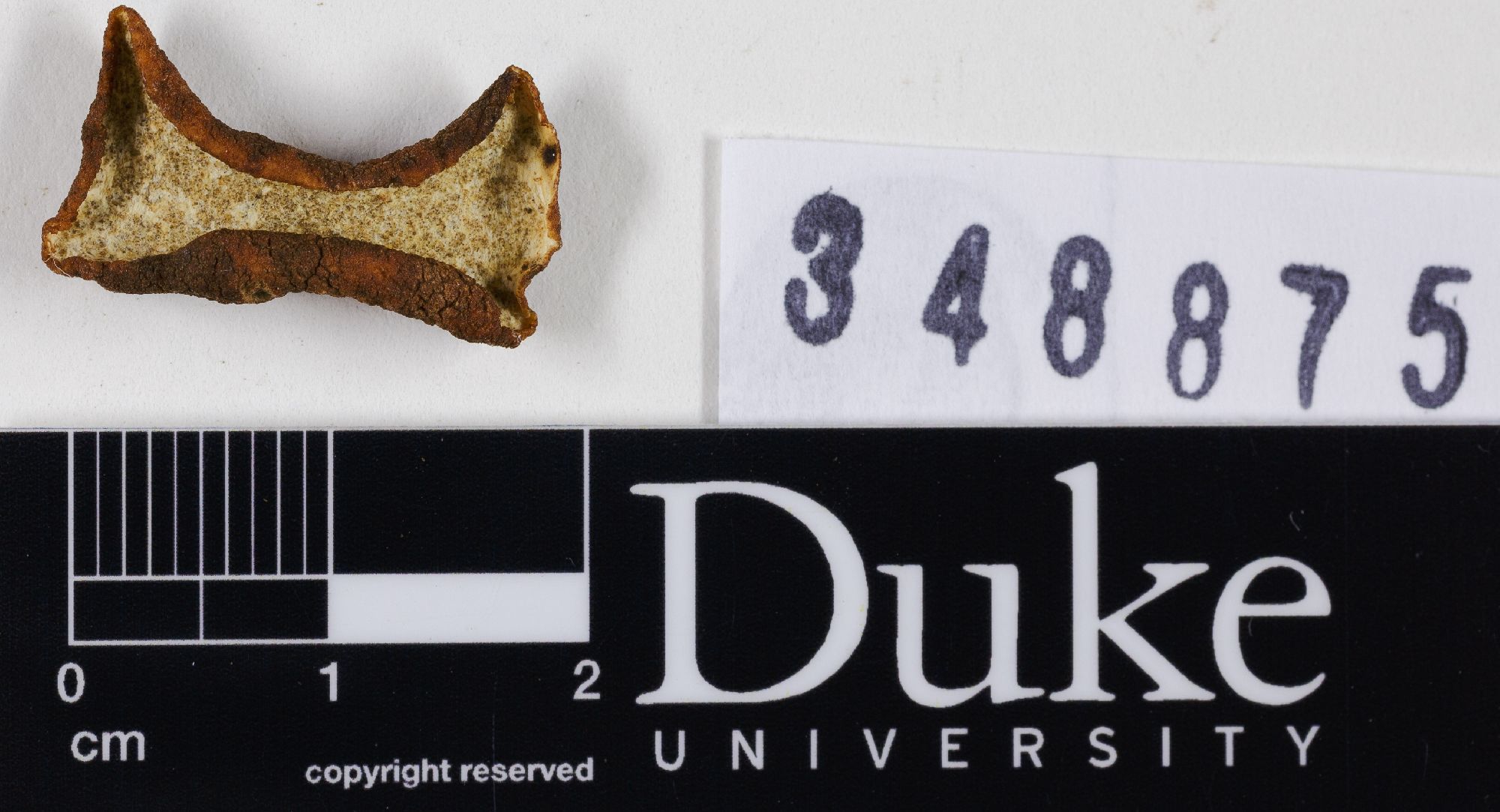
Kalapuya brunnea
species of fungus

Conoplea
Conoplea is a genus of fungi first described by Christian Hendrik Persoon in 1801. The eight members of the genus are anamorphic versions of Sarcosomataceae species.
Reddellomyces
Reddellomyces is a genus of truffle-like fungi in the Tuberaceae family. The genus, circumscribed in 1992, contains four species found in Australasia and the Mediterranean.

Ascobolus brassicae
species of fungus