Category
page 1Pezizomycotina
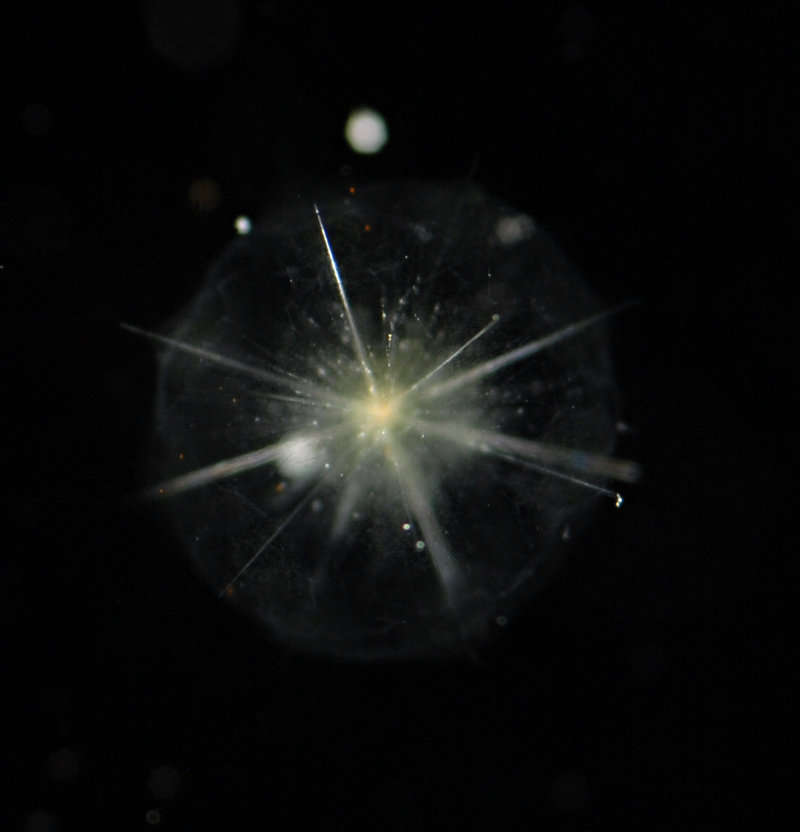
Pezizomycotina
Pezizomycotina is the largest subdivision of Ascomycota, containing the filamentous ascomycetes and most lichenized fungi. It is more or less synonymous with the older taxon Euascomycota. These fungi reproduce by fission rather than budding. This subdivision includes almost all ascus fungi that have fruiting bodies visible to the naked eye, except for the genus Neolecta, which belongs to Taphrinomycotina.
Pezizomycetes
Pezizomycetes are a class of fungi within the division Ascomycota.

Arthrobotrys
Arthrobotrys is a genus of mitosporic fungi in the family Orbiliaceae. They are predatory fungi that capture and feed on nematode worms.
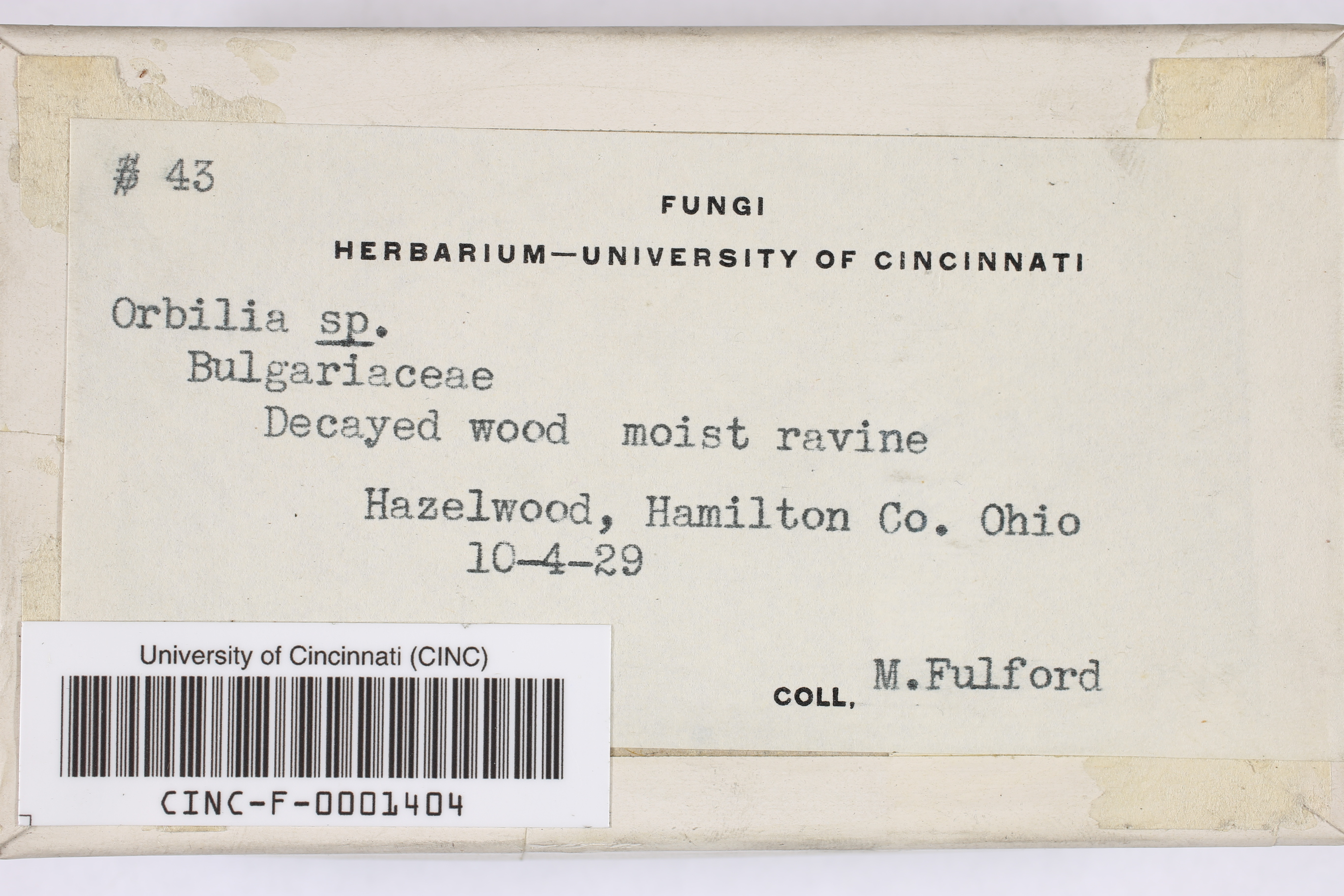
Orbilia
Orbilia is a genus of fungi in the family Orbiliaceae. Anamorphs of this genus include the Arthrobotrys, Dactylella, Dicranidion, Dwayaangam, Helicoön, Monacrosporium, and Trinacrium.
The genus was established in 1836 by Elias Magnus Fries to accommodate the species Peziza leucostigma. The mycologist Josef Velenovský wrote articles describing species found in Bohemia and Moravia (Czechoslovakia). In 1951, Fred Jay Seaver recorded 20 species in North America, and R.W.G. Dennis later described 9 species from Venezuela. According to the Dictionary of the Fungi (10th edition, 2008), there are abou
Geoglossomycetes
REDIRECT Geoglossaceae
Vezdaeaceae
REDIRECT Vezdaea
Euopsis
Euopsis is a small genus of lichen-forming fungi in the family Harpidiaceae. The genus contains two species. The genus was established in 1881 by the Finnish lichenologist William Nylander, who transferred species from the genus Pyrenopsis based on differences in their reproductive structures. These lichens form dark reddish-brown crusts that become jelly-like when wet and grow primarily on damp, acidic rock faces and mossy surfaces.
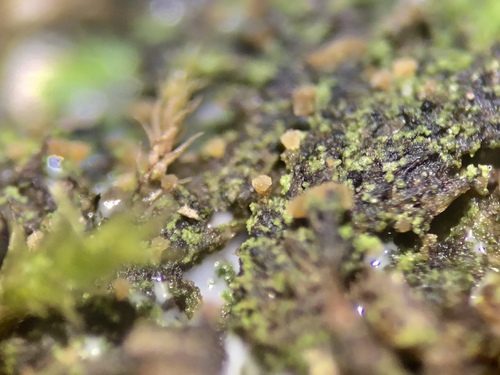
Vezdaea
Vezdaea is a genus of crustose lichens in the monotypic family Vezdaeaceae, which itself is the only taxon in the order Vezdaeales. The genus was established in 1976 and named after the Czech lichenologist Antonín Vězda for his contributions to lichen science. These lichens form extremely thin crusts that appear as dustings of tiny greenish to grey particles on decaying moss, plant debris, and soil, particularly in metal-enriched environments that other lichens avoid. The genus contains 14 species.
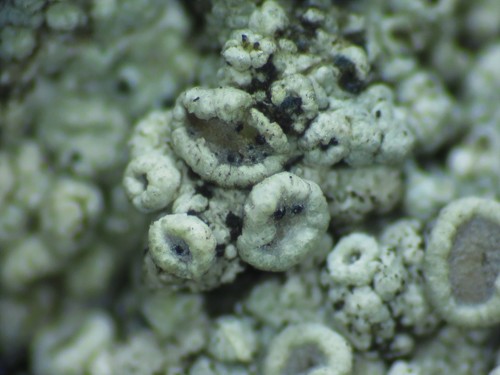
Lichenodiplis
Lichenodiplis is a genus of fungi with uncertain classification.

Harpidium
Harpidium is a genus of lichen-forming fungi in the family Harpidiaceae. The genus contains three species. Harpidium was circumscribed in 1855 by German lichenologist Gustav Wilhelm Körber, with Harpidium rutilans assigned as the type species.

Chaenotheca cinerea
species of fungus