Category
page 1Philosophers in ancient Alexandria

Hypatia
Hypatia (born 350–370 – March 415 AD) was a Neoplatonist philosopher, astronomer, and mathematician who lived in Alexandria, at that time in the province of Egypt and a major city of the Roman Empire. In Alexandria, Hypatia was a prominent thinker who taught subjects including philosophy and astronomy, and in her lifetime was renowned as a great teacher and a wise counselor. Not the only fourth century Alexandrian female mathematician, Hypatia was preceded by Pandrosion. However, Hypatia is the first female mathematician whose life is reasonably well recorded. She wrote a commentary on Di

Plotinus
Plotinus (; , Plōtînos; – 270 CE) was a Hellenistic Greek philosopher, born and raised in Roman Egypt. Plotinus is regarded by modern scholarship as the founder of Neoplatonism.

Athanasius of Alexandria
Pope of Alexandria from 328 to 373 (296–373)

Origen
Origen of Alexandria (), also known as Origen Adamantius, was an early Christian scholar, ascetic, and theologian who was born and spent the first half of his career in Alexandria. He was a prolific writer who wrote roughly 2,000 treatises in multiple branches of theology, including textual criticism, biblical exegesis and hermeneutics, homiletics, and spirituality. He was one of the most influential and controversial figures in early Christian theology, apologetics, and asceticism. He has been described by John Anthony McGuckin as "the greatest genius the early church ever produced".

Arius
Arius (; ; 250 or 256 – 336) was a Cyrenaic presbyter and ascetic. He has been regarded as the founder of Arianism, which holds that Jesus Christ was not coeternal with God the Father, but was rather created directly by God the Father before anything else, as the true Firstborn. Arian theology and its doctrine regarding the nature of the Godhead showed a belief in radical subordinationism, a view notably disputed by 4th century figures such as Athanasius of Alexandria.
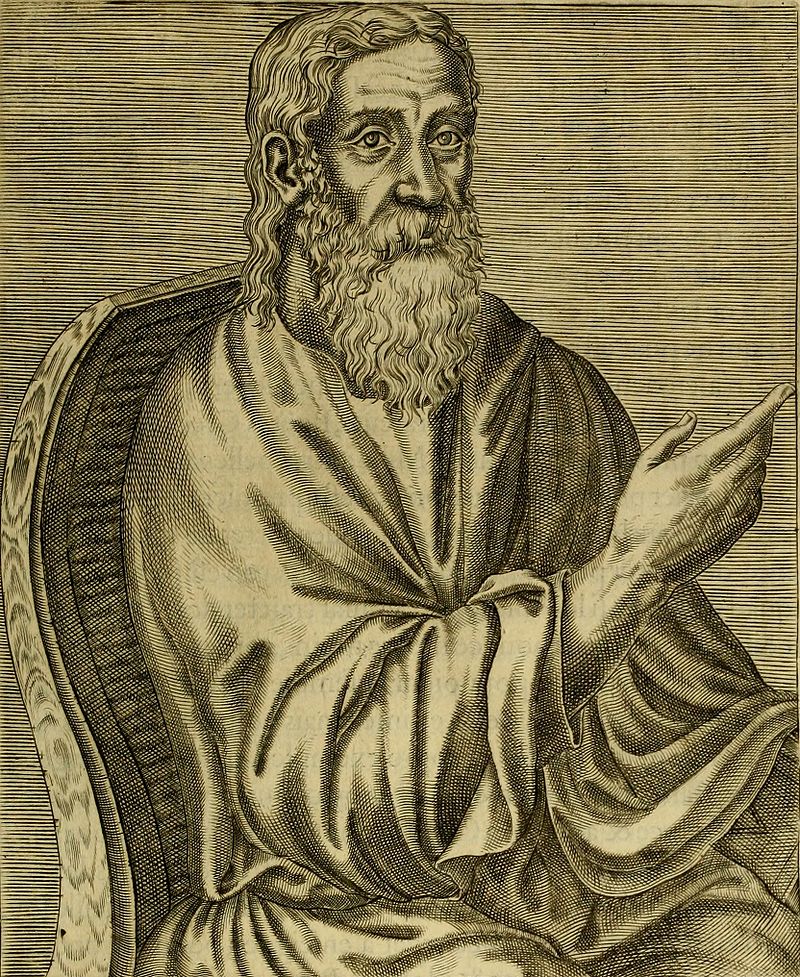
Clement of Alexandria
Christian theologian (c.150 – c.215)

Philo of Alexandria
Philo of Alexandria (; ; ; ), also called '''''', was a Hellenistic Jewish philosopher who lived in Alexandria, in the Roman province of Egypt.

Apollodorus of Athens
ancient Greek grammarian and historian
Ammonius Saccas
Hellenistic Platonist philosopher (175-242)

Demetrius of Phalerum
Greek statesman and philosopher (c.350–c.280 BC)

John Philoponus
Byzantine philologist and philosopher (c. 490–c. 570)

Didymus the Blind
4th century Alexandrian Christian theologian
Ammonius Hermiae
5th-century Greek philosopher
Cassius Longinus
Syrian/Egyptian Neoplatonist philosopher (c.213–273)
Aedesia
Aedesia () was a philosopher of the Neoplatonic school who lived in Alexandria in the fifth century AD. She was a relation of Syrianus and the wife of Hermias, and was equally celebrated for her beauty and her virtues. After the death of her husband, she devoted herself to relieving the wants of the distressed and the education of her children, Ammonius and Heliodorus. She accompanied the latter to Athens, where they went to study philosophy, and was received with great distinction by all the philosophers there, and especially by Proclus, to whom she had been betrothed by Syrianus, when she wa
Olympiodorus the Younger
Neoplatonist philosopher (c.495–570)
Hermippus of Smyrna
3rd-century BC Greek biographer and philosopher
Sotion
Sotion of Alexandria (, gen.: Σωτίωνος; fl. c. 200 – 170 BC) was a Greek doxographer and biographer, and an important source for Diogenes Laërtius. None of his works survive; they are known only indirectly. His principal work, the Διαδοχή or Διαδοχαί (the Successions), was one of the first history books to have organized philosophers into schools of successive influence: e.g., the so-called Ionian School of Thales, Anaximander and Anaximenes. It is quoted very frequently by Diogenes Laërtius, and Athenaeus. Sotion's Successions likely consisted of 23 books, and at least partly drew on th
Arius Didymus
1st century BCE Greek Stoic philosopher
Eudorus of Alexandria
1st century BC Greco-Egyptian philosopher
Satyrus the Peripatetic
3rd-century BC Greek philosopher and historian
Aristobulus of Paneas
philosopher
Chaeremon of Alexandria
Stoic philosopher, historian, and grammarian
Ammonius of Alexandria
3rd century Alexandrian Christian philosopher
Origen the Pagan
3rd century Alexandrian Platonist philosopher
Asclepiodotus of Alexandria
Roman philosopher
Stephen of Alexandria
philosopher
Xenarchus of Seleucia
1st century BC Greek Peripatetic philosopher and grammarian
Sotion
ancient Greek philosopher

Heliodorus of Alexandria
ancient Greek philosopher and astronomer
Apelles
gnostic christian thinker
Dioscorus of Aphrodito
Egyptian poet, lawyer, civic administrator
Antoninus
Fourth century Neoplatonist philosopher
Potamo of Alexandria
eclectic philosopher
Aristo of Alexandria
ancient Greek Peripatetic philosopher
George of Laodicea
Alexandrian theologian of 4th century CE