Category
page 1Pinaceae

Pinus

Abies
Firs are evergreen coniferous trees belonging to the genus Abies () in the family Pinaceae. There are approximately 48–65 extant species, found on mountains throughout much of North and Central America, Eurasia, and North Africa. The genus is most closely related to Keteleeria, a small genus confined to eastern Asia.

Pinaceae
The Pinaceae, or pine family, are conifer trees or shrubs, including many of the well-known conifers of commercial importance such as cedars, firs, hemlocks, larches, pines, and spruces. The family is included in the order Pinales, formerly known as Coniferales. Pinaceae have distinctive cones with woody scales bearing typically two ovules, and are supported as monophyletic by both morphological trait and genetic analysis. They are the largest extant conifer family in species diversity, with between 220 and 250 species (depending on taxonomic opinion) in 11 genera, and the second-largest (afte

Keteleeria
Keteleeria is a genus of three species of coniferous trees in the family Pinaceae first described as a genus in 1866.

Pseudolarix amabilis
species of plant

Keteleeria fortunei
species of plant

Keteleeria davidiana
species of plant
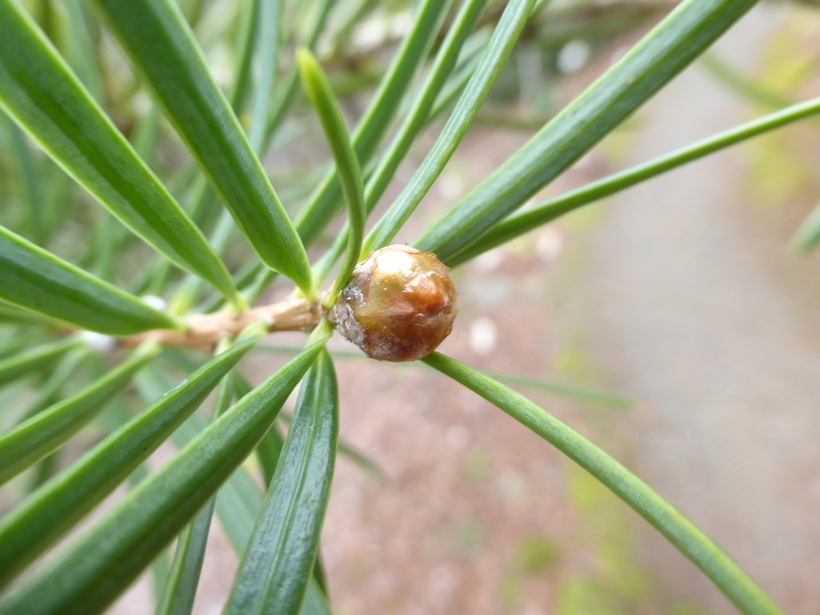
Keteleeria evelyniana
species of plant
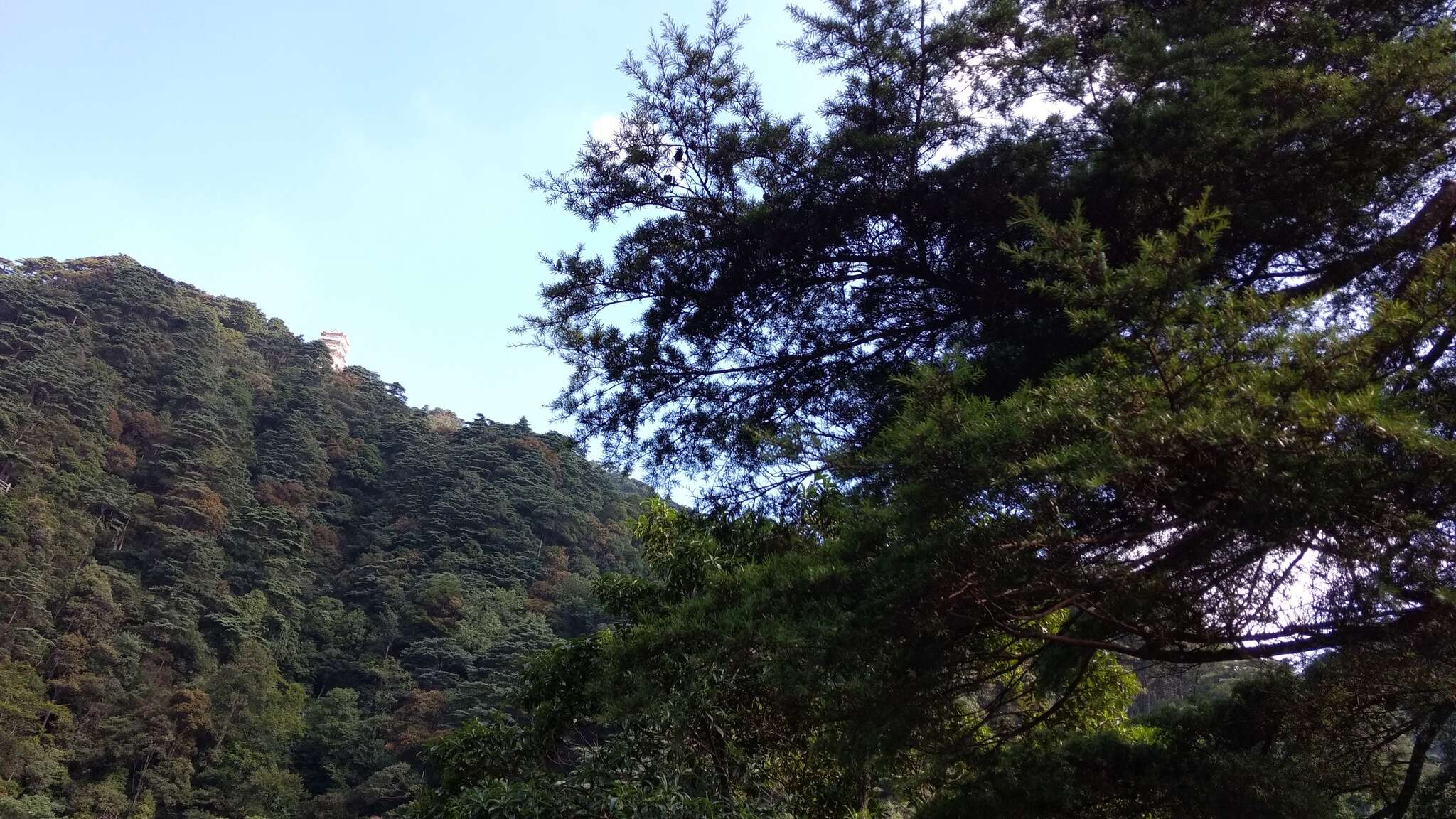
Nothotsuga
Nothotsuga is a genus of coniferous trees in the family Pinaceae endemic to China. Nothotsuga contains only one living species, Nothotsuga longibracteata, commonly known as the bristlecone hemlock or chang bao tie shan (), which is found in southeastern China, in southern Fujian, northern Guangdong, northeast Guangxi, northeast Guizhou, and southwest Hunan.
Abietoideae
Abietoideae is a subfamily of the conifer family Pinaceae. The name is from the genus Abies (firs), which contains most of the species in the genus. Six genera are currently assigned to this subfamily: Abies, Cedrus, Keteleeria, Nothotsuga, Pseudolarix, and Tsuga. The group was formerly treated as a separate family, the Abietaceae, by some plant taxonomy systems, such as the Wettstein system.
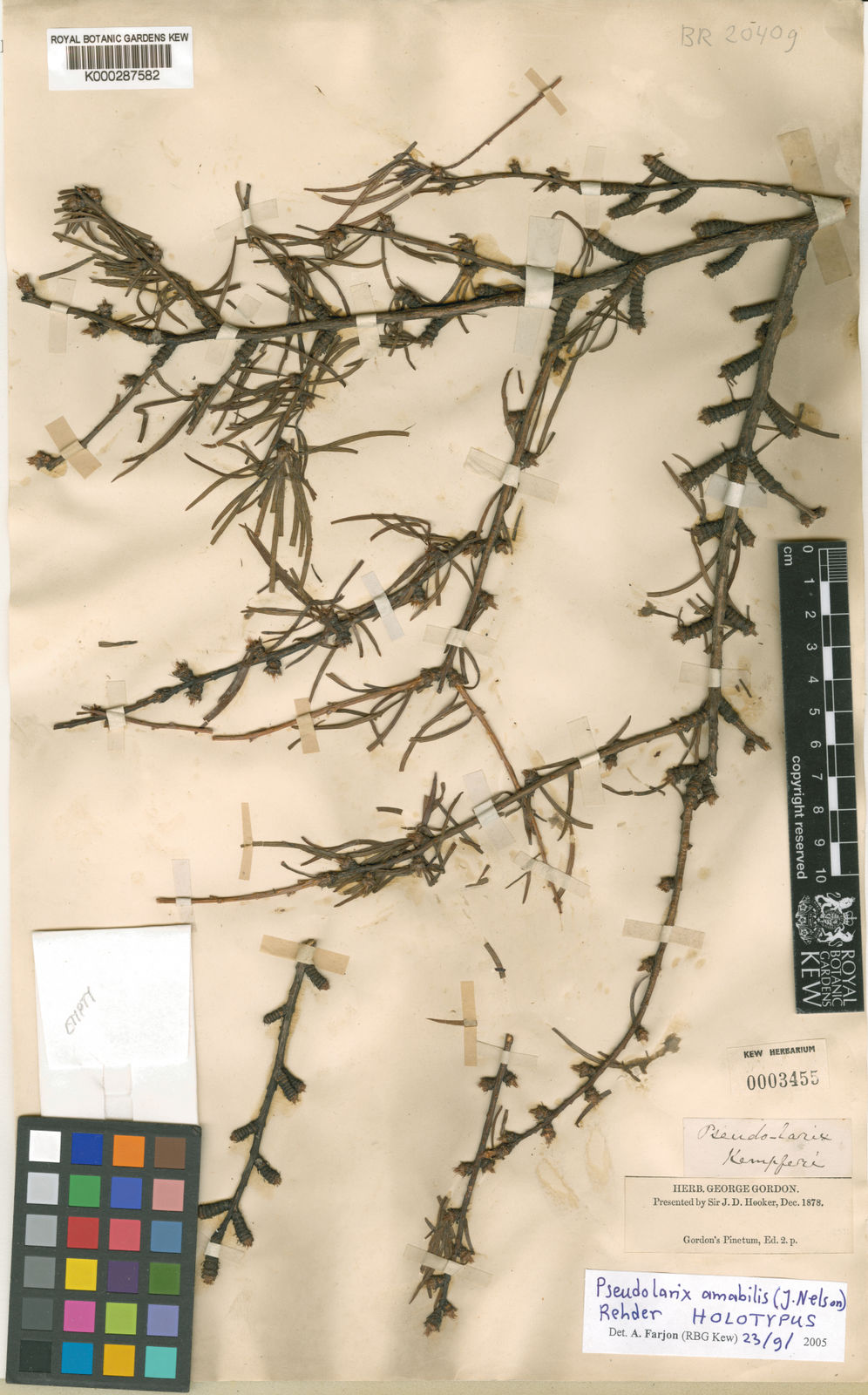
Pseudolarix
Pseudolarix is a genus of coniferous trees in the pine family Pinaceae containing three species, the extant Pseudolarix amabilis and the extinct species Pseudolarix japonica and Pseudolarix wehrii. Pseudolarix species are commonly known as golden larch, but are not true larches (Larix) being more closely related to Keteleeria, Abies and Cedrus. P. amabilis is native to eastern China, occurring in small areas in the mountains of southern Anhui, Zhejiang, Fujian, Jiangxi, Hunan, Hubei and eastern Sichuan, at altitudes of . P. wehrii is described from fossils dating to the Early Eocene (Ypresian)
Laricoideae
The Laricoideae are a subfamily of the Pinaceae, a Pinophyta division family. They take their name from the genus Larix (larches), which contains inside most of the species of the group and is one of only two deciduous genera of the pines complex (together with Pseudolarix, which however belongs to a different subfamily, the Abietoideae). Ecologically important trees, the Laricoideae form pure or mixed forest associations often dominant in the ecosystems in which they are present, thanks also to their biological adaptations to natural disturbances, to reproductive strategies put in place and h