Category
page 1Planetary systems with five confirmed planets

Kepler-20
Kepler-20 is a star about from Earth in the constellation Lyra with a system of at least five, and possibly six, known planets. The apparent magnitude of this star is 12.51, so it cannot be seen with the unaided eye. Viewing it requires a telescope with an aperture of or more. It is slightly smaller than the Sun, with 94% of the Sun's radius and about 91% of the Sun's mass. The effective temperature of the photosphere is slightly cooler than that of the Sun at , giving it the characteristic yellow hue of a stellar class G8 star. The abundance of elements other than hydrogen or helium, what ast

Kepler-62
Kepler-62 is a K-type main sequence star cooler and smaller than the Sun, located from Earth in the constellation Lyra. It resides within the field of vision of the Kepler spacecraft, the satellite that NASA's Kepler Mission used to detect planets that may be transiting their stars. On April 18, 2013, it was announced that the star has five planets, two of which, Kepler-62e and Kepler-62f are within the star's habitable zone. The outermost, Kepler-62f, is likely a rocky planet.

Kepler-186
Kepler-186 is a main-sequence M1-type dwarf star, located 177.5 parsecs (579 light years) away in the constellation of Cygnus. The star is slightly cooler than the sun, with roughly half its metallicity. It is known to have five planets, including the first Earth-sized world discovered in the habitable zone: Kepler-186f. The star hosts four other planets discovered so far, though they all orbit interior to the habitable zone.
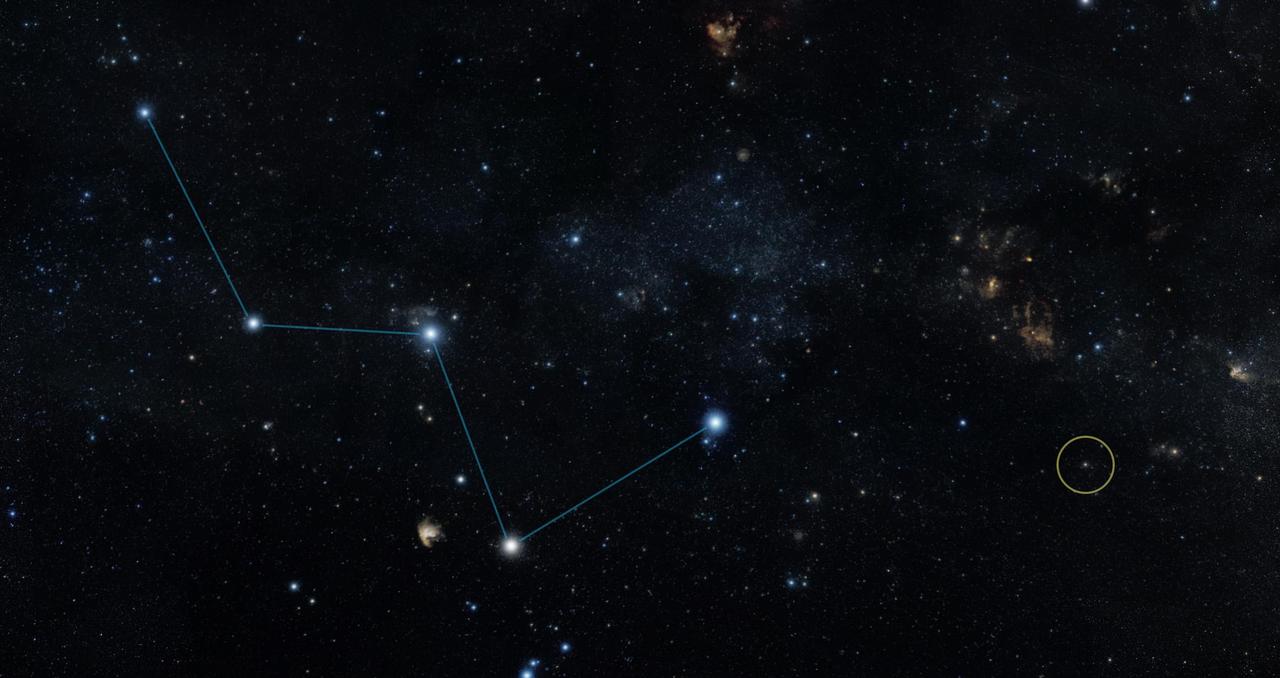
HD 219134
nearby star in the constellation Cassiopeia
Kepler-32
Kepler-32 is an M-type main sequence star located about 1053 light years from Earth, in the constellation of Cygnus. Discovered in January 2012 by the Kepler spacecraft, it shows a 0.58 ± 0.05 solar mass (), a 0.53 ± 0.04 solar radius (), and temperature of 3900.0 K, making it half the mass and radius of the Sun, two-thirds its temperature and 5% its luminosity.
Kepler-33
Kepler-33 is a star about in the constellation of Cygnus, with a system of five known planets. Having just begun to evolve off from the main sequence, its radius and mass are difficult to ascertain, although data available in 2020 shows its best-fit mass of 1.3 and radius of 1.6 are compatible with a model of a subgiant star.
Gliese 163
red dwarf star of the constellation Dorado

Kepler-444
Kepler-444 (or KOI-3158, KIC 6278762, 2MASS J19190052+4138043, BD+41°3306) is a triple star system, estimated to be 11.2 billion years old (more than 80% of the age of the universe), approximately away from Earth in the constellation Lyra. On 27 January 2015, the Kepler spacecraft is reported to have confirmed the detection of five sub-Earth-sized rocky exoplanets orbiting the main star. The star is a K-type main sequence star. All of the planets are far too close to their star to harbour life forms.

Kepler-296
Kepler-296 is a binary star system in the constellation Draco. The primary star appears to be a late K-type main-sequence star, while the secondary is a red dwarf.

L 98-59
star in Volans
Kepler-102
Kepler-102 is a star away in the constellation of Lyra. Kepler-102 is less luminous than the Sun. The star system does not contain any observable amount of dust. Kepler-102 is suspected to be orbited by a binary consisting of two red dwarf stars, at projected separations of 591 and 627 AU.
HD 108236
Star with 5 planets
Kepler-84
Kepler-84 is a Sun-like star 3,339 light-years from the Sun. It is a G-type star. The stellar radius measurement has a large uncertainty of 48% as in 2017, complicating the modelling of the star. The Kepler-84 star has two suspected stellar companions. Four stars, all more than four magnitudes fainter than Kepler-84, are seen within a few arcseconds and at least one is probably gravitationally bound to Kepler-84. Another, which has only a 0.005% chance of being a background star, is a yellow star with mass at a projected separation of 0.18″ or 0.26″ (213.6 AU).
HD 158259
star in the constellation Draco
HD 134606
star in the constellation Apus