Category
page 1Planetary transit variables
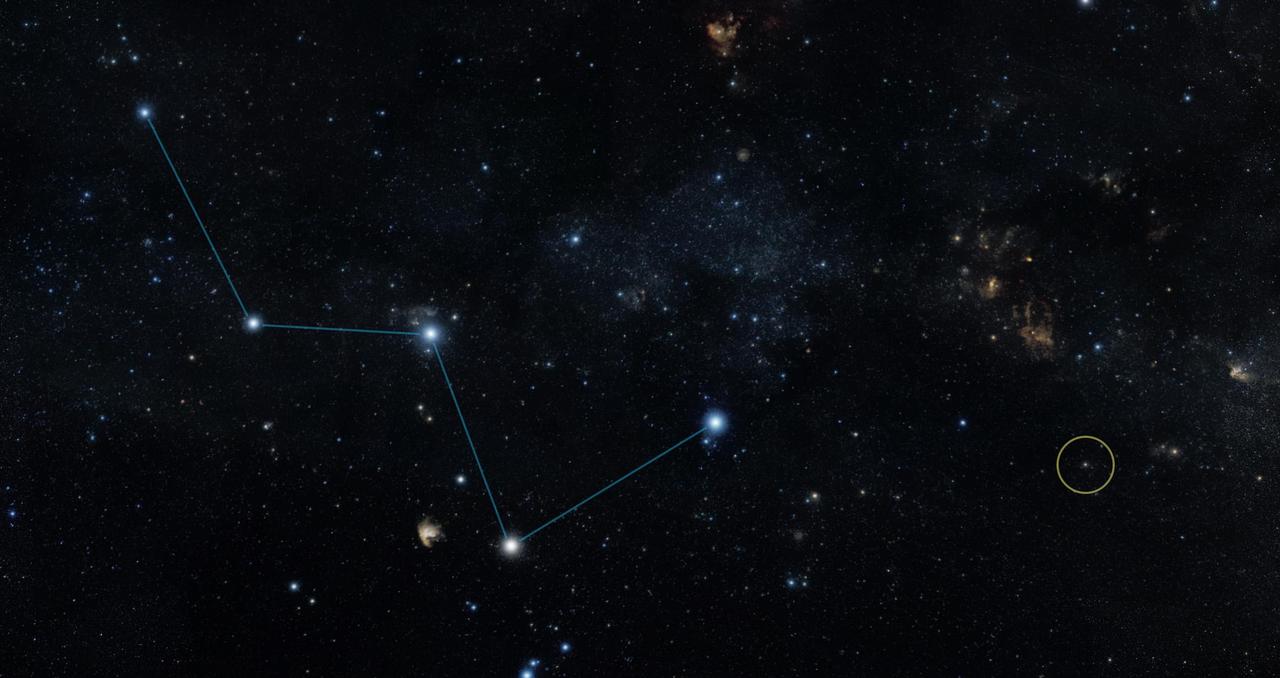
TRAPPIST-1
|-
! style="background-color: #FFFFC0; text-align: center;" colspan="2"| Characteristics
|- style="vertical-align:top"
! style="text-align:left" | Evolutionary stage
| Main sequence
|- style="vertical-align:top"
! style="text-align:left" | Spectral type
| M8V
|- style="vertical-align:top"
! style="text-align:left" | Apparent magnitude (R)
|
|- style="vertical-align:top"
! style="text-align:left" | Apparent magnitude (I)
|
|- style="vertical-align:top"
! style="text-align:left" | Apparent magnitude (J)
|
|- style="vertical-align:top"
! style="text-alig

55 Cancri
binary star

Kepler-11
Kepler-11, also designated as 2MASS J19482762+4154328, is a Sun-like star slightly larger than the Sun in the constellation Cygnus, located some 2,110 light years from Earth. It is located within the field of vision of the Kepler space telescope, the satellite that NASA's Kepler Mission uses to detect planets that may be transiting their stars. Announced on February 2, 2011, the star system is among the most compact and flattest systems yet discovered. It is the first discovered case of a star system with six transiting planets. All discovered planets are larger than Earth, with the larger one

Kepler-22
Extrasolar PlanetsEncyclopaediadata

Kepler-20
Kepler-20 is a star about from Earth in the constellation Lyra with a system of at least five, and possibly six, known planets. The apparent magnitude of this star is 12.51, so it cannot be seen with the unaided eye. Viewing it requires a telescope with an aperture of or more. It is slightly smaller than the Sun, with 94% of the Sun's radius and about 91% of the Sun's mass. The effective temperature of the photosphere is slightly cooler than that of the Sun at , giving it the characteristic yellow hue of a stellar class G8 star. The abundance of elements other than hydrogen or helium, what ast

Kepler-10
Kepler-10, formerly known as KOI-72, is a Sun-like star in the constellation of Draco that lies from Earth. Kepler-10 was targeted by NASA's Kepler space telescope, as it was seen as the first star identified by the Kepler mission that could be a possible host to a small, transiting exoplanet. The star is slightly less massive, slightly larger, and slightly cooler than the Sun; at an estimated 11.9 billion years in age, Kepler-10 is 2.3 times the age of the Sun.
Noquisi
star in the constellation Leo

Kepler-90
Kepler-90, also designated 2MASS J18574403+4918185, is an F-type star located about from Earth in the constellation of Draco. It is notable for being the only confirmed planetary system with the same number of observed planets as the Solar System.

Kepler-62
Kepler-62 is a K-type main sequence star cooler and smaller than the Sun, located from Earth in the constellation Lyra. It resides within the field of vision of the Kepler spacecraft, the satellite that NASA's Kepler Mission used to detect planets that may be transiting their stars. On April 18, 2013, it was announced that the star has five planets, two of which, Kepler-62e and Kepler-62f are within the star's habitable zone. The outermost, Kepler-62f, is likely a rocky planet.
V376 Pegasi
star in the constellation Pegasus

WASP-12
WASP-12 is a magnitude 11 yellow dwarf star located approximately 1347 light-years away in the constellation Auriga. WASP-12 has a mass and radius similar to the Sun and is known for being orbited by a planet that is extremely hot and has a retrograde orbit around WASP-12. WASP-12 forms a triple star system with two red dwarf companions. Both of them have spectral types of M3V and are only 38% and 37% as massive as the Sun, respectively.

Kepler-186
Kepler-186 is a main-sequence M1-type dwarf star, located 177.5 parsecs (579 light years) away in the constellation of Cygnus. The star is slightly cooler than the sun, with roughly half its metallicity. It is known to have five planets, including the first Earth-sized world discovered in the habitable zone: Kepler-186f. The star hosts four other planets discovered so far, though they all orbit interior to the habitable zone.
WDS 20007+2243AB
star in the constellation Vulpecula
Orkaria
star

Kepler-37
Kepler-37, also known as UGA-1785, is a G-type main-sequence star located in the constellation Lyra from Earth. It is host to exoplanets Kepler-37b, Kepler-37c, Kepler-37d and possibly Kepler-37e, all of which orbit very close to it. Kepler-37 has a mass about 80.3 percent of the Sun's and a radius about 77 percent as large. It has a temperature similar to that of the Sun, but a bit cooler at 5,357 K. It has about half the metallicity of the Sun. With an age of roughly 6 billion years, it is slightly older than the Sun, but is still a main-sequence star. Until January 2015, Kepler-37 was the s
HD 219134
nearby star in the constellation Cassiopeia
COROT-7
CoRoT-7 (TYC 4799-1733-1) is a binary star system made up of a late G-type star and a M-dwarf star that was discovered in 2021. The primary star has three exoplanets, including CoRoT-7b, a super-Earth exoplanet that is remarkable due to its extremely high temperature (around 2000°C) and very short orbital period, around 20 hours. It was the first exoplanet shown to be rocky. The system has the name CoRoT-7 after the CoRoT space telescope, which discovered the exoplanets around the star CoRoT-7A. The stellar system is 520 light-years from the Earth.
== Stellar components ==
=== CoRoT-7A ===
The

Kepler-42
<!--This is now a page in its own right, not merely a translation of other languages' pages, but I'm leaving the translation material here so the material from the Chinese and French pages can be incorporated into this page by persons who know that language.

Kepler-69
Kepler-69 (KOI-172, 2MASS J19330262+4452080, KIC 8692861) is a G-type main-sequence star similar to the Sun in the constellation Cygnus, located about from Earth. On April 18, 2013 it was announced that the star has two planets. Although initial estimates indicated that the terrestrial planet Kepler-69c might be within the star's habitable zone, further analysis showed that the planet very likely is interior to the habitable zone and is far more analogous to Venus than to Earth and thus completely inhospitable.

WASP-1
WASP-1 is a magnitude 12 binary star system located about light-years away in the Andromeda constellation. The binary system consists of a metal-rich F-type main-sequence star, named WASP-1A, and a distant low-mass star, named WASP-1B. WASP-1A has one known transiting hot Jupiter exoplanet named WASP-1b.

Kepler-4
Kepler-4 is a sunlike star located about 1626 light-years away in the constellation Draco. It is in the field of view of the Kepler Mission, a NASA operation purposed with finding Earth-like planets. Kepler-4b, a Neptune-sized planet that orbits extremely close to its star, was discovered in its orbit and made public by the Kepler team on January 4, 2010. Kepler-4b was the first discovery by the Kepler satellite, and its confirmation helped to demonstrate the spacecraft's effectiveness.
ADS 16402
star
Kepler-32
Kepler-32 is an M-type main sequence star located about 1053 light years from Earth, in the constellation of Cygnus. Discovered in January 2012 by the Kepler spacecraft, it shows a 0.58 ± 0.05 solar mass (), a 0.53 ± 0.04 solar radius (), and temperature of 3900.0 K, making it half the mass and radius of the Sun, two-thirds its temperature and 5% its luminosity.

Kepler-9
Kepler-9 is a sunlike star in the constellation Lyra. Its planetary system, discovered by the Kepler Mission in 2010 was the first detected with the transit method found to contain multiple planets.

Kepler-7
Kepler-7 is a star located in the constellation Lyra in the field of view of the Kepler Mission, a NASA operation in search of Earth-like planets. It is home to the fourth of the first five planets that Kepler discovered; this planet, a Jupiter-size gas giant named Kepler-7b, is as light as styrofoam. The star itself is more massive than the Sun, and is nearly twice the Sun's radius. It is also slightly metal-rich, a major factor in the formation of planetary systems. Kepler-7's planet was presented on January 4, 2010 at a meeting of the American Astronomical Society.

Kepler-6
Kepler-6 is a G-type star situated in the constellation Cygnus. The star lies within the field of view of the Kepler Mission, which discovered it as part of a NASA-led mission to discover Earth-like planets. The star, which is slightly larger, more metal-rich, slightly cooler, and more massive than the Sun, is orbited by at least one extrasolar planet, a Jupiter-sized planet named Kepler-6b that orbits closely to its star.
thumb|Kepler-6

OGLE-TR-56
OGLE-TR-56 is a dim, distant, magnitude 17 Sun-like star located approximately away in the constellation of Sagittarius.
This star is listed as an eclipsing type variable star with the eclipse due to the passage of the planet as noted in the discovery papers. The eclipses were detected by the Optical Gravitational Lensing Experiment (OGLE) team analysing data collected in 2001.
Kepler-47
Kepler-47 is a binary star system in the constellation Cygnus located about away from Earth. The stars have three exoplanets, all of which orbit both stars at the same time, making this a circumbinary system. The first two planets announced are designated Kepler-47b and Kepler-47c, and the third, later discovery is Kepler-47d. Kepler-47 is the first circumbinary multi-planet system discovered by the Kepler mission. The outermost of the planets is a gas giant orbiting within the habitable zone of the stars. Because most larger stars (the size of the sun or greater) are binary, the discovery tha
HD 149026
star in the constellation Hercules
Dìwö
WASP-17, also named Dìwö, is an F-type main sequence star approximately 1,310 light-years away in the constellation Scorpius. It hosts the planet WASP-17b.
WASP-11/HAT-P-10
WASP-11, also designated HAT-P-10, is a binary star system. The primary star is a main-sequence orange dwarf star. The secondary is an M dwarf with a projected separation of . The system is located about 424 light-years away in the constellation Aries.

WASP-18
WASP-18 is a magnitude 9 star located away in the Phoenix constellation of the Southern Hemisphere. It has a mass of 1.29 solar masses.

Kepler-444
Kepler-444 (or KOI-3158, KIC 6278762, 2MASS J19190052+4138043, BD+41°3306) is a triple star system, estimated to be 11.2 billion years old (more than 80% of the age of the universe), approximately away from Earth in the constellation Lyra. On 27 January 2015, the Kepler spacecraft is reported to have confirmed the detection of five sub-Earth-sized rocky exoplanets orbiting the main star. The star is a K-type main sequence star. All of the planets are far too close to their star to harbour life forms.
Nushagak
star in the constellation Cassiopeia
Kepler-33
Kepler-33 is a star about in the constellation of Cygnus, with a system of five known planets. Having just begun to evolve off from the main sequence, its radius and mass are difficult to ascertain, although data available in 2020 shows its best-fit mass of 1.3 and radius of 1.6 are compatible with a model of a subgiant star.

COROT-1
CoRoT-1 is a yellow dwarf main sequence star similar to the Sun. The star is located approximately 2,510 light-years away in the constellation of Monoceros. The apparent magnitude of this star is 13.6, which means it is not visible to the naked eye; however, it can be seen through a medium-sized amateur telescope on a clear, dark night. The first exoplanet discovered in the course of the CoRoT mission orbits this star; it is considered to be a "hot Jupiter", and is approximately as massive as the planet Jupiter itself.
Kepler-5
Kepler-5 is a star located in the constellation Cygnus in the field of view of the Kepler Mission, a NASA project aimed at detecting planets in transit of, or passing in front of, their host stars as seen from Earth. One closely-orbiting, Jupiter-like planet, named Kepler-5b, has been detected around Kepler-5. Kepler-5's planet was one of the first five planets to be discovered by the Kepler spacecraft; its discovery was announced on January 4, 2010 at the 215th meeting of the American Astronomical Society after being verified by a variety of observatories. Kepler-5 is larger and more massive

OGLE-TR-10
thumb|left|A light curve for OGLE-TR-10 showing the planet transit, adapted from Pont et al. (2007)
OGLE-TR-10 is a distant G-type main sequence star located 4100 light years from Earth in the constellation of Sagittarius. It is located near the Galactic Center.
This star is listed as an eclipsing type variable star with the eclipse due to the passage of the planet as noted in the discovery papers. The eclipses were detected by the Optical Gravitational Lensing Experiment (OGLE) team analysing data collected in 2001.
Márohu
WASP-6, also officially named Márohu, is a type-G yellow dwarf star located about away in the Aquarius constellation. Dim at magnitude 12, it is visible through a moderate sized amateur telescope. The star is about 80% of the size and mass of the Sun and it is a little cooler. Starspots in the WASP-6 system helped to refine the measurements of the mass and the radius of the planet WASP-6b.
Hunor
star

Kepler-56
Kepler-56 is a red giant in the constellation Cygnus. It is located roughly away from the solar system and has slightly more mass than the Sun.
Kepler-8
Kepler-8 is a star located in the constellation Lyra in the field of view of the Kepler Mission, a NASA-led operation tasked with discovering terrestrial planets. The star, which is slightly hotter, larger, and more massive than the Sun, has one gas giant in its orbit, Kepler-8b. This gas giant is larger than Jupiter, but is less massive, and thus more diffuse. The planet's discovery was announced to the public on January 4, 2010 along with four other planets. As the fifth confirmed planetary system verified by Kepler, it helped demonstrate the capabilities of the Kepler spacecraft.

TrES-2
GSC 03549-02811 (sometimes referred to as Kepler-1, or either TrES-2A or TrES-2 parent star in reference to its exoplanet TrES-2b) is a binary star system containing a G-type main-sequence star similar to the Sun. This star is located approximately 704 light-years away in the constellation of Draco. The apparent magnitude of this star is 11.41, which means it is not visible to the naked eye but can be seen with a medium-sized amateur telescope on a clear dark night. The age of this star is about 5 billion years.
Kepler-1625
HD 15082
star in the constellation Andromeda

Moldoveanu
XO-1 is a magnitude 11 G-type main-sequence star located approximately 530 light-years away in the constellation Corona Borealis. XO-1 has a mass and radius similar to the Sun.
In 2006 the extrasolar planet XO-1b was discovered orbiting XO-1 by the transit method using the XO Telescope.
HAT-P-4
HAT-P-4 is a wide binary star consisting of a pair of G-type main-sequence stars in the constellation of Boötes. It also has the BD designation BD+36°2593.
.png)
Kepler-138
Kepler-138, also known as KOI-314, is a red dwarf located in the constellation Lyra, 219 light years from Earth. It is located within the field of vision of the Kepler spacecraft, the satellite that NASA's Kepler Mission used to detect planets transiting their stars.
Nu2 Lupi
star

OGLE-TR-111
OGLE-TR-111 is a yellow dwarf star approximately 3,600 light-years away in the constellation of Carina (the Keel) with an apparent magnitude of about 17. Because its apparent brightness changes when one of its planets transits, the star has been given the variable star designation V759 Carinae.
WASP-2
WASP-2 is a binary star system located about 496 light-years away in the Delphinus constellation.
The primary is a magnitude 12 orange dwarf star, orbited by a red dwarf star on a wide orbit. The star system shows an infrared excess noise of unknown origin.
HAT-P-7
HAT-P-7 is a triple star system located about 1,088 light-years away in the constellation Cygnus. The apparent magnitude of this star is 10.5, which means it is not visible to the naked eye but can be seen with a small telescope on a clear dark night.
GJ 9827
star in the constellation Pisces
WASP-7
WASP-7, also identified as HD 197286, is a type F star located about 527 light-years away in the constellation Microscopium. This star is a little larger and about 28% more massive than the Sun and is also brighter and hotter. At magnitude 9.5 the star cannot be seen by the naked eye but is visible through a small telescope.
GSC 02620-00648
star
WASP-5 b
WASP-5 is a magnitude 12 G-type main-sequence star located about away in the Phoenix constellation. The star is likely older than the Sun, slightly enriched in heavy elements and is rotating rapidly, being spun up by the tides raised by the giant planet on a close orbit.
Kepler-160
Kepler-160 is a G-type subgiant star approximately the width of our Galactic arm away in the constellation Lyra, first studied in detail by the Kepler Mission, a NASA-led operation tasked with discovering terrestrial planets. The star, which is very similar to the Sun in mass and radius, has three confirmed planets and one unconfirmed planet orbiting it.
Kepler-80
Kepler-80, also known as KOI-500, is a red dwarf star of the spectral type M0V. This stellar classification places Kepler-80 among the very common, cool, class M stars that are still within their main evolutionary stage, known as the main sequence. Kepler-80, like other red dwarf stars, is smaller than the Sun, and it has both radius, mass, temperatures, and luminosity lower than that of our own star. Kepler-80 is found approximately 1,223 light years from the Solar System, in the stellar constellation Cygnus, also known as the Swan.

Kepler-19
Kepler-19 (TYC 3134-1549-1, 2MASS J19214099+3751064, GSC 03134-01549, KOI-84) is a G7V star that is host to three known planets - Kepler-19b, Kepler-19c, and Kepler-19d. It is located about away in the constellation Lyra, five arcminutes northwest of the much more distant open cluster NGC 6791.
GSC 02652-01324
star in the constellation Lyra