Category
page 1Plant classes

Magnoliopsida
Magnoliopsida is a valid botanical name for a class of flowering plants. By definition the class will include the family Magnoliaceae, but its circumscription can otherwise vary, being more inclusive or less inclusive depending upon the classification system being discussed.
thumb|right|300px|Magnolia flowers

Polypodiopsida
REDIRECT Fern

Lycopodiopsida
Lycopodiopsida is a class of vascular plants also known as lycopsids, lycopods, or lycophytes. Members of the class are also called clubmosses, firmosses, spikemosses and quillworts. They have dichotomously branching stems bearing simple leaves called microphylls and reproduce by means of spores borne in sporangia on the sides of the stems at the bases of the leaves. Although living species are small, during the Carboniferous, extinct tree-like forms (Lepidodendrales) formed huge forests that dominated the landscape and contributed to coal deposits.

Bryopsida
The Bryopsida constitute the largest class of mosses, containing 95% of all moss species. It consists of approximately 11,500 species, common throughout the whole world.
Equisetopsida
REDIRECTEquisetidae
Sphagnopsida
Sphagnopsida is a class of mosses that includes a single subclass Sphagnidae, with two orders. It is estimated it originated about 465 million years ago, along with Takakia. The order Sphagnales contains four living genera: Ambuchanania, Eosphagnum, and Flatbergium, which counts four species in total, and Sphagnum which contains the rest of the species. The extinct Protosphagnales contains a single fossil species.

Jungermanniopsida
Jungermanniopsida is the largest of three classes within the division Marchantiophyta (liverworts).
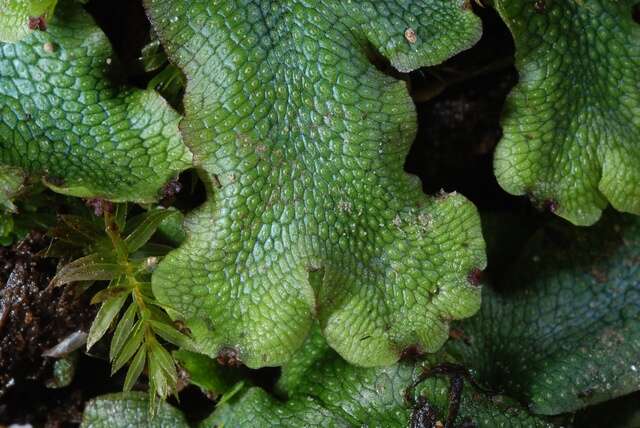
Marchantiopsida
Marchantiopsida is a class of liverworts within the phylum Marchantiophyta. The species in this class are known as complex thalloid liverworts. The species in this class are widely distributed and can be found worldwide. Complex oil bodies are only found in the gametophyte.

Cladoxylopsida
thumb|right|Bark (possibly from a cladoxylopsid) from the Middle Devonian of Wisconsin
Gnetopsida
REDIRECT Gnetophyta
Isoetopsida
REDIRECTLycopodiopsida

Haplomitriopsida
Haplomitriopsida is a class of liverworts comprising fifteen species in three genera. Recent cladistic analyses of nuclear, mitochondrial, and plastid gene sequences place this monophyletic group as the basal sister group to all other liverworts. The group thus provides a unique insight into the early evolution of liverworts in particular and of land plants in general.

Pinopsida
REDIRECT Conifer
Polypodiidae
subclass of plants, used by Chase and Reveal (2009)

Rosopsida
thumb|Rosopsida

Horneophytopsida
thumb|Horneophyton corms found in the Rhynie chert; scale bar is 1 cm.
The Horneophytopsida, informally called horneophytes, are a class of extinct plants which consisted of branched stems without leaves, true roots or vascular tissue, found from the Late Silurian to the Early Devonian (around ). They are the simplest known polysporangiophytes, i.e. plants with sporophytes bearing many spore-forming organs (sporangia) on branched stems. They were formerly classified among the rhyniophytes, but it was later found that some of the original members of the group had simple vascular tissue and

Liliopsida
thumb| Lilium jankae
Liliopsida Batsch (synonym: Liliatae) is a botanical name for the class containing the family Liliaceae (or lily family). It is considered synonymous (or nearly synonymous) with the name monocotyledon. Publication of the name is credited to Scopoli (in 1760): see author citation (botany). This name is formed by replacing the termination -aceae in the name Liliaceae by the termination -opsida (Art 16 of the ICBN).
Ginkgoopsida
Ginkgoopsida is a proposed class of gymnosperms defined by Sergei V. Meyen in 1984 to encompass Ginkgoales (which contains the living Ginkgo) alongside a number of extinct seed plant groups, which he considered to be closely related based on similarities of morphology of pollen, seeds, cuticles, short shoots and leaves. The validity of this group as a whole has been considered questionable by other authors, who consider that it is unlikely to be monophyletic. Other authors have used the class as a monotypic grouping, including only Ginkgoales. Some authors have used the clade Ginkgophyta to en