Category
page 1Plants

plant
Plants are the eukaryotic organisms that constitute the kingdom Plantae. They are predominantly photosynthetic, meaning that they obtain their energy from sunlight. They do that using the green pigment chlorophyll in their chloroplasts to produce sugars from carbon dioxide and water. Exceptions are parasitic plants that have lost the genes for chlorophyll and photosynthesis, and obtain their energy from other plants or fungi. Most plants are multicellular, except for some green algae.

Angiosperms
clade of seed plants that produce flowers

Brassica oleracea var. capitata
Cabbage, comprising several cultivars of Brassica oleracea, is a leafy green, red (purple), or white (pale green) biennial plant grown as an annual vegetable crop for its dense-leaved heads. It is descended from the wild cabbage (B. oleracea var. oleracea), and belongs to the "cole crops" or brassicas, meaning it is closely related to broccoli and cauliflower (var. botrytis); Brussels sprouts (var. gemmifera); and Savoy cabbage (var. sabauda).

shrub
thumb|250px|A Cytisus scoparius|broom shrub in flower
thumb|250px|A rhododendron shrubbery in [[Sheringham Park]]

seed plant
division of plants

tracheophyte
clade of plants with xylem and phloem

evergreen plant
right|300px|thumb|A Abies alba|silver fir shoot showing three successive years of retained leaves
thumb|304x304px|Cupressus sempervirens (Mediterranean cypress), an evergreen tree
In botany, an evergreen is a plant which has foliage that remains green and functional throughout the year. This contrasts with deciduous plants, which lose their foliage completely during the winter or dry season. Consisting of many different species, the unique feature of evergreen plants lends itself to various environments and purposes.

Embryophytes
The embryophytes () are plants of the clade Embryophyta, also known as 'Plantae sensu strictissimo (, "plant in the strictest sense") or land plants'. They are complex multicellular eukaryotes with haplodiplontic life cycles, all have specialized reproductive organs called sporangia, and reproduce sexually via alternation of generations using spores or seeds. The name "embryophyte" derives from their innovative characteristic of nurturing the embryonic sporophytes within the tissues of the parent gametophytes during the early stages of multicellular development. They are the dominant group of

lignin
thumb|500px|Idealized structure of lignin from a softwood
Lignin is a class of complex organic polymers that form key structural materials in the support tissues of most plants. Lignins are particularly important in the formation of cell walls, especially in wood and bark, because they lend rigidity and do not rot easily. Chemically, lignins are polymers made by the cross-linking of phenolic precursors.

Pteridophyta
A pteridophyte is a vascular plant with xylem and phloem that reproduces by means of spores. Because pteridophytes produce neither flowers nor seeds, they are sometimes referred to as "cryptogams", meaning that their means of reproduction is hidden. They are also the ancestors of the plants we see today.
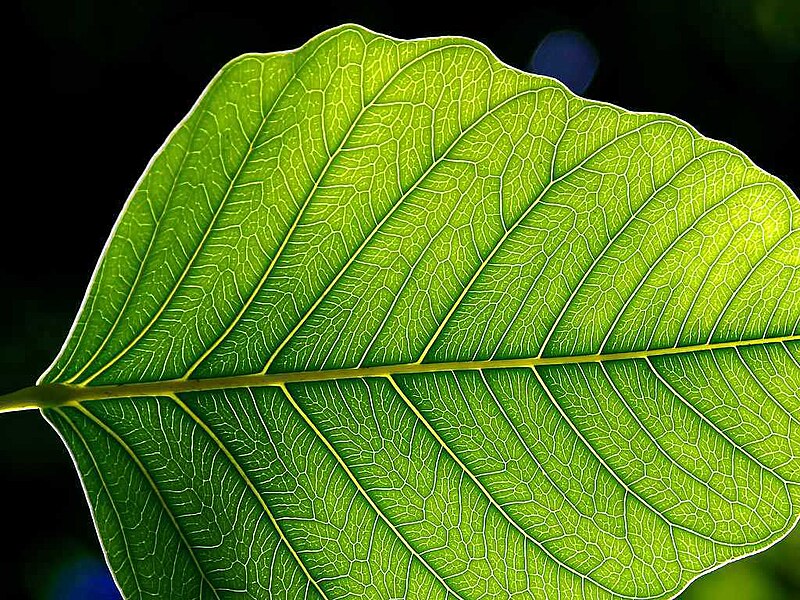
Portal:Plants
Wikimedia portal
woody plant
plant that produces wood as its structural tissue

understory
thumb|Lesser celandine (Ficaria verna) on forest floor in spring
primary production
synthesis of organic compounds from atmospheric or aqueous carbon dioxide
ephemeral plant
plant with a short life cycle

entomophily
thumb|Bee pollinating a flower
thumb|Soldier beetle covered with pollen
artificial flower
imitations of natural flowering plants used for commercial or residential decoration
non-vascular plant
clade of land plant without xylem and phloem

Euphyllophyta
The euphyllophytes are a clade of plants within the tracheophytes (the vascular plants). The group may be treated as an unranked clade, a division under the name Euphyllophyta or a subdivision under the name Euphyllophytina. The euphyllophytes are characterized by the possession of true leaves ("megaphylls"), and comprise one of two major lineages of extant vascular plants. As shown in the cladogram below, the euphyllophytes have a sister relationship to the lycopodiophytes or lycopsids. Unlike the lycopodiophytes, which consist of relatively few presently living or extant taxa, the euphylloph

Polysporangiophytes
Polysporangiophytes, also called polysporangiates or formally Polysporangiophyta, are plants in which the spore-bearing generation (sporophyte) has branching stems (axes) that bear sporangia. The name literally means 'many sporangia plant'. The clade includes all land plants (embryophytes) except for the bryophytes (liverworts, mosses and hornworts) whose sporophytes are normally unbranched, even if a few exceptional cases occur. While the definition is independent of the presence of vascular tissue, all living polysporangiophytes also have vascular tissue, i.e., are vascular plants or tracheo

blossom
thumb|Almond|Almond blossom
right|thumb|Cherry blossoms, Paris, full bloom
In botany, blossoms are the flowers of stone fruit trees (genus Prunus) and of some other plants with a similar appearance that flower profusely for a period of time in spring.

Cephalophyllum
Cephalophyllum is a genus of flowering plants in the family Aizoaceae. It includes 34 species native to Namibia and the Cape Provinces of South Africa.

Cormophyta
thumb
Cormophytes (Cormophyta) is a historical term seldom used today for the plants that are differentiated into roots, stems and leaves. These plants differ from thallophytes, whose body is referred to as the thallus, i.e. a simple body not differentiated into leaves and stems. Definitions have varied, notably about whether mosses and liverworts are included.

primary succession
gradual growth and change of an ecosystem on new substrate
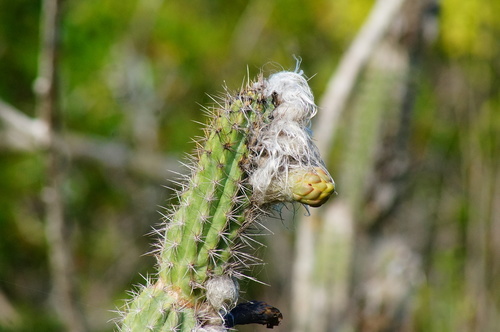
Pilosocereus collinsii
species of plant
Stomatophyta
The Stomatophyta are a proposed sister branch of the Marchantiophyta (Liverworts), together forming the Embryophyta. The Stomatophyta consist of the Bryophyta (Moss), and the remainder of the Embryophyta, including the Anthocerotophyta (Hornsworts). The word stomatophyta means plant with stoma.
division
horticulture
Thermophyte
thumb|Hot-springs with bacteria, [[cyanobacteria, and algae in Yellowstone National Park]]
Thermophyte (Greek thérmos = warmth, heat + phyton = plant) is an organism which is tolerant or thriving at high temperatures. These organisms are categorized according to ecological valences at high temperatures, including biological extremes. Such organisms include hot-spring taxa also.
offset
daughter plant asexually produced on the mother plant