Category
page 1Plays set in ancient Greece

A Midsummer Night's Dream
play by William Shakespeare

Antigone
ancient Greek tragedy by Sophocles

Oedipus Rex
ancient Greek tragedy by Sophocles

The Comedy of Errors
early play by William Shakespeare

Medea
ancient Greek tragedy by Euripides

Timon of Athens
play by Shakespeare
Troilus and Cressida
play by William Shakespeare

Prometheus Bound
ancient Greek tragedy by Aeschylus

Lysistrata
Lysistrata ( or ; Attic Greek: , Lysistrátē, ) is an ancient Greek comedy by Aristophanes, first staged in early 411 BCE at Lenaea festival in classical Athens. The play is a comic account of a woman's – Lysistrata's – mission to end the Peloponnesian War between Greek city states by denying sex from all the men of warring parties and occupying the Acropolis of Athens. Lysistrata persuades the women of the warring cities to engage in a sex strike as a means of forcing the men to negotiate peace – a strategy that inflames the battle between the sexes.

Electra
ancient Greek tragedy by Sophocles

Oedipus at Colonus
ancient Greek tragedy by Sophocles
The Bacchae
ancient Greek tragedy by Euripides

Oresteia
The Oresteia () is a trilogy of Greek tragedies written by Aeschylus in the 5th century BC, concerning the murder of Agamemnon by Clytemnestra, the murder of Clytemnestra by Orestes, the trial of Orestes, the end of the curse on the House of Atreus, and the pacification of the Furies (also called Erinyes or Eumenides).

The Persians
ancient Greek tragedy by Aeschylus
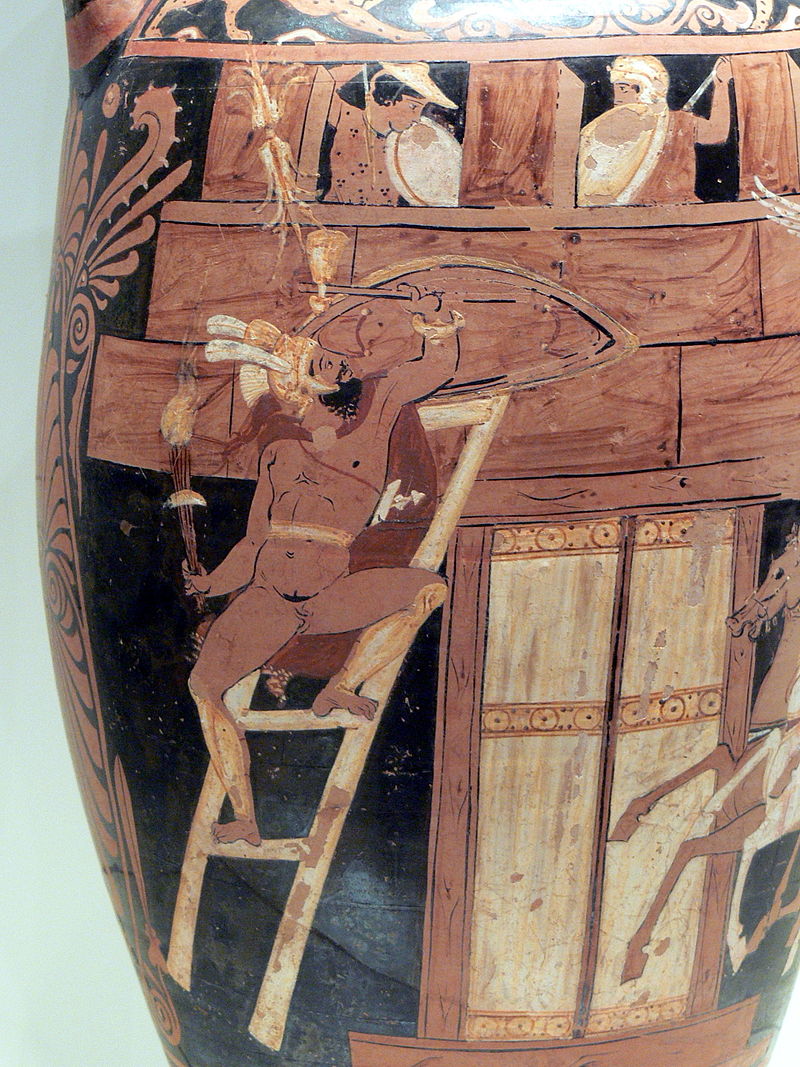
Seven against Thebes
ancient Greek tragedy by Aeschylus
The Frogs
comedy by Aristophanes
Pericles, Prince of Tyre
play written in part by William Shakespeare
The Trojan Women
ancient Greek tragedy by Euripides
Philoctetes
ancient Greek tragedy by Sophocles
Alcestis
ancient Greek tragedy by Euripides
Iphigenia in Aulis
ancient Greek tragedy by Euripides
Ajax
ancient Greek tragedy by Sophocles
The Birds
comedy by Aristophanes

Phèdre
Phèdre (; originally Phèdre et Hippolyte) is a French dramatic tragedy in five acts written in alexandrine verse by Jean Racine, first performed in 1677 at the theatre of the Hôtel de Bourgogne in Paris.
Electra
ancient Greek tragedy by Euripides

Assemblywomen
Assemblywomen (Ancient Greek: Ἐκκλησιάζουσαι Ekklesiazousai; also translated as, Congresswomen, Women in Parliament, Women in Power, A Parliament of Women, Assembly-Women, and Women in the Assembly) is a comedy written by the Greek playwright Aristophanes in 391 BCE. The play portrays a scenario where the women of Athens assume control of the government and institute reforms that ban private wealth and enforce sexual equity for the old and unattractive. In addition to Aristophanes' political and social satire, Assemblywomen derives its comedy through sexual and scatological humor. The play aim
Hippolytus
ancient Greek tragedy by Euripides
The Clouds
comedy by Aristophanes
Trachiniae
ancient Greek tragedy by Sophocles
The Two Noble Kinsmen
play partly written by William Shakespeare
Iphigenia in Tauris
Ancient Greek tragedy by Euripides
Cyclops
ancient Greek satyr play by Euripides
Orestes
ancient Greek tragedy by Euripides
Andromache
ancient Greek tragedy by Euripides
The Knights
comedy by Aristophanes
The Wasps
comedy by Aristophanes
The Acharnians
comedy by Aristophanes
Hecuba
ancient Greek tragedy by Euripides
The Suppliants
ancient Greek tragedy by Euripides

Thesmophoriazusae
Thesmophoriazusae (; Thesmophoriazousai, ), or Women at the Thesmophoria (sometimes also called The Poet and the Women), is one of eleven surviving comedy plays by Aristophanes. It was first produced in 411 BC, probably at the City Dionysia. The play's focuses include the subversive role of women in a male-dominated society; the vanity of contemporary poets, such as the tragic playwrights Euripides and Agathon; and the shameless, enterprising vulgarity of an ordinary Athenian, as represented in this play by the protagonist, Mnesilochus. The work is also notable for Aristophanes' free adaptatio
The Phoenician Women
ancient Greek tragedy by Euripides
Suppliants
ancient Greek tragedy by Aeschylus
Plutus
comedy by Aristophanes
Ion
ancient Greek tragedy by Euripides
Peace
comedy by Aristophanes
Herakles
ancient Greek tragedy by Euripides
Helen
ancient Greek tragedy by Euripides

Andromaque
Andromaque is a tragedy in five acts by the French playwright Jean Racine written in alexandrine verse. It was first performed on 17 November 1667 before the court of Louis XIV in the Louvre in the private chambers of the Queen, Marie Thérèse, by the royal company of actors, called "les Grands Comédiens", with Thérèse Du Parc in the title role. The company gave the first public performance two days later in the Hôtel de Bourgogne in Paris. Andromaque, the third of Racine's plays, written at the age of 27, established its author's reputation as one of the great playwrights in France.
Herakles' Children
ancient Greek tragedy by Euripides

Dyskolos
Dyskolos (, , translated as The Grouch, The Misanthrope, The Curmudgeon, The Bad-tempered Man or Old Cantankerous) is an Ancient Greek comedy by Menander, the only one of his plays, and of the whole New Comedy, that has survived in nearly complete form. It was first presented at the Lenaian festival in Athens in 316 BCE, where it won Menander the first prize.
Amphitryon
Ancient Roman play by Plautus

Erotokritos
Erotokritos () is a romance composed by Vikentios Kornaros in early 17th century Crete. It consists of 10,012 fifteen-syllable rhymed verses, the last twelve of which refer to the poet himself. It is written in the Cretan dialect of the Greek language. Its central theme is love between Erotokritos (only referred to in the work as Rotokritos or Rokritos) and Aretousa. Around this theme, revolve other themes such as honour, friendship, bravery and courage. Erotokritos and Erophile by Georgios Hortatzis constitute classic examples of Greek Renaissance literature and are considered to be the most

Aulularia

The Tragedy of Man
play written by Imre Madách
Rhesus
Athenian tragedy attributed to Euripides
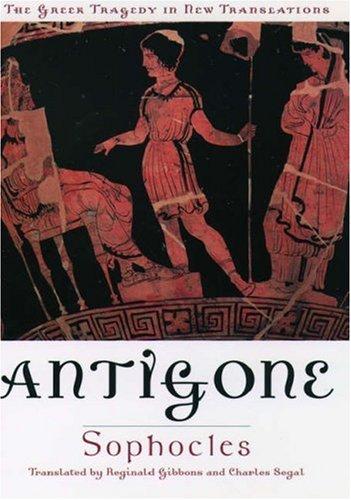
Antigone
play written by Jean Anouilh
Ichneutae
The Ichneutae (), also known as the Searchers, Trackers or Tracking Satyrs, is a fragmentary satyr play by the fifth-century BC Athenian dramatist Sophocles. Three undistinguished quotations in ancient authors were all that was known of the play until 1912, when the extensive remains of a second-century CE papyrus roll of the Ichneutae were published among the Oxyrhynchus Papyri. With more than four hundred lines surviving in their entirety or in part, the Ichneutae is now the best preserved ancient satyr play after Euripides' Cyclops, the only fully extant example of the genre. The manuscript
Phormio
Latin comic play by Terence

Pseudolus
Pseudolus is a play by the ancient Roman playwright Titus Maccius Plautus. It is one of the earliest examples of Roman literature and is a key example of the Fabulae Palliatae which are early Roman Comedies set in a Classical Greek setting. Pseudolus was first shown in 191 BC during the Megalesian Festival, which was a celebration for the Phrygian Goddess Cybele. The temple for worship of Cybele in Rome was completed during the same year in time for the festival.

Mostellaria
Mostellaria is a play by the Roman author Plautus. Its name translates from Latin as "The Ghost (play)" (with the word understood in the title). The play is believed to be an adaptation of a lost comedy of the Athenian poet Philemon called Phasma (the Ghost). It is set in a street in the city of Athens.