Category
page 1Pleistocene first appearances

thylacine
The thylacine (; binomial name Thylacinus cynocephalus), also commonly known as the Tasmanian tiger or Tasmanian wolf, is an extinct species of carnivorous marsupial that was native to the Australian mainland and the islands of Tasmania and New Guinea. The thylacine died out in New Guinea and mainland Australia around 3,600–3,200 years ago, possibly because of the introduction of the dingo, whose earliest record dates to around the same time, but which never reached Tasmania. Prior to European settlement, around 5,000 remained in the wild on the island of Tasmania. Beginning in the nineteenth
aurochs
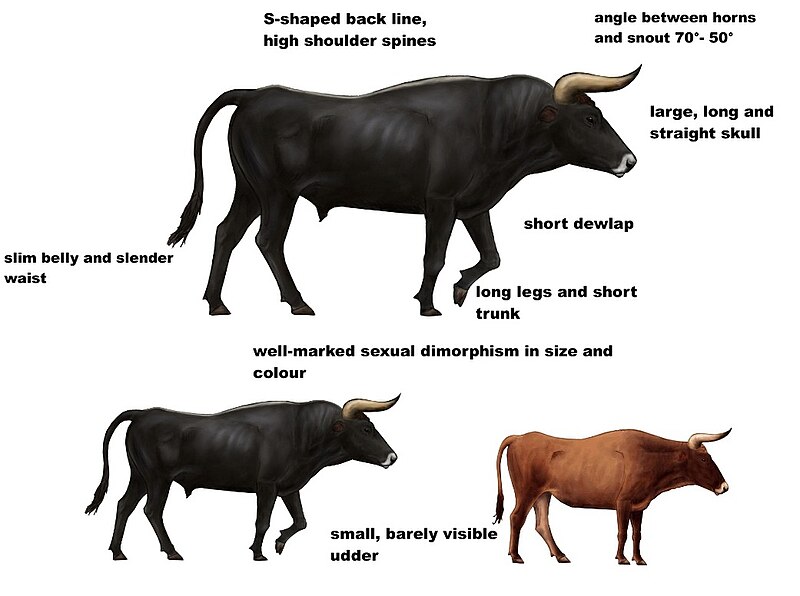
The aurochs (Bos primigenius; or ; pl.: aurochs or aurochsen; also ure or urus) is an extinct species of bovine, considered to be the wild ancestor of modern domestic cattle. With a shoulder height of up to in bulls and in cows, it was one of the largest herbivores in the Holocene; it had massive elongated and broad horns that reached in length.

Smilodon
Smilodon is a genus of extinct felids. It is one of the best-known saber-toothed predators and prehistoric mammals. Although commonly known as the saber-toothed tiger, it was not closely related to the tiger or other modern cats, belonging to the extinct subfamily Machairodontinae, with an estimated date of divergence from the ancestor of living cats around 20 million years ago. Smilodon was one of the last surviving machairodonts alongside Homotherium. Smilodon lived in the Americas during the Pleistocene to early Holocene epoch (2.5 mya – at latest 8,200 years ago). The genus was named in 18

Great Auk
species of bird (extinct)
Passenger Pigeon
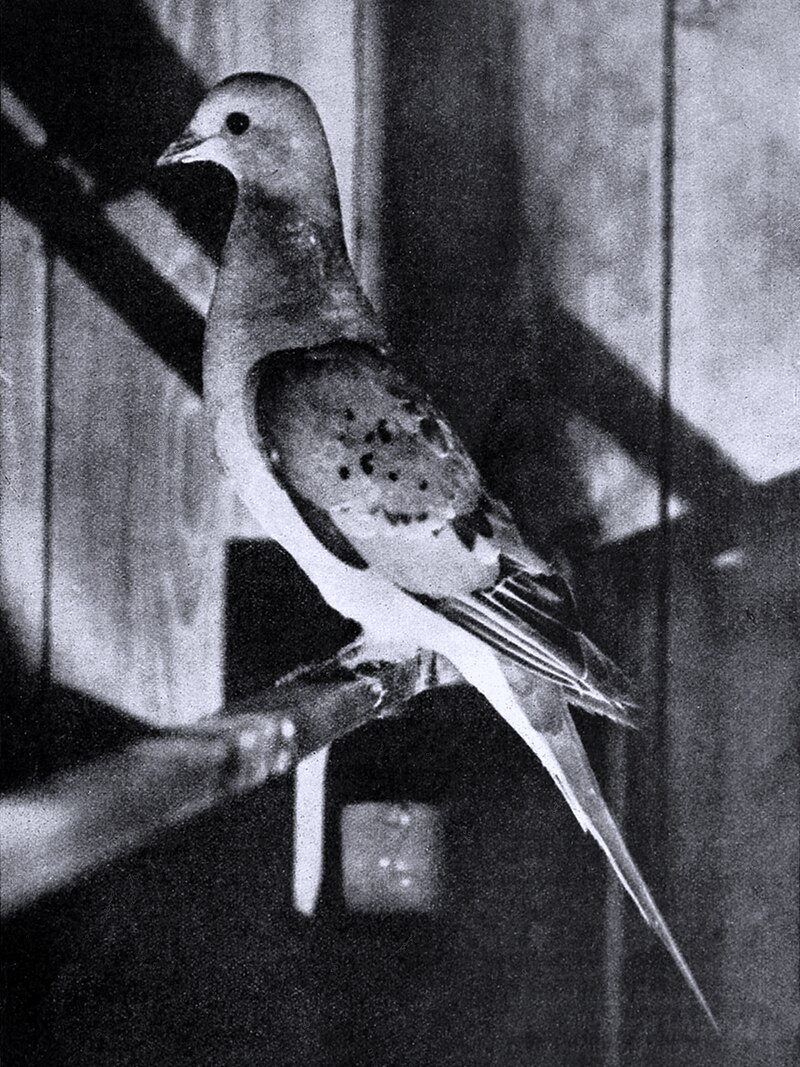
extinct species of North American pigeon, most abundant bird on Earth before extinction

Woolly Mammoth
extinct species of mammoth (Mammuthus)

elephant bird
family of birds (subfossil)

dire wolf
extinct species of canids (Canidae)

Haast's Eagle
extinct species of eagle

Megaloceros giganteus
extinct species of cervid (deer)

Varanus priscus
Megalania (Varanus priscus) is an extinct species of giant monitor lizard, part of the megafaunal assemblage that inhabited Australia during the Pleistocene. It is the largest terrestrial lizard known to have existed, but the fragmentary nature of known remains make estimates highly uncertain. Studies suggest that most known specimens would have reached around in body length excluding the tail, while some individuals would have been significantly larger, reaching sizes around , or perhaps even in total length.
Columbian mammoth
extinct species of mammoth (Mammuthus)
steppe bison
species of mammal (fossil)
Thylacinus
Thylacinus is a genus of extinct carnivorous marsupials in the family Thylacinidae. The only recent member was the thylacine (Thylacinus cynocephalus), commonly also known as the Tasmanian tiger or Tasmanian wolf. The last known Tasmanian tiger was in the Beaumaris Zoo in Tasmania, eventually dying in 1936. The earliest known member of the genus, Thylacinus macknessi appeared during the Early Miocene, around 16 million years ago, and was smaller than the modern thylacine, with a body mass of about . Thylacinus represented the only extant genus of the family after the beginning of the Pliocene

mountain pygmy possum
species of mammal
European jaguar
species of mammal

Megaloceros
Megaloceros (from Greek: + , literally "Great Horn"; see also Lister (1987)) is an extinct genus of deer whose members lived throughout Eurasia from the Pleistocene to the early Holocene. The type and only undisputed member of the genus, Megaloceros giganteus, vernacularly known as the "Irish elk" or "giant deer", is also the best known. Fallow deer are thought to be their closest living relatives. Megaloceros has been suggested to be closely related to other genera of "giant deer", like the East Asian genus Sinomegaceros and the largely European Praemegaceros, the species of both genera havin
Pygmy mammoth
species of mammal (fossil)
Heptaxodontidae
Heptaxodontidae, rarely called giant hutia, is an extinct family of large rodents known from fossil and subfossil material found in the West Indies. One species, Amblyrhiza inundata, is estimated to have weighed between , reaching the weight of an eastern gorilla. This is twice as large as the capybara, the largest rodent living today, but still much smaller than Josephoartigasia monesi, the largest rodent known. These animals were probably used as a food source by the pre-Columbian peoples of the Caribbean.
Megalomys
Megalomys is a genus of rodent in the family Cricetidae, part of the tribe Oryzomyini. The genus contains five large rodents from various Caribbean islands, of which two are known to have survived into modern times, but all of which are now extinct. The last species to survive was M. desmarestii from Martinique, which became extinct after the Mount Pelée eruption in 1902. Ancient DNA analysis places Megalomys forming a clade with Pennatomys, sister to the clade containing Aegialomys, Nesoryzomys, Melanomys and Sigmodontomys, having diverged from the mainland clade around 7 million years ago.

Mylodon
Mylodon is an extinct genus of ground sloth belonging to the family Mylodontidae, known from southern South America. With a total length of 3 to 4 m and a body mass of 1-2 tonnes, it is one of the largest mylodontids (though it was considerably exceeded in size by the mylodontid Lestodon).

Doedicurus
Doedicurus, from Ancient Greek δοῖδυξ (doîdux), meaning "pestle" and oυρά (ourá), meaning "tail", is an extinct genus of glyptodont from South America containing one species, D. clavicaudatus. Glyptodonts are a member of the family Chlamyphoridae, which also includes some modern armadillo species, and they are classified in the superorder Xenarthra alongside sloths and anteaters. Being a glyptodont, it was a rotund animal with heavy armor and a carapace. Averaging at an approximate , it was one of the largest glyptodonts to have ever lived. Though glyptodonts were quadrupeds, large ones like D

Pelorovis
Pelorovis is an extinct genus of African wild cattle which existed during the Pleistocene epoch. Originally believed to be a giant member of Caprinae, related to modern sheep, it is now known to be a relative of cattle and buffalos. The best known and type species is Pelorovis oldowayensis, from the Early Pleistocene of Olduvai Gorge, Tanzania, though two others, P. turkanensis and P. howelli, are currently recognised. A fourth, P. praeafricanus, may exist, or it may represent the same species as P. oldowayensis. "Pelorovis" antiquus, from the Late Pleistocene-Holocene, and "P." kaisensis, hav
Monkey lemur
family of mammals

Megalocnus
Megalocnus ("great sloth" in Greek) is a genus of extinct ground sloths that were native to Cuba during the Pleistocene and Holocene epochs. They were among the largest of the Caribbean sloths (Megalocnidae), with individuals estimated to have weighed up to 270 kg (595 lbs) to 200 kg (440 lbs), around the size of a black bear when alive. Its relatives include other megalocnid sloths, such as Acratocnus, Mesocnus, Miocnus, Neocnus and Parocnus. The former species M. zile from Hispaniola is currently thought to be a junior synonym of Parocnus serus.

Mixotoxodon
Mixotoxodon ("mixture Toxodon") is an extinct genus of notoungulate of the family Toxodontidae inhabiting South America, Central America and parts of southern North America during the Pleistocene epoch, from 1,800,000–12,000 years ago.

Notiomastodon
Notiomastodon is an extinct genus of gomphothere proboscidean (related to modern elephants), endemic to South America from the Pleistocene to the early Holocene. Individuals of Notiomastodon reached a size similar to that of the modern Asian elephant, with a body mass of 3-4 tonnes. Like other brevirostrine gomphotheres such as Cuvieronius and Stegomastodon, Notiomastodon had a shortened lower jaw and lacked lower tusks, unlike more primitive gomphotheres like Gomphotherium.
Panthera onca augusta
subspecies of big cat native to the Americas

Acratocnus
Acratocnus is an extinct genus of Caribbean sloths that were found on Cuba, Hispaniola (today the Dominican Republic and Haiti), and Puerto Rico during the Late Pleistocene and early-mid Holocene.
Californian Turkey
species of bird (fossil)
evolution of the wolf
overview about the evolution of the wolf
Palaeoloxodon cypriotes
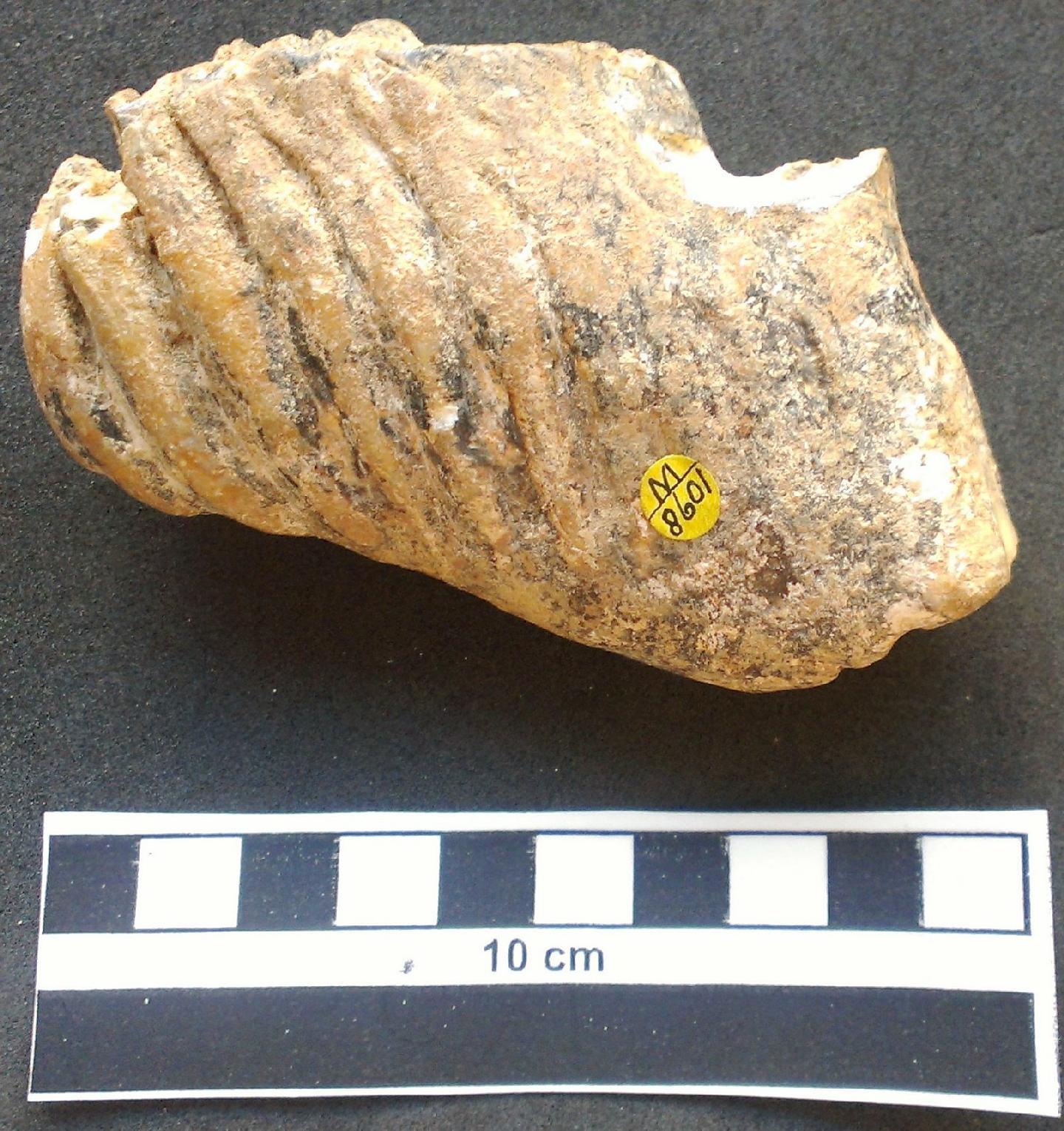
species of mammal (fossil)
Panthera onca mesembrina
Extinct subspecies of Jaguar
Xenorhinotherium bahiense
Xenorhinotherium is an extinct genus of macraucheniine macraucheniids, native to northern South America during the Pleistocene and Holocene epoch, closely related to Macrauchenia of Patagonia. The type species is X. bahiense.
Nothrotherium
Nothrotherium is an extinct genus of medium-sized ground sloth from South America (Bolivia, Brazil and the Ware Formation, La Guajira, Colombia). It differs from Nothrotheriops in smaller size and differences in skull and hind leg bones.
Canis latrans orcutti
subspecies of mammal
Volia
Volia is an extinct monospecific genus of mekosuchine crocodylian closely related to Mekosuchus and Trilophosuchus. Volia is known from a collection of largely fragmentary remains including skull bones and limbs recovered from the Voli Voli and Wainibuku Caves on Viti Levu (Fiji), with similar remains having been found on Naigani. It was around long, making it the largest predatory animal on the island and subsequently most likely the apex predator of the Pleistocene ecosystems of Fiji. It may have fed on giant iguanas, flightless birds or even fish. Like its closest relatives, it may have bee