Category
page 1Pleistocene United States

Snowy Egret
species of Bird

Bog turtle
species of reptile
Lake Bonneville
former pluvial lake in what is now Utah, Nevada, and Idaho in the United States

Notophthalmus viridescens
species of amphibian

Eremotherium
Eremotherium (from Greek for "steppe" or "desert" "beast": ἔρημος "steppe or desert" and θηρίον "beast") is an extinct genus of giant ground sloth in the family Megatheriidae. Eremotherium lived in southern North America, Central America, and northern South America. It was one of the largest sloths, with a body size comparable to elephants, weighing around and measuring about long, slightly larger than its close relative Megatherium.
Snake River Plain
valley in Idaho, United States
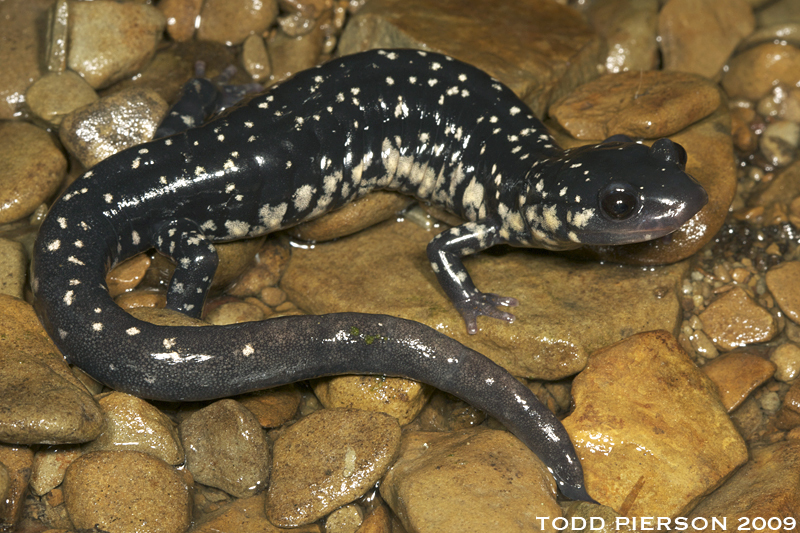
Plethodon glutinosus
species of amphibian

Cuvieronius
Cuvieronius is an extinct New World genus of gomphothere which ranged from southern North America to northwestern South America during the Pleistocene epoch. Reaching a shoulder height of and a body mass of , it was comparable in size to an Asian elephant. Cuvieronius inhabited subtropical and tropical latitudes in environments ranging from grasslands to tropical rainforest. Among the last gomphotheres along with the South American Notiomastodon, it became extinct as part of the end Pleistocene-extinction event, approximately 12-11,000 years ago, along with most other large mammals in the Amer

Desmognathus fuscus
species of amphibian

Spring salamander
species of amphibian

Ambystoma jeffersonianum
species of amphibian

Platygonus
Platygonus ("flat head" in reference to the straight shape of the forehead) is an extinct genus of herbivorous peccaries of the family Tayassuidae, endemic to North and South America from the Miocene through Pleistocene epochs (10.3 million to 11,000 years ago), existing for about . P. compressus stood tall.
_(20485352308).jpg)
Glyptotherium
Glyptotherium (from Ancient Greek for 'grooved or carved beast') is a genus of glyptodont (an extinct group of large, herbivorous armadillos) in the family Chlamyphoridae that lived from the Early Pliocene, about 3.9 million years ago, to the Late Pleistocene, around 15,000 years ago. It was widely distributed, living in the United States, Mexico, Guatemala, Costa Rica, Honduras, El Salvador, Panama, Venezuela, Colombia, and Brazil. Fossils that had been found in the Pliocene Blancan Beds in Llano Estacado, Texas were named Glyptotherium texanum by American paleontologist Henry Fairfield Osbor
Sevier Lake
intermittent lake in Millard County, Utah, United States

Seal salamander
species of amphibian

Holmesina
Holmesina is an extinct genus of pampathere, a group of armadillo-like xenarthrans that were distantly related to extant armadillos. Like armadillos, and unlike the other extinct branch of megafaunal cingulates the glyptodonts, the shell was made up of flexible plates which allowed the animal to move more easily.
thumb|left|Holmesina occidentalis
thumb|left|Life reconstruction of Holmesina floridanus and size comparation
Holmesina individuals were much larger than any modern armadillo: They could reach a length of , and a weight of , while the modern giant armadillo does not attain more than
Wisconsin glaciation
glacial period

Allegheny Mountain dusky salamander
species of amphibian

Mixotoxodon
Mixotoxodon ("mixture Toxodon") is an extinct genus of notoungulate of the family Toxodontidae inhabiting South America, Central America and parts of southern North America during the Pleistocene epoch, from 1,800,000–12,000 years ago.
Lake Lahontan
Pleistocene lake
Shoshone Falls
waterfall on the Snake River in Twin Falls and Jerome counties in Idaho, United States
Hemiauchenia
Hemiauchenia is an extinct genus of lamine camelids that evolved in North America in the Miocene epoch about 10 million years ago. This genus diversified and entered South America in the Late Pliocene about three to two million years ago, as part of the Great American Biotic Interchange. The genus became extinct at the end of the Pleistocene. The monophyly of the genus has been considered questionable, with phylogenetic analyses finding the genus to paraphyletic or polyphyletic, with some species suggested to be more closely related to living lamines (llamas and relatives) than to other Hemiau
Yellowstone hotspot
hotspot
Mount Taylor
stratovolcano in the San Mateo Mountains, Cibola County, New Mexico, North America
Henry's Fork Caldera
caldera in Fremont County, Idaho
Zuni-Bandera volcanic field
mountain
Touchet Formation
geological formation