Category
page 1Political philosophy in ancient Greece

polis
Polis (: poleis) means 'city' in Ancient Greek. The ancient word polis had socio-political connotations not possessed by modern usage. For example, Modern Greek πόλη (póli), "city", is located within a (chóra), "country", which is a πατρίδα (patrída) or "native land" for its citizens. In ancient Greece, the polis was the native land; there was no other. It had a constitution and demanded the supreme loyalty of its citizens. Χώρα was only the countryside, not a country. Ancient Greece was not a sovereign country; rather, it was territory occupied by Hellenes, people who claimed as their native

Antigone
ancient Greek tragedy by Sophocles

Apology
work by Plato

Crito
thumb|Beginning of Crito in the Codex Oxoniensis Clarkianus 39 of the Bodleian Library|Bodleian library (dating from around 895).
Crito ( or ; ) is a dialogue written by the ancient Greek philosopher Plato. It depicts a conversation between Socrates and his wealthy friend Crito of Alopece regarding justice (δικαιοσύνη), injustice (ἀδικία), and the appropriate response to injustice. It follows Socrates' imprisonment, just after the events of the Apology.

History of the Peloponnesian War
5th century BC history book by Thucydides

Politics
work of political philosophy by Aristotle
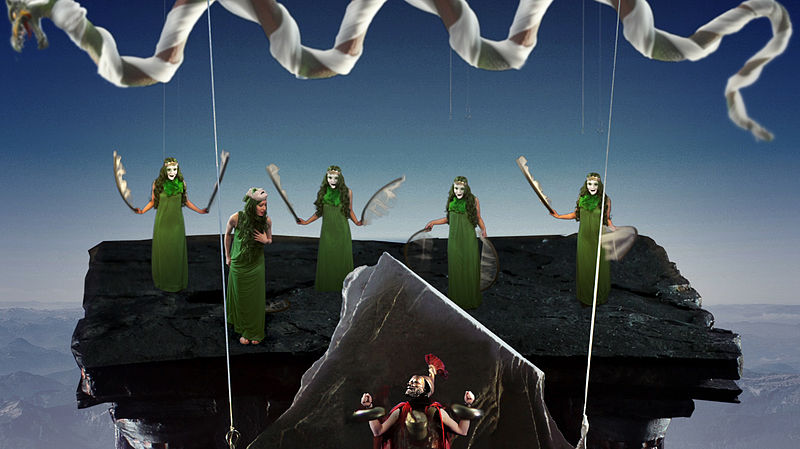
Prometheus Bound
ancient Greek tragedy by Aeschylus

Oresteia
The Oresteia () is a trilogy of Greek tragedies written by Aeschylus in the 5th century BC, concerning the murder of Agamemnon by Clytemnestra, the murder of Clytemnestra by Orestes, the trial of Orestes, the end of the curse on the House of Atreus, and the pacification of the Furies (also called Erinyes or Eumenides).
Laws
Platonic dialogue

Paideia
thumb|Isocrates, shown here in a copy of a bust from [[Villa Albani in Rome, was one of the foremost thinkers about paideia.]]
Paideia (/paɪˈdeɪə/; also spelled paedeia; ) referred to the rearing and education of the ideal member of the ancient Greek polis or state. These educational ideals later spread to the Greco-Roman world at large, and were called humanitas in Latin.
The Birds
comedy by Aristophanes

Assemblywomen
Assemblywomen (Ancient Greek: Ἐκκλησιάζουσαι Ekklesiazousai; also translated as, Congresswomen, Women in Parliament, Women in Power, A Parliament of Women, Assembly-Women, and Women in the Assembly) is a comedy written by the Greek playwright Aristophanes in 391 BCE. The play portrays a scenario where the women of Athens assume control of the government and institute reforms that ban private wealth and enforce sexual equity for the old and unattractive. In addition to Aristophanes' political and social satire, Assemblywomen derives its comedy through sexual and scatological humor. The play aim

Critias
dialog by Plato
The Knights
comedy by Aristophanes

Cyropaedia
thumb|Xenophon's Cyropaedia, 1803 English edition.
The Cyropaedia, sometimes spelled Cyropedia, is a partly fictional biography of Cyrus the Great, the founder of Persia's Achaemenid Empire. It was written around 370 BC by Xenophon, the Athenian-born soldier, historian, and student of Socrates. The Latinized title Cyropaedia derives from the Greek Kúrou paideía (), meaning The Education of Cyrus. Aspects of it would become a model for medieval writers of the genre mirrors for princes. In turn, the Cyropaedia strongly influenced the most well-known but atypical of these, Machiavelli's The Princ
The Histories
account of the rise of Rome by Polybius

Statesman
Socratic dialogue written by Plato
politeia
Politeia (πολιτεία) is an Ancient Greek word used in Greek political thought, especially that of Plato and Aristotle. Derived from the word polis ("city-state"), it has a range of meanings from "the rights of citizens" to a "form of government" to "commonwealth".

Hiero
literary work by Xenophon
Plato's political philosophy
aristocracy ruled by philosopher-kings