Category
page 1Pollution

pollution
Pollution is the introduction of contaminants into the natural environment that cause harm. Pollution can take the form of any substance (solid, liquid, or gas) or energy (such as radioactivity, heat, sound, or light). Pollutants, the components of pollution, can be either foreign substances/energies or naturally occurring contaminants.

smoke
thumb|Smoke from a fire|alt=

ozone
Ozone (), also called trioxygen, is an inorganic molecule with the chemical formula ''''''. It is a pale-blue gas with a distinctively pungent odour. It is an allotrope of oxygen that is much less stable than the diatomic allotrope , breaking down in the lower atmosphere to (dioxygen). Ozone is formed from dioxygen by the action of ultraviolet (UV) light and electrical discharges within the Earth's atmosphere. It is present in very low concentrations throughout the atmosphere, with its highest concentration high in the ozone layer of the stratosphere, which absorbs most of the Sun's ultraviole
air pollution
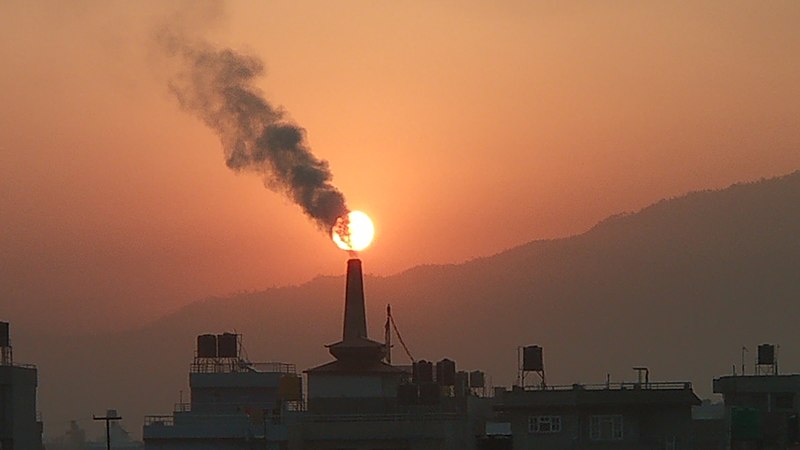
presence of dangerous substances in the atmosphere

acid rain
rain that is unusually acidic

smog
alt=A hazy cityscape to the right and a clear one to the left|thumb|Smog and a sunny day within a 10-day interval in Fanhe Town, Tieling|Fanhe, China

aerosol
thumb|upright=1.4|Mist and [[fog are aerosols|alt=photograph of heavy mist]]
noise pollution
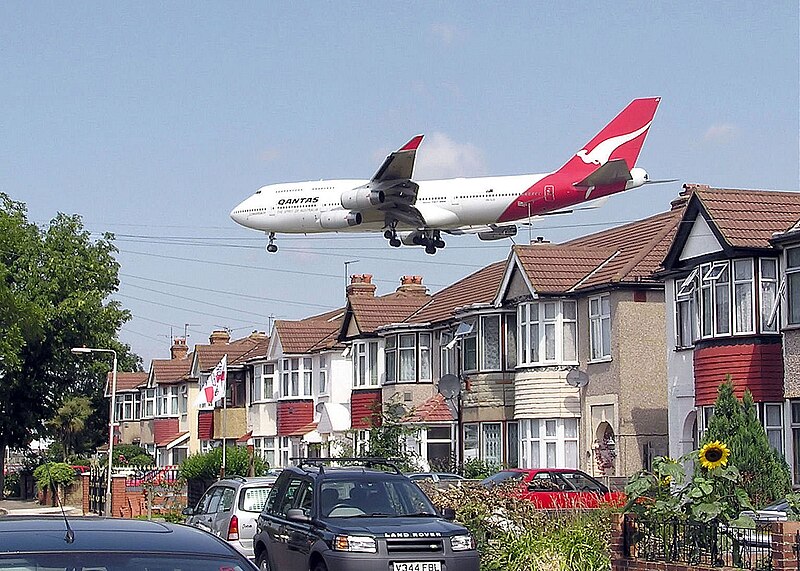
excessive, displeasing human, animal, or machine-created environmental noise

ozone depletion
stratospheric phenomena of Earth

light pollution
anthropogenic light in the night environment, caused by excess or misdirected lighting

wildfire
thumb|upright=1.35|Wildfire burning in the Kaibab National Forest, [[Arizona, United States, in 2020. The Mangum Fire burned more than of forest.]]
A wildfire, forest fire, or a bushfire is an unplanned and uncontrolled fire in an area of combustible vegetation. Some natural forest ecosystems depend on wildfire. Modern forest management often engages in prescribed burns to mitigate fire risk and promote natural forest cycles. However, controlled burns can turn into wildfires by mistake.

soot
thumb|Emission of soot in the exhaust gas of a large diesel truck, without particle filters

soil contamination
pollution of land by human-made chemicals or other alteration

space debris
defunct artificial object or collection of such objects in space

volcanic ash
volcanic material formed during explosive eruptions with the diameter of the grains less than 2 mm

plastic pollution
contamination of the natural environment with plastic products

chlorofluorocarbon
Chlorofluorocarbons (CFCs) and hydrochlorofluorocarbons (HCFCs) are fully or partly halogenated hydrocarbons that contain carbon (C), hydrogen (H), chlorine (Cl), and fluorine (F). They are produced as volatile derivatives of methane, ethane, and propane.

haze
thumb|Harmattan Haze in [[Abuja]]
thumb|right|Haze over the Mojave Desert from a [[brush fire in Santa Barbara, California, seen as the Sun descends on the 2016 June solstice, allows the Sun to be photographed without a filter.]]
thumb|Haze as smoke pollution over the Mojave from fires in the Inland Empire, June 2016, demonstrates the loss of contrast to the [[Sun, and the landscape in general.]]

Basel Convention
international treaty to prevent transfer of hazardous waste from developed to less developed countries
particulates
microscopic solid or liquid matter suspended in the Earth's atmosphere

global dimming
gradual reduction in the amount of global direct irradiance at the Earth's surface; approx. 4% reduction over 1960–1990; caused by an increase in atmospheric particulates (e.g. sulfate aerosols) due to human action
radioactive contamination
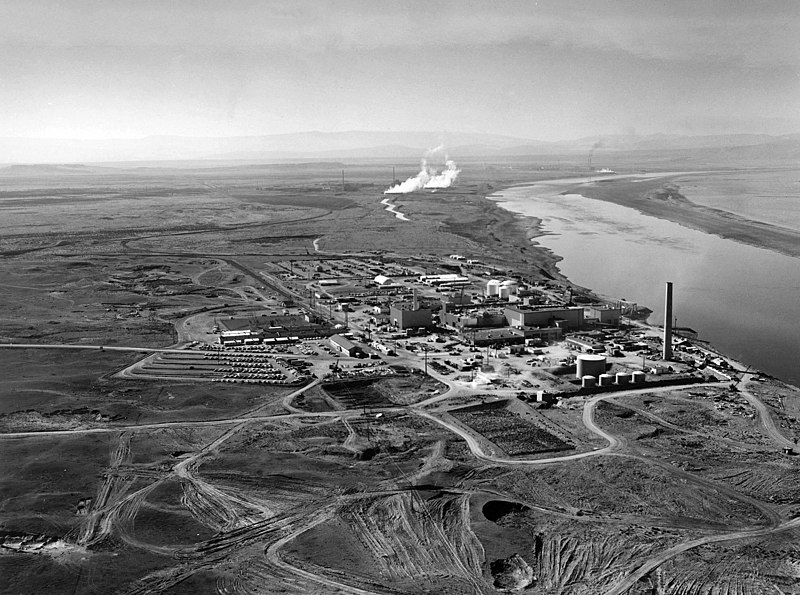
presence of radioactive substances where they are undesirable
volatile organic compound
organic chemical with appreciable vapor pressure at room temperature
persistent organic pollutant
organic compound that resists environmental degradation

asbestosis
exhaust gas
emitted as a result of the combustion of fuels such as natural gas, gasoline, petrol, biodiesel blends, diesel fuel, fuel oil, or coal
bioaccumulation
Bioaccumulation is the gradual accumulation of substances, such as pesticides or other chemicals, in an organism. Bioaccumulation occurs when an organism absorbs a substance faster than it can be lost or eliminated by catabolism and excretion. Thus, the longer the biological half-life of a toxic substance, the greater the risk of chronic poisoning, even if environmental levels of the toxin are not very high. Bioaccumulation, for example in fish, can be predicted by models. Hypothesis for molecular size cutoff criteria for use as bioaccumulation potential indicators are not supported by data. B

pollutant
thumb|Surface runoff, also called [[nonpoint source pollution, from a farm field in Iowa, the United States during a rainstorm. Topsoil, as well as farm fertilizers and other potential pollutants, runoff unprotected farm fields when heavy rains occur.|400x400px]]
Kessler syndrome
planetary low-orbit debris hazard

biomagnification
thumb|Biomagnification is a process causing the concentration of a substance (crosses) to increase at higher levels of the food chain.
thumb|In this scenario, a pond has been contaminated with toxic waste. Further up the food chain, the concentration of the contaminant increases, sometimes resulting in the top consumer dying.
Biomagnification, also known as bioamplification or biological magnification, is the increase in concentration of a substance in the tissues of organisms at successively higher levels in a food chain.
disposable product
product designed for a single use
visual pollution
visible deterioration and negative aesthetic quality of natural and human-made landscapes
polluter pays principle
principle
Global plastic pollution treaty
international agreement on plastics that will address the entire life cycle of plastics, from design to production and disposal
toxic waste
waste material that is toxic

debris
thumb|Debris still present 10 days after the Joplin tornado struck the city of [[Joplin, Missouri.]]

biofouling
thumb|Current measurement instrument encrusted with zebra mussels
thumb|Plant organisms, bacteria and animals (freshwater sponges) have covered (fouled) the sheath of an electric cable in a canal (Mid-[[Deûle in Lille, north of France).]]
environmental impact of mining
environmental problems with the uncontrolled mining

plastiglomerate
thumb|The melting of plastic waste from campfires or high temperatures on beaches (1) is resulting in the formation of a new type of rock known as plastiglomerate (2). Formed plastiglomerate merges with surrounding sediment to create a compositionally different sediment layer (3).The emergence of this new layer is being used as physical evidence of a marker horizon for an Anthropocene Epoch (4).
Plastiglomerate is a rock made of a mixture of sedimentary grains, and other natural debris (e.g. shells, wood) that is held together by plastic. It has been considered a potential marker of the Anthro
information pollution
contamination of information supply with irrelevant, redundant, unsolicited and low-value information
Global distillation
Movement of pollutant chemicals
point source pollution
Single source of pollution
Plasticosis
Plasticosis is a form of fibrotic scarring that is caused by small pieces of plastic which inflame the digestive tract.
drug pollution
Pollution of the environment with pharmaceutical drugs and their metabolites
Industrial Emissions Directive
EU directive
firewater
firefighting term
particulate pollution
health effect
change in health resulting from exposure to a source such as pollution, occupational noxae, medical drugs and psychotropic substances, transport, war events
environmental impact of pharmaceuticals and personal care products
effects of drugs on the environment
Blue ice
formed by leaky aircraft waste tanks
legacy pollution
pollution that is a result of a historical industry or previous use of a chemical
pollution prevention
strategy for reducing the amount of waste created and released into the environment, particularly by industrial facilities, agriculture, or consumers
history of sustainability
history of the development of sustainability from 1713 onwards
environmental impact of fashion
radio spectrum pollution
straying of waves in the radio and electromagnetic spectrums outside their allocations that cause problems for some activities, of particular concern to radio astronomers
War sand
Sand contaminated by weapon projectiles
environmental persistent pharmaceutical pollutant
Micropollutants are substances that even at very low concentrations have adverse effects on different environmental matrices. They are an inhomogeneous group of anthroprogenic chemical compounds that is discharged by human to the environment. Commonly known micropollutants that might pose possible threats to ecological environments are, to name just a few:
environmental persistent pharmaceutical pollutants and personal care products,
pesticides,
stimulants,
persistent organic pollutants,
and artificial sweeteners
To date, most of the scientists have identified wastewater treatment plants
marginal abatement cost
the marginal cost of reducing pollution
air pollution measurement
process of collecting and measuring the components of air pollution