Category
page 1Positive psychology
.jpg)
gratitude
thumb|upright=1.2|Gratitude. Statue in Palácio Nacional da Ajuda.
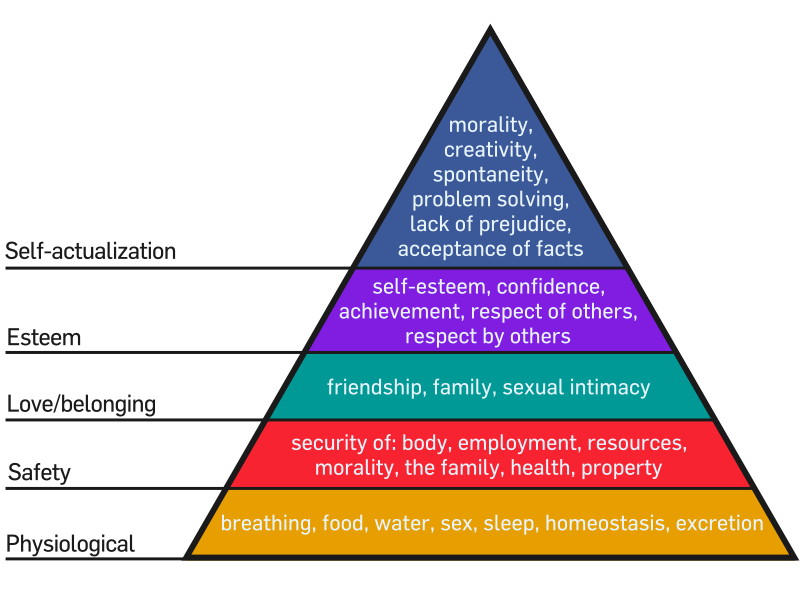
Maslow's hierarchy of needs
theory in developmental psychology proposed by Abraham Maslow, comprising a five-tier model of human needs: physiological, safety, love and belonging, esteem, and self-actualization
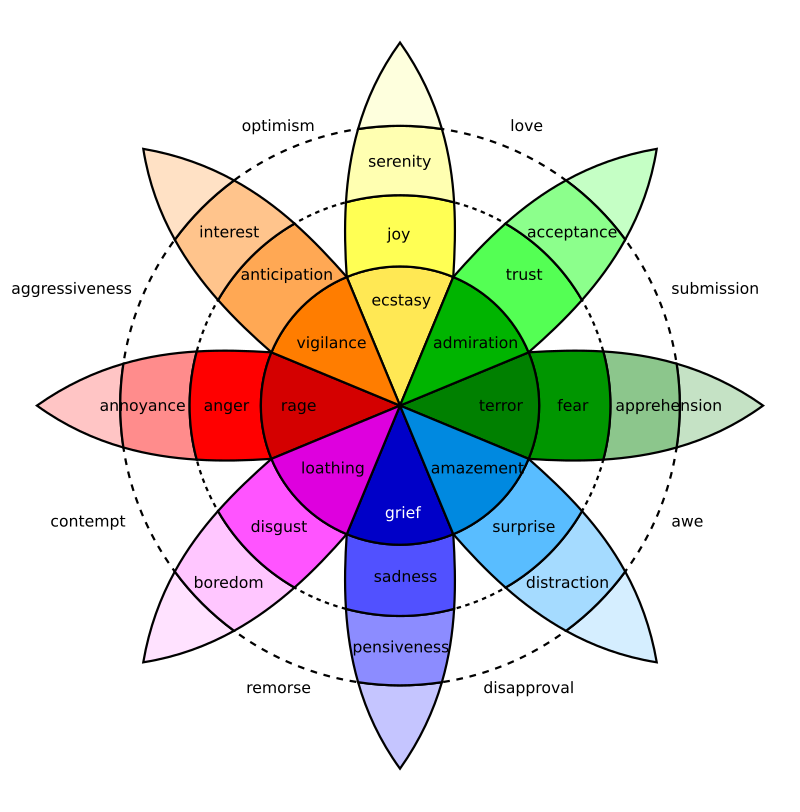
emotional intelligence
ability to identify, assess, and control the emotions of oneself, of others, and of groups

positive psychology
scientific study of the positive aspects of the human experience that make life worth living

well-being
thumb|upright=1.35|alt=Photo of a group of children that are sitting outside, smiling, and laughing|Positive interpersonal relationships contribute to well-being.

flow
mental state

confidence
Confidence is the feeling of belief or trust that a person or thing is reliable. Self-confidence is trust in oneself. Self-confidence involves a positive belief that one can generally accomplish what one wishes to do in the future. Self-confidence is not the same as self-esteem, which is an evaluation of one's worth. Self-confidence is related to self-efficacy—belief in one's ability to accomplish a specific task or goal. Confidence can be a self-fulfilling prophecy, as those without it may fail because they lack it, and those with it may succeed because they have it rather than because of an
self-determination theory
cognitive theory of human motivation and personality

sisu
'''''' is a Finnish word variously translated as stoic determination, tenacity of purpose, grit, bravery, resilience, and hardiness. It is held by Finns to express their national character. It does not necessarily have a single-word literal equivalent in English, although tenacity, grit, resilience, and hardiness share similar meanings but do not necessarily imply stoicism or bravery.
It Gets Better Project
LGBT campaign
hedonic treadmill
observed tendency of humans to quickly return to a relatively stable level of happiness despite major positive or negative events or life changes
ERG theory
theory
pleasure principle
instinctual seeking of pleasure and avoiding of pain in order to satisfy biological and psychological needs
aversion to happiness
People wanting to deliberately avoid positive emotions and / or happiness

salutogenesis
Salutogenesis is the study of the origins (genesis) of health (salus) and focuses on factors that support human health and well-being, rather than on factors that cause disease (pathogenesis). More specifically, the "salutogenic model" was originally concerned with the relationship between health, stress, and coping through a study of Holocaust survivors. Despite going through the dramatic tragedy of the Holocaust, some survivors were able to thrive later in life. The discovery that there must be powerful health causing factors led to the development of salutogenesis. The term was coined by Aa
happiness economics
quantitative and theoretical study of happiness, positive and negative affect, well-being, quality of life, life satisfaction and related concepts, typically combining economics with other fields such as psychology, health and sociology
subjective well-being
self-reported measure of well-being

determination
thumb|right|Remarking on the Resistance during World War II|anti-Nazi resistance movement fighting during the [[Warsaw Uprising, Polish President Andrzej Duda has stated that "thanks to its... determination, Poland exists".]]
toxic positivity
ignoring negative emotions rather than dealing with them
self-acceptance
hardiness
in humans, the ability to endure stress without deleterious effects on health
rosy retrospection
tendency to view past events in a positive (often unrealistic) light
mental toughness
measure of drive and perserverance through difficult challenges
stiff upper lip
displaying fortitude and stoicism in the face of adversity; exercising great self-restraint in the expression of emotion
Positive psychological capital
tool used for measuring psychological outcomes, initiated by Fred Luthans
perception management
influence tactic
positive affectivity
psychological capability to respond positively
constructive journalism
journalistic approach emphasising solutions, context and societal possibilities
peak experience
altered state of consciousness characterized by euphoria
Rosenberg self-esteem scale
Self-report questionnaire
Emotional literacy
the ability to understand your emotions, listen to others, empathise with their emotions, and express emotions productively
Broaden-and-build
The broaden-and-build theory in positive psychology suggests that positive emotions (such as happiness, and perhaps interest and anticipation) broaden one's awareness and encourage novel, exploratory thoughts and actions. Over time, this broadened behavioral repertoire builds useful skills and psychological resources. The theory was developed by Barbara Fredrickson around 1998.
elevation
emotion elicited by witnessing acts of remarkable moral goodness
meta learning
Meta-learning is a branch of metacognition concerned with learning about one's own learning and learning processes.
Values in Action Inventory of Strengths
proprietary psychological assessment measure