Category
page 1Postmodern theory

Michel Foucault
French philosopher (1926–1984)

Jean Baudrillard
French sociologist, philosopher and cultural theorist (1929–2007)

Jean-François Lyotard
French philosopher (1924–1998)

deconstruction
In philosophy, deconstruction is a loosely defined set of approaches to understanding the relationship between text and meaning. The concept of deconstruction was introduced by the philosopher Jacques Derrida, who described it as a turn away from Platonism's ideas of "true" forms and essences which are valued above appearances. American literary critic and major proponent of deconstruction Barbara Johnson describes the approach in this way:

Fredric Jameson
American academic and literary critic (1934–2024)
Post-structuralism
Post-structuralism is a philosophical movement that questions the objectivity or stability of the various interpretive structures that are posited by structuralism and considers them to be constituted by broader systems of power. Although different post-structuralists present different critiques of structuralism, common themes include the rejection of the self-sufficiency of structuralism, as well as an interrogation of the binary oppositions that constitute its structures. Accordingly, post-structuralism discards the idea of interpreting media (or the world) within pre-established, socially c

postcolonialism
Postcolonialism is the academic study of the cultural, political and economic consequences of colonialism and imperialism, focusing on the impact of human control and exploitation of colonized people and their lands. The field started to emerge in the 1960s, as scholars from previously colonized countries began publishing on the lingering effects of colonialism, developing an analysis of the history, culture, literature, and discourse of imperial power. It is part of the critical theory framework in broader sense, and more narrowly, critical race theory.

modernity
Modernity, a topic in the humanities and social sciences, is both a historical period (the modern era) and the ensemble of particular socio-cultural norms, attitudes, and practices that arose in the wake of the Renaissancein the Age of Reason of 17th-century thought and the 18th-century Enlightenment. Commentators variously consider the era of modernity to have ended by 1930, with World War II in 1945, or as late as the period falling between the 1980s and 1990s; the following era is often referred to as "postmodernity". The term "contemporary history" is also used to refer to the post-1945 ti

discourse analysis
generic term for the analysis of social, language policy or historiographical discourse phenomena
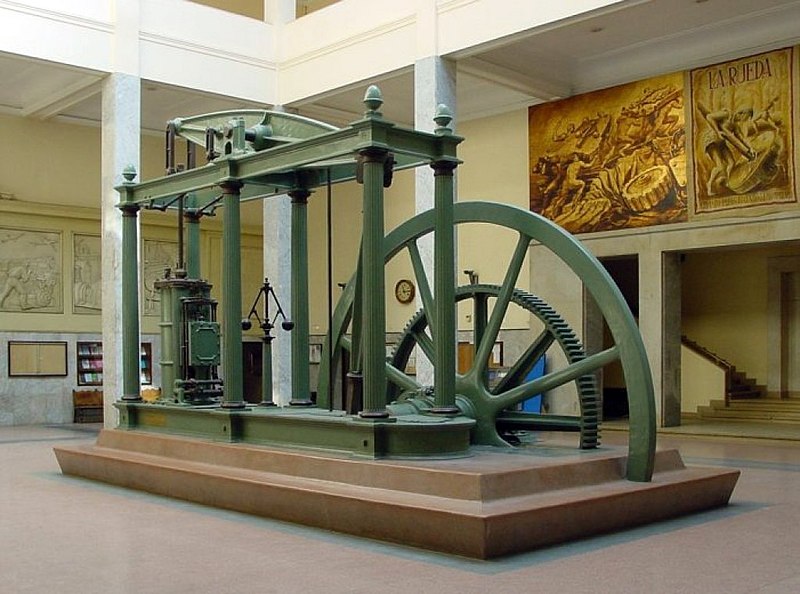
late modern period
the era from ca. 1800 until the present
sexual objectification
disregarding personality or dignity; reducing a person to a commodity or sex object

Philippe Sollers
French philosopher (1936–2023)

Paul Virilio
French philosopher (1932–2018)
Postmodernity
Postmodernity (post-modernity or the postmodern condition) is the economic or cultural state or condition of society which is said to exist after modernity. The idea of the postmodern condition is sometimes characterized as a culture stripped of its capacity to function in any linear or autonomous state like regressive isolationism, as opposed to the progressive mind state of modernism.
cultural hegemony
marxist notion of cultural dominance

simulacrum
thumb|Image of a real apple (left), and plastic food model apple (right). The fake apple is a simulacrum.
A simulacrum (: simulacra or simulacrums, from Latin simulacrum, meaning "likeness, semblance") is a representation or imitation of a person or thing. The word was first recorded in the English language in the late 16th century, used to describe a representation, such as a statue or a painting, especially of a god. By the late 19th century, it had gathered a secondary association of inferiority: an image without the substance or qualities of the original. Literary critic Fredric Jameson of
.jpg)
hyperreality
Hyperreality is a concept in post-structuralism that refers to the process of the evolution of notions of reality, leading to a cultural state of confusion between signs and symbols invented to stand in for reality, and direct perceptions of consensus reality. Hyperreality is seen as a condition in which, because of the compression of perceptions of reality in culture and media, what is generally regarded as real and what is understood as fiction are seamlessly blended together in experiences so that there is no longer any clear distinction between where one ends and the other begins.
postmodern philosophy
philosophical movement

nondualism
Nondualism, also called nonduality, is a polyvalent term originating in Indian philosophy and religion, where it is used in various, related contemplative philosophies which aim to negate dualistic thinking or conceptual proliferation (prapanca) and thereby realize nondual awareness, 'that which is beyond discursive thinking', a state of consciousness described in contemplative traditions as a background field of unified, immutable awareness that exists prior to conceptual thought.
ecosophy
Ecosophy or ecophilosophy (a portmanteau of ecological philosophy) is a philosophy of ecological harmony or equilibrium. The term was coined by the French post-structuralist philosopher Félix Guattari and the Norwegian philosopher Arne Næss, father of deep ecology.
rhizome
theory and research that allows for multiple, non-hierarchical entry and exit points in data representation and interpretation
post-processual archaeology
a theoretical paradigm in archaeology
Pierre Lévy
French philosopher
Subaltern
colonial populations who are socially, politically, and geographically excluded from the hierarchy of power of an imperial colony and from the metropolitan homeland of an empire
new queer cinema
movement in queer-themed independent filmmaking
Mario Perniola
Italian philosopher (1941-2018)
feminist epistemology
examination of the study of knowledge from a feminist standpoint
Bracha L. Ettinger
Israeli artist, painter, photographer, theorist and psychoanalyst (born 1948)
_projection_at_MoMA-PS1_by_Ebon_Fisher%2C_2000.jpg)
post-postmodernism
Post-postmodernism is a wide-ranging set of developments in critical theory, philosophy, architecture, art, literature, and culture which are emerging from, and reacting to, postmodernism and its antecedent, modernism. While there are varied definitions of post-postmodernism, common themes include a focus on sincere reconnection with the world that modernism had positioned the observer above, or postmodernism had alienated them from. In contrast to the ironic and unstable belief systems endemic to postmodernism, common themes of post-postmodernism include sincerity, trust, faith, immersion and
abjection
In critical theory, abjection is the state of being cast off and separated from norms and rules, especially on the scale of society and morality. The term has been explored in post-structuralism as that which inherently disturbs conventional identity and cultural concepts. Julia Kristeva explored an influential and formative overview of the concept in her 1980 work Powers of Horror: An Essay on Abjection, where she describes subjective horror (abjection) as the feeling when an individual experiences or is confronted by the sheer experience of what Kristeva calls one's typically repressed "corp
Ihab Hassan
American literary theorist (1925–2015)
Rein Raud
Estonian writer, academic (born 1961)

Henry Flynt
American musician (born 1940)
Jean-Jacques Lebel
French painter (born 1936)
Dialogic
Dialogic refers to the use of conversation or shared dialogue to explore the meaning of something. (This is as opposed to monologic which refers to one entity with all the information simply giving it to others without exploration and clarification of meaning through discussion.) The word "dialogic" relates to or is characterized by dialogue and its use. A dialogic is communication presented in the form of dialogue. Dialogic processes refer to implied meaning in words uttered by a speaker and interpreted by a listener. Dialogic works carry on a continual dialogue that includes interaction with
thealogy
thumb|Statue of Ceres, the Roman goddess of [[agriculture]]
Frank Popper
French art historian
Roy Ascott
English cybernetic artist (born 1934)
postmodern Christianity
postmodern theology
Michael Joyce
American academic and writer (born 1945)
comics studies
academic study of comics and graphic novels
time–space compression
term
Transmodernism
Transmodernism is a philosophical and cultural movement founded by Argentinian-Mexican philosopher Enrique Dussel. He refers to himself as a transmodernist and wrote a series of essays criticising the postmodern theory and advocating a transmodern way of thinking. Transmodernism is a development in thought following the period of postmodernism. As a movement, it was also developed from modernism and critiques modernity and postmodernity, viewing them as the end of modernism.
dispositif
Dispositif is one of the most prevalent concepts in 20th and 21st century philosophy, especially in Continental philosophy. As a philosophical term, dispositif has been introduced into the English language via the work of Michel Foucault, although there is now an extensive literature covering the much broader genealogy of dispositifs in contemporary philosophy. In general, they are a complex arrangement of discursive and non-discursive elements, which produce our world, subject positions, and ways of understanding. In the words of Gilles Deleuze, they are "machines that make one see and speak.
Sylvère Lotringer
French literary critic (1938–2021)
post-politics
Post-politics is a term in social sciences used to describe the effects of depoliticisation—a move away from the antagonistic political discourse, empowering unelected technocrats with decisions—in the late 20th and early 21st centuries, when the representative democracies of the post–Cold War era had arguably entered depoliticisation. Generally related to and used alongside similar terms such as "post-democracy" and "the post-political", the term "post-politics" carries negative connotations of depriving the people from having a voice on issues deemed settled by the elites.
Second modernity
industrial society transformed into a more reflexive network society or information society
Reflexive modernization
non-simultaneity
Non-simultaneity or nonsynchronism (German: Ungleichzeitigkeit, sometimes also translated as non-synchronicity) is a concept in the writings of Ernst Bloch which denotes the time lag, or uneven temporal development, produced in the social sphere by the processes of capitalist modernization and/or the incomplete nature of those processes. The term, especially in the phrase "the simultaneity of the non-simultaneous", has been used subsequently in predominantly Marxist theories of modernity, world-systems, postmodernity and globalization.
Billy Klüver
American engineer
Neomodernism
Neomodernism is a philosophical movement based on modernism which addressess the critique of modernism by postmodernism. It is rooted in the criticisms which Habermas has leveled at postmodern philosophy, namely that universalism and critical thinking are the two essential elements of human rights and that human rights create a superiority of some cultures over others.

Jussi Parikka
Finnish new media theorist
critical management studies
left wing approach to management, business and organization
interdiscourse
Interdiscourse is the implicit or explicit relations that a discourse has to other discourses. Interdiscursivity is the aspect of a discourse that relates it to other discourses. Norman Fairclough prefers the concept "orders of discourse". Interdiscursivity is often mostly an analytic concept, e.g. in Foucault and Fairclough. Interdiscursivity has close affinity to recontextualisation because interdiscourse often implies that elements are imported from another discourse.
doing gender
concept
Thierry de Duve
professor
Seminars of Jacques Lacan
1952–1980 seminars in Paris
Catherine Perret
French philosopher
Craig Owens
American art critic (1950–1990)
Database consumption
Method of media consumption