Category
page 1Pressure

pressure
Pressure (symbol: p or P) is the force applied perpendicular to the surface of an object per unit area over which that force is distributed. Gauge pressure (also spelled gage pressure) is the pressure relative to the ambient pressure.

vapor
thumb|An ampule of nitrogen oxide vapor: brown [[nitrogen dioxide and colorless dinitrogen tetroxide, in equilibrium]]
In physics, a vapor (American English) or vapour (Commonwealth English; see spelling differences) is a substance in the gas phase at a temperature lower than its critical temperature, which means that the vapor can be condensed to a liquid by increasing the pressure on it without reducing the temperature of the vapor. A vapor is different from an aerosol. An aerosol is a suspension of tiny particles of liquid, solid, or both within a gas.

Boyle's law
experimental gas law

hydrostatics
thumb|right|250px|Table of Hydraulics and Hydrostatics, from the 1728 Cyclopædia, or an Universal Dictionary of Arts and Sciences|Cyclopædia

pressure cooker
utensil for cooking food under high pressure steam
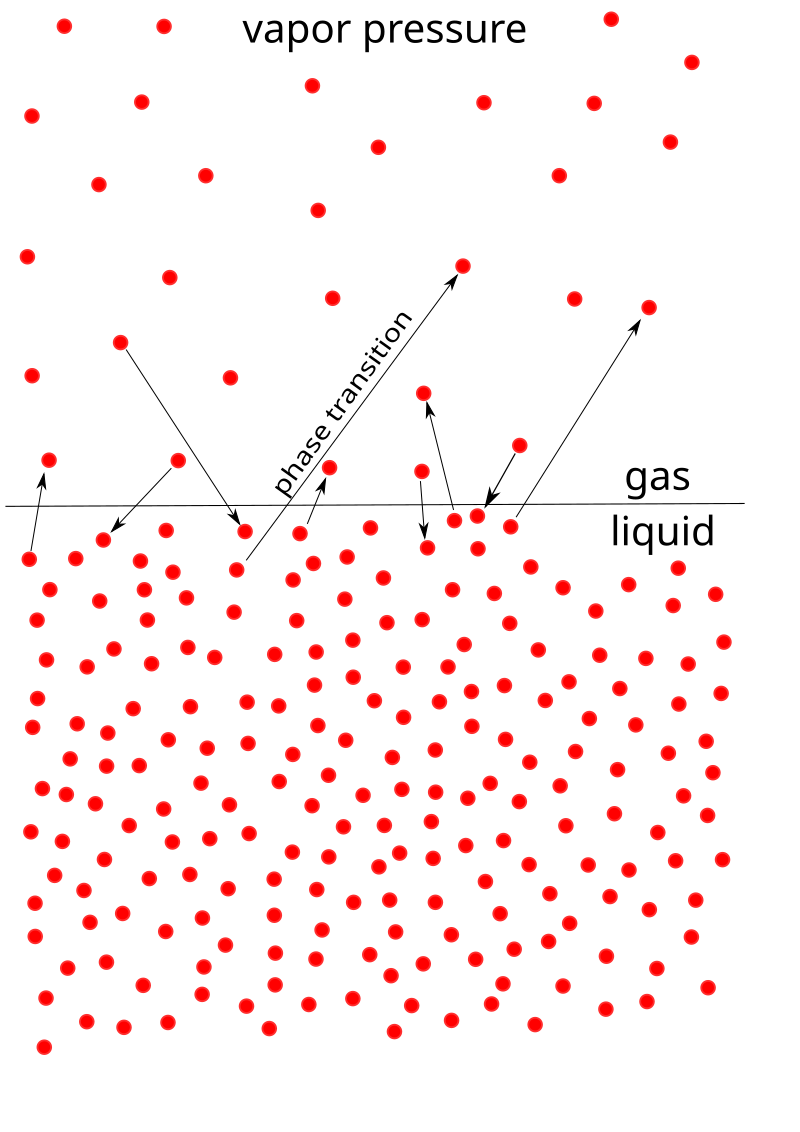
vapor pressure
pressure exterted by a vapor in thermodynamic equilibrium
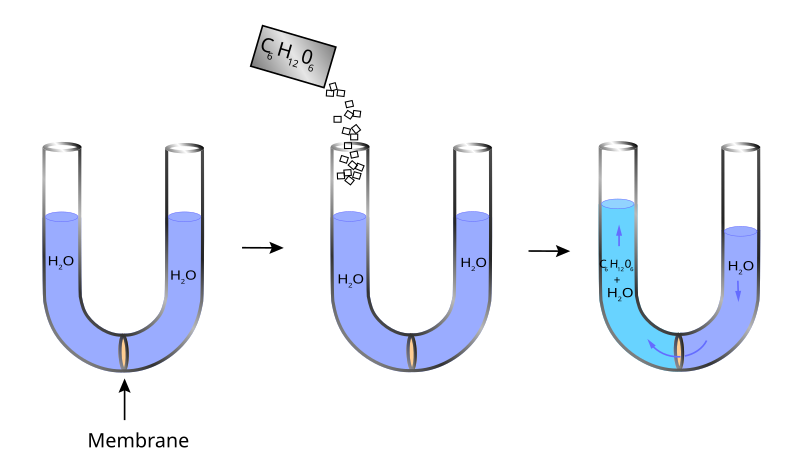
osmotic pressure
measure of the tendency of a solution to take in pure solvent by osmosis

Dalton's law
physical law that the pressure of a mixture of ideal gases is equal to the sum of the partial pressures of its constituents

cavitation
thumb|upright=1|right|Cavitating propeller model in a Water tunnel (hydrodynamic)|water tunnel experiment
partial pressure
hypothetical pressure of gas if it alone occupied the volume of the mixture at the same temperature
communicating vessels
set of containers containing a homogeneous fluid
hydrostatic pressure
pressure due to weight of a fluid at rest
hydraulic head
specific measurement of liquid pressure above a vertical datum
dynamic pressure
concept in fluid dynamics
pressure sensor
measurement device, transducer activated by pressure changes
Torricelli's experiment
physical experiment
pressure gradient
a transition in the amount of pressure between two spatial locations
ram pressure
pressure exerted on a body that is moving through a fluid medium

high pressure
material science term for pressures over 100 MPa
Negative room pressure
isolation technique used in hospitals and medical centers to prevent cross-contamination
millibar
redirect Bar (unit)
Pascalization
Pascalization, bridgmanization, high pressure processing (HPP) or high hydrostatic pressure (HHP) processing is a method of preserving and sterilizing food, in which a product is processed under very high pressure, leading to the inactivation of certain microorganisms and enzymes in the food. HPP has a limited effect on covalent bonds within the food product, thus maintaining both the sensory and nutritional aspects of the product. The technique was named after Blaise Pascal, a 17th century French scientist whose work included detailing the effects of pressure on fluids. During pascalization,
pressing
in winemaking, the process of extracting juice from grapes
Laplace pressure
Laplace pressure
cold inflation pressure
pressure in tires before they are warmed up by the car's motion

back pressure
force opposing the flow of fluid through pipes
pressurization
Pressurization or pressurisation is the application of pressure in a given situation or environment.
vacuum airship
hypothetical type of airship that contains a vacuum rather than a lighter-than-air gas
ambient pressure
pressure of the surrounding medium
positive pressure
pressure minus ambient pressure
submarine depth ratings
measures of a submarine's ability to operate underwater, used as design parameters
Pressure head
In fluid mechanics, the height of a liquid column