Category
page 1Proto-Protestants

Petrarch
thumb|right|upright|Santa Maria della Pieve in Arezzo
thumb|right|upright|La Casa del Petrarca (birthplace) at Vicolo dell'Orto, 28 in Arezzo
.jpg)
Erasmus
Desiderius Erasmus Roterodamus ( ; ; 28 October c. 1466 – 12 July 1536), commonly known in English as Erasmus of Rotterdam or simply Erasmus, was a Dutch humanist, Christian theologian, and pioneering philologist and educationalist. He was, through his writings and translations, one of the most influential scholars of the Northern Renaissance and a major figure of Western culture.

Jan Hus
Czech theologian, philosopher and preacher (1369-1415)
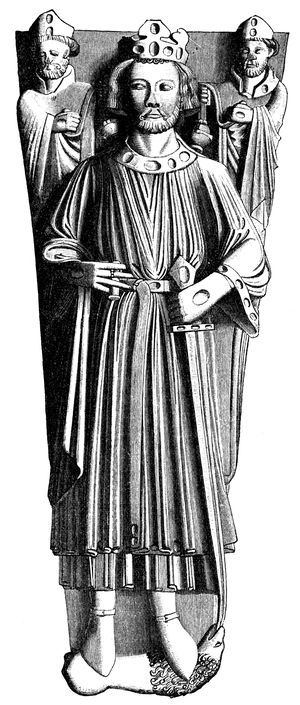
John, King of England
King of England from 1199 to 1216

Girolamo Savonarola
Italian Dominican friar and preacher (1452-1498)

John Wycliffe
English theologian and early dissident in the Roman Catholic Church

Giovanni Pico della Mirandola
Italian Renaissance philosopher (1463–1494)

Lorenzo Valla
Italian Renaissance humanist (c. 1407–1457)

Jacques Lefèvre d'Étaples
French theologian and humanist (1450 ca.-1536/1538)

Peter Waldo
French theologian
Joachim of Fiore
Italian abbot

Arnold of Brescia
Canon regular and revolutionary
Ratramnus
Ratramnus (died ) was a Frankish monk of the monastery of Corbie, near Amiens in northern France, and a Carolingian theologian known best for his writings on the Eucharist and predestination. His Eucharistic treatise De corpore et sanguine Domini (On the Body and Blood of the Lord) was a counterpoint to his abbot Paschasius Radbertus’s realist Eucharistic theology. Ratramnus was also known for his defense of the monk Gottschalk, whose theology of double predestination was the center of much controversy in 9th-century France and Germany. In his own time, Ratramnus was perhaps best known for his
Peter of Bruys
12th century heresiarch
Claudius of Turin
bishop of Turin

Jovinian
Jovinian (; died c. 405) was an opponent of Christian asceticism in the 4th century and was condemned as a heretic at synods convened in Rome under Pope Siricius and in Milan by Ambrose in 393 because of his views. Our information about him is derived principally from the work of Jerome in two books, Adversus Jovinianum. Jerome referred to him as the "Epicurus of Christianity". He was a native of Corduene, in present day Turkey. John Henry Newman called Aerius of Sebaste, Jovinian and Vigilantius the forerunners of Protestantism, likening them to the "Luther, Calvin, and Zwingli of the fourth
Wessel Gansfort
Dutch theologian (1419-1489)
Helvidius
Helvidius (sometimes Helvetius) was the author of a work written prior to 383 against the belief in the perpetual virginity of Mary. Helvidius maintained that the biblical mention of "sisters" and "brothers" of the Lord constitutes solid evidence that Mary had normal marital relations with Joseph and additional children after the miraculous conception and birth of Jesus. He supported his opinion by the writings of Tertullian and Victorinus. Helvidius is sometimes seen as an early proto-protestant, along with Vigiliantius, Jovinian and Aerius of Sebaste.
Vigilantius
Vigilantius (fl. 400) the Christian presbyter, wrote a work, no longer extant, which opposed a number of common 5th-century practices, and which inspired one of the most violent of the polemical treatises of Jerome (died 420). Vigilantius was born about 370 at Calagurris (current Saint Martory) in Aquitania, where his father kept an inn on the great Roman road from Gallia Aquitania to Spain. While still a youth his talent became known to Sulpicius Severus ( – ), who had estates in that neighborhood, and in 395 Sulpicius, who probably baptized him, sent him with letters to Paulinus of Nola, whe