Category
page 1Protostome classes

Trematoda
Trematoda is a class of flatworms known as trematodes, and commonly as flukes. They are obligate internal parasites with a complex life cycle requiring at least two hosts. The intermediate host, in which asexual reproduction occurs, is a mollusk, usually a snail. The definitive host, where the flukes sexually reproduce, is a vertebrate. Infection by trematodes can cause disease in all five vertebrate groups: mammals, birds, amphibians, reptiles, and fish.

Monogenea
Monogeneans, members of the class Monogenea ( ), are a group of ectoparasitic flatworms commonly found on the skin, gills, or fins of fish. They have a direct lifecycle and do not require an intermediate host. Adults are hermaphrodites, meaning they have both male and female reproductive structures.
.png)
Q430301
Bdelloidea (from Greek βδέλλα, bdella 'leech') is a class of rotifers found in freshwater habitats all over the world. There are over 450 described species of bdelloid rotifers (or 'bdelloids'), distinguished from each other mainly on the basis of morphology. The main characteristics that distinguish bdelloids from related groups of rotifers are exclusively parthenogenetic reproduction and the ability to survive in dry, harsh environments by entering a state of desiccation-induced dormancy (anhydrobiosis) at any life stage. They are often referred to as "ancient asexuals" due to their unique a
Gymnolaemata
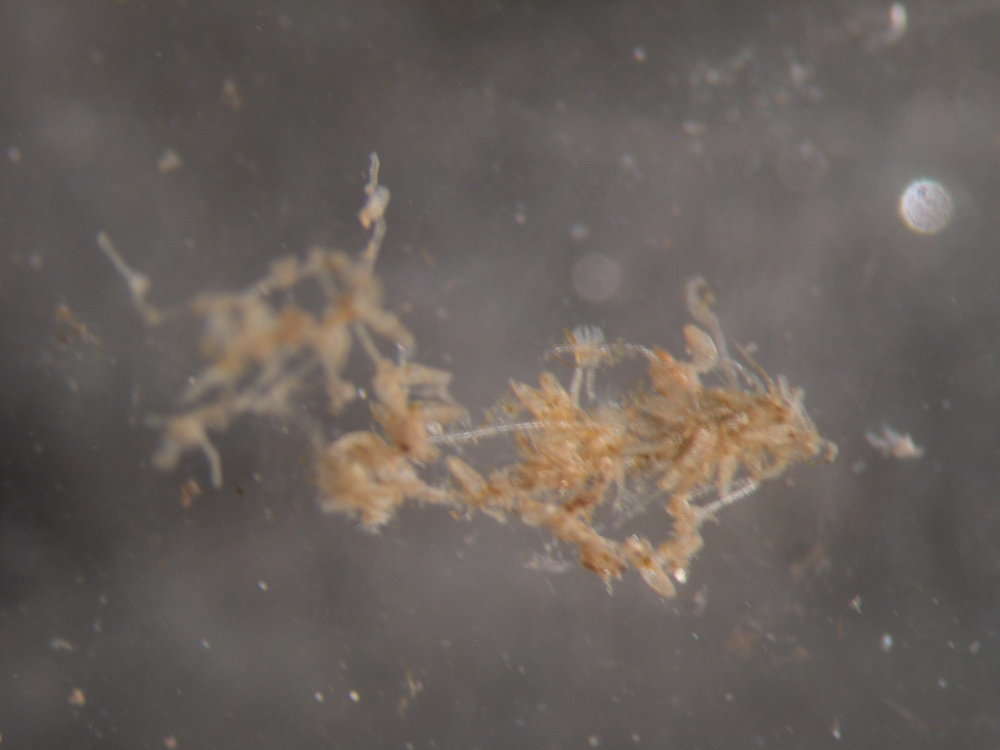
Gymnolaemata are a class of Bryozoans. Gymnolaemata are sessile, mostly marine organisms and grow on the surfaces of rocks, kelp, and in some cases on animals, like fish. Zooids are cylindrical or flattened. The lophophore is protruded by action of muscles pulling on the frontal wall. This order includes the majority of living bryozoan species.

Rhynchonellata
thumb|A modern member of Rhynchonellata, Calloria inconspicua, observed off the coast of New Zealand
The Rhynchonellata is a class of Lower Cambrian to Recent articulate brachiopods that combines orders from within the Rhynchonelliformea (Articulata revised) with well developed pedicle attachment. Shell forms vary from those with wide hinge lines to beaked forms with virtually no hinge line and from generally smooth to strongly plicate. Most all are biconvex. Lophophores vary and include both looped and spiraled forms. Although morphologically distinct, included orders follow a consistent phyl
Stenolaemata
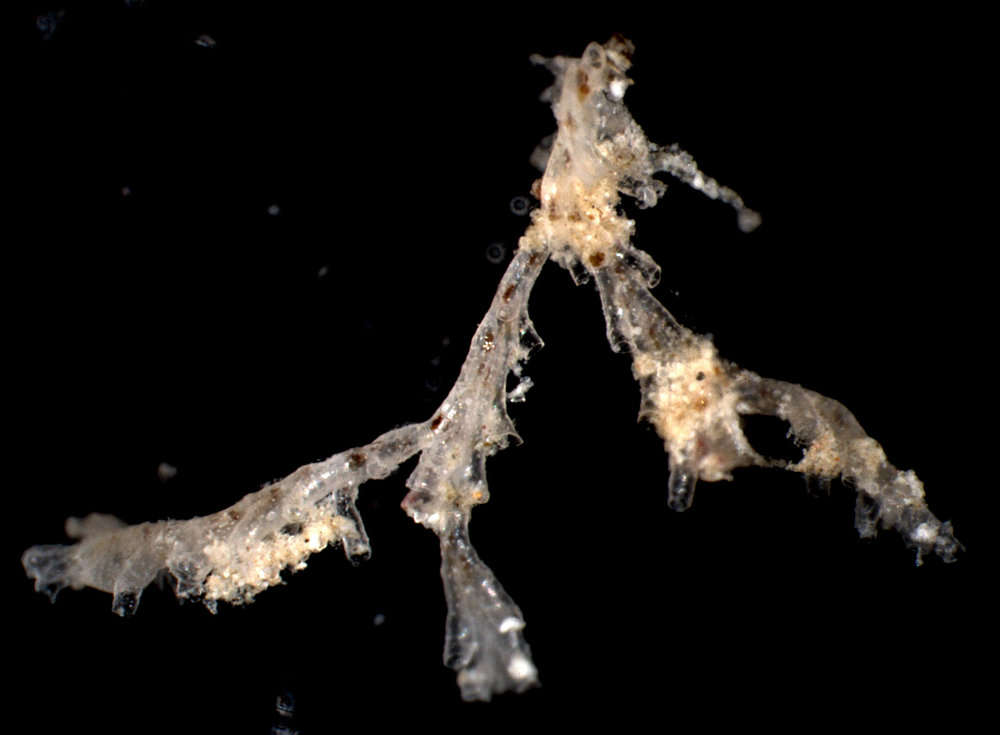
Stenolaemata are a class of exclusively marine bryozoans. Stenolaemates originated and diversified in the Ordovician, and more than 600 species are still alive today. All extant (living) species are in the order Cyclostomatida, the third-largest order of living bryozoans.
%2005.jpg)
Phylactolaemata
Phylactolaemata is a class of the phylum Bryozoa whose members live only in freshwater environments. Like all bryozoans, they filter feed by means of an extensible "crown" of ciliated tentacles called a lophophore, and like nearly all bryozoans (the only known exception being Monobryozoon), they live in colonies, each of which consists of clones of the founding member. Unlike those of some marine bryozoans, phylactolaemate colonies consist of only one type of zooid, the feeding forms known as autozooids. These are supported by an unmineralized "exoskeleton" made of gelatinous material or prote
Lingulata
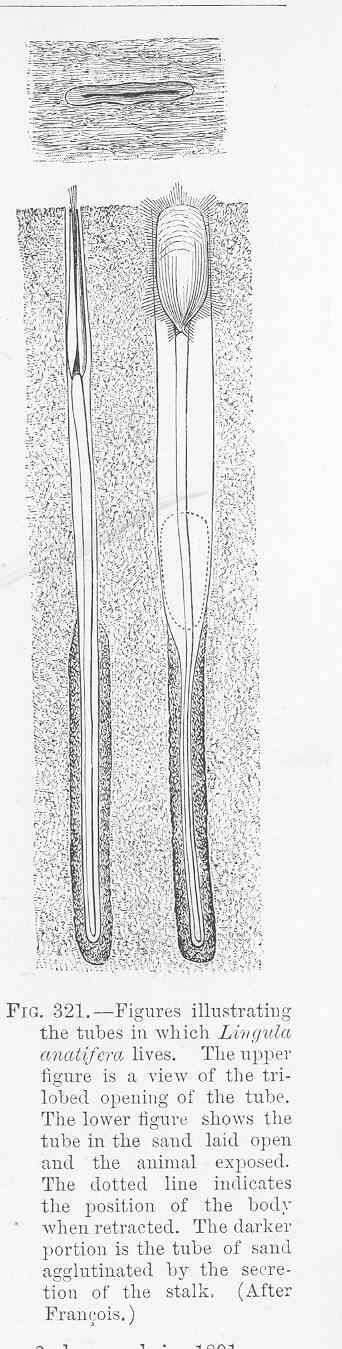
Lingulata is a class of brachiopods, among the oldest of all brachiopods having existed since the Cambrian period (). They are also among the most morphologically conservative of the brachiopods, having lasted from their earliest appearance to the present with very little change in shape. Shells of living specimens found today in the waters around Japan are almost identical to ancient Cambrian fossils.
Catenulida
Catenulida is an order of flatworms in the classical classification, or a class of flatworms in a phylogenetic approach. They are relatively small free-living flatworms, inhabiting freshwater and marine environments. There are about 100 species described worldwide, but the simple anatomy makes species distinction problematic.

Rhabditophora
Rhabditophora (from rhabdito-, rhabdite + Greek -φορος [-phoros], bearer, i.e., "rhabdite bearers") is a subphylum (previously a class) of flatworms. It includes all parasitic flatworms (clade Neodermata) and most free-living species that were previously grouped in the now obsolete class Turbellaria. Therefore, it contains the majority of the species in the phylum Platyhelminthes, excluding only the catenulids, to which they appear to be the sister group.
Monogononta
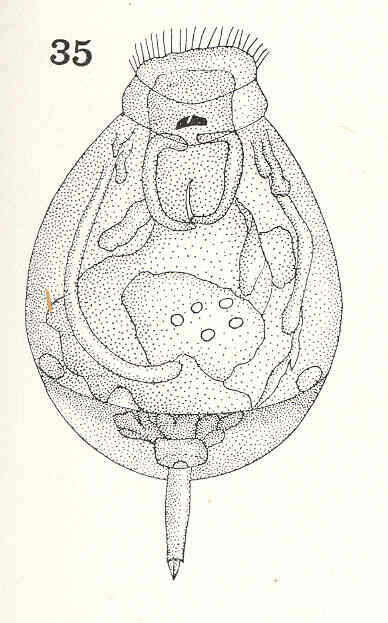
Monogononta is a class of rotifers, found mostly in freshwater but also in soil and marine environments. They include both free-swimming and sessile forms. Monogononts generally have a reduced corona, and each individual has a single gonad, which gives the group its name. Males are generally smaller than females, and are produced only during certain times of the year, with females otherwise reproducing through parthenogenesis.
Phascolosomatidea
Phascolosomatidea is a subclass of the class Sipuncula, the peanut worms, containing two orders:-
Sipunculidea
REDIRECT Golfingiida
Craniforma
class of brachiopods
Eucycliophora
REDIRECT Symbion